Source unknown – Title unknown (201X)

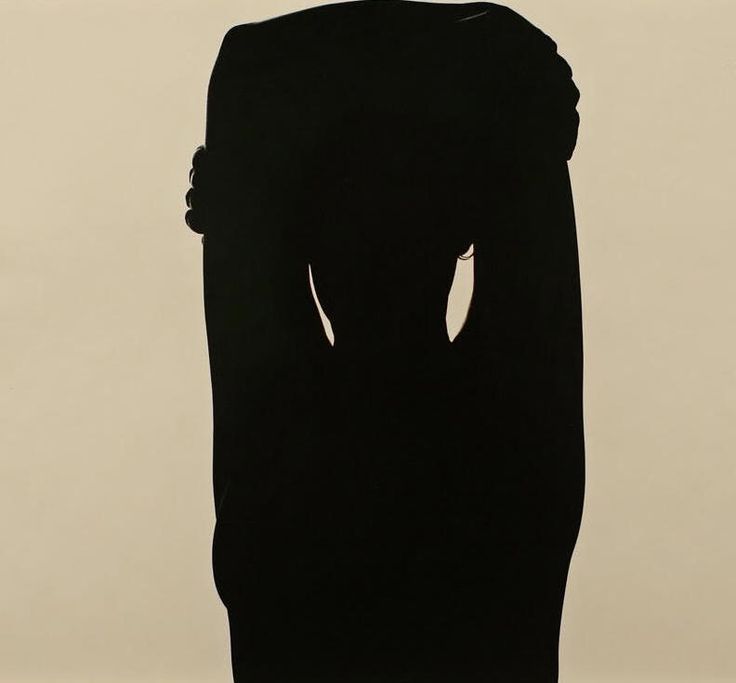
Efff me but this is magnificent.

The palate is reminiscent of Edward Isais–the perspective, lighting, composition and more unadordned mise en scene are decidedly not, however. (The pose might as well be a doppelgänger for Yung Cheng Lin–but although the perspective and composition of this are more in-line with his work, I don’t think he’s ever done anything this tenebristic.)

I originally found it here (which looks less like the source or even the site of the model and more just a really precocious self-definition-through-curatory-reblogging).

Does anyone know the source for this? I would be very interested in learning more about whomever made it…

EDIT: It seems likely that it’s Chinese image maker pingguodang (tumblr) (behance)–thanks for the tip-off anon!

Harry CallahanEleanor (1948)

There are only a handful of photographers in the history of the medium with as roundly as exquisite a body of work over their lifetime. Callahan is absolutely one such photographer.

(In fact: if I was asked to name one photographer who one might through an especially thorough study of their work, glean the most extensive picture of photography as an art form, I’d probably insist that Callahan was the only consideration.)

My favorites are the photos he made with Eleanor and subsequently Eleanor and his daughter. But even with his minimalist landscapes and plants in the landscape–he is always magnificently attuned to nuance of light, tone and dimensionality.

I love everything about this photo. (I’ve somehow never seen it before encountering it here.) But what’s particularly revelatory about it is that silhouettes usual appear completely flat–as if someone cut out a shape in heavy cardboard and placed them between the camera and the light. (If you’re thinking of the scene in Home Alone with the cardboard Micheal Jordan cut-out… good call.)

The reason for that you’re dealing with something that is brightly backlit–thus, the object is blocking the light. The point at which the object blocking the light is the widest only has one dimension and there’s light that is blocked and light that is not blocked on either side of that object.

When I teach three point lighting to undergrads, we talk about the key light, the fill light and the back (or rim) light. The reason it has become customary to use this setup is because it a standardized approach to the stylized representation of natural lighting.

If you’re standing in the middle of a field on a sunny day–unless you’re facing into the sun (which doesn’t make for the most aesthetically appealing imagery–the sun is going to be bright on one side of you than the other. This is because the sun hits one side of you and by hitting that one side of you, it’s blocked from hitting the other side of you. (Unless you’re a ghost and then my apologies.)

The ground around you actually reflects light to a certain degree. So while one side of your face is brighter than the other, the ground helps fill it in so it’s still slightly darker but naturally and flatteringly so. (The key light is usually to left and the fill light to the right of the scene–you can do it however but as the convention is borrowed from Dutch Baroque painting, where the light almost categorically falls left to right.)

It’s the light behind you that actually gives you dimensionality. (A key light and a fill light will make the objects illuminated appear flat in exactly the same way a silhouette makes the subject presented in silhouette appear two dimensional.)

Notice how just the faintest of fills on the fingers of Eleanor’s right hand on her left arm–I’m reasonably certain that she’s is standing with her back to the camera–have dimensionality; and therefore create this strange since that she is and is not actually flat.

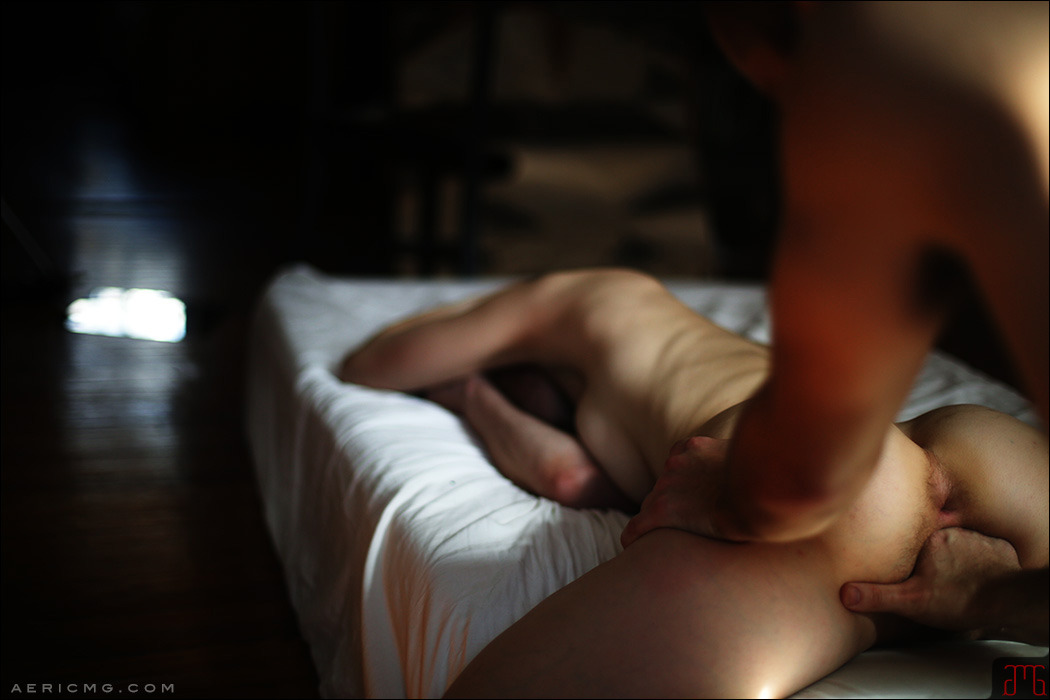
Aeric Meredith-GoujonSink, Shank, Chunk (2018)

Part of what impresses me about is the use of positive and negative space–there’s the chiaroscuro nay: tenebrism (most folks would’ve let the background go completely dark but this preserves a sense of space enough to suggest some sort of lived in environment).

The other thing that moves me is that it brings back a flood of memories–memories that are a little too closely held to share but suffice it to say that it is my experience that the above configuration is not only a great way to approach/warm-up to fisting, it’s actually maybe the best position for directly stimulating the g-spot. (In positions where the g-spot haver is stretched out supine, you experience a limited range of motion and are constantly working against gravity. Your arms can tire, muscles cramp and have your wrist painfully lock up. Wheres, when things are positioned as above, the fingers can press down alone, the thumb can be used as a fulcrum to rock the hand–it can take a bit to get used to it but you can also stimulate the clitoris while using the thumb as a fulcrum; additionally, you can vary and combine all three movements in response to your partner.)

From here it’s also possible to rotate your wrists side to side to create an intense sensation. (Not everyone enjoys this but those who do–in my experience–really enjoy it.)

@coffeemugccUntitled (2017)

An argument that I’ve made multiple times through this project is that I don’t think there’s every any reason to decapitate someone. This goes triple for folks making work where they want to remain anonymous–it’s really just lazy and sloppy for you to position yourself with your head just beyond the edge of the frame. It limits what you can do compositionally and just signals a lack of willingness to do some planning and or problem solving.

I’ve forward the idea of excising faces of folks who want to remain anonymous–a la Bellocq’s Jesuit brother.

This was before I spent any time on Instagram–or, as I insist the kids are calling it The ‘Gram. The Gaussian blur over nipples and genitals is incredibly distracting and detracts enormously from the images. Thus: I will concede that I didn’t think this all the way through. Short of the effect that liquefy effect that @lisakimberly uses so fantastically, masking faces in post is probably not the best approach.

Point being: it’s good to have some kind of idea what you are going to do with an image after you make it. Case in point: the image above.

Ostensibly it’s the picture of a young woman, hands covered in papaya juices with her finger disappearing into the soft core of the ripe fruit. It brings to mind both masturbation and lesbian fucking.

It’s also 100% compliant with The ‘Gram’s standards. It’s arguably that the depth of field would’ve rendered the fact that the model is naked from the mid-riff down but the right little finger protrudes in such a way as to obfuscate any sort of consideration that the creator is trying to sneak something by the censors.

And really that’s what I should be emphasizing instead of completely poopoing any one strategy for addressing concerns over what to show, what to hide and what to excise–there’s almost always a better way to do something than what first occurs to you. It’s always wise to know your own limits as well as the limits of those you work with as well as the forums where you disseminate work.

This does just that and does it masterfully.

Housekeeping notes

After several weeks of cobbling together daily posts at the 11th hour, there’s a short queue running again. Hoping to keep it that way through the summer–knock on wood.

Further: you all were very patient with me while I was agonizing over my applications to 3 MFA programs. I have news on that front I wanted to share: I was rejected by one program (way to be great big ol’ bag of dicks, CalArts), waitlisted at the second and accepted with full funding at the third (which just so happened to be my first choice school).

This girl is going to grad school, y’all!!!

Full funding–come to find out–does not include housing these days. Also: not that I’m super excited about taking on further student loan debt but I can only borrow against the estimated cost my program cosigns. They allow for $1618 in supplies for the entire academic year. (I want to know who came up with this amount and when the last time they shopped for art supplies was–fucking 1978?

Add in the expense of swapping coasts and yeah…it’s a great big old stress mess.

For now: that will have little bearing on this project. However, beginning in September–unless something gives–this project will be slowing down in a major way. We’ll almost certain go from a post every day (on average) to something like five (5) posts every two (2) weeks.

It’s not my preference to take that approach–however: something will have to give and this is the first thing with any flexibility.

Thus, if you like what we do here and you are able to do so: really, really please give some thought to supporting us via our Patreon. I realize in the real world only about 2% of your total followers can be counted on to offer support. But seriously, if 10% of you pledged $5/month, I could treat this project as my job and essentially do this and be a full-time student. (Also: if Patreon isn’t your jam, and you want to just donate–reach out and we’ll figure out how to make that happen.)

I am also working on two other things that will eventually be tied into this project: a series of guerilla exhibitions and a subscription introduction to photography history and technique online course. (Both of those are taking a lot longer than I anticipated to pull together.)

Lastly, Vox ran this think piece on digital imaging with smartphones and its impact on memory. There’s a host of category mistakes and uninformed assumptions. But it’s the first time I’ve really read something like this directed at non-photo/imaging folks and I think that despite it’s boneheadedness, the crux of the matter it’s trying to address is actually worth photographs and image makers more actively engaging with.

(If I seem scattered, I am. This week has been an abject clusterfuck and I am spectacularly ragged brained right now. Thanks for putting up with me.)

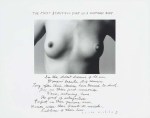
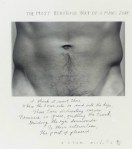
Duane Michals – [↑] The Most Beautiful Part of a Woman’s Body (1986); [↓] The Most Beautiful Part of a Man’s Body (1986)

[↑] In the oldest dreams of old men / Womens’ breasts still remain. / Long
after their desires have turned to dust. / They are their first
memories. / Warm, nurturing, home. / The point of satisfaction. /
Perfect in their gracious arcs. / Women wear their breasts as medals, /
Emblems of their love.

[↓] I think it must there / Where the torso sits on and into the hips /
Those twin delineating curves / Feminine in grace, girdling the trunk /
Guiding the eye downwards / To their intersection, / the point of
pleasure.