

[↑] Toshio Saeki – Onikage (2010); [↓] Trevor Brown – Title unknown from My Alphabet (1999)
The relief of giving in to destruction.
—Franz Kafka, from a diary entry featured in Diaries, 1910 -1923 (via violentwavesofemotion)
[↑] Toshio Saeki – Onikage (2010); [↓] Trevor Brown – Title unknown from My Alphabet (1999)
The relief of giving in to destruction.
—Franz Kafka, from a diary entry featured in Diaries, 1910 -1923 (via violentwavesofemotion)

Source unknown – Nicole Vaunt (2017)
Few places I have ever visited have gotten so thoroughly under my skin as Iceland. If my Seasonal Affective Disorder wasn’t already off-the-charts, I would have moved there by now.
What’s so great about it? If I told you it’s because it’s magical, there would be two distinct responses: those who will grin stupidly/nod knowingly & those will look askance/skeptical–the former have visited, the latter have not.
I could talk about the light. But the light in-and-of-itself is not entirely exceptional. If you’ve watched any of Bergman’s films–you’ll understand why he and Sven Nyquist strove to work with natural light whenever possible. (Arctic light in the summer is pretty much ripped out of a Romantic Period oil painting.)
The landscape might as well be off-world–the stunning vibrancy of color contrasted against the harsh landscape is something that stops you in your tracks at least a half dozen times each day.
It’s not all rainbows and kittens: most folks view Iceland as a sort of Viking inhabited glacier. (I started having dreams about the place during my middle teens and it was all snowbound and empty. I found out after about a decade of having the dreams that Iceland is green and Greenland is ice–in fact, viking languages were apparently uber literal because the capital of Reykjavik means nothing more or less than ‘smoky bay’ and Iceland in the native languague is really Island; it’s westerners that make it seem like a stronghold of winter.) The weather is hardly perfect. I’ve seen it rain sideways while it’s still blindingly sunny. (But as the saying goes: if you don’t like the weather, wait 15 minutes–as is that ever the fucking truth.)
What appeals to me about this image is the degree to which it–by decontextualizing both the relationship of the landscape to light and color, it demonstrates the degree to which the landscape has texture. (I think that’s something I’ve always felt on an instinctive level but it would’ve taken me several more trips to come to that realization on my own. And as far as I’m concerned that’s really the single credo you need when asking whether or not a photo or image is good: does it show me how to see something that I might otherwise have never discovered? If the answer is yes, then that’s already more than halfway there.)

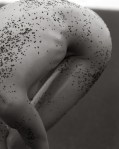

Herb Ritts – [↖] Female Nude with Black Sand, Hawaii (1989); [↗] Female Nude with Black Sand, Hawaii (1989); [↓] Untitled (1989)
If you’re anything like me you’ll ask yourself: Herb who? You already know him–I promise.
This photo of David Bowie? This photo of Michael Jackson? This one of Britney Spears? All three were made by Herb Ritts.
There’s a good bit of common ground between Ritts and Avedon, actually. Both have the same tendency of thwarting expectations. Working in a studio was less something either did as a means of de-emphasizing location as it was an effort to give personality free range to manifest. Also, both make photos that focus on the subject in the same way–Ritts merely trained his lens on larger than life uber celebrities, house name entertainers and supermodels. (Leveraging recognizability and depicting celebrity personality as its own ultra exclusive destination which you could only access as he allowed was a brilliant maneuver.)
Perusing his catalog is a strange undertaking–where you see the person both as they wanted to be seen at the time the photo was made. At the same time, ex post facto, it’s possible to look at the work and guess what the various PR teams had in mind but there’s also a way in which the work also presents a subtle wink to some of the less pristine aspects of many of his subjects lives–about which we have begun to learn.
I don’t care for Picasso at all but it’s sort of like the critic who took issue with his painting of Gertrude Stein by saying it doesn’t look anything like her and Pablo responding shortly: but it will.
Also, there’s no way to fault Ritts for borrowing so readily from others–as the adage goes it’s not theft if you take something and improve upon it. It’s difficult to say if stealing Avedon’s formula and applying it to the super rich and famous was an act of genius or not–it just works too well to judge that after the fact.
However, in the case of these photos, it’s easier to see that here he was riffing on Iwase Yoshiyuki. (Although again, he did at least pick something of Yoshiyuki’s that was truly and exquisitely exceptional…)





[↖] Source unknown – Title unknown (201X); [↗] Source unknown – Title unknown (201X); [↙] Source unknown – Title unknown (201X); [↘] Source unknown – Title unknown (201X); [↓] Source unknown – Title unknown (201X)
Follow the thread.

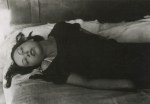
[↑] Gian Lorenzo Bernini – The Ecstasy of St. Teresa (1647-52); [↓] Brassaï – Le phénomène de l’extase (1932)
Juxtaposition as commentary

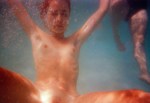
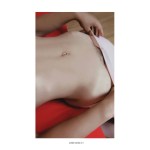



[↖] Girls Out West – Allegra (2017); [↗] Liza Mandelup – Untitled from Give Yourself to the Sea (2013); [+] Julien Zarka – Kim (2017); [↙] Source unknown – Title unknown (200X); [↘] Louis Treserras – Tout Simplement (2011); [-] A Private Expose – It’s Time to Begin (2018)
My work flow for this project is pretty straight forward. I spend about two hours every day cycling through my dash to the point where I quit the previous day–liking anything along the way that catches my eye.
From the resulting likes, I conduct a second pass and ask myself do I have anything to say about this photo/image/illustration/set/etc. Such items get shunted into my drafts. Drafts get moved to my queue so that I can decide the best order to present them in and I usually only compose an entry for something that’s already in queue.
Anyway, there’s a mass of images in my drafts right now that I know I want to engage with but I’m not sure how I want to approach them. (Unfortunately, this has resulted in a bloated drafts section that is a bit cumbersome to navigate.)
I realized this morning that what I want to say about these six images has been difficult to coalesce because individually they don’t trigger much for me except to say that these images all view feminine embodiment in a way that I wish was a way I could learn to see my own body–as something beautiful, a bit awkward sometimes but thorough well-suited for utilitarian use and fundamentally desirable.

Francesca Woodman – Depth of field, Providence, Rhode Island (1975-8)
Woodman first appeared on my radar in either late 2005 or early 2006.
Her Wikipedia entry was much sparser then–not that it’s anything to write home about now; however, it did have one fantastic feature: there was a ridiculously chronological index of approximately 120 of her photos. (At that point it was the most comprehensive collection of her work–essentially, every photo uploaded to the Internet was centrally linked.)
Dribs and drabs of additional work would emerge as new exhibitions went up. And the spate of new and/or updated monographs in the late aughts introduced even more work.
That shifted noticeable with her 2012 Guggenheim retrospective in NYC–which if memory serves consisted of 20% new/rare photographs.
The Guggenhein show was staged more or less chronologically. Beginning with the early work–culminating in her Swan Song series; before interjecting the work she made while studying in Italy for a year (which was housed in a passage and adjacent niche), followed by the ‘failed’ fashion photographic efforts and then looping back into the first room where there was work from her time at the MacDowell artist colony.
This layout was simplistic but with the simplification driven by cleverness not torpor–allowing her work to demonstrate itself as always of exceptional quality but arranged in such a way that her incandescent genius becomes all that much more apparently as she slowly begins to fire on all cylinders. (If nothing else a strict chronological view of the work shares with the viewer a sense of hard work finally paying off when you consider a photo like the one of her as her alter ego Sloan side-by-side with other work from the same period. She was getting better, saw she was getting better and derived confidence from the awareness.)
The narrative of her trajectory has always been that she peaked during her year abroad and never quite managed to reach such Olympian heights ever again. The notion that her fashion experiments were a failure dovetails nicely with this theory.
Still, it’s always bothered me that one of my favorite photos she ever made emerges from the same period as the fashion ‘failures’–namely, this self-portrait with a wasp on her neck.
Over the last 18 months, I’ve noticed a deluge of work I’ve previously never seen emerging. (The above is an example of such.) There’s no enough of it that I am beginning to question the endurance of the narrative that she was very good but also immature, undisciplined and very lucky.
There’s a couple of things you have to keep in mind here: first, the photos that until recently have been understood as her overarching body of work were ones she exhibited during her life. The subsequent work that’s emerged has been released into the world by her parents. (This has led to issues where there exist an original print or two she made herself vs work that he father has reprinted–the latter tend to present a more dynamic range of tones, whereas hers skew much darker, as a rule.)
The notion that the fashion work was a complete failure is something I think the newly released work calls sharply into question. I won’t argue that a lot of it is bad. There’s enough of it that is at least stubbornly iconoclastic that suggests something further at work here.
Increasingly, I think that what gets interpreted as failure was merely an effort to play the can I be an artist in mid-to-late capitalism and not starve. My impression is that Woodman was attempting to fit her style and preoccupations to what she understood as the framework high fashion sought. When, really, the other way round was the way she should’ve approached it. (A more concrete way of putting it might be to suggest that whereas her early work were about self-expression, the later work is an effort to invert the ploy of inventing an alter ego like Sloan (to allow herself to explore–representation at some degree of remove) and instead wanted to filter her work in such a way that she would be perceived as belonging on the fashion scene. It didn’t work because too much of who she was involved independence and a commitment to non-conformity.
As bad as some of the fashion stuff, it is not all bad and she continued to make exceptional work–or that’s what the emerging work suggests to me. It’s almost as if the darker her vision became the more increasingly universal the reaction to and response to her work.
A lot of extravagant privilege allows for the possibility of this project. I try not to take that for granted and dedicate every 50th post to contextualizing the considerations of this blog within the current sociopolitical milieu.
I have to confess I’ve been doing a really godawful job keeping up with the news. As I have been essentially what I guess is termed a digital nomad for the last month and will remain so for the next 1.5 months or so: I find that I spend a lot less time consuming news media. (It makes me feel like a bad activist but it’s also been a boon to my mental health–as has been being in a locale where it’s chilly overnight but reaches into the low 70s during the day.)
As such, the stories I’ve noticed have been a little less all over the place than usual.
There was a solid opinion piece over at al-Jazeera about how while Obama would’ve never used such a term as ‘shithole’ to refer to other countries–he certainly treated them as if they were exactly that.
Then there’s the focus on immigration:
Currently, the US government is trying to hash out another short term stop gap to fund the government several more weeks so that some sort of consensus can be reached over the status of the so-called Dreamers, i.e. people who were brought her without the requisite legal documentation as children and who have participated in the system in good faith for a decade if not longer.
Numerous sources have reported that there is bipartisan support for dreamers and that if a vote was called for the decoupled Dreamers from being held hostage by budget negotiations–then it has the votes necessary to pass. However, Ryan is determined to carry water for President Shithole and refuses to allow such a vote.
There’s also the matter of President Shithole trying to insist that his wall be funded as part of the budget process–despite the fact that it’s a colossal boondoggle that has no bearing on the way undocumented crossing of borders most often happens.
Also: there’s been a lot of news about ICE recently–with the end of record keeping for the previous year, ICE arrests went up 30% over the previous non-President Shithole year.
They keep on exhibiting themselves as reprehensible shit licking scum fucks on the regular. (ACAB but there is a special place in hell for ICE agents.)
Oh and by the way: ICE is trying to muscle in on the intelligence community. If that doesn’t scare the fuck out of you then I’m betting your only marginally literate.
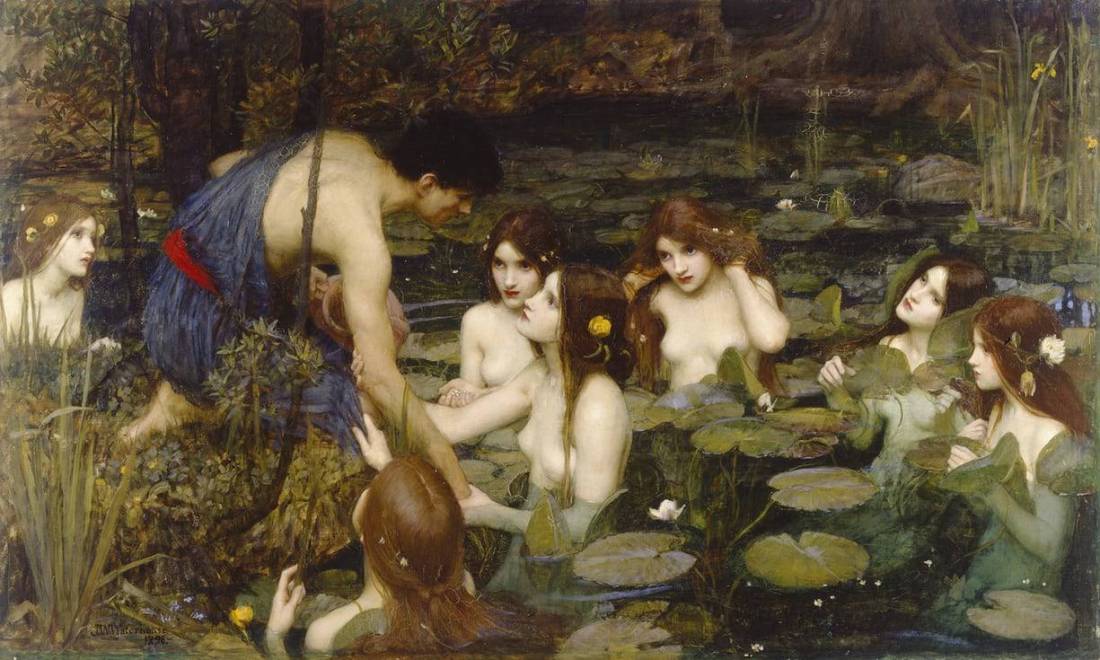
John William Waterhouse – Hylas and the Nymphs (1896)
Unless you’ve been living under a rock, you will almost certainly know about the Manchester Art Gallery’s decision to remove this painting from display. (You’ll note that this story has been updated several times in a way which makes it contradict itself several times.)
The story has shifted and morphed a number of times–unfortunatley, I do not have cached versions of it available to reference: but here’s my understanding of how things played out:
Under the auspice of extending the Time’s Up and #MeToo movements general impetus to art history, the Manchester Art Gallery announced that it would be not only removing the painting from display but also removing post cards of the painting from their gift shop.
We I first encountered the story there was no mention that this was a temporary experiment. As it turns out the museum saw this action as a gimmick–intended to foment conversation on the long history of blatant misogyny in art history as well as tying into an upcoming exhibition by Sonia Boyce.
As of this writing the painting has been rehung.
I’m not especially interested in exonerating Waterhouse–I don’t care for his work, personally. I also think that the accusations that this is just another in a long line of mainstreaming so-called SJW puritanism are entirely facile arguments. But conceptually there are a number of things about this stunt that were poorly considered and/or executed.
First off, anyone who has studied mythology will know that Hylas was gay. Also, like: y’all do know that his fascination with these nymphs ends up getting him killed, right? (Conceptually: there’s an argument that by choosing this painting to take down, there is contained a biting critique of Time’s Up and #MeToo–a kind of let’s question the sexualization of female bodies in this one case where those bodies will subsequently punish a man whose attention they have claimed?)
Second, if the issue really is the sexualization of not just women’s bodies but of young women’s bodies–then why aren’t we critiquing the work of folks like Klimt and Schiele first? The Guardian article mentions that the painting was and is once again hanging in a room entitled In Pursuit of Beauty? Thus, again–from a conceptual standpoint–the museum is shirking its own role and responsibility in this kerfuffle. (What would’ve been more interesting is to fill the same room as the Waterhouse with paintings made by women artists roughly concurrent to Waterhouse.)
Third, I’m not unaware that many consider Waterhouse to have been very nearly a pornographer. And I’m sure there are bawdy sketches with which I am not familiar but generally speaking there’s this notion that in order to become a suspect on counterfeit currency you study the real currency as opposed to the fakes. If you’ve studied either Art or pornography–to any extent you should be able to identify it as the former and not at all the latter.
Lastly, there’s a difference between having to see something–i.e. a monument to the confederacy (from which there is no separating a fundamental conviction in white supremacy) or a confederate general vs something in an art museum. There is absolutely a prolonged and difficult conversation that needs to be had about the legacy of objectification with regard to depictions of femininity in art. For example: as much as I adore Emma Sulkowicz her latest piece protesting Picasso and Chuck Close (and seriously fuck both those ass hats sideways with a shovel), was sloppy and haphazard but it at least did more than point to a problem it suggested a means of addressing the problem moving forward.

 Acetylene Eyes