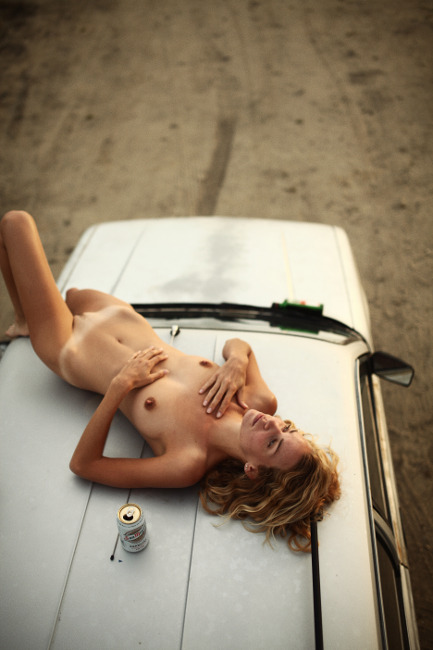

Olivier Laselle – Untitled (2017); [] Mark Steinmetz – Athens, GA from South East series (1996)
Juxtaposition as commentary
Olivier Laselle – Untitled (2017); [] Mark Steinmetz – Athens, GA from South East series (1996)
Juxtaposition as commentary
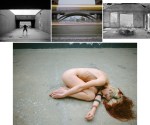
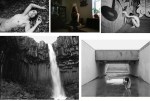
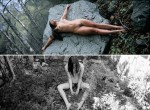
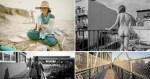


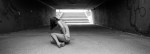
wonderlust photoworks – [top to bottom; left to right] Mx Incohate (2014); Homesick for the Distances (2015); 29:18 collaboration with Anonymous (2010); Map in the Maze collaboration with @camdamage (2015); A Dark Chant collaboration with @marissalynnla (2016); Baba Yaga collaboration with @suspendedinlight (2017); Hasp collaboration with @kyotocat (2016); Svartifoss (2015); Echo (2019); Woodland Cathedral collaboration with @marissalynnla (2016); Wombs + Tombs collaboration with @kyotocat (2016); Hold Me Now or Hold Me Never (2017); A Piece of the Sky collaboration with @suspendedinlight (2016); Coney Island, October (2016); Two Red Plastic Bags (2015); Samson’s Riddle collaboration with Kelsey Dylan (2016); Moxie (2016); Hold Me Like the Landscape Holds the Light (2017); Heart-Shaped Sunglasses + Helianthuses collaboration with Jacs Fishburne (2016); Emma collaboration with @kyotocat (2016)
Since I’ve been yammering on about it, it seemed only fair to share with the rest of the class. Above is the work I am submitting to MFA programs. (Apologies for some of the early formatting awkwardness…I had to trick Tumblr into letting me upload everything to a single post.)
The accompanying statement reads as follows:
I grew up in a Christian doomsday cult—an experience which forged a lifelong
preoccupation with the conceptual interpenetration of sin/transgression + salvation/
transcendence.
Storytelling figured prominently in this milieu—scads of Trojan horse fables secreting ideological payloads—but, also: beautiful, expansive conversations which were
less dialogue + more interactive sharing of stories not unlike a carefully curated anthology places various parts in implicit dialogue across the whole.
This effusive sharing sparked a strong sensitivity for wonderment which drew me
to music (something that saved me, continues to save me) + lead in turn to Johannes
Vermeer’s paintings, Andrei Tarkovsky’s oneiric long takes, William Eggleston’s impeccable dye transfers + Francesca Woodman gothic self-portraiture.
(Other artists to whose work I perennially return? Chris Burden, Duane Michals,
Rackstraw Downes, Ana Medieta, Peter Hujar, Kelli Connell, Aino Kannisto + Allison
Barnes.)
The enormity of experiencing beauty has always seemed a profound responsibility—as if in seeing there is a duty to labor in whatever way one is able to give something
back for what one have so undeservingly received.
My own art making process begins with the identification of a “visual problem” +
fits the form of a question*—e.g. How might a single, static frame imply a narrative
arc? (This question maneuvered me from cinematography to fine art photography.)
Any rendering of a person in an environment suggests narrative potential insofar
as the viewer asks who the figure is (characterization) + how she came to be in this particular scene (causation) + what she is doing there (context).
This introduces a second, more complicated conceptual problem. Given that photographing people is a minefield of political + ethical quandaries, how does one depict
identity, gender + sexuality while actively thwarting the art historical, dominant (hetero-partiarchal) gaze?
The only means I have found to ameliorate this is to conceptualize my photography as collaborative . I seek out + work with artists—sharing my questions with
them, asking each to bring their ideas + personal sensibilities to the proceedings.
When I am behind the camera, I refuse to allow myself to fixate on conceptual
considerations. Instead, I trust the preparation + planning that has led to the point of
making something. I proceed instinctively, acting less as author + more as a steward/midwife; the camera serves as a means of extending my capacity to feel outward—both
from the standpoint of sensory stimulus but also with regard to emotional resonance.
When what I see through the viewfinder feels like a response to the visual problem(s), I
snap the shutter.
My strategy for editing retraces the above steps from conceptualization to execution except in reverse order + with one notable exception: my collaborators receive “first
edit”, i.e. if they are uncomfortable with any aspect of their depiction they can opt to exclude any image(s) from further consideration—allowing for the exercise of personal
agency in expressing identity within the context of visual representation.
From what remains, I review the work with special attention to frames which
exhibit ‘good’ composition in tandem with unity between form + visual grammar. Work
which surprises me hints at subsequent avenues of exploration (whether by expanding
my understanding of one or more problems or suggesting more effective ways of addressing those problem). Time has taught me the photos which evoke a feeling similar to
what I felt when the shutter clicked are the ones that matter.
I am at a point in my life where it feels as if I am on the cusp of making a leap
forward in my work—the work is asking me to commit to it. The [REDACTED] program would allow me to dedicate myself to my work for two years—allowing me to take risks + experiment, e.g. I am fascinated by the ways my process
overlaps with conceptual + performance based modalities of art making; also: how might it possible to convey visually something of the feeling of gender dysphoria?
The [REDACTED] MFA would not only foster a richer understanding of art history,
it would also provide a in-depth interdisciplinary insight into the working practice of
cohorts + faculty in an edgy, forward thinking creative community
*Trial + error have shown me that a good question anticipates less an answer and instead suggests a better/more focused question.
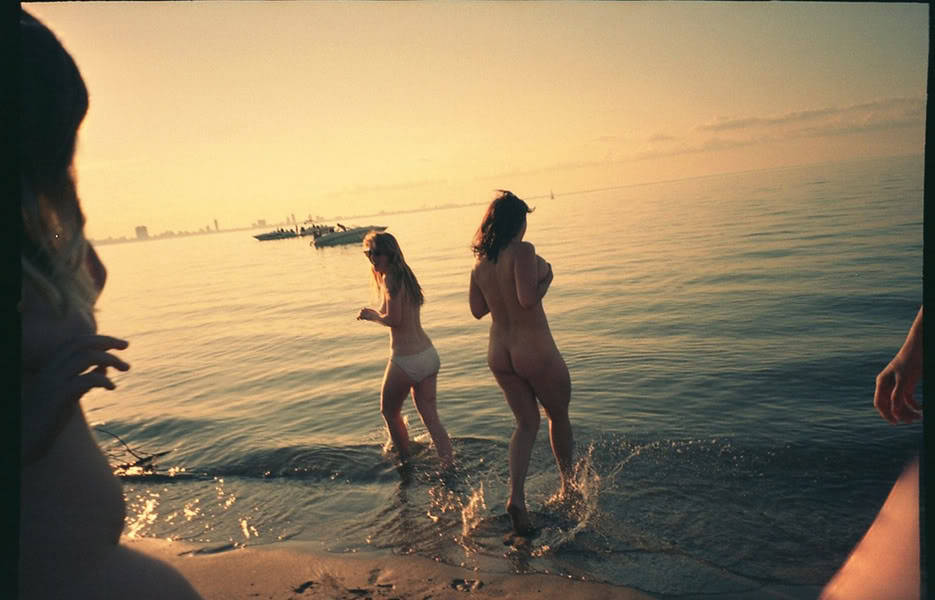
Dimitri Karakostas – Untitled (2011)
The has a great sense of motion in space and time.
For example: the woman at the left edge seems to be running parallel to the tide line, blocking the sun just enough to get that lens flare effect at the lower right corner; in turn, the flare draws attention to the hand that’s so wonderfully enters from frame right.
The running woman and the hand create a parenthesis containing the two women running into the surf–the left most who is peeling off while glancing back at the running woman at frame left while the right most woman in the white bikini bottom runs straight into the water.
I find most of Karakostas’ work underwhelming–despite his impressive sense of immediacy. Still, there’s something about his work that strikes a cord and it occurs to me that it has to do with his investiture with skate culture.
That knowledge triggers a number of ancillary realizations for me. First, it places his work within a lineage tracing its way from Ryan McGinley and Spike Jonze back through Larry Clark to Diane Arbus; second, there is the prevailing notion that there are (at least broadly) two flavors of photography: photojournalism and fine art; the former is ‘objective’, the second–‘subjective’.
I’m not sure I agree with this bifurcation. Photojournalism is only more objective in aim–but the artifice of the frame is already to have introduced notions of inclusion and exclusion; also, work that is disseminated has be prejudiced over other work for what are closer to subjective criteria. (Also, McGinley, Jonze, Clark and Arbus are–to the best of my knowledge–outsiders who are recognized and trusted in the community they prefer to document. I’m not entirely sure why there seems to be so much more trust in the art world for outside observers telling stories that aren’t their own. Karakostas is–in some ways–more in line with Nan Goldin.)
However, the main thing an awareness of the photographer as a part of skate culture is a result of spending the last six weeks interrogating my own personal approach to art making: I’ve realized what an indispensable facet of my process failure is.
It’s not a popular thing. We all want to make it seem like it’s effortless and second nature and the ideas just emerge from us like Athena springing fully formed from the head of Zeus. In reality, there’s a lot of shit that just doesn’t work–but you have to put a lot of work into that failure before you realize it doesn’t work.
(I was once told that Aimee Mann claims that for every song she releases she writes 99 songs that are awful and don’t work.)
And I think about these kids I see skateboarding from time to time in SoHo. They’ll spend hours, days and weeks repeating the same stunt–falling, picking themselves up, trying it again; you don’t learn to do a trick without at least getting a handle on all the things you can do to fuck it up and then training your body to be mindful w/r/t avoiding those mistakes. But all the failures make the minor successes all that more motivating–the eventual mastery all the more appreciated for how challenging it was to accomplish.
Show me a skater who is also an image maker and I’ll show you someone who has a ridiculously refined notion of the dynamics of motion with regard to the spatial relationships between bodies and environments. (Yes, most likely they’ll burn through an exponential amount of film–but they also will have a ridiculously good idea of what works and what doesn’t work)




[↖] Lucas Amorim – Untitled (2017); [↗] Kyotocat – Lonerism (2015); [+] Shelbie Diamond – Title unknown (201X); [↙] Nan Goldin – Kathe in the tub, Berlin (1984); [↘] Ruth Orkin – Little Fugitive (1953)
Follow the thread
Why is it that when you awake to the world of realities you nearly always feel, sometimes very vividly, that the vanished dream has carried with it some enigma which you have failed to solve?
What I am giving you is nothing that belongs to me […] It is just yourself, you running through me throwing off sparks, your eyes blazing with fear, blazing with hope, I am giving you your own fire. All I do is breathe very gently on your night embers and handfuls of stars fly out.
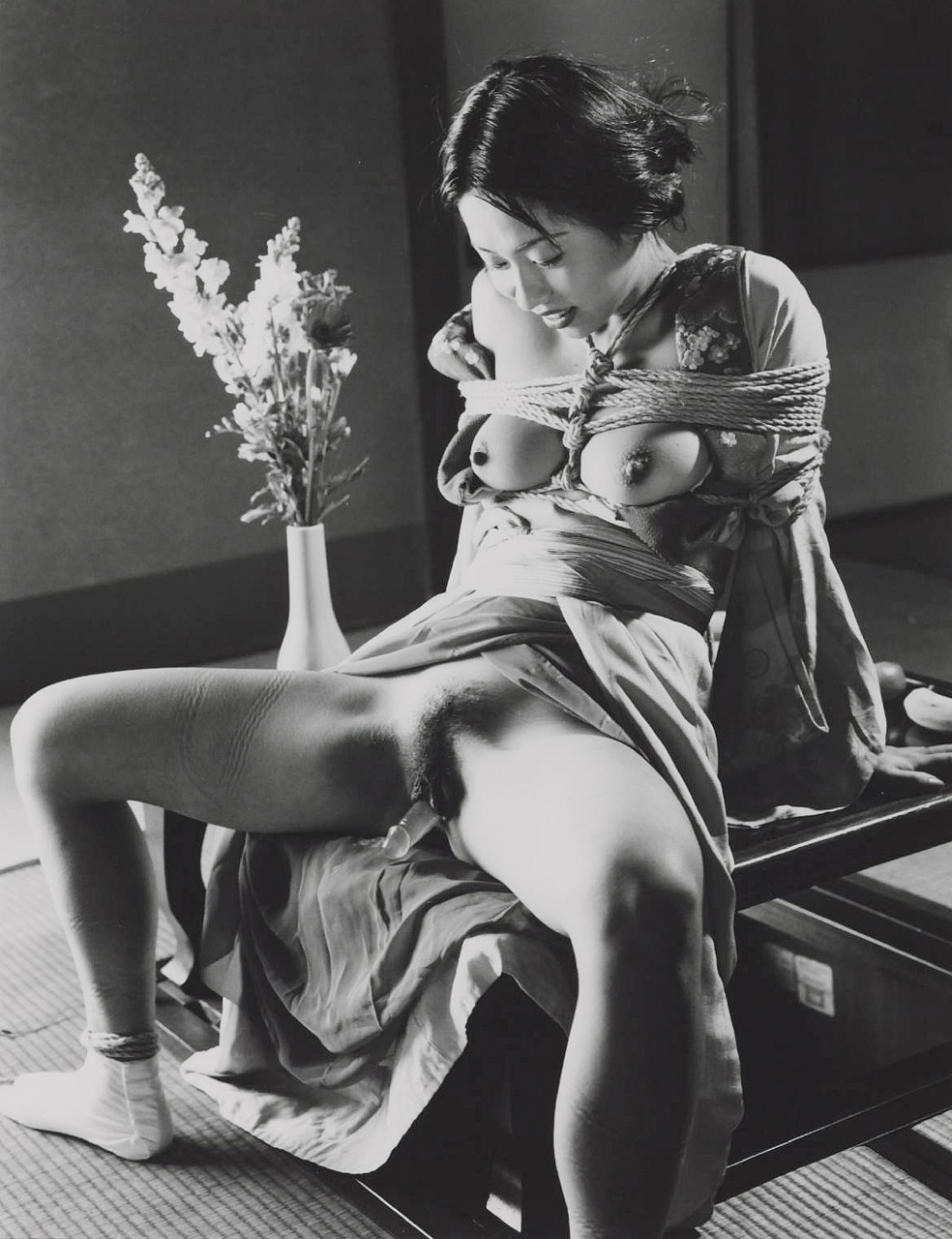
Nobuyoshi Araki – Untitled (1995)
This is almost certainly Araki referencing Hans Bellmer.
I am actually glad to see Bellmer getting some renewed attention. I’m seeing more of his work slide across my dashboard here. Also, @insideflesh did a cool photobook last year inspired by him.
I’ve also mentioned that I think Bellmer is really kind of an important figure given our current globalized socio-political shitstorm. I suggested that it might be a good exhibition notion to do a joint retrospective of his work alongside Ana Mendieta.
The plan is–knock on wood–to dedicate two weeks of posts to using this blog to stage such an exhibition. I can’t say when just yet. It’s slow going as much of the scholarship is heavily coded in Freud’s BS. But I’m about a 1/3 of the way through preliminary research on Bellmer. And then it’ll be on to Mendieta–on whom there is far less scholarly material.
Anyway–something to keep an eye out for down the line.

Source unknown – Title unknown (201X)
The idea of waiting for something makes it more exciting.
–Andy Warhol
I do not see the world at all; I invent it.


 Acetylene Eyes