
Source unknown – Title unknown (19XX)
There are no chaste minds. Minds copulate wherever they meet.
–Eric Hoffer
Source unknown – Title unknown (19XX)
There are no chaste minds. Minds copulate wherever they meet.
–Eric Hoffer
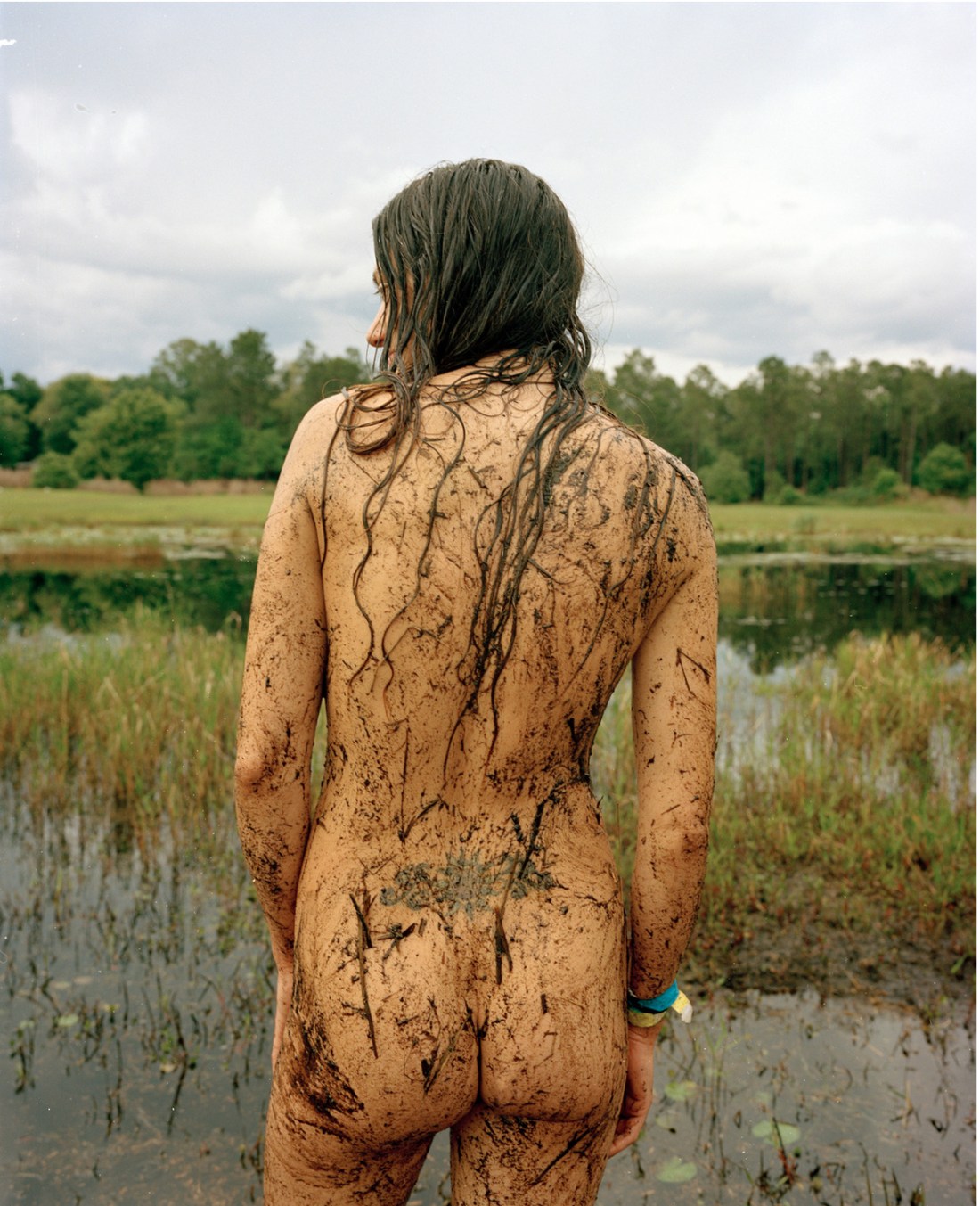
Katty Hoover – Untitled from Lake Como series (2014)
Places that hold meanings for people result in the construction of
unique ‘memory maps,’ yet many memories manifested in the landscape
leave little, if any, physical trace. A pile of water-worn cobbles on
the riverbank to mark the time and place when you first learnt to
swim–the autumn floods that year would have removed those. The tree bark
or bus shelter where we inscribed the initials of our first love–the
tree’s new growth will have erased most traces, and bus shelters are
repainted or replaced. A first pet buried in a garden, or offerings put
into the ground to commemorate a family member’s death–most are unlikely
to survive the rigours of time. […] At Malin Head in Donegal, thousands
of beach pebbles spell people’s names, signing themselves on to the
landscape through a physical act. In many cases, the names within soon
become illegible, the pebbles displaced by the feet of subsequent
visitors, or re-used for new acts of commemoration. The ways in which
people choose to mark space and commit events to memory suggests that
similar, small-scale practices in the past may also have been transient
or overwritten, with the vast majority not visible in the archaeological
record at all.–Adrian M. Chadwick & Catriona D. Gibson, from “‘Do You Remember the First Time?’ A Place through Memory, Myth, and Place,” Memory, Myth and Long-term Landscape Inhabitation, ed. Adrian M. Chadwick & Catriona D. Gibson (Oxbow Books, 2016)
[←] Salvo Rivolo – Dani (2017); [→] Virgínia Di Lauro – Title Unknown (201X)
Juxtaposition as commentary

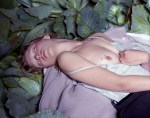
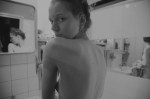
Joanna Szproch – [↖] Title unknown from Sulejow series (201X); [+] Untitled from Personal I series (2013); [↗] Patricia with mosquito, Warsaw, Poland from Sulejow series (2011); [↓] Untitled for Tissue Magazine (2012)
This is the second time Szproch has been featured here.
I’m still head over heels for that photograph. And it’s exciting to see the plethora of new work she’s posted to her portfolio.
Not all of it is too my taste. In fact I’m honestly a bit underwhelmed by the extent to which her commercial work seems to uniformly adapt a Lukasz Wierzbowski affect.
I mean there’s no disputing the quality she delivers–it’s just according to Szproch, her approach is motivated by:
a mixture of vulgarity and innocence, saturated color and dowdiness, high technology and analogue, [the photos &] images are a celebration of contrasts.
That’s an actually an astute observation. However, it raises the issue of whether or not she is perhaps losing some of the force of the work by incorporating such shouted visual trends.
I’ve culled the above images from her more personal projects. And I want to point out how when she cultivates a quieter tone, how it sharpens the ambiguity and constrasts within the work.
Let’s start with top-right image. The light is most likely from some sort of canned lighting to the right of the camera–some of the color is getting bleached out in order to provide a nice right-to-left light-to-dark grade is preserved. It doesn’t pop like the still life to the left or the luminous and surreal image on the top left.
Now consider the dates the pictures were made: Patricia with mosquito dates from 2011, Untitled from the Personal I series is more recent by 2 years and I’d wager that Title unknown from the Sulejow series is likely the most recently created of the work posted here.
It’s too easy to overlook the way that form and content interpenetrate in the quieter work. Patricia with mosquito is painterly and connected to the tradition of oil painting until you realized that all the elements are rigorously ordered around the mosquito’s presence–and the implications of that a suggestion of fecundity as an invitation to parasitism.
With the still life the compression of both highlight and shadows both makes the color seem aqueous, as if it is both radiating off the fruits and vegetables–the lushness against the blacks and greys possesses an extravagant superfluity that I can only think to describe as erotic.
In the top-rightmost picture the shape of the woman’s body, her pre-orgasmic expression and the way her dress spreads out behind her but her head hangs, while the strain of her posture–there’s no way that position doesn’t hurt to hold; all point to a dichotomy between the beauty of nature and the way that such beauty is never that far removed from something that will soil the skin if it’s touched.
But I really love the sensitivity of the B&W image the most. The way she’s choosing to ignore how she sees herself and focus her attention on the camera and the way the downy hair on her arm is all standing on end along the left edge of her arm and the way you can see the reflection of her clothes which she holds balled up protectively against her stomach–it’s a devastating indictment of the art historical male gaze that instead of supposing an equal and alternative female gaze, demonstrates how given any degree of agency the subject can by merely reacting instinctively to a scenario can upend that entire paradigm.
Tommy Cash – Surf (2017)
Everything about this is 🔥
Long time followers will be able to guess that part of what I love about this is the way it makes you think one thing in close-up and then the camera pulls back to reveal the broader context and it’s not quite what you thought it was.
And the use of color is breathtakingly uniform. (Pay attention to the woman’s color and the trim of the plate in the lateral tracking shot of everyone sitting at the table polishing silverware. Note: how this is repeated in just about every scene–including the book bags strewn throughout the bathroom.)
On top of all that: I’m super into the fact that this seems to be a prophylaxis against Wes Anderson’s hollow hipster bullshit. But, I think to leave it at that is to give too little credit. There’s some interesting work being done w/r/t expanding the notion of what camera movement telegraphs about a scene. I’m thinking here of 20th Century Women–which although hell of problematic in it’s politics, does use push ins and pull outs (not those kind, Pervy McPervington) to captivating effect.

Source unknown – Title unknown (201X)
I have so many complicated and conflicting feelings about posting shit like this. Or honestly even looking at them–it feels a bit like being stranded in the middle of a desert desperate with hunger and thirst and having an airplane fly overhead and drop menus from a fancy restaurant. I’m looking at something that will never be a part of my life.
I don’t know maybe that’s what gives this project a vitality that some of you seem to respond to: the wanting makes it seem more relevant.
In the end I’m posting this gif loop not because of what it depicts but because of the notion that maybe someday someone will see me as containing multitudes and within those multitudes are contained all three of these lovers.
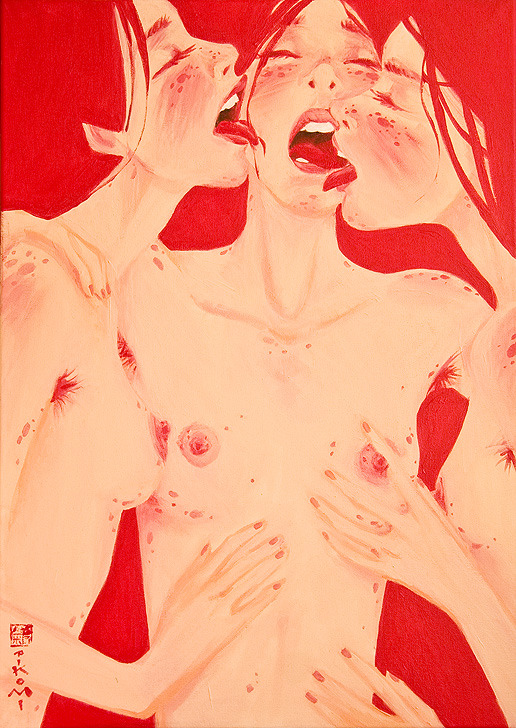
Alexander Pierschel [aka Pikomi] – Wash Myself (2010)
I have built, deep in my heart, a chapel filled with you.
—Marcel Proust, in a letter to Anatole France, from Selected
Letters: 1880-1903 (via hauntologist5000)
Julia Ducournau – Raw (2016)
I saw this in a packed theater in Brooklyn the other night and holy fucking fuck on a stick.
One of the best cinematic experiences of my life and a staggeringly audacious, incisive and just damn compelling and consummately well made meditation on the interpenetration of hunger and desire. One HELL of debut feature.
Do yourself a favor and see it on the big screen if you can. It’s a movie I am beyond jealous that I didn’t make myself. In-effing-credible.
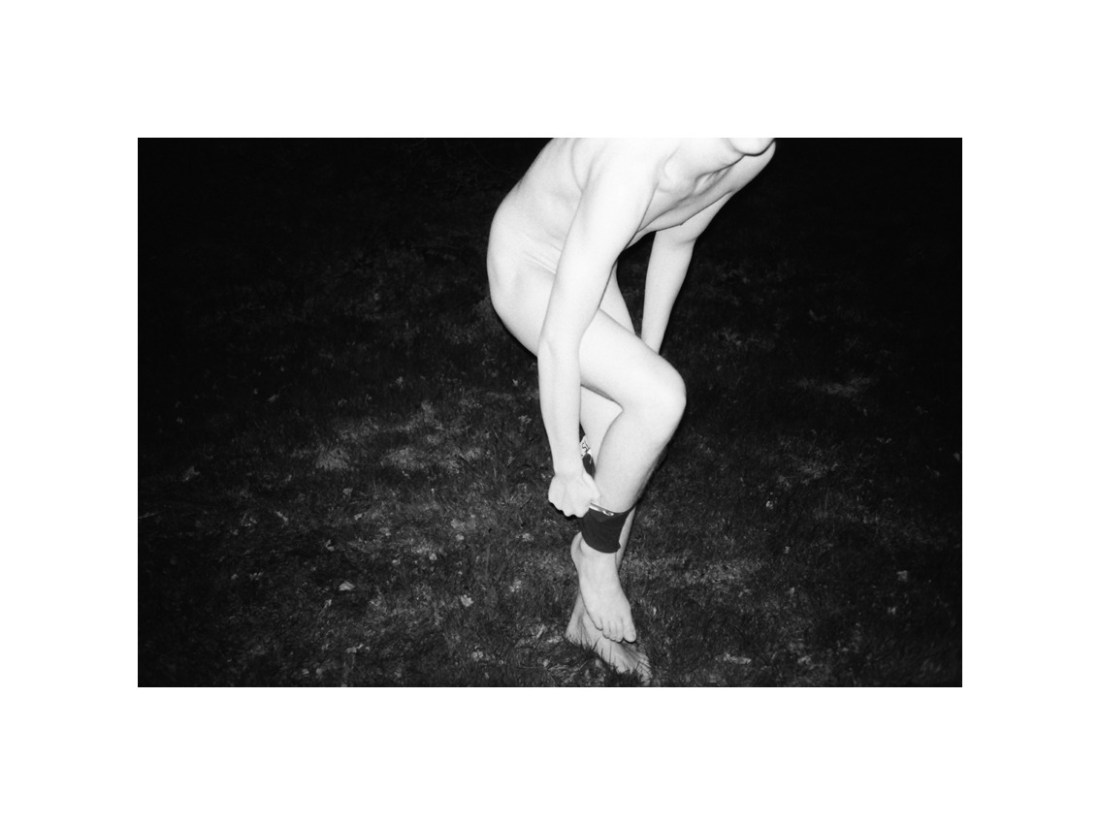
Julie van der Vaart – Untitled (2015)
A good percentage of folks reading this likelyknow that almost a month ago (at this writing) Ren Hang–one of the most ‘internet famous’ photographers–took his own life.
Now, I’m not now nor have I ever been a Ren Hang apologist. However, as–ostensibly a fellow photographer–who also suffers from fairly debilitating depression, the knowing in this case has not been exactly easy to process.
What I know of the man behind the work suggests he would vigorously disagree with my characterization of his work as ‘audacious’ and ‘brash’. It seemed very much like he was struggling to feel some sort of connection, any sort of connection (however ephemeral) to the world around him.
And on those grounds, he certainly succeeded–insofar as his photos presented a seamless stylistic imperative of casual confrontation and conceptual extremity.
My gut feeling is that history will likely not be especially kind to his work. And I would be fine with that were it not for a handful of things I think he did that were of crucial importance.
I can’t look at his work and not think of Terry Richardson’s bright strobe with the subject frozen against a milk white background. Hang unquestionably ‘wore’ it better and to more stunning/less predatory effect–harnessing the immediacy of a snapshot and anchoring it to a fine art formalism.
It’s unlikely that he intended to comment on questions of pornography vs art but there’s a way in which his work bucks the trend to which Rebecca Solnit points about how the balance between highlight and shadow is–in pornography–skewed away from the more typical human experience of sexual intimacy.
I have no way of knowing definitively but there are a handful of up-and-coming image makers that seem to have internalized the fetishized conceptualization of technique in Hang’s work and applied it exquisitely to their own work.
I’m thinking here primarily of Ao Kim Ngân [aka yatender], who for my money is one of the best upstarts actively making new work. But also van der Vaart. The hyper-bright, edging on over-exposure vibe is reminiscent of Hang–especially given his exterior, night work. However, the technique folds together seamlessly with the concept. The pose is at once confrontational and demurely modest–hiding as a sort of revelation.
Although I have objections to cutting off body parts with the frame edges and think there are far better ways to preserve anonymity without decapitation–this actually is an exception to that rule. There’s a logical consistency to the presentation here.
The point is I think Hang’s work is a long way from done with the world of fine art photography and the milieu of internet famous image making.

 Acetylene Eyes