The trouble with fiction is that it makes too much sense. Reality never makes sense.
Category: Uncategorized

Usamaru Furuya aka 古屋 兎丸 (Japanese, b. 1968, Tokyo, Japan) – Illustration from Yume Kana aka Is This A Dream? from Garden. Drawings
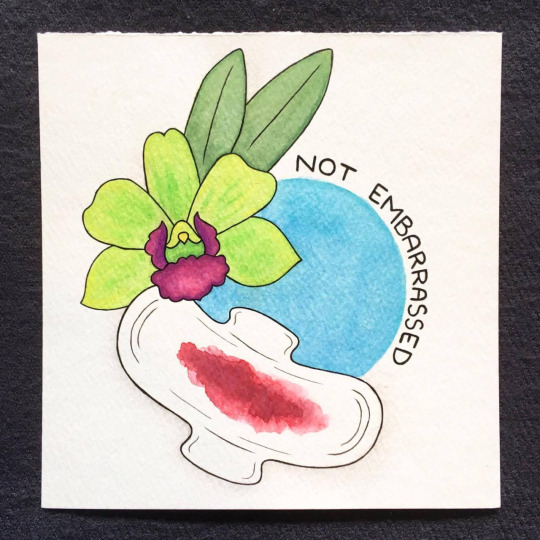
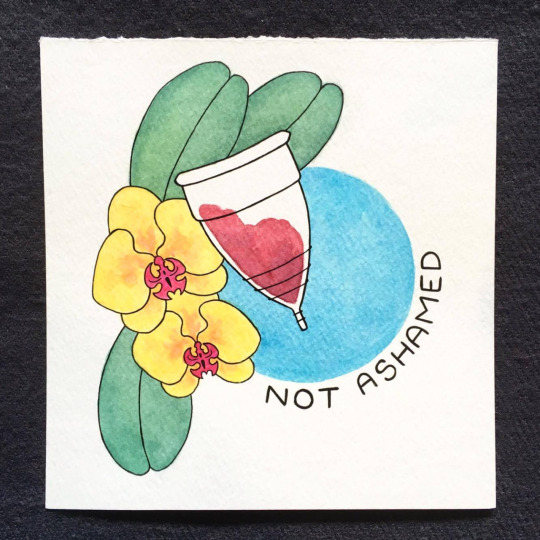
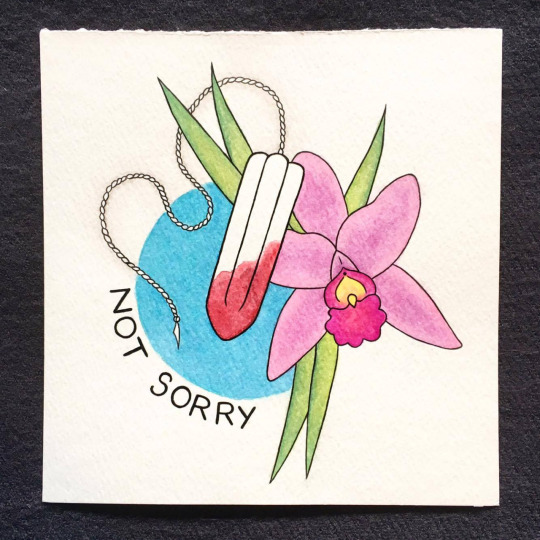
Maxine Sarah – Untitled (2016)
People who get their period do not need to be embarrassed. They do not need to be ashamed. They do not need to be sorry.
Our bodies should not be a source of shame. Or a source of stigma.
It’s time to end period shaming.
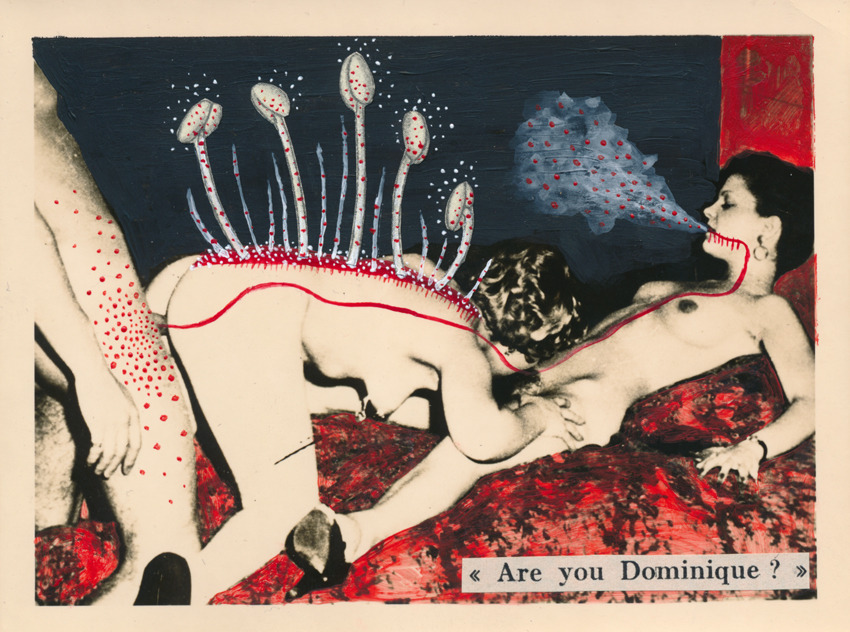
Vero / 2016
What she wants?
How can she tell you what she wants
until it blooms
in the dark beneath your hands.
Don’t be lazy,
work the earth of her.
–Peregrine (via youreyesblazeout)
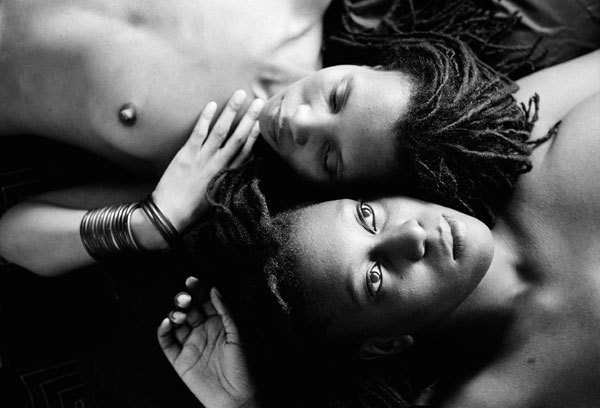
Zanele Muholi – Beloved II (2005)
I’ve pointed to Muholi’s splendid work before.
I purposely limited my commentary to factual tidbits. This was partly due to the fact that–contrary to how things may appear with my writing here–I don’t think expression is always the best response. Sometimes it’s necessary to sit and be silently present with resonate work. (If you’re a creative individual, a strong sensitivity precedes the development of vocabulary to explain in detail the way in which you respond to the work that moves you.)
The other reason is that although I am hyper-aware of pervasive (and entirely fucking justified) concerns over a lack of diversity in the arts and entertainment, I have no interest in participating in the who’s more ‘woke’, ally pissing contest that is just an elevation of gross tokenism to the status of virtue.
However, looking at this image, my brain automatically jumps to issues of representation. Specifically, like just about everyone else on Tumblr, I’m fond of the series Black Mirror.
When Season 3 was released several months back, a plurality of folks fell all over themselves telling me I had to drop everything and watch the San Junipero episode.
I resisted until I realized it was Black Mirror’s ‘gay’ episode and in the wake of the election and the subsequent spike in hate crimes, and then it seemed like the only thing that seemed like it might be worth watching.
I’m not interested in spoiling it. I’ll only say that I’ve since watched it a half a dozen times. It is every bit as good as I was led to believe. But, there’s something more bittersweet to it that I haven’t be able to put my finger on…
Looking at the image above, I realize what it is–for all the things San Junipero gets right (and trust me, it does get a lot right, a whole lot), the post-coital conversations are flat. I mean they’re shot flat, under too dim lighting. But the interactions are flat, too–I mean compare these scenes with the scenes where they are sitting outside Kelly’s beach rental and talking about their real world lives–some of the most on point dialogue in ages.
Charlie Brooker, the Black Mirror show runner, originally wrote the script to feature a hetero couple. But opted to change it–partly to be subversive (gay marriage wasn’t legal in 1987) and partly for issues of representation. And it works because it’s guided by a fundamental sense of empathy.
Yet, where it falls short, is the assumption that just because self-transcendent love looks the same no matter the race or gender of the lovers, the ways people in that sort of love reach out to each other might as well be as distinct as a thumbprint. These scenes adopt a hetero-post-coital conventional coding–which comes off as flat and lazy.
And that’s why we desperately need greater diversity in not just the characters that populate the stories we see on big and small screens alike; we need the people guiding those stories to tell their stories not according to tradition or convention but from deeply felt personal experience.
Imagine if Yorkie asking Kelly when she knew she was bisexual, had played out in a shot like Muholi’s above instead of the shot-reverse shot of the episode as it is? That would’ve been something because of separating the characters–from each other–you show them together negotiating the context that will come to be their mutual reality as a couple. Small, seemingly insignificant things like this make a world of difference. Or, to borrow advice I was given by someone much wiser than me: sweat the small stuff, the big picture’ll take care of itself.
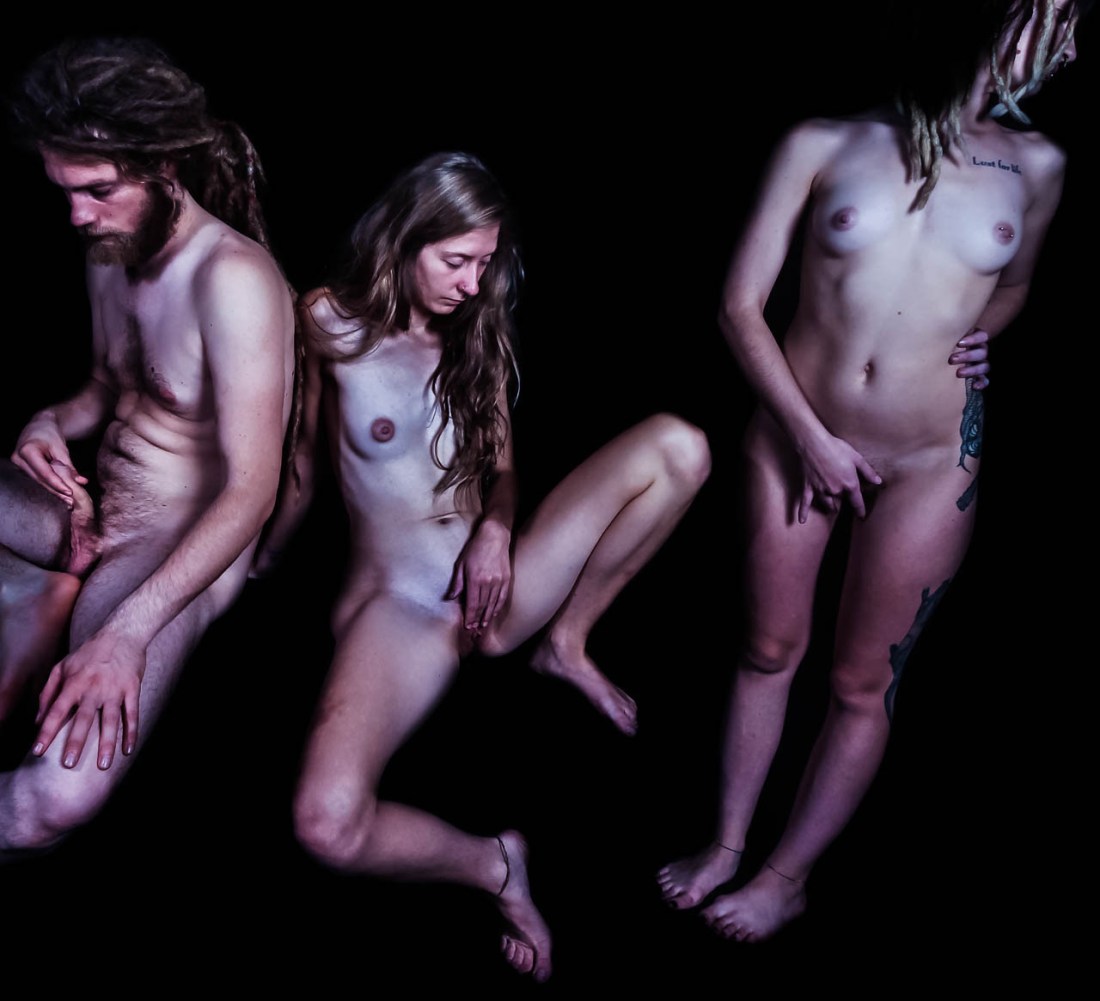
Manuel Laval – Solos (2016)
You will never be able to experience everything. So, please, do poetical justice to your soul and simply experience yourself.
—
Albert Camus, Notebooks (via fyp-philosophy)
[↑] Wayne Lazorik – Untitled (1970); [↓] Ray Bidegain – tuscany_1 (2007)
Juxtaposition as commentary
God occupies me as a shapeless hunger.
Scherezade Siobhan, The Mirror I Won’t
“Was it lust or hunger? How could I tell the difference?”
–Margaret Atwood, from Stone Mattress: Nine Wicked Tales; “Lusus Naturae,”

“Last year I abstained
this year I devour
without guilt
which is also an art“
–Margaret Atwood, excerpt from circe/mud poems



Yulia Gorodinski – Titles unknown (201X)
Remember when Flickr was the primary hotbed of up-and-coming photo and image making talent? Well, the first wave of that milieu crested in what–early to mid-2006, if memory serves.
At the time, Gorodinski was studying History and English literature in Tel Aviv. Originally of Belorussian extraction, her family immigrated to Israel when she was 12.
She joined flick in the post-first wave low-tide around 2007 and built a reputation for the sumptuous color invigorating already dynamically composed, narratively insinuative frames.
By 2010, she was a fixture of the Flickr second wave–gaining the attention of Dazed. (Virtually everything written about her after that point–leans heavily on the content of this interview.)
It’s still possible to see a good chunk of her work–a Google search turns up a lot of them. A Tumblr search adds some other exquisite samples of her work. However, as far as I can tell, Gorodinski no longer circulates this work herself. (I won’t pretend to speculate as to the motivations for this…)
It would seem that she does still make images. The above attribution links to a Tumblr that shares a few images indicative that it is the same Yulia Gorodinski. The new work is more mannered, patient and quotidian. It’s not bad–still definitely artful. But I do have to say that I miss the dizzying audacity of these self-portraits.
I think there’s an argument to be made that although she would probably wisely resist such a label, I think you could argue that the problematic term “the female gaze” could be well applied to her work.
Honestly, though beyond the fact that her work insists upon the profusion of color it present (that should not be diminished since so few photographers and image makers treat color as anything more than a binary that contributes to a better meshing between the conceptual and compositional, meditation on the nature of how color affects perception and reaction to such perception being so intrinsic to these images), there’s also something else very special about these: an imagistic totality.
As someone who is ostensibly fixated on both the tradition of staffage and cinematic/narrative photography & image making, the line between a landscape with figures in it (a more painterly affectation) and something that seems more suggestive of composition through post-production layering–i.e. shooting someone in front of a green screen–it’s not always easy to pull off work like Gorodinski’s.
That she does it at all is impressive but that she does it so flipping well, so frequently is even more awe-inducing. This is impressive stuff and while I don’t feel as strongly about her more recent work, I am curious to see what her newfound restraint would contribute if she returned to a similar approach again. I suspect it would probably be the sort of thing that would make me feel like I needed to sell all my gear and leave the photo game to the real pros.

Viki Kollerová – On Being an Apple (2011)
After dinner, the weather being warm, we went into the garden &
drank [tea] under the shade of some apple tree; only he & myself […a]mid other discourse, he told me, he was just in the same situation,
as when formerly the notion of gravitation came into his mind. Why
sh[oul]d that apple always descend perpendicularly to the ground,
thought he to himself; occasion’d by the fall of an apple, as he sat in
contemplative mood.Why sh[oul]d it not go sideways, or upwards? But constantly to the
Earth’s centre? Assuredly the reason is, that the Earth draws it. There
must be a drawing power in matter. And the sum of the drawing power in
the matter of the Earth must be in the Earth’s centre, not in any side
of the Earth.Therefore does this apple fall perpendicularly or towards the
centre? If matter thus draws matter; it must be proportion of its
quantity. Therefore the apple draws the Earth, as well as the Earth
draws the apple.–William Stukeley reports an early version of Isaac Newton’s famous falling-apple-inspires-theory-of-gravity anecdote
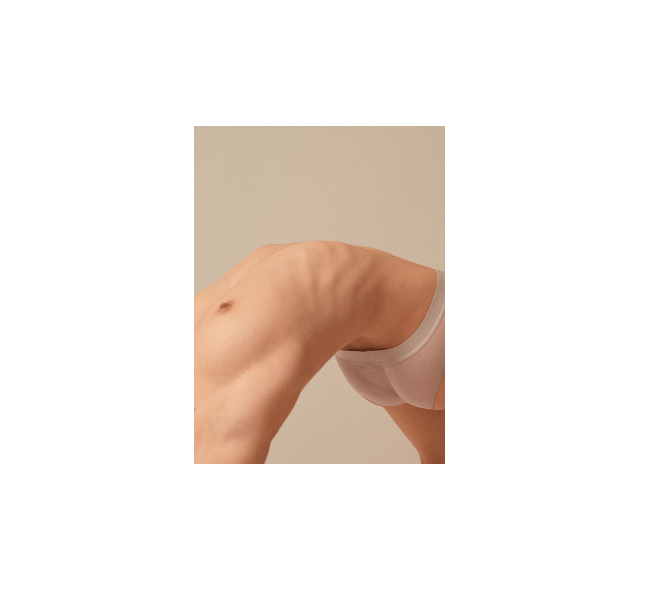
Sigurd Grünberger – Untitled (201X)
I’ve heard that you can recognize a photographer
by how they continually compose the edges of their frames,that each quarter-second decision to exclude, to define a boundary,
to say what will not be in the photographis as explicit as a thumbprint.
I watched Damien Chazelle’s Whiplash again several days ago. (If you haven’t seen it, I can’t recommend it enough–the storytelling is strong enough to compensate for the shit visuals.)
It got me thinking about how classical and jazz musicians are not unlike fine art photographers insofar as they tend to look down on those who embrace other quote-unquote genres of image making.
To perhaps push the analogy to its point of rupture: fashion photography is not unlike pop music; it’s not intended to be expansive so much a tick certain boxes at certain times in an effort to sell as many units as possible. (That’s not to say pop can’t be ‘innovative’ and/or ‘ground-breaking’, merely to point out that when such words are used–it is the exception that proves the rule.)
Historically, there are those who have pursued both pursuits. Annie Leibovitz and Helmut Newton come to mind; both of whom, incidentally, I don’t exactly hold in high esteem. (I mean Newton was a sexist pig and if you’re at all interested in how not to render those you photograph as objects instead of people, there are worse things to do than treating the man’s body of work as a cautionary tale.)
And I shouldn’t completely write off either–in both cases, there is some good to be found by attacking their respective body of works’ with a fine-toothed comb. For example: in Leibovitz’s case, I recently encountered her photo of Karen Finley in Nyack, NY in 1992 and consider it to be effortlessly immediate in a way that the rest of her work just isn’t; whereas, if you’re ever in Berlin and can somehow swing getting into the Helmut Newton museum without paying (the price of admission is too steep considering how little is on offer), Newton’s sequestered personal work (left and all the way to the back upon entering the museum) is not exactly good but it exudes a sort of stubborn melancholy that feels both more honest and astute than the rest of his work.)
However, to return to the analogy at hand: I feel there is a way that fashion photography has historically sought to sublimate the photographer’s thumbprint in favor of foisting the idea of the brand in its place. Or, a better way to put it is that fashion photography has always seemed to me to be more preoccupied with a look, with representing fashion as reliably and replicably about adhereing to strict design parameters–something not unlike what web developers would call a style sheet.
These days with scads of internet famous photographers and image makers blurring the boundaries between the genres of fashion, editorial and lifestyle, it’s nice to see folks who feel most at home in fashion actually honing their distinctive thumbprints.
This certainly applies to someone like Grünberger. (I’d place Maxime Imbert in the same category.) You can spot his work from twenty yards out without having to read any kind of plaque or search for attribution. There are elements of high-end design, sensitivity to color, sharpness, resolution, painstaking lighting design/post-processing and a focus on minimal distractions from the subject.
I think it might be time for so-called fine art folks to maybe start spending more time with fashion folks. I mean if you haven’t seen the latest Amish inspired Vogue Italy editorial by Steven Meisel, it’s maybe overly clever and precious but it’s also one of the best examples I’ve encountered of how to include both B&W and color within a single, closely circumscribed body of work.
 Acetylene Eyes