Source unknown – Title unknown (201X)
Since I met you, I’ve felt abandoned without your nearness; your nearness is all I ever dream of, the only thing.
—
Franz Kafka, The Castle (via anamorphosis-and-isolate)
Source unknown – Title unknown (201X)
Since I met you, I’ve felt abandoned without your nearness; your nearness is all I ever dream of, the only thing.
—
Franz Kafka, The Castle (via anamorphosis-and-isolate)
If you want to learn what someone fears losing, watch what they photograph.

Paul Freeman – Adam Rexx from Outback Dusk (2015)
The technique employed here is nice–the waning golden hour light kissing everything with just enough light to limit highlights to the sky and making Rexx’s body push forward from the mid-ground ever so slightly. (If pushed I’d bet that some contrast was added back in during post and the black point was massaged a little.)
The limited available light imposes a truncated depth of field–I’d say about four feet from just in front of the foreground in the lower part of the frame; and the focus starts to go soft just beyond the back right edge of the armchair. (Providing some cine-style bokeh on the bushes, fence and mountains in the distance–which further emphasizes his body.
I do have two small criticisms:
The position of his legs is a little too obviously cheating his package so as to provide maximum visibility to the camera. The angle of his head and the several profile clashes with the rest of the body language.
Still, for those small objections, there is something to say about how this is an image fixated on the sexual potentiality of the nude male body–anchoring it in this setting muddles the conceptual underpinnings somewhat, because while the emphasis is the flaccid cock, there’s the presentation of the body anchored and clearly contextualized in space. (The opposite would be something like this where the image reads as a picture of a beautiful erect dick that also happens to be connected to a boy who is essentially extraneous to the image’s purpose.)
The chair sitting angled so perfectly on the shattered bricks is, yes: overly coy. The boots and hat add some kitschy fetish viability but also contribute to a sense of barely constrained awkwardness.
This is actually one of those images where I think perhaps making the sexual potentiality more explicit might have helped the image substantially. The thing about watching people fuck either themselves/someone else or multiple other parties is that while yes, it’s a crutch to use people fucking as a narrative crutch, there’s a degree of universality to the urge to get it on that’s so strong, waiting until a more appropriate moment isn’t an option.
Like with this image, if Rexx had a trail of semen on his abs and chest, the awkward bits of the image would be diminished to the point of insignificance–because the viewer will believe that he’s masturbated and in the moments after is worried if anyone has approached and he hasn’t heard them due to his breathless ecstasy.
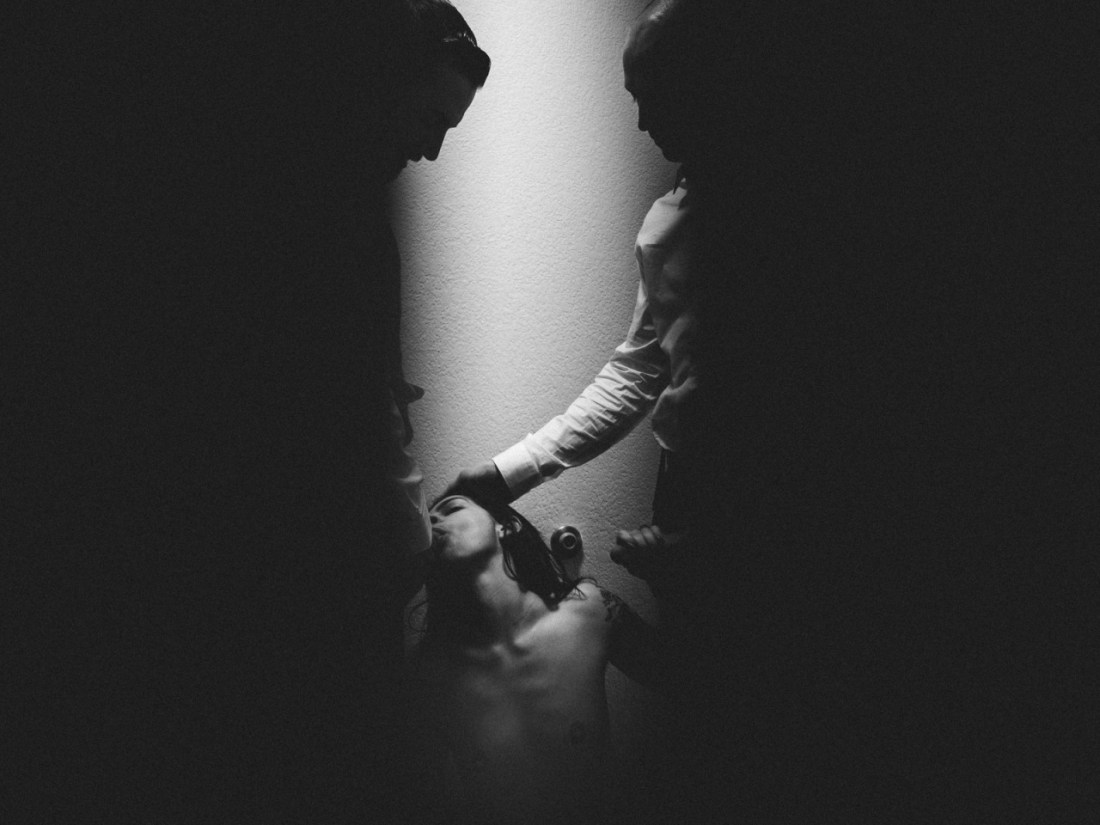
Aphro Oner – Triumvirate feat. La Dangerous (2015)
Life will break you.
Nobody can protect you from that, and living alone won’t either, for
solitude will also break you with its yearning. You have to love. You
have to feel. It is the reason you are here on earth. You are here to
risk your heart. You are here to be swallowed up. And when it happens
that you are broken, or betrayed, or left, or hurt, or death brushes
near, let yourself sit by an apple tree and listen to the apples falling
all around you in heaps, wasting their sweetness. Tell yourself you
tasted as many as you could.
—
Louise Erdrich, The Painted Drum LP (via thequotejournals)



Igor Kuprianov – [1] Nu (2016); [2 & 3] BK (2016); [4] dr (2016); [5 & 6] BK (2016)
See Also: andrés castañeda
To be clear, you’re referring to this post.
While I believe your objection is probably on the nose–I know NOTHING about ‘(that kind of) dance’, I would offer two supplemental points:
There’s that other quip about not making fun of people who mispronounce words because you can ascertain that as long as the are using the word appropriately, that they learned it through reading. I heard the quip about Rogers and Astaire as a result of being stuck in an airport that was playing Obama’s first official endorsement of HRC on all the monitors. In other words, I was attempting more to match context and tone. Lame probably, but that’s how I roll when I’m sleeping 20 hours a week, working 40 at a shit desk job and spending all the rest of my time I’m not scrambling to put posts together for this blog caring for a dear friend who is suffering from a debilitating illness.
Quips are–as you rightly point out–fundamentally flawed. It’s one of the reasons we’ll never–sadly–see peace in Palestine because we live in a world where everything has to be distilled to a 5 second sound bite and to understand the situation in the middle east requires volumes upon volumes of context most people lack. (To apply it to this example: if one knows ‘(that kind of) dance’, the quip is a nuisance; but does that make the statement invalid because it’s a nuisance to the person who actually knows what they’re talking about on the matter?) I keep thinking of another quip about how to tell King Snakes from Coral Snakes: red and yellow: kill a fellow; red and black, friend of jack.
A herpetologist can (and trust me: will) take issue with the overly simplistic and arguably misleading nature of the statement. I was taught it in sixth grade. I’ve never used it–and just like foraging for mushrooms I don’t know enough to trust my judgment. But the one point the quip reminds me of is that not all snakes are necessarily venomous. You should respect them and steer clear unless you know the difference from across the way. To me that’s not a valueless bit of knowledge.
Anyway, I’m going to link your objection in the actual post. I appreciate your taking the time to convey it.
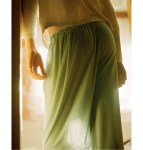

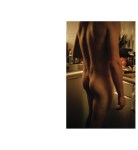

Tereza Cervenova – [↖] Untitled from See Through series (2014); [↗] Untitled from Verse series (2014); [↙] Untitled from Verse series (2014); [↘] Untitled from See Through series (2014)
One need not be especially observant to notice that the art historical depiction of women has been inherently sexist.
It’s at least partly a question of representation. History–being written by the victorious (namely: white cishet men)–necessarily reflects its authors.
Throughout history there have always been women artists. But as the quip goes: Ginger Rogers did everything Fred Astaire did except backwards and wearing heels.* In other words: women have to do twice as much equal to their male peers to be considered by history as half as meritorious.
(As the art terrorists/activists Guerrilla Girls have pointed out: representation of women artists in targeted galleries was only 10% in 1985–just shy of 30 years later, representation has doubled but still is only a paltry 20%).
But not only is the art that has been deemed canonical decidedly authored by men, it’s also produced primarily for the consumption of white, cishet men–a fact so blatantly obvious it seems innocuous.
John Berger famously called this out in his seminal Ways of Seeing, when he took the rote objectification in art history to task–which he referred to as the male gaze. (Although limited to the tradition surrounding the female nude as a subject of Art, his criticism can and should be applied broadly and often to any and all means of plastic visual representation.)
Recently, there has been a trend of young women photographers and image makers whose work has been deemed an active and sustained subversive attack on the tradition surrounding the male gaze. Typically, this is referred to–knee-jerkishly–as ‘the female gaze’.
I’m using scare quotes very specifically here. I’ve taken issue with the term in a handful of previous posts. But I am going to resist the urge to repeat myself beyond saying that I think it could apply to the work of several artists, including Cervenova.
Yet, I suspect that like the other artists where I don’t feel it’s pretentious or arrogant for the artist to deploy such a term, I’d wager that Cervenova would be hesitant to embrace the term as applicable to her own work.
That’s noble enough–but here I think it lends a certain prescience to the work. Cervenova favors vertical orientation. I don’t think accusations of #skinnyframebullshit necessarily fit. (Yes, I’m not sure I’d choose to frame things in this fashion and given a sort of familiarity with landscape vs portrait orientation and the grammar surrounding each, her work doesn’t follow ‘the rules’ but is actually surprisingly consistent. Also, I’m fond of the way self-conscious cropping figures into her framing decisions.)
But rejecting the portrait vs landscape framework hardly makes work worthy of being subversive. What’s so intriguing about Cervenova’s work is the way the frame informs or parses the space the viewer is shown. There’s something solid about it. An authoritative flourish. The act of seeing as a type of intimate sharing.
I keep coming back to that Ginger Rogers line because here are elements in Cervenova’s work that are not unlike say Paul Barbera. Both have a similar interest in using light against type. But I feel like Barbera uses the short hand developed to goose the male gaze while Cervenova pushes things in a more experiential direction–by offering the viewer glimpses of fleeting mementos in limited and contained context. I won’t argue that her work is better but she is taking risks that many established male photographers have never been forced to because they can be safe and respected.
*It’s been pointed out to me that this Astaire/Rogers quip is, at best, myopic.
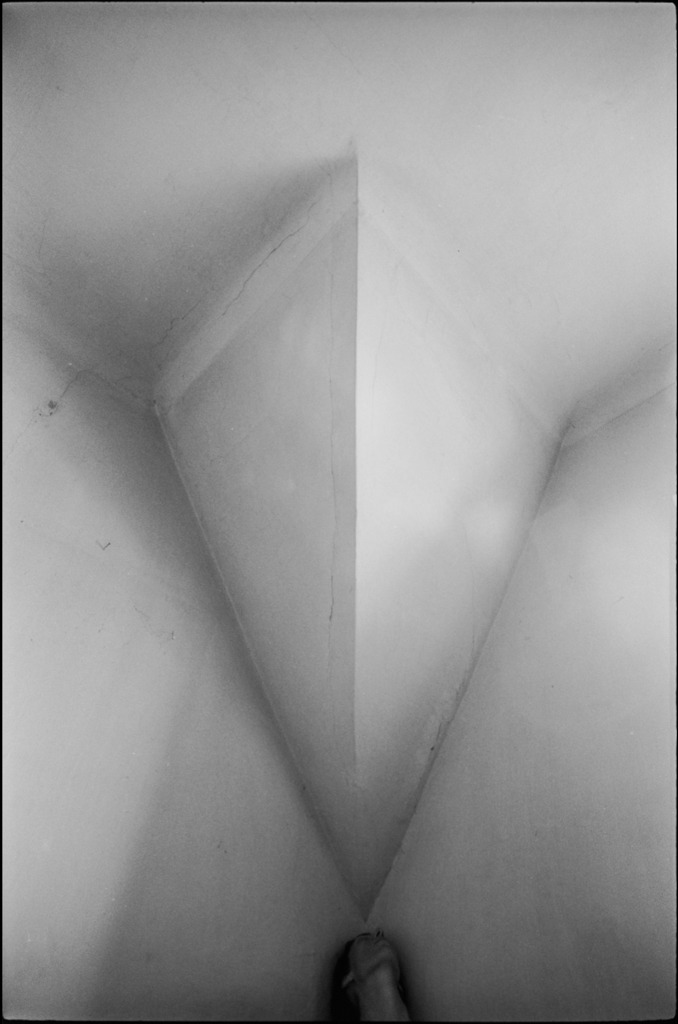
Viki Kollerová – vision (2016)
Nothing ever goes away until it teaches us what we need to know.
–Pema Chödrön
we know little, but that we must trust in what is difficult is a certainty that will never abandon us; it is good to be solitary, for solitude is difficult; that something is difficult must be one more reason for us to do it.
It is also good to love: because love is difficult.
but learning-time is always a long, secluded time, and therefore loving, for a long time ahead and far on into life, is–: solitude, a heightened and deepened kind of aloneness for the person who loves




Ryan McGinley – [↖] Pickup Truck (2013); [↗] Dakota Hair (2004)
Mike Brodie – [↙] Untitled from A Period of Juvenile Prosperity series (2009); [+] Untitled from A Period of Juvenile Prosperity series (2009); [↘] Untitled from A Period of Juvenile Prosperity (2009)
Juxtaposition as commentary
 Acetylene Eyes