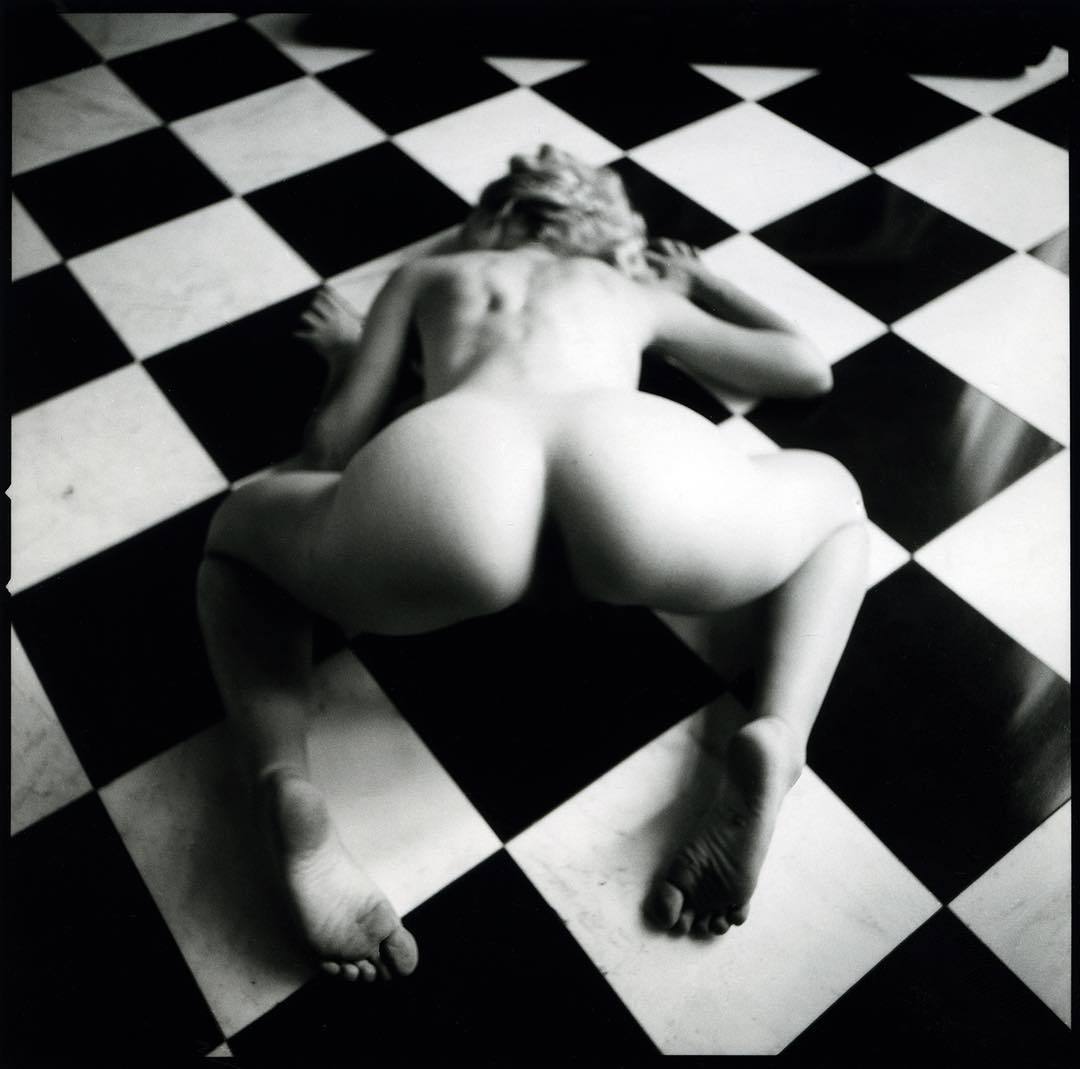
Brittney MarketPrey (2017)

I have mixed feelings about Market’s work. It’s not that I don’t appreciate her erotic preoccupations and preference for analog processes frequently wed to a permeating sense of Gothic dread; it’s more that her brand is more or less Francesca Woodman 2.0.

The above is almost certainly equal parts reference/homage to this photo of Woodman’s mixed with this one and subsequently upgraded with a contemporary edge sharpened by feminist ethos.

She even prints overly dark–just like Francesca preferred.

What I didn’t realize–until this photo prompted me to dig a little–is that Market sells traditional dark room prints and they are really impressive.

As best I can tell this is from this print–the composition is off (the camera is listing 7 or 8 degrees starboard and is bowed down towards the ground, creating a sense in conjunction with the not quite symmetrical pose that the floor is tilted slightly); however by keeping the reflection of the curtains so white that the disappear against the dodged white tiles at the right frame edge and then burning in the tiles on the bottom and right so that you can see the texture in them, there’s a sense that this is a still frame from a Lynchian nightmare.

Also, I’m fairly certain that the shadows around Shelbie’s legs have been further burned in for stylistic purposes.

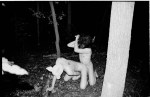
Source unknown – Title unknown (201X)

I’m pretty sure this is a digital collage. (The easiest way to tell is to look at the top of the woman who hugging the tree’s right thigh–there’s a seam between her and the background. From there you can see that the light falling on the background is coming from a different angle as the light that is falling on the couple vs the light on the woman up the tree. In the case of the background the light is lower in the sky and you would almost certainly have the sun in frame if this framing was panned so that the left frame edge started where the current right most frame edge is. The sun on the couple is higher in the sky–probably roughly early afternoon; it’s still coming from beyond frame right at least. The woman hugging the tree, however, has light that would be coming from the opposite direction as the couple.)

There’s also some small issues with scale. The woman up the tree is further back and therefore should appear smaller but she’s easily head and shoulders taller than the boy.

I’m not sure this completely works as a composition but the Photoshopping is surprisingly clever–even if it doesn’t completely work. I’d be curious to know who made this originally.

Lastly, several of my dude preferring women friends refer to guys they find hot by saying: I’d climb that like a tree.

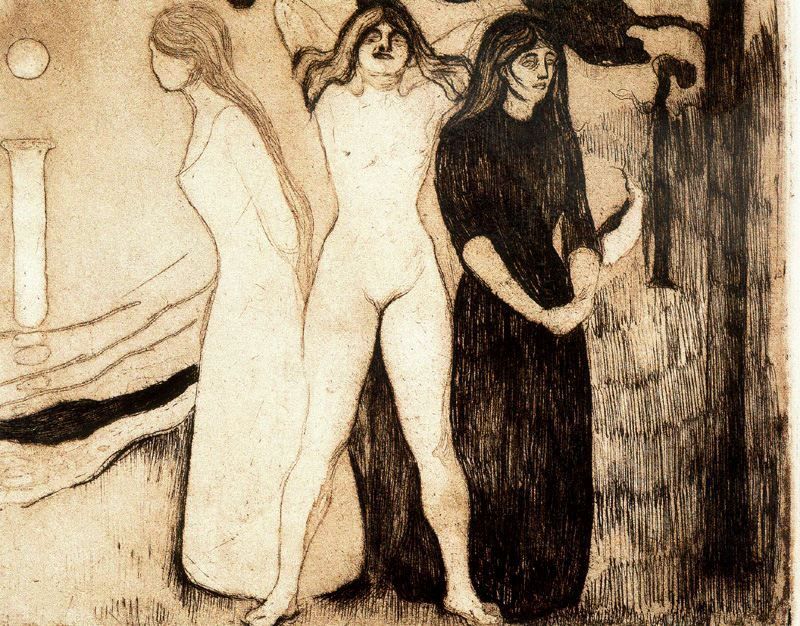
Alex Vivian – How to Ride… Bitches (2016)

This .gif is hell of cute.

…as you can probably guess, however–it’s from a video that is flagrantly sexist in much the same way alt-right fuckers will say reprehensible shit that if they are called on it they claim was “only a joke, lighten up!”

I’m not suggesting it’s possible to shrug and dismiss what’s problematic with it. But, it did occur to me that this is probably as good an illustration as anything of the way the art historical male gaze gets imprinted on virtually everything.

Let’s not overly complicate it. Just consider the interplay between Ashley and Lana’s actions in combination with their facial expressions. Lana–with stiff upper lip willfulness with a trace of smug satisfaction–grabs Ashley’s boobs. Ashley remains inert until Lana squeezes her breasts; she then grins with an expression that I can only describe as halfway between coyly flirtatious and femme fatale malicious. (It’s a look intended to refer to an expectation of a feeling which she is expected to feel but does not–this would be fairly in-line with my understanding of Baudrillard’s notion of pure simulacrum.)

From here it’s possible to get even more microscopic. It’s possible to note that Lana is the stand-in or male surrogate. That both women are only allowed to experience feelings in relationship to sexualized touching. Also, the context of riding a motorcycle is not automatically something you’d view as sexual. Yet, Lana’s actions take it there and Ashley just seems OK with it. (This is pure cisthet male fantasy.)

It did occur to me that there may be a useful object lesson here–specifically with regard to the oft touted of late notion of the female gaze. And I think just about the best example of how the so-called female gaze is different than the male gaze is to while still focusing on the expressions and actions, swap the facial expressions between Ashley and Lana.

Now, with that in mind zoom back out and consider the expression swap in the context of the same scenario. The problematics are still the same but the align differently now. If you follow that analysis to it’s conclusion, you’ll have a much better understanding of why I am so skeptical of the whole push for a ‘female gaze’ instead of efforts to rebuild the politics and paradigms related to visual representation from the ground up.

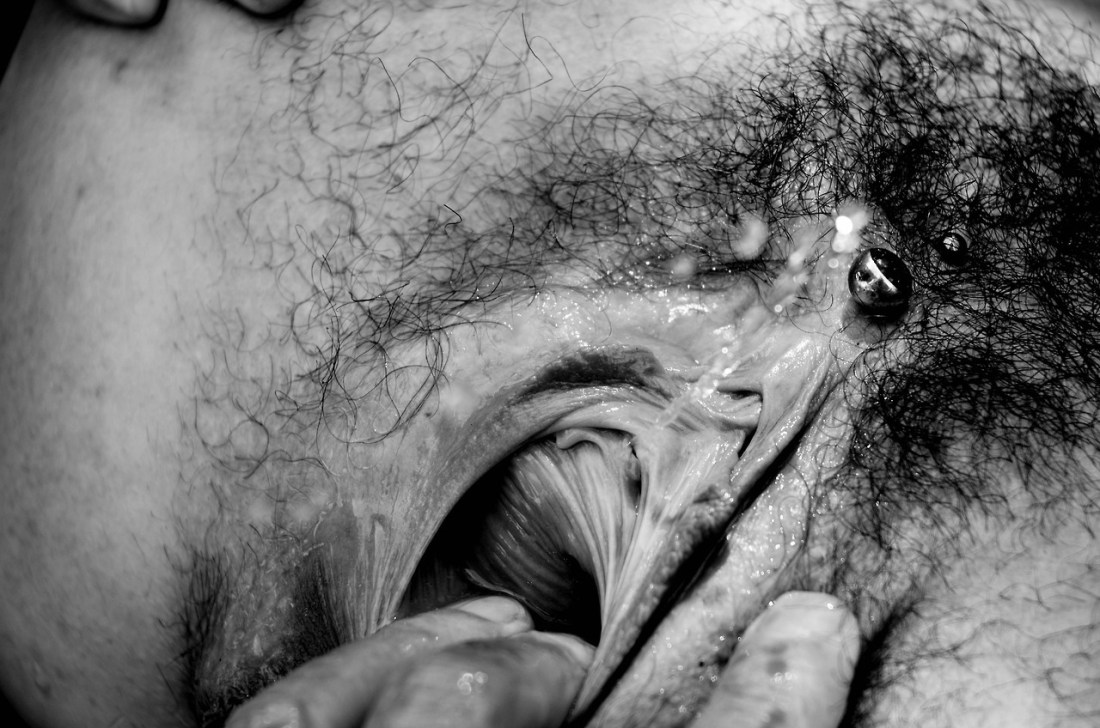
@deluckas13untitled (2017)

Do something for me: use your hand to block the two finger tips you can barely see in the upper left corner. See how this renders the picture almost cartoonish in it’s exaggeration.

Remove your hand. See how that creates a tension where the cartoonish is constrained by a sense of equal and opposite resisting pressure.

I think there’s a valuable lesson here not only about the dynamics of dramatic composition but also about creative expression. Playing to your strengths fails to have the same effect once you remove them from their inter-penetrative connection with your limitations, shortcomings and weaknesses.