
Sometimes, when I have trouble getting myself off, I do this. (I have no idea why but it almost always works.)
Alas, I’m nowhere near as pretty as her when I do.
(Note: this is an acceptable use of portrait orientation.)
Sometimes, when I have trouble getting myself off, I do this. (I have no idea why but it almost always works.)
Alas, I’m nowhere near as pretty as her when I do.
(Note: this is an acceptable use of portrait orientation.)

.
Four years or so ago I watched The Work of Mark Romanek while tripping balls.
Beyond the a vague recollection of the occurrence, I don’t remember much of it except that the dish soap genie thing near the end of Fiona Apple’s Criminal video struck me as undeniably ejaculatory.
Since then I’ve flirted with making a picture not unlike this one on a number of occasions. But this steals practically my entire playbook with the black and white, flashbulb aesthetic.
Of course, I’d want a wider frame. Granted, this would diminish the apparent force of the seminal spay. A loss more than made up for by the flash freezing the trajectory in a floating, ethereal stasis.

Normal
0
false
false
false
EN-US
X-NONE
X-NONE
/* Style Definitions */
table.MsoNormalTable
{mso-style-name:”Table Normal”;
mso-tstyle-rowband-size:0;
mso-tstyle-colband-size:0;
mso-style-noshow:yes;
mso-style-priority:99;
mso-style-parent:””;
mso-padding-alt:0in 5.4pt 0in 5.4pt;
mso-para-margin-top:0in;
mso-para-margin-right:0in;
mso-para-margin-bottom:10.0pt;
mso-para-margin-left:0in;
line-height:115%;
mso-pagination:widow-orphan;
font-size:12.0pt;
mso-bidi-font-size:11.0pt;
font-family:”Garamond”,”serif”;}
There’s a cropped, desaturated version of this with nearly 5K notes.
I’m not knocking it altogether—whoever shopped it had to have some fierce chops to dodge the area around the right eye while keeping the skin tone throughout consistent.
The edit emphasizes the young woman as a signifier of conventional beauty norms. It’s a flat casual shot.
It’s not how it reads in color, with the original framing.
This way the image is not flat. The single source of illumination is a skylight visible in the top-right corner of the frame. There is a dynamic contrast range—dark underexposed shadow areas to bright overexposed light pooling on the young woman’s skin.
And this way the awkward framing the removes the top of the young woman’s head and deletes her feet is logically explained by additional context—namely, the room is very small and the image maker is likely backed against a wall.
The original resonates with a warmth and intimacy—the antithesis of casuality.

Set fire to nests of best ideas;
Let plagues spill from your lips,
When deserts choke on wetness and wanting,
Firebirds feast on ash.
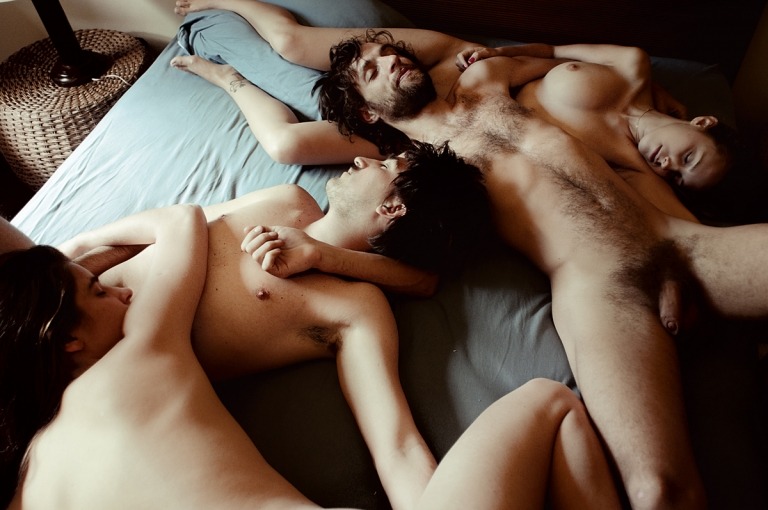
The best available estimate is that the group had experienced a total of 11 orgasms that afternoon.

Normal
0
false
false
false
EN-US
X-NONE
X-NONE
/* Style Definitions */
table.MsoNormalTable
{mso-style-name:”Table Normal”;
mso-tstyle-rowband-size:0;
mso-tstyle-colband-size:0;
mso-style-noshow:yes;
mso-style-priority:99;
mso-style-parent:””;
mso-padding-alt:0in 5.4pt 0in 5.4pt;
mso-para-margin-top:0in;
mso-para-margin-right:0in;
mso-para-margin-bottom:10.0pt;
mso-para-margin-left:0in;
line-height:115%;
mso-pagination:widow-orphan;
font-size:12.0pt;
mso-bidi-font-size:11.0pt;
font-family:”Garamond”,”serif”;}
– Untitled (Bathtub) 2005
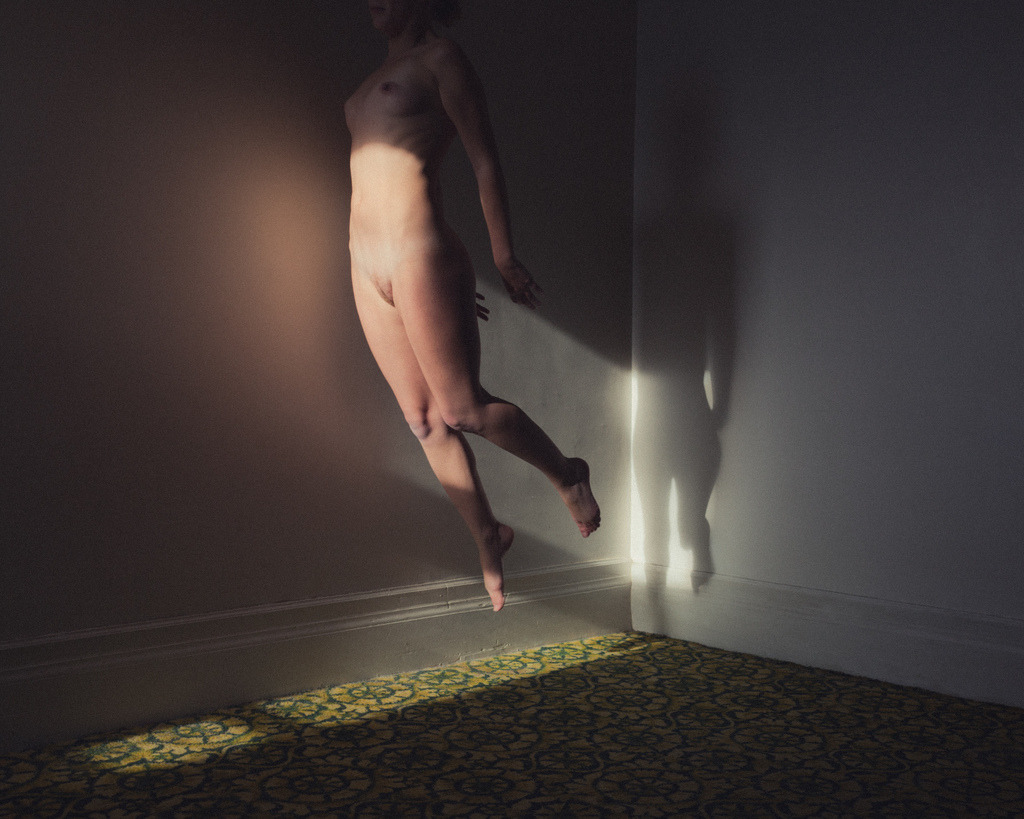
Normal
0
false
false
false
EN-US
X-NONE
X-NONE
/* Style Definitions */
table.MsoNormalTable
{mso-style-name:”Table Normal”;
mso-tstyle-rowband-size:0;
mso-tstyle-colband-size:0;
mso-style-noshow:yes;
mso-style-priority:99;
mso-style-parent:””;
mso-padding-alt:0in 5.4pt 0in 5.4pt;
mso-para-margin-top:0in;
mso-para-margin-right:0in;
mso-para-margin-bottom:10.0pt;
mso-para-margin-left:0in;
line-height:115%;
mso-pagination:widow-orphan;
font-size:12.0pt;
mso-bidi-font-size:11.0pt;
font-family:”Garamond”,”serif”;}
An image of Paillé’s—from the World Rainbow Gathering in Guatemala—slid across my dash several months ago.
Intrigued, I quickly found his candid portraits of illegal Ivorian immigrants working as “beaters” outside Paris’ Chateau D’eau Station. Despite the conceptually problematic aspects of the project—fetishizing alterity, for starters—the detail and precise exposure control floored me.
The majority of his works causes me to suffer an uncharacteristic loss for words. I am never particularly enamored with his choice of subjects and I think his use of color borders on gratuitous hyper-stylization. But damn if I don’t absolutely dig his eye.
However, the thing that makes his work so distinct is for me less a visual signature and more an attitude toward the subject. I’ve found it’s always stupid to try to say something that has already been said well better, so there’s this quote from Thich Nhat Hanh:
You must love in such a way that the person you love feels free.
To my eye, that is what makes a Benoit Paillé image so unique—he seems less concerned with taking a picture than offer his camera as a means of recording the intrinsic truth that comes from sharing a holy moment.
Normal
0
false
false
false
EN-US
X-NONE
X-NONE
/* Style Definitions */
table.MsoNormalTable
{mso-style-name:”Table Normal”;
mso-tstyle-rowband-size:0;
mso-tstyle-colband-size:0;
mso-style-noshow:yes;
mso-style-priority:99;
mso-style-parent:””;
mso-padding-alt:0in 5.4pt 0in 5.4pt;
mso-para-margin-top:0in;
mso-para-margin-right:0in;
mso-para-margin-bottom:10.0pt;
mso-para-margin-left:0in;
line-height:115%;
mso-pagination:widow-orphan;
font-size:12.0pt;
mso-bidi-font-size:11.0pt;
font-family:”Garamond”,”serif”;}
I pressed play and as the music rose on the speakers she closed her eyes to listen.
Just after the first crescendo in Rockets Fall on Rocket Falls she exploded out along her seams.
You must love Stravinsky.
I shook my head.
She reached passed me to pause the CD.
Get out! A dubious look. What have you heard?
I mentioned Fantasia.
A look of abject horror.
…
Later that same night in her living room—as Pierre Boulez led the Cleveland Symphony Orchestra through Le Sacre du Rrintemps—the aural awe ripped my soul from my body where it sat near her on the carpet and tossed me up amongst the stars.
…
Not three months later, she and I sat in the terrifying mezzanine at Carnegie Hall as Pierre Boulez explained in his heavily accented English aspects of the trickier passages of the piece before guided the London Symphony Orchestra through the piece.
The entire performance is an out of body blur in my memory—the second most amazing live music experience of my life. But I remember looking over at her and seeing her face wet with tears and in an effort to wipe them away touched my own face and realized I was crying too.
I had no idea then that this woman was my soulmate or that three years later we would become lovers.
…
I knew nothing of Pina Bausch before I saw Wim Wenders gorgeously uneven 3D biopic-umentary of her life.
And I would’ve known nothing about dance if it hadn’t been for an erstwhile friend who is a talented dancer.
I made a show at her annual performances to be supportive but was dubious about the whole dance scene. This attitude changed over time. First, I realized that dancers seem to categorically possess a precocious knack for effortlessly interrogating knotty conceptual concerns pertaining to art.
By the time my friend and I were seated with our 3D glasses on as the house lights dimmed and Pina began I had seen a lot of work I hated, several performances I enjoyed and even one or two I loved. But I was still straddling the fence with regard to whether dance was Art or not.
One of my all-time favorite quotes is Emily Dickinson’s response to the question of how she knows whether or not something is poetry:
If I read a book and it makes my whole body so cold no fire can warm me, I know that is poetry. If I feel physically as if the top of my head were taken off, I know that is poetry. These are the only ways I know it. Is there any other way?
Bausch’s vision of Le Sacre du Printemps is nothing short of poetry. The earth covered stage, the intensity of the movements always edging over into violence but remaining a beautiful idea. Short of paroxysm of pain, orgasm or death, I don’t know of anything that is so purely physical as this piece. The movements feed the music which feeds the movement. What you see is not something assembled piecemeal over more than half a century, it is something born with all the insistence of a burning moth.
There are hundreds of things I want to point out about this video—the way the dancers skin becomes sweat-muddied, the way the movement illustrates both the story and the manner of its telling and you can see hints of it in this but the degree to which the exerted breathing of the dancers becomes a part of the score stacks Goosebumps upon Goosebumps.

May5†h♥new/sense…inside(Vadim Stein)★
Normal
0
false
false
false
EN-US
X-NONE
X-NONE
/* Style Definitions */
table.MsoNormalTable
{mso-style-name:”Table Normal”;
mso-tstyle-rowband-size:0;
mso-tstyle-colband-size:0;
mso-style-noshow:yes;
mso-style-priority:99;
mso-style-parent:””;
mso-padding-alt:0in 5.4pt 0in 5.4pt;
mso-para-margin-top:0in;
mso-para-margin-right:0in;
mso-para-margin-bottom:10.0pt;
mso-para-margin-left:0in;
line-height:115%;
mso-pagination:widow-orphan;
font-size:12.0pt;
mso-bidi-font-size:11.0pt;
font-family:”Garamond”,”serif”;}
Stein’s images suffer from critical wounds, shot through and through as they are with magic bullets of commercial viability.
In that manner his work is of a kind with Edward Weston—a photographer who epitomized the craft of photography but whose work leaves me cold.
Stein almost certainly holds Weston as a formative influence. And while I do not think he’s achieved a similar level of mastery yet—despite my ambivalence toward his content, Weston’s black and white prints are un-fucking-paralleled—when he pushes the limits of his over-produced, studio lighting comfort zone, Stein makes riveting images.
What grabs me here is the shadowplay and its emphasis of the tactile—sand, granular and smooth, against fluid human skin. (The ability of images to invoke something akin to sight-for-touch synesthesia is a long-running personal preoccupation.)
Also, it makes me think it’s high time I re-watched Hiroshi Teshigahara’s The Woman in the Dunes.

This post is guest curated by azura09:
When I first looked at you in the almost-dark, scared that you would not like my breasts. That I would see disappointment on your face. But you still pushed me to touch you, my fingers climbing your back as I held you and kissed you near your mouth.
Years pass and I’m used to your hatred of overhead lighting. I expect it when you reach over to turn on the desk lamp or light a candle I don’t like the smell of, wax and apple cinnamon. I’m grateful for the way you now know my body so well it’s not necessary for you to see me, but yet you still want to look.

