
Marc Attali [p] / Jacques Delfau [t] – Les érotiques du regard (1968)
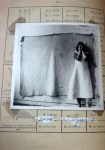
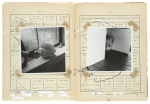
I don’t speak a lick of French–so best as I can tell: this image is from a book entitled Les érotiques du regard (trans. Erotic Gaze).
It was published in the late 60s and features Attali’s photos and Delfau’s poems.
What’s online from it looks effing exquisite!
There’s something mysterious about this photo. Has she removed her own undergarment to holding it up like a flag? Does it instead belong to a lover? Is she holding it up to the light the better to see it? The text–again I do not know French–but Google translate seems to suggest something like “dedicated to the unfaithful” as the meaning. (EDIT #1: I’ve been informed by my favorite native French speaker that it means literally: “[v]owed to an unfaithful role” or maybe something like “[d]oomed to be unfaithful”. EDIT #2: After further contextual investigation it seems it means “relegated [as if by societal perception] to be unfaithful”)
…
Vermeer may be my all-time favorite artist. That’s because many of his works feature what I call a ‘story seed’.
Much the way an acorn contains the oak–a story seed is a single static frame given which the viewer can interpolate much if not all of the events leading up to the moment rendered as well as some notion of what follows given the scene as presented.
It is unlikely that Vermeer ever intended his paintings to bear titles. But what’s interesting to me is that frequently the titles that have come to be historically attached to his work tend to describe as opposed to definitively encapsulate.
…
One of the many things Joel Sternfeld is up to in his On This Site series is majorly fucking with the conception of the relationship between photographs and their accompanying titles.
With the project, he pairs self-consciously mannered fine art photographs bearing descriptive titles with additional text explaining the broader historical context which motivated him to make the picture–in this case: incidents of stunning violence.
…
I object to artist’s who hang titles on their work as an attempt to activate a perceived narrative that might otherwise be missed by the viewer. Worse though are the scores of folks who pretentiously intellectualize titles as a way to add a sense of lofty intellectual ambition to straightforward work.
A good title serves as something closer to an ergonomic handle never–and yes, at times knowing a handle is a handle can be instructive if you are questioning how to carry something. But as a rule, if you title your photographs: your title should not function as a instruction manual or explanatory dissertation.
If that’s how you employ titles then you might be better served pursuing something more in keeping with the artists’ books tact of Les érotiques du regard–in that way you’ll have room for didactics instead of bragging about how oh so super smart you are.





 Acetylene Eyes