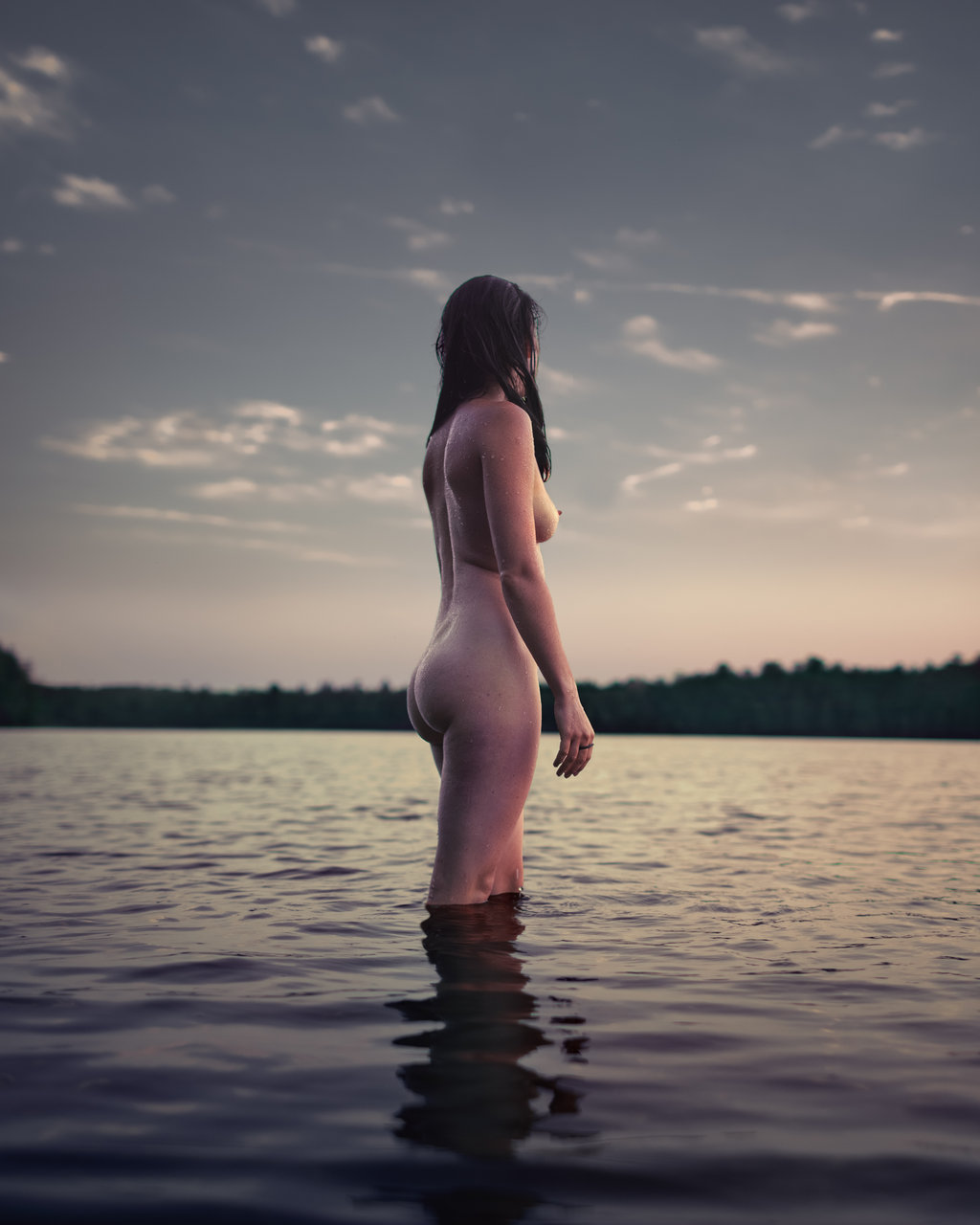
Benoit PailleRainbow Family member 39 (2011)

I can’t think of a contemporary image maker who casts a wider net than Paille.

In the last five years, he’s explored Crewdson-esque quasi-narrative, made a bunch of stuff with strobes mounted on drones, used a video game as a point of departure for landscape work, created realistic scenes via masterful Photoshop manipulation and made portraits of business owners in and around Paris.

Not all of it works. Yet, what’s surprising is how much of it does. And usually what makes that which works do so is a direct result of Paille’s fascination with surreal, psychedelia-inflected lighting.

The above is wonderful because of the subtle and dynamic gradation of skin-tone–red, purple, pink and peach tones that present with something like an inversion of the sky. (I’m saying it poorly–but think of the sky as if it were a positive and the woman as if she were a negative placed onto a positive field.)

The slight cant of the horizon and the way her reflected shadow goes completely black in the water all work together for an arresting, incisive image.

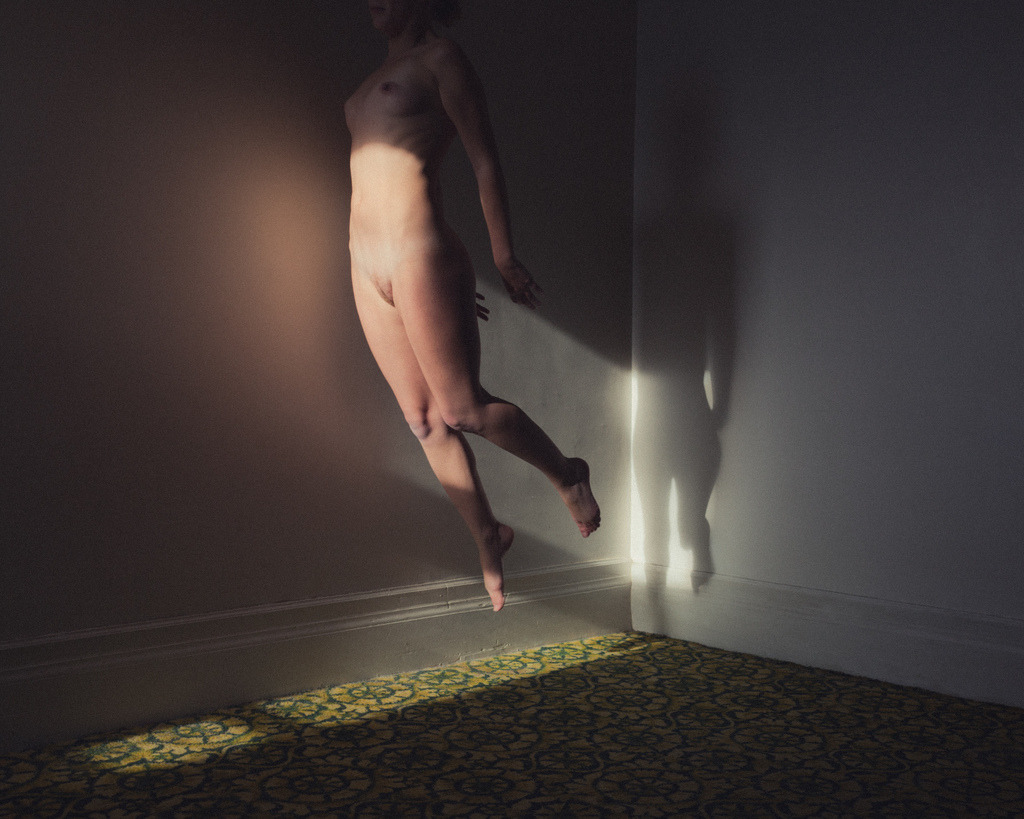
scherbius:

constructed/deconstructed

model Cam Damage

If you aren’t following Cam,  you’re doing Tumblr wrong. Her work is singular, distinctive and almost without exception is of the highest quality.

The above (shot by Zeitgeist Photography) is hand’s down my favorite image of hers. Each panel functions in and of itself so well that even divorced from the others, it would retain its dynamism.

Additionally, breaking the image out in this fashion works more or less like showing your work which solving an equation; the choices the went into constructing them image are implicated in how the image is seen.

It’s damn engaging. And not to detract from it but I would be remiss were I to overlook the obvious parallels with Benoit Paille’s recent work–specifically: Visions/Hyper-reality/suburb as well as the loading docks backdrop.

Paille uses a staggering number of manipulations. (Here’s a glimpse at his process.) For all the fuss, these manipulations only change the images insofar as clarifying the impetus for creating them–highlighting matters of shape, line and form designed to nudge viewers toward noticing how their eyes scan an image.

syntheticpubes:

by Benoit Paillé

Normal
0

false
false
false

EN-US
X-NONE
X-NONE

/* Style Definitions */
table.MsoNormalTable
{mso-style-name:”Table Normal”;
mso-tstyle-rowband-size:0;
mso-tstyle-colband-size:0;
mso-style-noshow:yes;
mso-style-priority:99;
mso-style-parent:””;
mso-padding-alt:0in 5.4pt 0in 5.4pt;
mso-para-margin-top:0in;
mso-para-margin-right:0in;
mso-para-margin-bottom:10.0pt;
mso-para-margin-left:0in;
line-height:115%;
mso-pagination:widow-orphan;
font-size:12.0pt;
mso-bidi-font-size:11.0pt;
font-family:”Garamond”,”serif”;}

An image of Paillé’s—from the World Rainbow Gathering in Guatemala—slid across my dash several months ago.

Intrigued, I quickly found his candid portraits of illegal Ivorian immigrants working as “beaters” outside Paris’ Chateau D’eau Station. Despite the conceptually problematic aspects of the project—fetishizing alterity, for starters—the detail and precise exposure control floored me.

The majority of his works causes me to suffer an uncharacteristic loss for words. I am never particularly enamored with his choice of subjects and I think his use of color borders on gratuitous hyper-stylization. But damn if I don’t absolutely dig his eye.

However, the thing that makes his work so distinct is for me less a visual signature and more an attitude toward the subject. I’ve found it’s always stupid to try to say something that has already been said well better, so there’s this quote from Thich Nhat Hanh:

            You must love in such a way that the person you love feels free.

To my eye, that is what makes a Benoit Paillé image so unique—he seems less concerned with taking a picture than offer his camera as a means of recording the intrinsic truth that comes from sharing a holy moment.