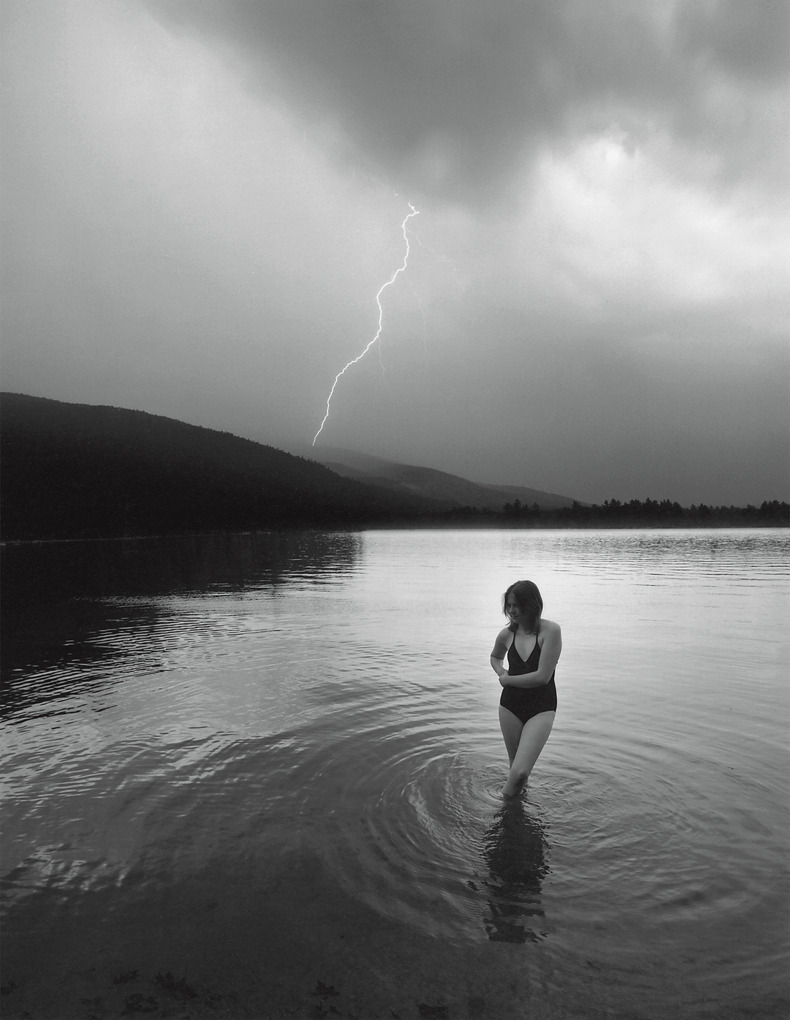
Tommy Nease – Celest (2015)

Speaking of music, this reminds me of the cover art for Body Void’s I Live Inside a Burning House–which is so thoroughly incredible that if it were already September (and there wasn’t a Lingua Ignota album arriving in two weeks), it would be my preemptive pick for metal AOTY.

While we’re on the subject, here’s some other 2018 releases I’ve been obsessively shoving into my ear holes: Ilsa’s Corpse Fortress, LLNN’s Deads, Dark Buddha Rising’s II, Yob’s Our Raw Heart, Thou’s Inconsolable and (duh!) Sleep’s The Sciences.

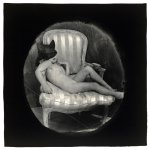
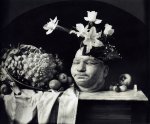
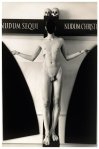
Joel-Peter Witkin – [↑] Poussin in Hell (1999); [←] Anna Akmatova (1998); [+] Nude with a Mask, LA (1988); [→] Still Life, Marseilles (1992) [↙] Glassman (1994); [↘] Naked Follow the Naked Christ, NYC (2006); [↓] Arm Fuck, NYC (1982)

I was in my final year as an undergraduate in an advanced philosophy course when I made a terrible mistake. I used the word ‘tautology’ in the context of something that was axiomatic instead of something that was redundant. Folks looked at me strangely and finally another classmate asked rhetorically whether or not I was aware that I had clearly no idea what a tautology was.

Joel-Peter Witkin is similar. For whatever reason: I’ve always associated him with Jerry Uelsmann’s seamless multiple negative fantasy landscapes.

But Witkin doesn’t really have anything in common with Uelsmann. He works with a single frame–frequently scratching the emulsion, obscuring his negatives with tissue paper when printing, defacing the film and smearing chemicals and lord knows what all else everywhere. He’s a bit like Bosch with a camera. He has a ridiculous familiarity with art history. (The proper way to introduce his work to me would’ve been to say: you know how much you love Mark Romanek’s work on // | /’s Closer video? Well, Romanek stole whole cloth, half of the visuals in that video from Witkin.)

Once I realized my mistake I dug into his work. There’s a lot of fine lines in his work–not just scratched into the negatives but conceptually. He’s a devout Catholic; also: a left-of-center Democrat. There’s a lot going on in the majority of his frames. Personally, I think that 65% of his stuff is overwrought to the point of sensory overload. When it works it’s unrivaled–a la Poussin in Hell. Mostly I prefer his less busy, more balanced compositions.

35% of his work is either too masterful or too audacious to ignore. (I’m not exactly on board with his politics and he’s not done a very good job of being sensitive to the marginalized communities he likes to depict.) And really there’s a lot of shit with his work that is not easily defensible. He’s borrowed Rhesus monkeys from animal testing labs to feature in questionable contexts within his work. (One of his most notorious photos straight up implies bestiality.)

Feeling stifled by the rules in the US against such thing, he spent time in Mexico during the early 90s photographing corpses. His exquisite Glassman was the pinnacle of that work. (I read this story before I ever say the photo, so I was never even a little put off by the work. I just think it’s brilliant.)

He’s certainly not the first artist to fixate upon cadavers. da Vinci gained a great deal of his anatomical acumen by dissecting human corpses. Then there’s Stan Brakhage’s The Act of Seeing with One’s Own Eyes–which has always struck me as antipathic through and through. As well as the work Sally Mann did on her Body Farm series.

There are oodles of problematics and objections that can be pointed at Witkin’s work. I think a lot of that has been overlooked because the work has been seen as too irrevocably unpleasant. (A lot of the criticism of his work during the late 80s and early 90s involved objections along the lines that Art is meant to instruct and edify, whereas Witkin’s work vacillates between fomenting revulsion and focusing on visions of disquiet, alienation and brutality.

Perhaps he was merely 25 years ahead of the curve because this stuff feels of a piece with a lot of edgy, emerging internet art. I’m really sort of hoping this post will take off–in spite of my heavy handed prose.

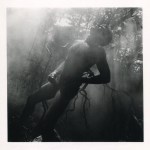
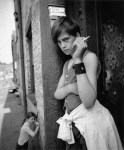
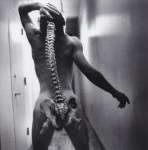
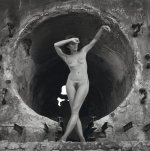
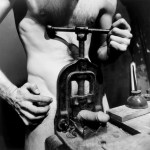
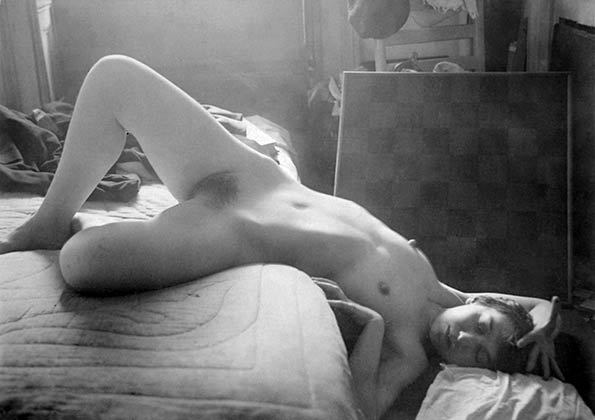
Arthur Tress – [↖] Young Man in Burning Forest (1995); [↑] Bride and Groom, New York (1971) [↗] Boy with Cigarette, Albany, NY (1970); [←] Spinal Tap, New York, NY (1996); [] Twinka At Arles, France (1985); [→] Teenager Drinking on Telephone Pole, Bronx, NY (1969); [↙] Sex with Vice (1977); [↓] Untitled (197X); [↘] Male Nude (1970)

In ritual, the world as lived and the world as imagined…
turns out to be the same world.
C. Geertz

Douglas D. PrinceAdel and the Lightning from Multi-Negative Silver Prints series (1972)

I’ve featured a .gif made from Prince’s photos of Francesca Woodman in her studio on here several years ago. (At the time, I did not know that it was his work.)

The photo above is from a series produced by way of compositing multiple frames into a single, seamless print–not unlike the M.O. of Jerry Uelsmann.

However, where Uelsmann works in a vein to create an immersive sci-fi/fantasy surreal vision, Prince is much more interested in creating work that is surreal only in it’s clarity, in it’s this-could-be-something-that-happened-in-the-world-under-exactly-these-circumstances-except-those-circumstances-weren’t-ready-to-hand-so-the-liberty-was-taken-of-creating-the-envisioned-scenario-via-photomontage. (In that way, Prince is actually closer to Minkkinen than Uelsmann.)

Also, there are at least two other famous photographs that seem to refer back to Prince’s multiple negative series. The lightning in the above is more than a little reminiscent of this photo by Mark Steinmetz. Also, another of the photos in the multiple negative series seems like a harbinger for Jeff Wall‘s The Flooded Grave.

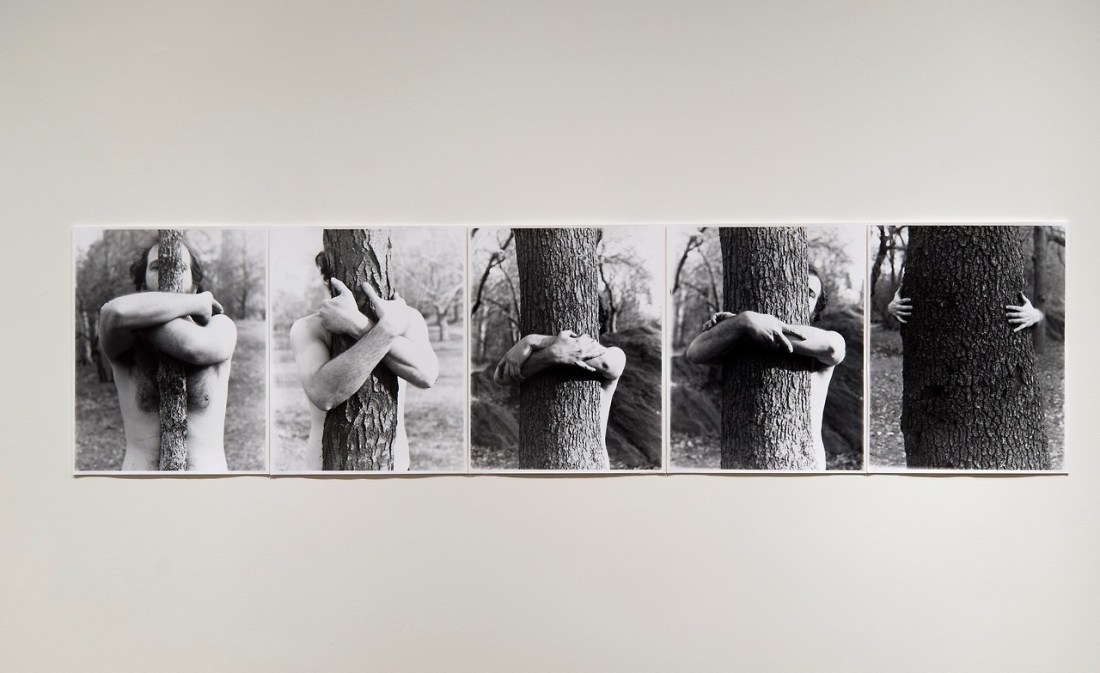
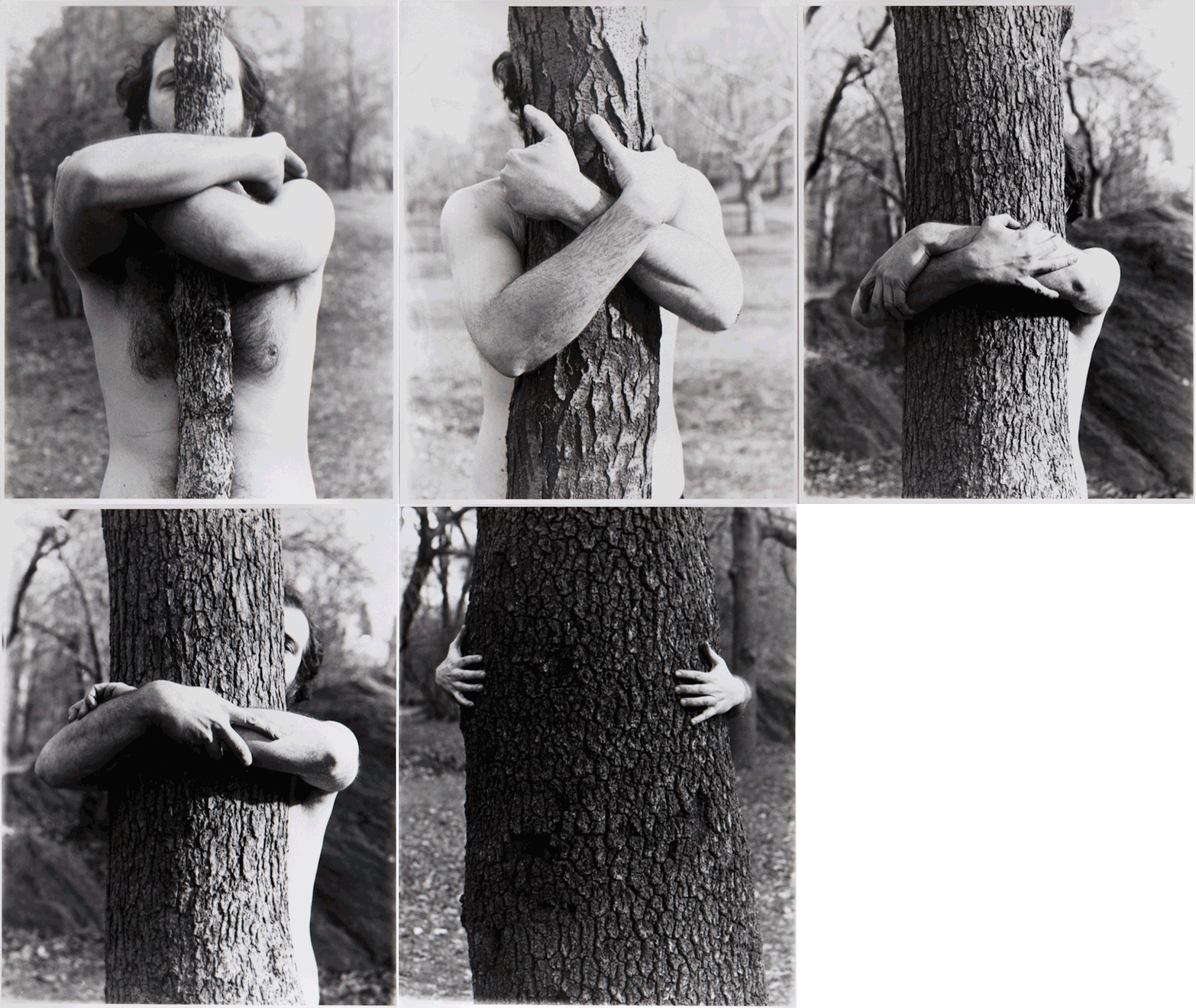
Alan SonfistMyself Becoming One with the Tree (1969)

Me (to myself): this sequence is naturally predisposed to a .gif format.

Myself (to me): you know how to make a a .gif, you lazy ass hussy.

I can’t say the idea of making photo sequences into .gifs was is original. I stole it from this post featuring a .gif of Duane Michals’ 1969 The Human Condition.

But I do sort of take issue with that post because although culture dictates that the .gif is how we are most accustomed to processing photo sequences, the sequences were not originally contextualized as animation. Thus while this is definitely a good idea to get people into work they might not otherwise encounter, you really absolutely must be honest about the intervention upon the work, IMO.

Feliz PalomaAngyne, Toronto (2007)

Outside of a high school band recital or symphony performance, a French horn is not a commonplace object.

It’s certainly not something you expect to see ostensibly being tooted by a young woman standing nude on her balcony framed against backdrop innervated with faux brutalist high rises and an ocean of murky cloud cover.

The angle of the balcony ledge appears higher on the left than the right. (I do not think this is due to the camera not being level–a similar if not far less successful version of this scenery can be viewed here; it appears as if Angyne has been cut out of another photo and then super imposed over the scenery, honestly; I have no idea why that image is featured in the portfolio while this one is excluded. Anyway, note that in the other photo the balcony ledge is equally askew.)

Strangely the tilt counter-intuitively contributes to the photo. You’d expect your eye to slide from left to right but the magnificence of the sky as well as the hint of the building you can see in the distance just above the rightmost edge of the balcony ledge strangely balances the composition.

Initially, I thought that perhaps there should be some sort of fill light to bring Angyne out of the shadows a little bit. However, on second thought I think that all that needs to have shifted for this to work 120% as is, would be for the horn to be positioned slightly higher so that the shape  of the horn is further emphasized against the backdrop.

Ellen von UnwerthPeaches, Rouilly le Bas (2002)

Generally, I think of Unwerth in terms similar to Miley Cyrus: I’m not a fan; I have a visceral distaste for both her and her work–but goddamn it if I don’t hear Wrecking Ball every other time I’m in a bodega or an airport bar and that effing hook comes on and becomes lodged in my brain for days afterward.

Double Trouble, New York (2002) is Unwerth’s Wrecking Ball–I don’t think it’s an especially great photograph but there’s something about it’s joyful immediacy that I find difficult to shake.

Peaches, Rouilly le Bas has me shook, tho.

There’s not much in the way of mid-tones–everything is either highlight, highlight with minimal detail, shadow with minimal detail, shadow. This functions as a diminution of the frilly femme frocks and makes it less fashion photography and something closer in aesthetic to mid-century reportage.

I can’t say I’m especially fond of the way the horizontals of the roof/gutter line in the background and the retaining wall upon which they are seated. Yet, it appears that the retaining wall was not perfectly parallel with the roof/gutter line. (And even if it were framing it symmetrically would have flattened the scene.

On second thought, ‘flattened’ may not be the best way to put it. It’s not as obvious as what’s happening with the models’ legs but note also how their posture changes from left to right: upright and leaning towards frame left, more slouchy and leaning (slightly) towards frame right and then leaning right to the point where the model’s head is sideways but her posture despite the slight right lean is close to upright. All this balanced again the frame’s cant and counter balanced against the poses which is then counter balanced against the roof/gutter line. That’s some masterful visual calculus, honestly.

I read up on Unwerth and turns out she’s a former fashion model who became a fashion photographer and is now mostly focused on concerns regarding the politics of visual depiction and femme eroticism. (Here’s a case where the term female gaze is probably not pretentious/preposterous in application.)

~ ~ ~

My initial reading of this was a variation on the see now evil, hear no evil, speak no evil trope. Except it’s more of a spectrum: modest and abstaining from eating the fruit to being coyly aware of being see but pretending not to notice while eating a peach to being ‘immodest’ while aware of being watched (and acknowledging the voyeurism by making eye contact with the viewer) while transforming peach eating into an undertaking shoot through with a nearly seductive impetus.

Goldilocks and the Three Bears is probably the better corollary, honestly. It’s not perfect—Goldilocks doesn’t move from one extreme to another, she tries both extremes and then settles on the inbetween option. (But I do feel that stumbling block just means that just right doesn’t have to be in between extremes, it can just exceed the customary boundaries of what is considered the usual furthest extremes of the spectrum.

Strangely, this got me thinking about the pattern of threes and fours in fairy tales. (I was reading something several months back that included several non-European fairy tales and I was surprised that events transpired in sets of fours. I made a mental note to look into threes vs fours–unfortunately I’m a stoner and I didn’t write it down, so, uh, yeah… it slipped my mind.)

But I looked into it and it seems that sets of threes are usually associated with predominantly Xtian cultures–the bible being full of threes: the trinity, days Jonah was in the belly of the Whale, # of times Peter denies Jesus and days Jesus lay in his tomb.

It seems that cultures favoring sets of four were much more in-line with paganism and their emphasis on fours may likely derive from notions of the four elements (earth, water, wind & fire), the seasons and/or the four cardinal directions.

Both The Bible and fairy tales (think Snow White) place an emphasis on sevens, as well. Conceptually, I think it’s interesting that theist traditions (predominantly 3s) and pantheist traditions (predominantly 4s), taken together allow for a balance hinged on the sum of 7 between them.

(I just realized while right this that most western music is based off divisions of 3 or divisions of 4. Oh the endless audacity of Pink Floyd’s Money.)

There’s also the wisdom that from the standpoint of visual composition, odd numbered sets of subjects are preferable to even ones. And three is kind of especially wonderful because as anyone with a fair amount of freckles knows… any three non-linear points when the three points are connected by one line, it forms a triangle.

It may seem that I’ve gone entirely off the rails with these conjectures but I’ve ended up here rather purposefully: by and large photographs and images all have frames consisting of four edges.

I’m not sure whether or not Unwerth was aware of any of these things that it’s possible to read into this photograph. Probably not. (I know from folks who have responded to my work that frequently the work conveys things I was wrestling with when I made it but didn’t necessarily see as relating to the work.) And I still think of her work as analogous with pop music. But not all pop music is intrinsically shabby because it’s popular. So I think I’m gonna start thinking of Unwerth less like Wrecking Ball and more like Fight Song–which I like enough to not even need to qualify it as a guilty pleasure.)

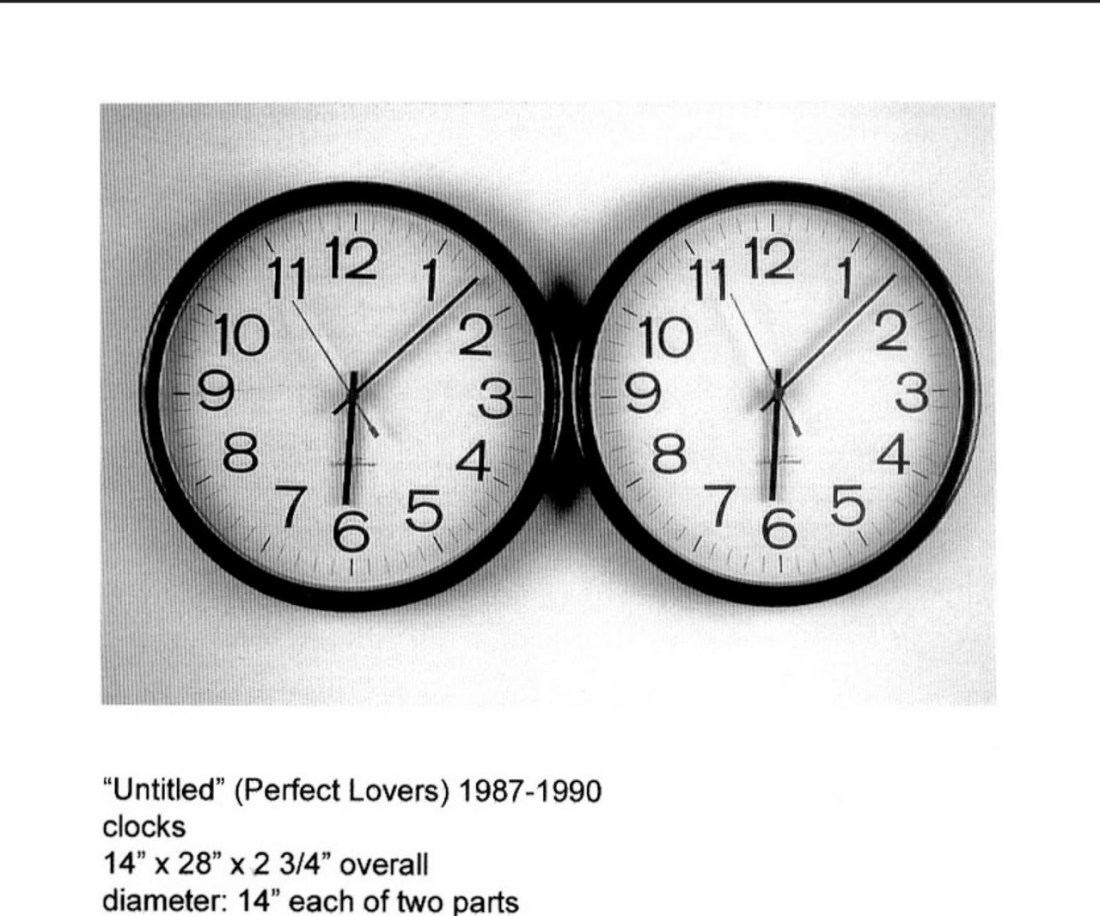
Félix González-Torres – Untitled {Perfect Lovers} (1987-1990)

I was completely unfamiliar with González-Torres or his work until earlier this week. I don’t think this piece has ever been far from my mind ever since.

As the story goes, González-Torres‘ partner Ross Laycock learned he had AIDS. In an effort to process the news, González-Torres outlined the following conceptual exercise:

He acquired two identical black rimmed wall clocks and hung them on a wall so they were touching each other. The clocks were synchronized and the set running. Slowly over time they fell out of sync with one another–whether due to one having better batteries or just the reality of entropy.

In an interview with ArtPress a year before he AIDS stole his life also, González-Torres stated:

Who is your public?’ I say honestly, without skipping a beat, ‘Ross.’
The public was Ross. The rest of the people just come to the work.