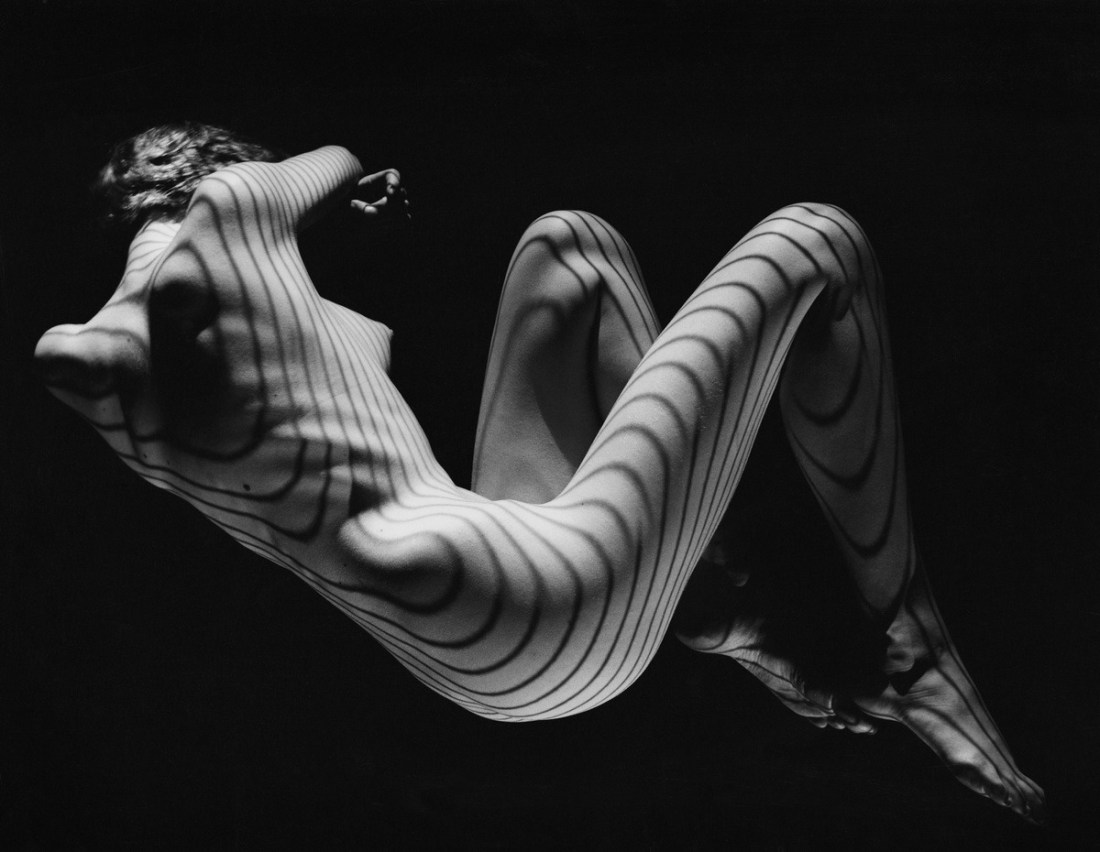
Fernard Fonssagrives – Contours (1954-57)
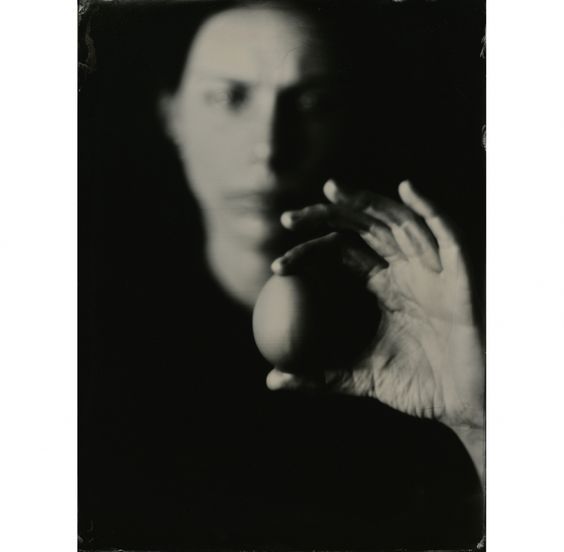
Isa Marcelli – Untitled from Toccata series (2015-16)
In music, toccata means literally ‘light touch’ and is a designation afforded to a pieces (usually keyboard based but also sometimes including string instruments) which are notoriously difficult to perform but allow the musician to show off their deftly virtuositic lightness of touch.
With the image above, there are several layers of meaning to draw from this. First that the woman is holding an egg resonates with the title. (And I can’t help but recall the apocryphal account of Brunelleschi carrying a basket of eggs and dropping them as a result of his shock upon encountering Masaccio’s Holy Trinity Fresco.) Secondly, Marcelli is using collodion to produce ferrotypes. (Collodion wet plates experienced their widest usage during the U.S. Civil War–during which time collodion was actually used to close up severe wounds; but through a process involving a number of extremely hazardous chemicals, i.e. ether and cyanide, it was possible to produce a resilient negative image on transparent glass.) Also: collodion is not exactly the most user friendly format as you have roughly 12 minutes to evenly coat the plate, load it into your camera, expose and process the resulting image.

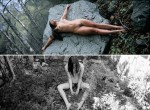
[↑] Pavel Banka – Nude with metal arch from Figuration series (1985); [↓] Ben Rains – Untitled from Somnio: The Darker Parts series (2014)
Juxtaposition as commentary
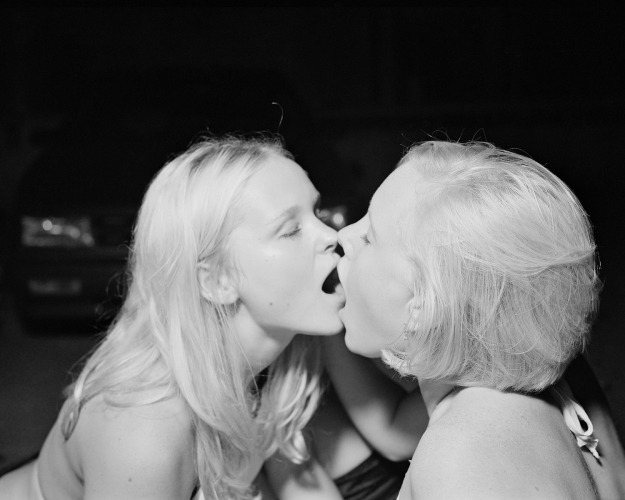
Alex Soth – Untitled from Looking for Love (1996)
I saw Blue Velvet for the first time over the summer of 1997; I was 19 and I HATED it.
I was somewhat familiar with Maestro Lynch at that point; I’d seen The Elephant Man, Dune and Twin Peaks: Fire Walk with Me–I enjoyed the former, was underwhelmed by the second and the sequence from the latter in The Pink Room is one of my favorite scenes in any Lynch film.
And even though I disliked Blue Velvet, I could admit that my issue with it had less to do with it’s quality and more to do with it’s tropes.
The primary reason I loathed was more a function of my perception than anything on the part of the film itself. By that I mean: I saw Pulp Fiction something like seven times while it was in theaters. It had thrust me deeper into ‘art house’ fare and I watched everything (not an exaggeration) that had any sort of link to either Tarantino himself or was categorized as being Tarantino-esque. (I spent a lot of time watching a lot of rubbish.)
My quarrel with Blue Velvet was that I had seen almost everything in it in other things. I felt that it was unoriginal.
I know, I know… it was partly because it looked so thoroughly modern and fantastic, I failed to realize it predated most of the stuff I thought it was ripping off by almost a full decade.
Luckily, I was forced to watch Eraserhead for a class and was thoroughly transfixed by both how weird it was/how beautifully it was made to look. I saw Wild at Heart (mixed feelings), The Straight Story (I feel like this and Eraserhead are the most truly Lynchian as far as it pertains to aesthetic vision), Lost Highway and Mulholland Dr. (LH and MD both share the same structural form–a Möbius strip and I’ve always felt like in the context of the latter that Adam Kesher is a stand-in for Lynch himself and that LH is the movie that The Cowboy insists Kesher make but MD is the film he really wanted to make in its place.)
(We don’t discuss Inland Empire–I have interacted with Lynch twice in my life and both times I’ve started arguments with him; the second time I may have told him the second hour of IE was entirely unnecessary and that had he still shot on film he would’ve made a better project for having to make decisions instead of throwing things at the wall and then leaving it up to the audience to decide whether or not they stick…)
Anyway–and I swear this all pertains to Soth (which he says rhymes with ‘both’ but why would you not say rhymes with ‘oath’, I mean really…)–I actually did go back and watch Blue Velvet again. The second time I was blown away by it. I may be partial to Eraserhead and Mulholland Dr. will likely go down as his crowning achievement but really, Blue Velvet is a cinematic masterpiece of truly rare acuity.
How all this relates to Soth is: I am not a fan of his work. But I try to remain mostly civil as far as this project–like I despise the work of Gregory Crewdson (spoiler alert: he’s not particularly well liked by those who had a hand in training him or who are his ostensible peers) and Fox Harvard and Brooke Shaden are godawful… but mostly I keep it constructive.
I have actually changed my opinion on Soth. He work doesn’t especially resonate with me but I now see that what I read before as vapid vacuity, is actually much closer to the form of fine art photography rendering meditations on disaffection and loneliness banal. I don’t really think this is exactly the best tact but it is a code I can read now.
And I think that’s really what I’m getting at: if you are doing the work you are supposed to be done correctly, i.e. with the appropriate degree of rigor and attention, then you are going to realize frequently that you’re wrong more than you are right.
I know this blog comes across as persnickety and I realize there are things I say that seem preposterous–but this is a way I’ve found of pushing myself to do the work.
I was wrong about Soth. It doesn’t mean I’m gonna rush out and buy his work it just means that I had not yet found the right photo to draw me into his work. The photo above was what I needed.
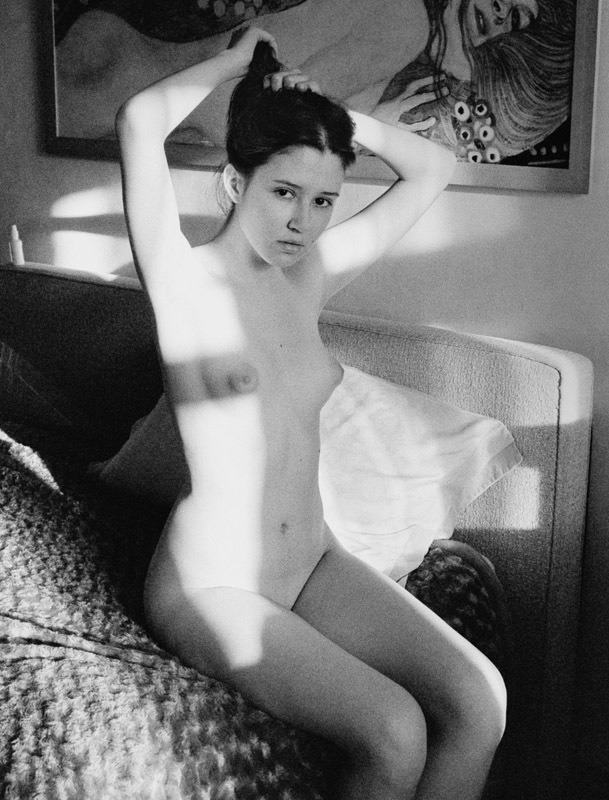
Anna Cladonia – Nude (2011)
TFW you find out that two photographers you adore have worked together: 🙂
The photo above is by Anna Cladonia–who I’ve posted about previously–of Julia Klem, who I have also posted about.
In fact, both earned a favorite tag. (Which by the way is a thing–if you know, you’re in a mood to mainline the creme de la creme.)
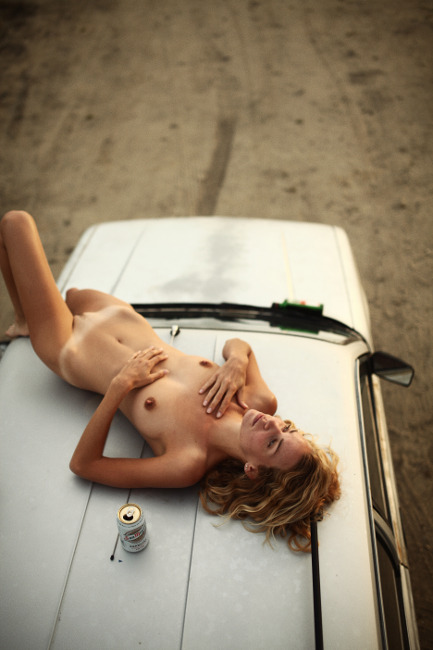

Olivier Laselle – Untitled (2017); [] Mark Steinmetz – Athens, GA from South East series (1996)
Juxtaposition as commentary
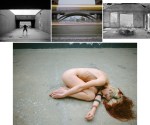
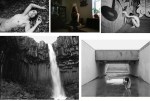
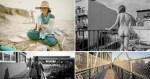


wonderlust photoworks – [top to bottom; left to right] Mx Incohate (2014); Homesick for the Distances (2015); 29:18 collaboration with Anonymous (2010); Map in the Maze collaboration with @camdamage (2015); A Dark Chant collaboration with @marissalynnla (2016); Baba Yaga collaboration with @suspendedinlight (2017); Hasp collaboration with @kyotocat (2016); Svartifoss (2015); Echo (2019); Woodland Cathedral collaboration with @marissalynnla (2016); Wombs + Tombs collaboration with @kyotocat (2016); Hold Me Now or Hold Me Never (2017); A Piece of the Sky collaboration with @suspendedinlight (2016); Coney Island, October (2016); Two Red Plastic Bags (2015); Samson’s Riddle collaboration with Kelsey Dylan (2016); Moxie (2016); Hold Me Like the Landscape Holds the Light (2017); Heart-Shaped Sunglasses + Helianthuses collaboration with Jacs Fishburne (2016); Emma collaboration with @kyotocat (2016)
Since I’ve been yammering on about it, it seemed only fair to share with the rest of the class. Above is the work I am submitting to MFA programs. (Apologies for some of the early formatting awkwardness…I had to trick Tumblr into letting me upload everything to a single post.)
The accompanying statement reads as follows:
I grew up in a Christian doomsday cult—an experience which forged a lifelong
preoccupation with the conceptual interpenetration of sin/transgression + salvation/
transcendence.
Storytelling figured prominently in this milieu—scads of Trojan horse fables secreting ideological payloads—but, also: beautiful, expansive conversations which were
less dialogue + more interactive sharing of stories not unlike a carefully curated anthology places various parts in implicit dialogue across the whole.
This effusive sharing sparked a strong sensitivity for wonderment which drew me
to music (something that saved me, continues to save me) + lead in turn to Johannes
Vermeer’s paintings, Andrei Tarkovsky’s oneiric long takes, William Eggleston’s impeccable dye transfers + Francesca Woodman gothic self-portraiture.
(Other artists to whose work I perennially return? Chris Burden, Duane Michals,
Rackstraw Downes, Ana Medieta, Peter Hujar, Kelli Connell, Aino Kannisto + Allison
Barnes.)
The enormity of experiencing beauty has always seemed a profound responsibility—as if in seeing there is a duty to labor in whatever way one is able to give something
back for what one have so undeservingly received.
My own art making process begins with the identification of a “visual problem” +
fits the form of a question*—e.g. How might a single, static frame imply a narrative
arc? (This question maneuvered me from cinematography to fine art photography.)
Any rendering of a person in an environment suggests narrative potential insofar
as the viewer asks who the figure is (characterization) + how she came to be in this particular scene (causation) + what she is doing there (context).
This introduces a second, more complicated conceptual problem. Given that photographing people is a minefield of political + ethical quandaries, how does one depict
identity, gender + sexuality while actively thwarting the art historical, dominant (hetero-partiarchal) gaze?
The only means I have found to ameliorate this is to conceptualize my photography as collaborative . I seek out + work with artists—sharing my questions with
them, asking each to bring their ideas + personal sensibilities to the proceedings.
When I am behind the camera, I refuse to allow myself to fixate on conceptual
considerations. Instead, I trust the preparation + planning that has led to the point of
making something. I proceed instinctively, acting less as author + more as a steward/midwife; the camera serves as a means of extending my capacity to feel outward—both
from the standpoint of sensory stimulus but also with regard to emotional resonance.
When what I see through the viewfinder feels like a response to the visual problem(s), I
snap the shutter.
My strategy for editing retraces the above steps from conceptualization to execution except in reverse order + with one notable exception: my collaborators receive “first
edit”, i.e. if they are uncomfortable with any aspect of their depiction they can opt to exclude any image(s) from further consideration—allowing for the exercise of personal
agency in expressing identity within the context of visual representation.
From what remains, I review the work with special attention to frames which
exhibit ‘good’ composition in tandem with unity between form + visual grammar. Work
which surprises me hints at subsequent avenues of exploration (whether by expanding
my understanding of one or more problems or suggesting more effective ways of addressing those problem). Time has taught me the photos which evoke a feeling similar to
what I felt when the shutter clicked are the ones that matter.
I am at a point in my life where it feels as if I am on the cusp of making a leap
forward in my work—the work is asking me to commit to it. The [REDACTED] program would allow me to dedicate myself to my work for two years—allowing me to take risks + experiment, e.g. I am fascinated by the ways my process
overlaps with conceptual + performance based modalities of art making; also: how might it possible to convey visually something of the feeling of gender dysphoria?
The [REDACTED] MFA would not only foster a richer understanding of art history,
it would also provide a in-depth interdisciplinary insight into the working practice of
cohorts + faculty in an edgy, forward thinking creative community
*Trial + error have shown me that a good question anticipates less an answer and instead suggests a better/more focused question.
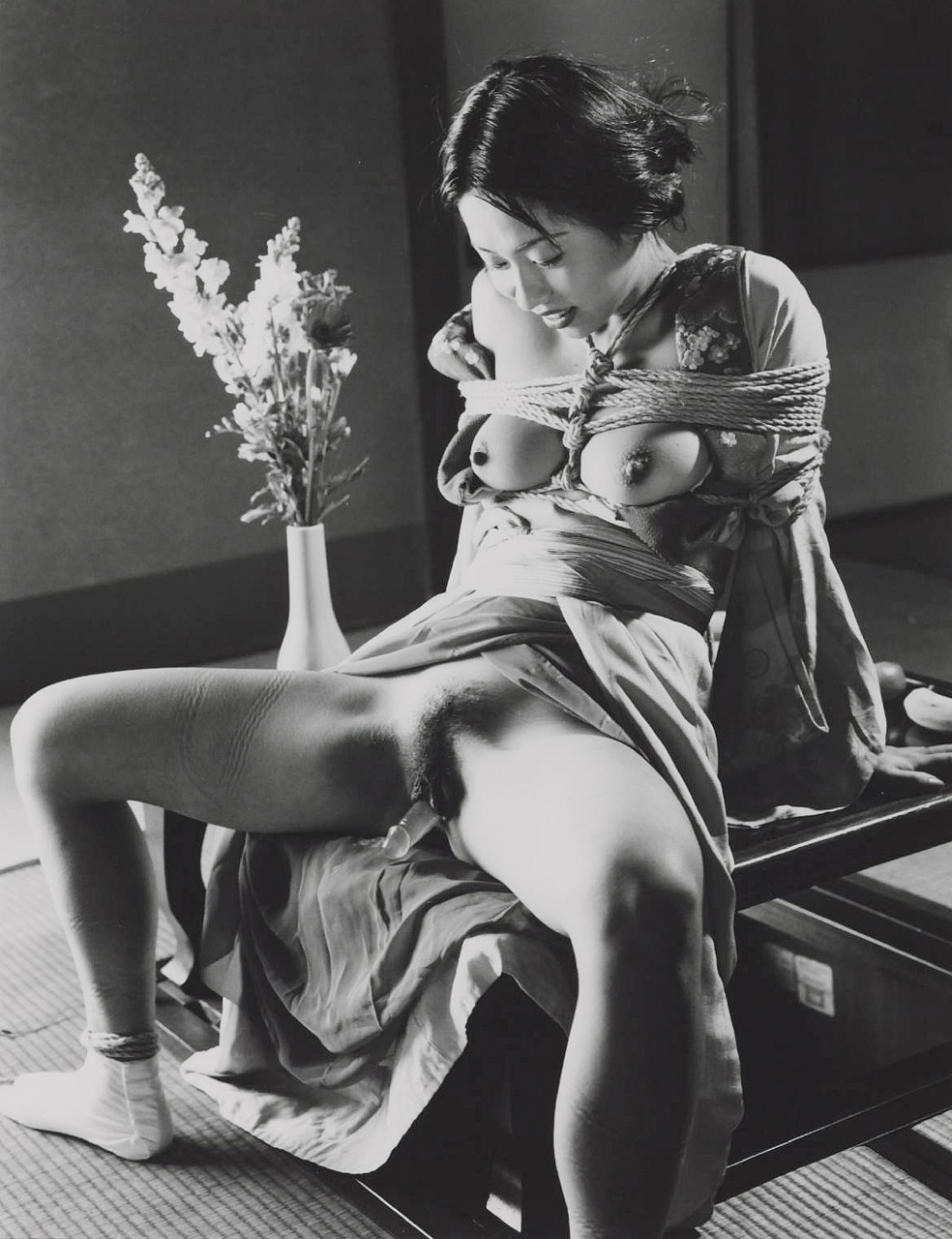
Nobuyoshi Araki – Untitled (1995)
This is almost certainly Araki referencing Hans Bellmer.
I am actually glad to see Bellmer getting some renewed attention. I’m seeing more of his work slide across my dashboard here. Also, @insideflesh did a cool photobook last year inspired by him.
I’ve also mentioned that I think Bellmer is really kind of an important figure given our current globalized socio-political shitstorm. I suggested that it might be a good exhibition notion to do a joint retrospective of his work alongside Ana Mendieta.
The plan is–knock on wood–to dedicate two weeks of posts to using this blog to stage such an exhibition. I can’t say when just yet. It’s slow going as much of the scholarship is heavily coded in Freud’s BS. But I’m about a 1/3 of the way through preliminary research on Bellmer. And then it’ll be on to Mendieta–on whom there is far less scholarly material.
Anyway–something to keep an eye out for down the line.

Cem Edisboylu – ANS3113 (201X)
OK, here it is the one image that is the exception to the rule that no one should ever use radial blue.
Now back to your regularly scheduled not ever using radial blur already in progress…
Duane Michals – Take One and See Mt. Fujiyama (1976)
It’s a bit difficult to read the text giving the low-res nature of this assemblage. And since it’s a bit of a challenge to find all the individual photos (presented legibly) in one place, I went ahead and transcribed everything:
I had never seen this until this morning–it’s superbly Lynchian (even if David Lynch would’ve been in the process of struggling to get Eraserhead made at the time Michals unleased this on the world.)
The interesting thing in putting this together is that there appears to be variances in the captioning based on editions? Also, there’s at least two versions of the 6th frame (v1, v2).
I actually think that v2 is probably better because the way it reads above, the frame 6 functions like an insert shot whereas and with v2 there’s a sense that the whole thing is covered in a single master shot.
 Acetylene Eyes