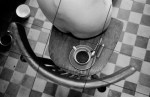
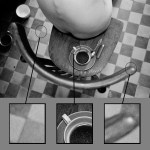
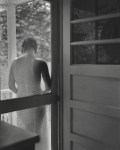
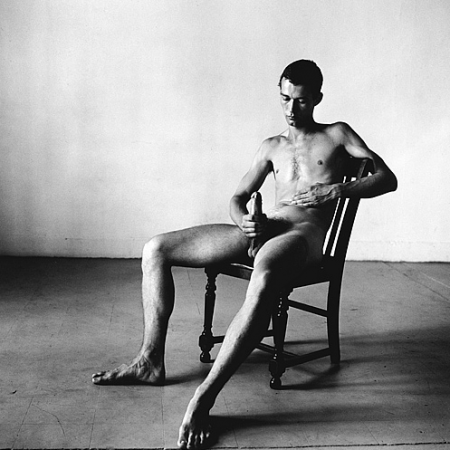
[↑] Igor MukhinUntitled (2010); [←] rule of thirds (overlay); [→] rule of thirds + 18° (overlay); [↓] grain density & depth of field (magnification sampling)

I talk to much and say too little. I decided to show as opposed to telling you the genius-tier visual math shit going on here.

Igor Mukhin has forgotten more about the photographic craft than most of us will ever hope to know.

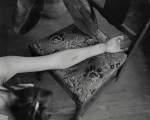
Allison Barnes –  [↑] July 30: Incision (2012); [←] July 23 (2012); [→] Bruised Vein from Neither For Me Honey Nor the Honey Bee (2014); [↓] July 24 (2012)

Little else drops me down a k-hole faster than stumbling upon a photographer whose work thoroughly engages me.

I spent a good part of yesterday pouring over Allison Barnes’ work. Given her proclivity for shooting analog large format almost exclusively, this shouldn’t be a surprise.

What surprised the fucking shit out of me was how far off base my initial impressions were.

For better or worse, I think everyone tends to start from what they know based on their experience. Barnes initially struck me as a photographer preoccupied with Francesca Woodman, Sally Mann and Ana Mendieta.

Following those markers leads down lush verdant path passing interesting scenic overlooks; but sooner or later each dead ends, leaving you to retrace your steps and then begin again from the beginning.

What’s strange is it almost feels like these false trails are supposed to be followed–as if in following them to their end the work is teaching the viewer how to see it, as if initial misunderstanding is somehow integral to any sort of eventual understanding…

It’s this that dismisses perfunctory correlations with Woodman and Mann–both being more caught up in aesthetic interrogations of the trilateral relationship between author, subject and audience, how that relationship manipulates objectivity.

The Mendieta trail does stretch further than the others but in the end Barnes veers away from carefully manicured feral confrontation for something not exactly patient or even contemplative so much as the expectant stillness of someone willing to wait for you to get the ever-so-clever joke in the otherwise grave conversation.

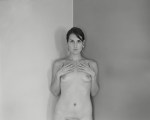
Kim Eliot FungPhenomenon of Being 2006

Normal
0

false
false
false

EN-US
X-NONE
X-NONE

/* Style Definitions */
table.MsoNormalTable
{mso-style-name:”Table Normal”;
mso-tstyle-rowband-size:0;
mso-tstyle-colband-size:0;
mso-style-noshow:yes;
mso-style-priority:99;
mso-style-parent:””;
mso-padding-alt:0in 5.4pt 0in 5.4pt;
mso-para-margin-top:0in;
mso-para-margin-right:0in;
mso-para-margin-bottom:10.0pt;
mso-para-margin-left:0in;
line-height:115%;
mso-pagination:widow-orphan;
font-size:12.0pt;
mso-bidi-font-size:11.0pt;
font-family:”Garamond”,”serif”;}

It’s like returning to a location that filled the child-mind with its enormity only to find it suddenly shrunk, like music that once moved you, moving on now without you.

A rule to which there are precious few exceptions.

The disparity between perception and reality has to burn away over time, like morning fog. Perhaps this is what Baudelaire was about when he advised poets to burn anything written before the age of twenty-five if they wanted to be taken seriously.

If you take the idea of poetry literally: what of Rimbaud—who wrote everything he would ever write prior to turning twenty?

What if you define poetry as did Emily Dickinson—and I do—what does this mean for the photo poetry of Francesca Woodman?

What about Kim Eliot Fung who was a teenager when she made this photograph?

I mean there are certainly criticisms that can be made here—adolescent angst, sentimentality. I might even add question with regard to why the model’s head is cut off—though I think the effort of the image has something to do with the spectators gaze and how an awareness of that implication inverts and skews notions of anonymity, gender perception/performance and the politics of visual representation of identity.

Criticisms that the work lacks refinement or is unaccomplished are completely off base. In other words, it suggests a precocious understanding of what maturity entails even if it has not yet fully reached maturation.

This is one of my favorite photographs. Unlike so many things that I return to in time, this does not seem smaller than my memory of it. If anything, the opposite is true: the image itself seems larger, richer and fuller when measured against my memory of it.

It’s my hope that Ms. Fung will return to photography at some point. Until then she makes aprons and curates the always impressive Editor’s Index.
passius:

porn4ladies:            passius:

Olga Karasik404 2013

The use of the mirror here is goddamn inspired– obscuring both women’s faces within the frame. (See!! There’s no reason to decapitate yourself in your images to maintain your anonymity. A little creativity goes a long way and makes for better pictures.)

It’s obviously beholden to Francesca Woodman; but it wisely cribs a page from the rock and roll rule book for performing cover songs: make it better than or do it different.

Karasik filters Woodman’s concerns through her own aesthetic sensibility in a way that marks it as reinterpretation instead of a rearranging of elements in a template.

Sadly, it’s either some #skinnyframebullshit; or, :::shudders::: cropped. (I loathe a we’ll-just-fix-it-in-post attitude. Do it right the first time or go the fuck home. Post-production is a safety net in the unlikely chance it becomes necessary; the entire fucking point is not to need it.)

I guess at least evinces some thought went into the decision to opt for the skinny frame.

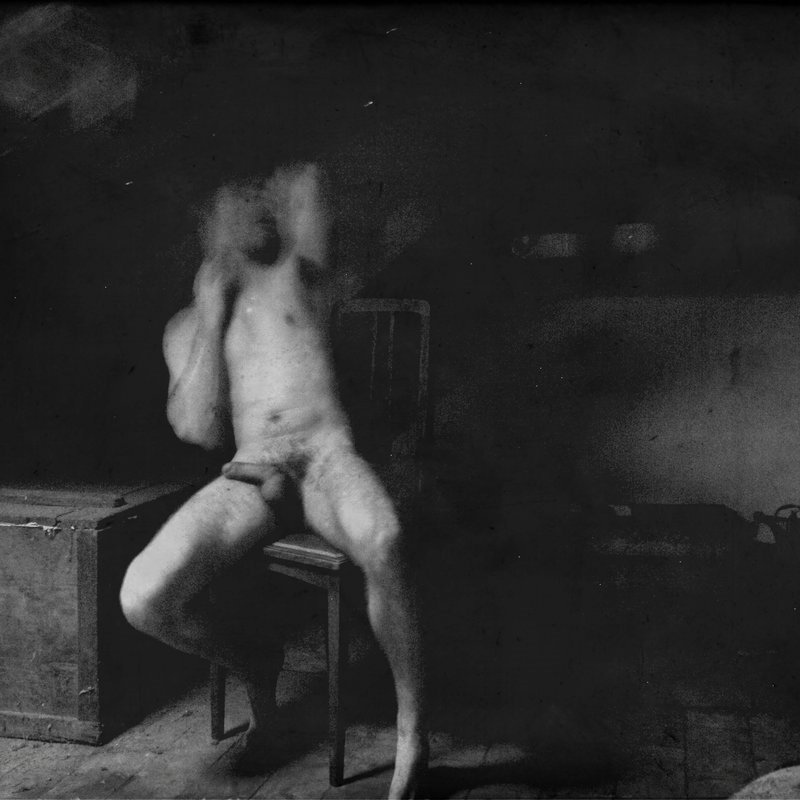
I have tried to source this but neither Google Image search or TinEye are coming up with anything conclusive.

This uncertainty exacerbates my polar reactions to it. Most of the time, the muddiness is reminiscent of Duane Michals early-ish work, particularlly a moment of perfection.

But there are also times–like writing this–where the position way his arms are positioned and his motion blurred face feel more like a horror film, a sort of  E. Elias Merhige’s Begotten-esque haunted house where the ghost seduces then strangles the amorous.

I don’t know what to make of it. Not in an I don’t give fuck one about it, though. It’s so true what is said about the distance between what we love and hate is much less than the disparity separating love from apathy.

There something else rattling around in my head about the body as a house haunted by a soul, but language and I are having another one of our frequent sullen tiffs. Besides, any time it starts to feel like the only thing I have ever known, I start to forget how the stories go.

passius:

I have reservations about this image: it can’t seem to make up its mind whether it’s entirely preoccupied with titillation or intimacy.

For example, the blocking emphasizes the clean-shaven vulva and anus for the benefit of the male gaze. Not to mention the #skinnyframebullshit—probably enacted to counteract heavy handed illumination as well as suggesting a moment outside space and time. (As visual shorthand, I’ve never felt such a tact work especially well; with maybe the exception of the seamless flashback scenes in The Frighteners—which if not exactly sensible were at least a novel technical exercise.)

However, there are at least two things I appreciate: the stripped down, stepped out of mound of clothing on the floor and the intensity of the intimacy between the two women. The clothing clearly speaks to what happened prior to the moment this single image was captured; it understands seduction as a process, not a single, discrete and isolated event. The chemistry and raw passion these women exude is thoroughly authentic and awesome to see. And in combination with the glimpse the discarded clothing offers of what preceded, this intimacy foretells a great deal of what will happen next.

In other words, there are clear elements of a story; or, put crudely: an incident with a beginning, middle and an end. After all, seductions are essentially narrative.

And if a picture truly is worth a thousand words, then why shouldn’t image makers tell a story, make a poem or preferably both all at once?