Heitor MagnoUntitled (2013)

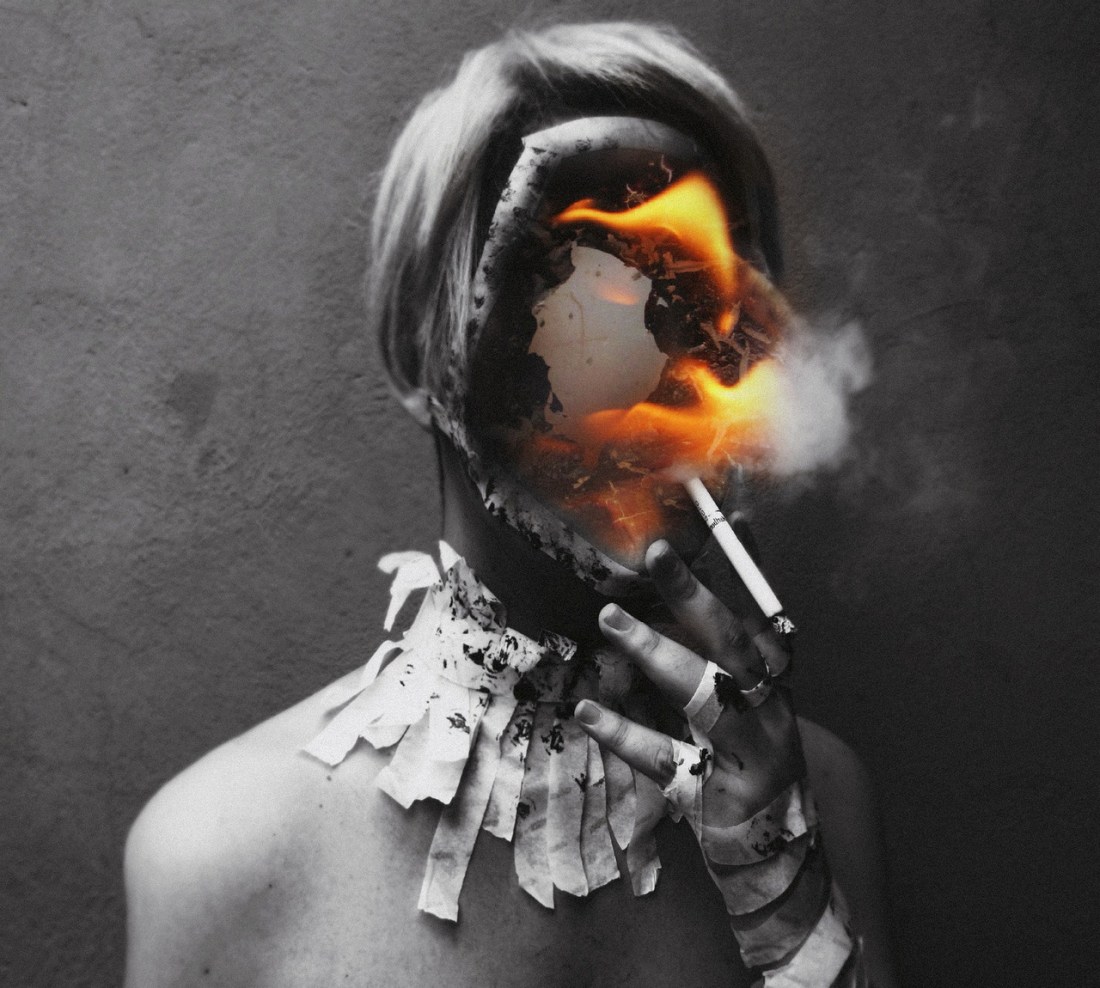
There’s no question: this piece owes a debt to David Lynch.

I know that portraits of someone’s head and shoulders presented in front of a textured wall in contrast-y B&W or monochrome is so ubiquitous as to be cliché but consider the preponderance of this motif in portraits of Lynch himself–it’s almost as if this manner of presentation is an extension of his brilliant white button ups, under shadow dark sports coats.

I’ve talked a fair amount of piss about Lynch in the past. I am a huge fan of most of his work–in fact, if you disregard Dune and Inland Empire, his oeuvre situates him as among one of the most consistently masterful, active, contemporary artists.

I watched the Twin Peaks revival in it’s entirety this spring. I am of a mind that it’s the best work he’s ever done–by quantum margins. There is honestly no way whatsoever I can oversell it; it’s an ingenious tour de force that is utterly exquisite to experience. (Also: some of the criticisms that I’ve lobbed Lynch’s way previous about the demarcation between the surreal and the oneiric–and how Lynch tends to play fast and loose with that boundary–well, Twin Peaks: The Return demonstrates that even if such a criticism was valid previously, it is certainly no longer the case.

I’ve not seen all the original run of Twin Peaks. (I was a about three years to young to catch Twin Peaks fever and subsequent efforts to re-watch it have been sabotaged by a constellation of factors. At this point: it is unlikely that I’ll ever see it.)

I am curious if the trope of facial voids and flames feature in the original run–because while the notion of a facial void is very Lynchian, I’m not sure I can recall that specific image in the rest of his work.

Lynch is one of those influences from whom artists would do well to exercise caution in riffing on without careful consideration. Someone much smarter than me pointed out how many ‘artists’ use Lynch as an excuse, i.e. going light on plotting so as to focus on compelling visuals and a sinister surrealism to pull things together. There is always an underlying logic to Lynch’s work–to the extent that even inconsistencies will be consistently applied.

Anyway, I would be curious if the facial void image occurs in the original Twin Peaks because if it doesn’t then I feel like Magno’s image is actually even better than I understand it to be–and I’m basing that of the premise that it ceases to be theft if you take an idea and in the process of making it your own, improve upon it.

This is fantastic for the way it constantly turns in on itself. The lit B&W cigarette resonates with the flame burning through a print. (This appears to be a collage effect, where the picture of a burning print has been digitally imposed over the B&W portrait–creating a mask that is in turn a void with dimension deeper than the image on which it has been overlaid; like one of those haunted houses that is bigger on the inside than the outside.)

Also, the trope of burning photos possesses a sinister value. Typically, when we see this in a piece it indicates someone surrendering something that costs them too much to keep. Think of unrequited lovers burning pictures of the one who has abandoned them or of a criminal destroying evidence.

In a lot of ways I feel like this takes ideas that almost certain were sparked by Lynch and internalizes not only the symbolism but the logic underlying the symbols; then: applies both to personal expression. That would already be impressive. But what I adore about this is that this goes even deeper by then taking the concept and then applying the same system of logic and symbols that codified the conceptual trappings and then applying that awareness to questions of how the presentation of the work will be seen and interpreted by the viewer.

It’s a level of commitment to consistency that is damn impressive. Even more so if it intuited this underlying theme in Lynch’s work and then extrapolated it into something that pushes things a great bit further than Lynch manages to in the Twin Peaks revival.
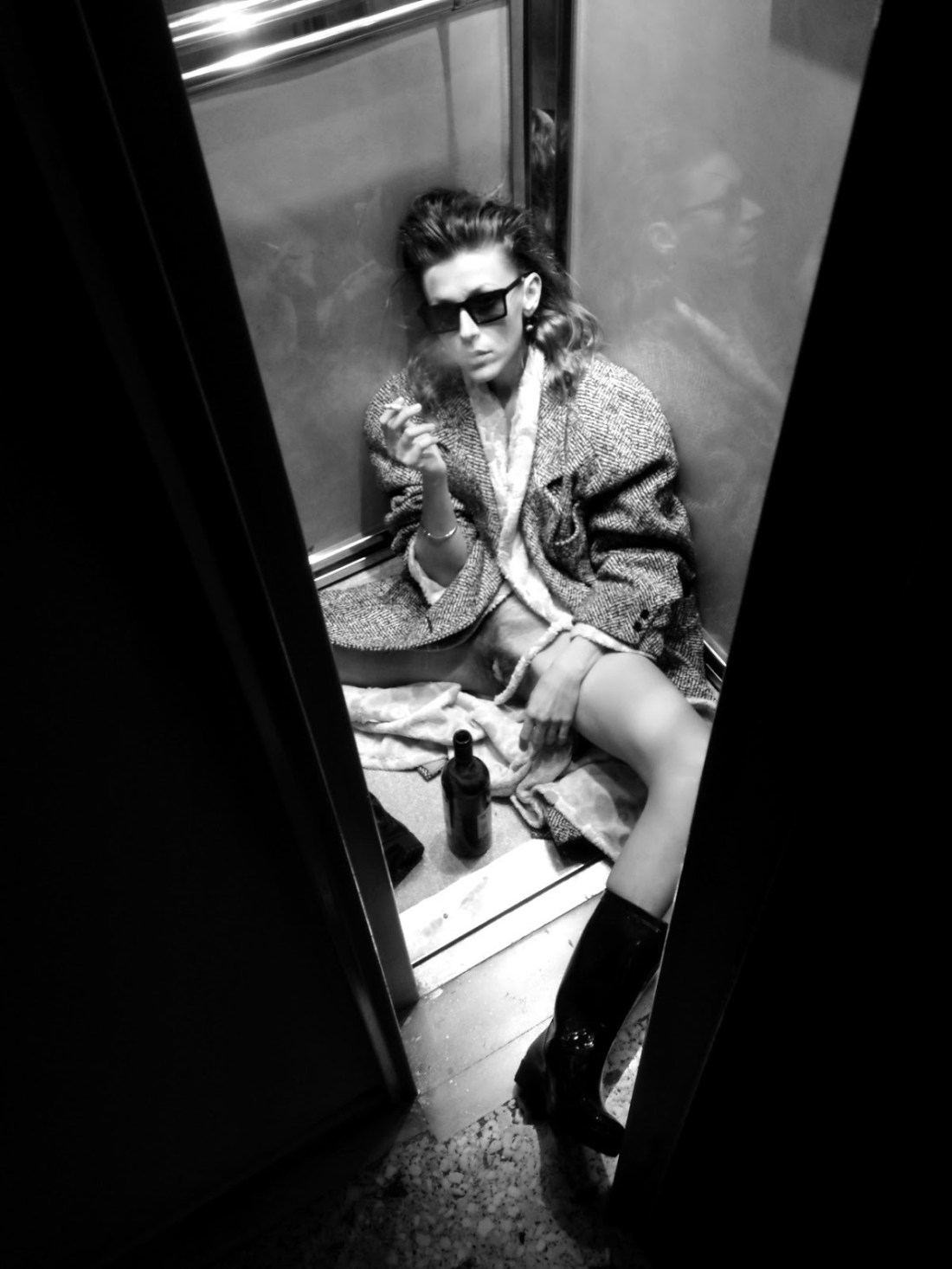
Marat SafinUntitled (2015)

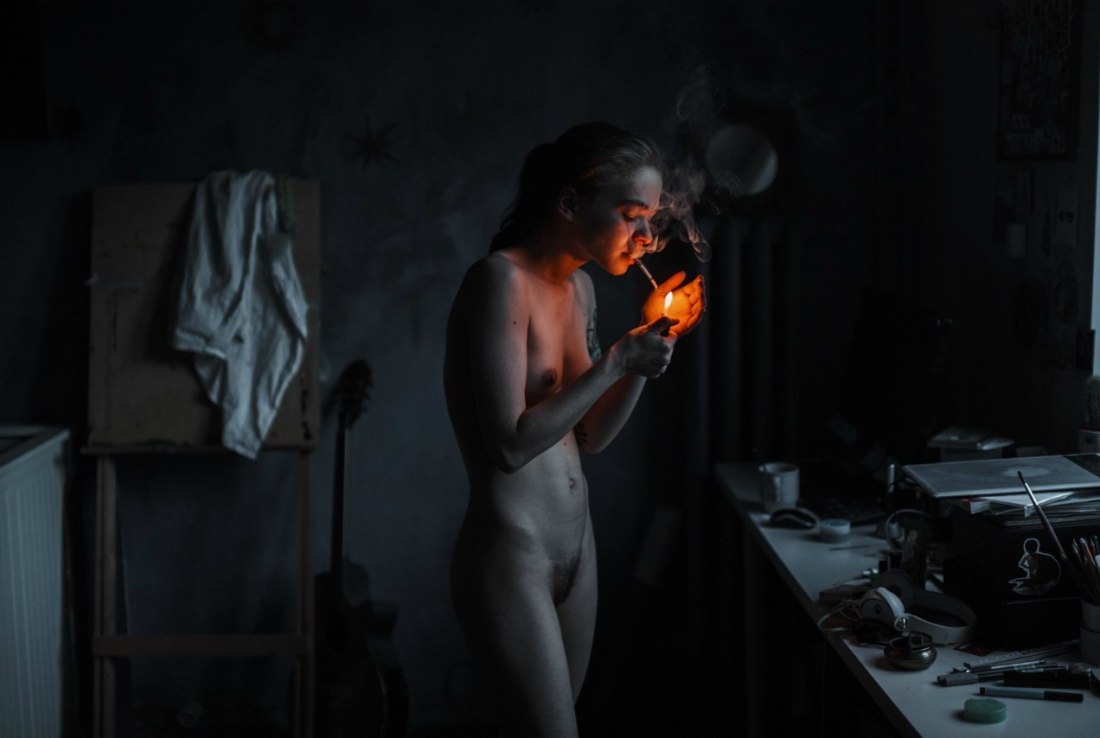
سأصير يوماً طائراً ،
One day, I will be a bird,
وأَسُلُّ من عَدَمي وجودي .
and will snatch my being out of my nothingness.
كُلَّما احتَرقَ الجناحانِ اقتربتُ من الحقيقةِ ، وانبعثتُ من الرمادِ .
The more my wings burn, the more I near my truth and arise from the ashes.
                   —Darwish – دَرويش (via m7madsmiry)               

Chadwick Tyler Cora Keegan (2014)

I think there are all kinds of negative implications when you use the frame to dismember a body like this. HOWEVER, everything else about this is in-fucking-credible–the Albers-esque palate, the texture and semi-reflective opacity of the water, Keegan’s skin tone and pose, etc.

The other thing I want to point out here is to reiterate the notion that as bad as it is to amputate legs, it’s much MUCH worse to decapitate.

I know, I know, you want to reclaim your body autonomy while remaining anonymous. I hardcore support you. But there are literally hundreds of ways for you to post your nudes without resorting to offing your own head. The above is a stellar example. Yes, Cora Keegan is a famous model–but the principle still applies. A little creativity instead of the lazy head-out of frame strategy produces seismically better results.

Here are some more examples: Janosch Simon, Jakub P and Elene Usdin.

If you’re willing to think outside the box and engage your critical, creative problem solving skills, then you’ll likely be able to keep your head inside the box while making a better picture and remaining anonymous.

D. Robert StanleyEmily (2010)

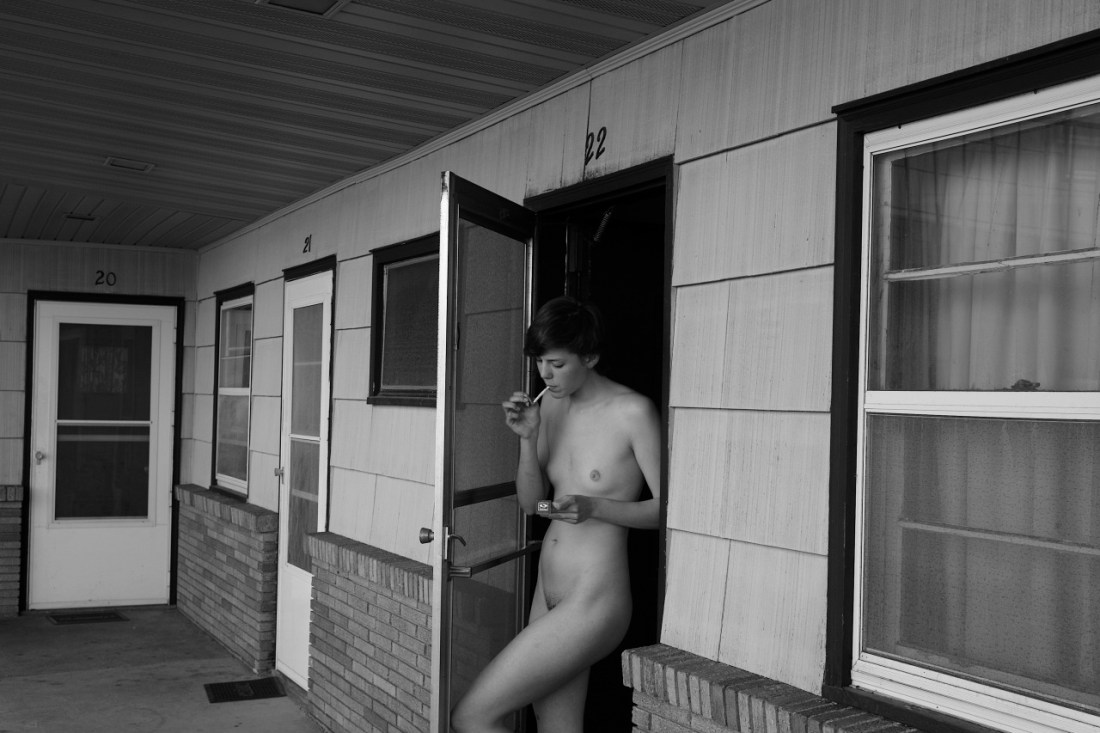
I appreciate the effect this is chasing; an ex post facto insinuation wherein the moment portrayed implicitly addresses the events immediately preceding it:

  1. The image maker stares out across an empty parking lot, a Leica M8 dangling from a strap around his neck;
  2. He hears the screen door opening to his left. A young woman–not wearing a stitch, presumably his companion–stands in the doorway, a cigarette hanging from her mouth and fumbling with a book of matches;
  3. Registering the base elements of An Image, the image maker sights through the viewfinder while pivoting, rocking focus hard right then slow left as the match head flares, drifts upward;
  4. As the flame touches cigarette tip, he triggers the shutter.

Although I am tempted to refute the assertion that this is a ‘narrative’ image–it’s not; there far are more urgent fish to fry.

Here: I want to point out once again that I dig the idea underlying this. I really do.

I am bothering to reiterate that point because I am afraid what follows may really harsh the image maker’s buzz.

First, I am very sorry but this is not a portrait. Welcome to Name That Genre, I am your host Jon Rafoto. And oh, I’m sorry you said ‘portrait;’ the answer we were looking for is: street photography. (EDIT: Unfortunately, I got a ahead of myself here and started playing fast and loose with the terms. What I meant is that the perspective of the image is closer to street photography than portraiture but I conflated how with the what and that led me to attribute (wrongly) the content to the genre of street photography. This was a mistake.)

See: a portrait preferences the subject over their surroundings. This preferences the surroundings over the subject.

Sure, I’ll see the ’environmental portrait’ call and raise with a ‘the tendency of a sitter in a portrait to acknowledge the camera’.

All that doesn’t even matter though because in this case I am holding pocket aces in ‘the camera that made this image was hand-held’. Now, that’s not to say portraits can’t be hand-held, they certainly can. But the failure to square the frame against the verticals of room 20’s door jamb to and the rightmost window edge is either shoddy composition or an effort to emphasize the pivoting pan of the photographer–suggestive of street photography.

Further, squaring the frame would have made the questionable compositional logic gallingly obvious.

That being said there are some insightful inclusions. There is an effort to include the texture of the roof as a compositional feature. As is, it doesn’t play. But the instinct to include it was excellent.

What was needed was either for the photographer to take two steps back and square the frame. Or to have a half-step left and squatted down. The former option would have shifted things even more toward street photography, the latter would have shifted it closer to portrait.

Both would have had the additional benefit of not bloody making the most annoying newbie mistake in the book–if you have to amputate with the frame edge do so in between and not at joints.

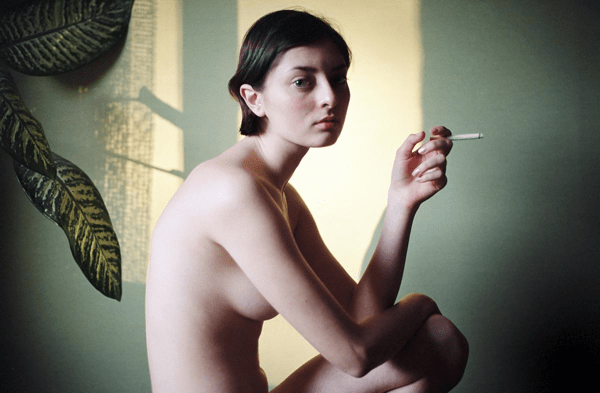
Margo Ovcharenko01 from Without Me (2008)

‘Intimacy’, ‘vulnerability’, ‘trauma’ and ‘stories’ are terms which recur in Q&As with Ovcharenko.

Although entirely befitting, they’re ultimately terms of abstraction.

In other words: what does one mean by ‘intimacy’: loneliness, togetherness, expressions of passion, etc., etc.

Don’t misunderstand: I am hell of fond of her work’s aestheticization.

Still, deep in the mix there’s something either coy and waffling; or–worse–intellectually dishonest.

I think it has to do with the way Ovcharenko speaks about her work.

In any interview with The Calvert Journal she offers the following explanation as to the implications of sex and violence in her work:

Sex and death are two of the most sensitive subjects for humans. The fear of death and the desire to prolong life by the passing on DNA are at the heart of everything. All of the social constructions that allow us to live in cities, such as the police and government, lead to perversions of these basic instincts. I am interested in how that works. I’m like a little girl poking a dead frog with a stick: I am sad and frightened but curiosity wins out. (Emphasis mine.)

It’s an adroit response that eschews abstraction. Viewing her work it’s easy to see her as a well intending child poking a dead frog with a stick.

Yet it runs counter to something on her website. (Note: I may be wrong in attributing the remark to Ovcharenko; how the quote appears is ambiguous due to a muddled layout. It could be attributed to the attribution is the author or several subjects.)

Pornography is an ugly and disgusting phenomenon. Erotic can be beautiful, porn–never.

Besides patently disagreeing with the statement, it contradicts her own admitted impetus for creating: what drives us to pornography except being sad and frightened but having curiosity win out in the end.It’s not merely that I disagree with her here.

Also, given her interest in depicting androgynous/non-gender conforming/homosexual folk, I find the absence of any explicit statement supporting LGBTQ rights considering the total clusterfuck in Russia at the moment to be somewhere between naively, tone deaf and irresponsible/exploitative.)

The last thing rankling me about Ovcharenko needs to be unpacked.

Remember that Wired article to which I took such umbrage: 10 Photographers You Should Ignore? It bothered me that the underlying point wasn’t that you can’t or shouldn’t learn from renowned fine art photographers; it was: unless you are making the work you want desperately to make then fuck off and die because you have no business behind a camera.

Fine art photography is a starting point; a set of initial vectors for approaching material. At some point the process and material will demand a very deliberative departure.

The problem is–just like religion–fine art photography is taught as if it is little more than a trigonometric function.

Until I come up with a pithy term in line with #skinnyframebullshit, I am going to call this approach to fine art photography as a trigonometric function as ‘photography as a function’.

The notion arose earlier this week while I was trying to write about Harley Weir.

I’ve run into her work a handful of times. It’s clean, solid. There’s a unity of content and form, muted colors, grounding in art historical perspective/scale considerations–it is what I expect fine art photography to look like.

But I felt fuck all for the work itself. Until I saw this; my brain did this thing it does where it leaps free associative and anchors images to music. I heard that line where the song says: 

But for now we are young
Let us lay in the sun
And count every beautiful thing we can see

I realized this feeling of being young, in love and overwhelmed by the beauty of everything was the raison d’etre for Weir’s images.

Now: why isn’t that made obvious by the work? Perhaps because there is too much emphasis placed on aestheticization and not enough on simplicity and clarity of effect.

(I dig Heidi Systo but her work is just as much photography as a function as Ovcharenko or Weir.)

I do feel an undeniable connection with Ovcharenko, though. In fairness, while the above dates from 2008, and while her newer work does little to avoid repeating the aforementioned pitfalls, it is at least much sharper.  For example, I am in love with 07 from her Hermitage series. It stands out from the rest of the images as a young girl who is bored with poking a dead frog with a stick, so instead she pokes it because she’s suddenly curious about why poking it makes her sad and frightened.

Garry WinograndNew York 1969

I would never dispute Al Pacino’s skill as an actor; I just don’t really ever respond to his performances– perhaps that’s the virtue. (Bear with me; I promise this comes back around to the image.)

Pacino is one of those actor’s actors–a notion I find intolerably snobbish, as if someone were saying you need to know something about what it takes to be an actor in order to understand.

Something not unlike being a photographer’s photographer–minus the snobbery–is true of Winogrand.

Saying I was initially nonplussed by his work would be putting it nicely. It seemed too random, chaotic and unpolished. I remember thinking anyone could have shot these.

For nothing else than my perpetual tossing around of that famous Picasso quote in defense of the modernists, this sentiment should have set off alarms.

Alas, I remained off put by Winogrand until a dear friend showed me this image recently.

I’d never delved deeply enough to have encountered it. The precise composition– the couple kissing, the smoldering cigarette pinched between fingers, the Tortilla Factory sign, the what-are-you-looking-at-motherfucker glare and the go-ahead-and-watch-you-motherfucker glance–made my head explode a little. The image appears almost accidental, unmediated.

You know that moment when you glance at something and look away without really seeing it? And suddenly, the scene registers and you have to do a double take to make sure you saw what you thought you did. This photo is a photographic approximation of that first seeing but unseeing glance. It inspires an instinct to look back at the image again to see if what you think you saw is what you really saw. 

That is really what makes this image so extraordinary. The skill of the photographer is on display only to the extent that the camera is no longer an extension of the eye but the eye itself. It’s all so vital, so gleefully transgressive.

Clearly, my initial estimation of Winogrand was wrong. I don’t necessarily like all his work. But I can appreciate it and I do get what all the fuss is about now.

I don’t like being wrong. But the wonderful thing about admitting your mistakes is that little else motivates learning and growth quite as effectively.