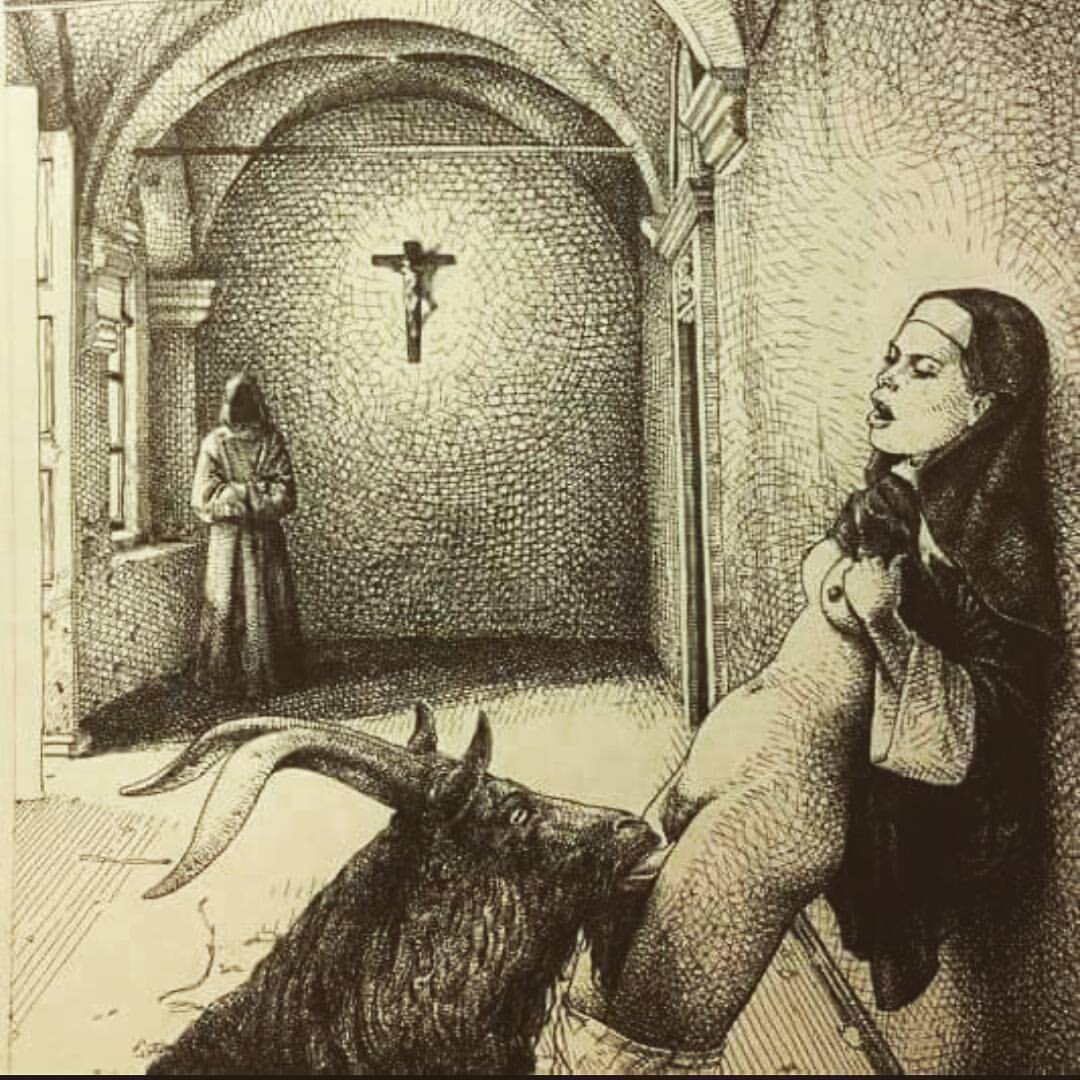
American Ritual Tattoo – Title unknown (2016)

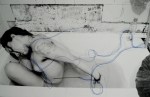
[←] Hans Bellmer – Bound (1959); [→] Ana Mendieta – Untitled {Guanaroca [First Woman]} (1981)
I have been watching from the sidelines and even occasionally wading into the melee on the topic of the responsibilities of art and makers of art in this time and place.
It’s not that I think it’s an unimportant conversation–it’s crucial. I just don’t really understand why every time we have this conversation, it seems like it’s the first time we’re having it.
I fancy myself a bit of a curatrix–y’all likely see me as a snobby poseur; still, I’ve been thinking about Bellmer in the context of Ana Mendieta and vice versa.
The idea has sort of gotten stuck in my head that not only are they fascinating artists to juxtapose–like I could put together an entire exhibit just on the interplay between their respective deployment of gender symbolism.
However, beyond even that, I think it’s interesting the way they both strove to stand against the prevailing ethos of their time without buying into an either/or arch- dichotomy.
I sort of envision an exhibition that is a joint retrospective of their respective bodies of work presented side by side. Call it something like RESIST! Hegemony.
Alas, I don’t have the clout or gallery connections to do this and I don’t know that there’s enough critical work to back my thesis–although my gut says that there’s plenty, I’m just not yet familiar with it.
Would anyone be interested in potentially seeing such an exhibit even if it’s only ever lives on this blog?

Edgar Degas – Two Women (1876-1877)
Most of the canonical oil painters from the mid-19th century onward can hardly be said to have produced entirely chaste work.
But what I find interesting is the extent to which sexuality is implicit in the quote-unquote masterpieces and explicit in their sketches, BTS experiments.
Seeing this sketch absolutely gives me a better grip on Degas’ work. (The feeling that I’ve always had that his bathers are prostitutes, washing up between clients–now seems far less preposterous and the so evocative rendering of his dancers suggests a fixation on sexuality associated with bodies and/or nudity.)
Gustav Klmit, Egon Schiele and Picasso all made v. similar sketches, actually. And the thought that suggests to me is that Schiele was probably the most honest about what he was up to–since there’s less discrepancy between what he exhibited publicly and what he mediated upon privately. Klimt and Degas were more interested in attempt to present sexuality organically within a proscribed context–one facet in a many faceted presentation. (And the Picasso drawing in the ambiguity of the depiction of the person performing oral sex on the woman preserves an undifferentiated, ambiguously gendered person that can serve as both signifier of a woman or a place holder for a man–which seems to be entirely in keeping with Picasso’s legendary misogyny.)
[←] Salvo Rivolo – Dani (2017); [→] Virgínia Di Lauro – Title Unknown (201X)
Juxtaposition as commentary

Source unknown – Title unknown (201X)
Love is like the sea. It’s a
moving thing, but still and all, it takes its shape from the shore it
meets, and it’s different with every shore.–Zora Neale Hurston, Their Eyes Were Watching God
(Quote reblogged from justbesplendid)
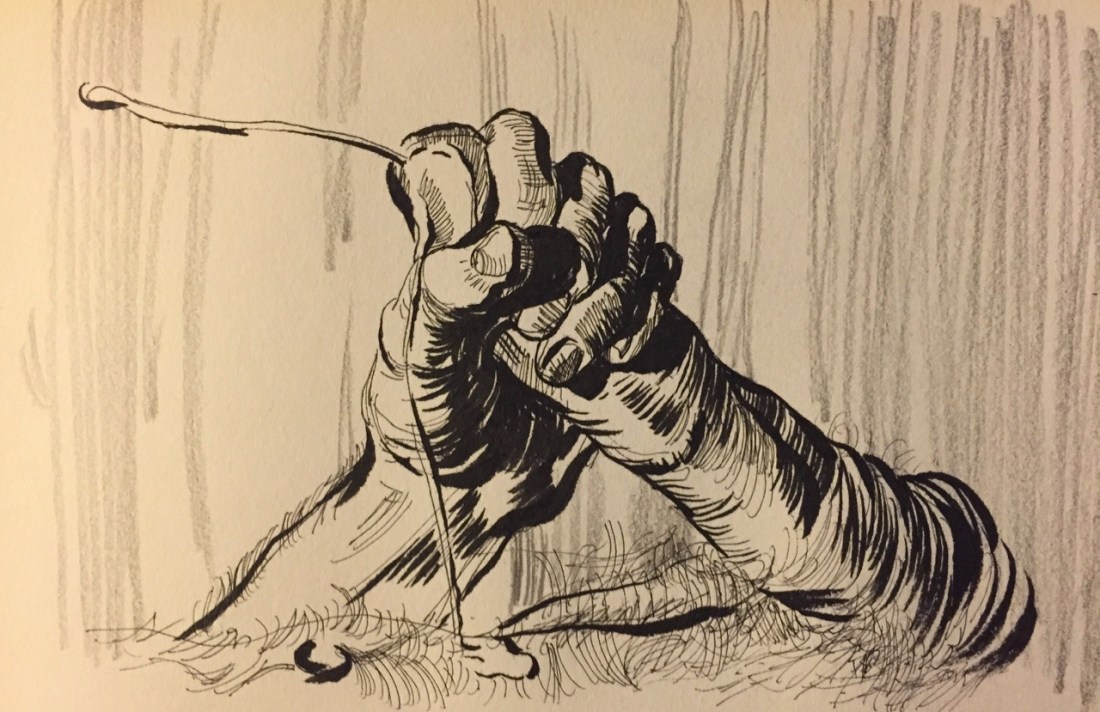
mou5elee – Untitled (2015)
Drawing/illustration is not a field where I have any sort of expertise.
About all I know is the stuff that crossing my Tumblr dashboard and that’s control by the interests and aesthetics of the blogs I follow.
Thus, it’s probably pretentious and definitely solipsistic for me to assert that most of the illustration work I see these days shows one of two characteristics–the sort of clean, minimal look that by this point has been completely co-opted by the tech sector (Apple, web dev standards, etc.) or this sort of Schiele-cum-Picasso styling.
I really like the above because based upon my limited understanding of trends and techniques in illustration, the way this is shaded actually reminds me of woodcuts.

Édouard Chimot – Untitled (1930)
This is clearly a sketch. By that I mean the figures are posed for the artist to render them. Yet here, how they are rendered is interesting. The presumable draped dais upon which they are standing is rendered in the drawing in sculptural fashion–the base requiring strategic load bearing functionality to support the figures rising from it. (It bears mentioning that the shading to suggest depth is masterful and I love the simple line and asymmetrical form of the standing woman’s breasts–an incisive application of the classical contrapposto posture to a female figure.)
And although the poses are hardly exact matches, the tone does remind me very much of Gustav Vigeland’s Kneeling Man Embracing a Standing Woman.
Also, I really like the cartoon face in the margin that appears like what I’d imagine the main character would be in a Jean Vigo directed anime.


 Acetylene Eyes