I spent a couple of hours on trying to source this and the first posting of it appears to have been to a now deleted twitter account. The tattoos should be a give away but beyond the fact that the seem similar to Kiara Winters, it’s appears to be someone who is ripping off her style. The stud is–I’m pretty sure–this creepy actor White Ghetto studios uses a lot.
Beyond that I have no clue. Google’s image search is less and less usable with each passing day.
Does anyone perchance know the source–you know for research
purposes (I’d be interested in expanding on this towards a different end,
actually)?
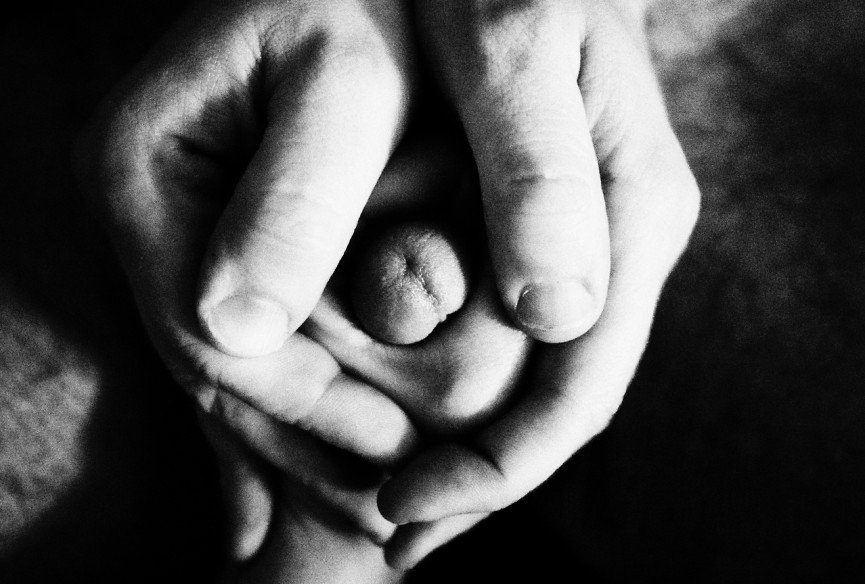
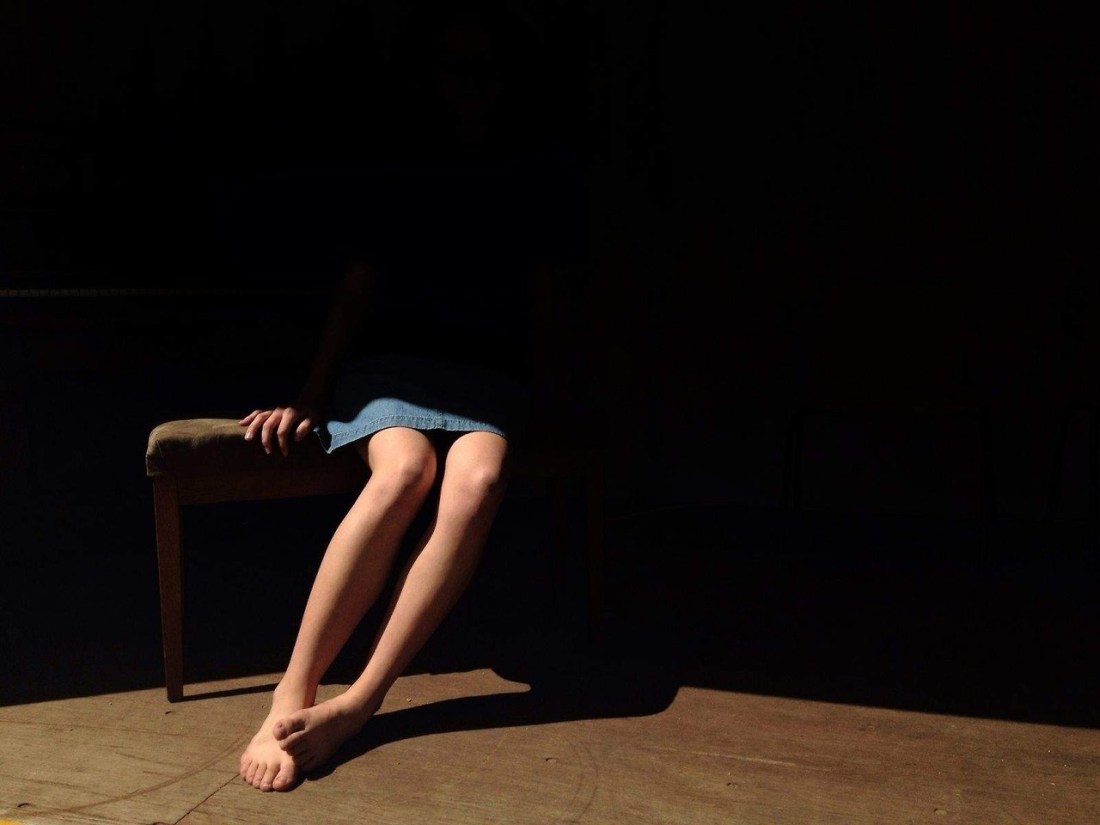
I can’t say I’m all that into Anja Gea Sladič‘s work but this is a magnificent photograph.
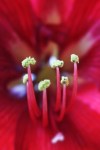
This is ostensibly a photo of someone with a penis masturbating. However–and I am not sure if it’s by design or because my brain is a little bit funky, but it exists as sort of a pareidolia for me; I don’t first see it as someone masturbating or even as a flower (which is actually what I thought it was at second glance), I see it–at least at first–as like one of those scenes from a Terrence Malick project where the characters are passionately and newly in love and they sensually embrace each other in the cream white light transmitted through windows in archetypal middle American single family homes.
The masculine presenting protagonist stands behind the feminine presenting love interest and they kiss and caress and at some point, hands touch her neck and circle under her chin as she’s plied slightly backwards and positioned at the best possible angle for a languid and longing kiss given the angle of the light, etc.
This clearly isn’t a chin–it’s genitalia… but for some reason I have to think of it in terms of a sensual embrace (which isn’t wrong) and as something flower-like before I can see what it is.
It’s maybe not always the best strategy to present the viewer with something it takes them a minute to parse–after all: getting someone to linger over work, to engage and think about what they are seeing is one of the prerequisites of art. This is an instance where I feel the multiplicity of interpretations actually contribute substantively to what is so effective about this piece.
Initially, the plan was to use this post to heap praise upon Allen’s thoroughly distinct and downright exceptional analog photography.
Then I read her artist statement/bio… new plan: let’s talk about how artists speak about their work.
There’s this notion–as far as I know originating with Renoir–that art ceases to be art as soon as it begins to require explanation.
Practically speaking Balthus’ 1968 retrospective at the Tate was probably the last time anyone has gotten away with the let the work speak for itself tact. Curators, gallerists and the gatekeepers of high culture all demand artist statement tributes and offerings of a modicum of veiled explanation. (I am not suggesting that instinct is entirely pointless… just that it almost always undercuts the mystery and nobility of the work. (Not to mention situates the audience in a position not only of passive acceptance but inferior receptivity where one must be educated regarding the merit of what one is has or is about to experience.)
It is very rare that an artist’s statement not only clarifies but also illuminates. Allen’s is an example.
…Sometimes
I just want to photograph things, see the pictures and burn the
negatives. It’s overwhelming at times, all these memories trapped in
36x24mm acetate frames.
..I’m
not doing this for myself, I don’t have much say in what’s going on.
When I look back at what’s come through and what’s been made, I don’t
know how I did most of it. It was another person than I am now. And
now I’m making things that one day I’ll look back on and say, I’m
another person now, once again.
…Everyone’s
a photographer. It’s not so precious anymore. The “print” is lost… on
a search to find it. Old cardboard with moisture stains and a
distressed image with a small frame around it, nothing fancy, something
cherished. I’ve got ideas, about to act on them.
…Fever. Avoiding suicide.
…There’s
actually a group of aliens making my work, I have no idea how it’s
done, they just give it to me and I present it, that’s what you see
here.
…I’m
waking up with the sun everyday, I can feel it peering over the horizon
like a cat meowing to be fed. Laying in bed, thinking about who is the
real Banksy, some article online got my brain spinning too early,
again. I have a ton of friends who are all half my age, I know there’s
something to analyze there. Watching people my age turn into their
parents, they said that would happen. I feel no sense of beginning,
middle and end, I’m living in a timeless existence where one day I will
cease to exist, taking that last breath and never saying anything more
into this world. I’m lost there, in that last breath, extending it for
as long as I can.
…Someone asked me this week what are my photos about? Okay, no one asked me, I was asking myself. And I stood there, silent.
….These
last couple series I’ve been working on, Gestures, Sunken Dream and
Earth Water are shot with 35mm film using multiple exposure techniques.
I shot fireworks, underwater sea life at the aquarium, plants and the
sea and then reshot the same rolls with a figure posing in my studio.
There’s never any digital modification on my photos. I could probably
create something similar with less orchestration involved but It’s just
too easy to use photoshop, I need to be challenged. I don’t like taking
the easy way out, I’ll get burned if necessary. I like process. I
like figuring it out. I like going to the museum and looking up real
close to the canvas and figuring out how the artist made something, and
then I want to know if they were feeling what this piece makes me feel.
I start to wonder about strangers…
… The three stages of Emotional Exile: Shock, Surrender, Catharsis.
… I’m not a fan, I’m an admirer.
… 4:20
….I used to hate photographs where the feet or hands were cut off, but now it doesn’t bother me.
…I
trust myself more than anyone else, especially when it comes to
developing my own film. My kitchen and dining area are my lab. I
photograph my friends, or will pose myself. Some of my friends are
people I’m really close to, some are people I’m not as close to but I
feel a strong connection with. All these people who are at different
places in their lives, figuring it all out.
…There’s a sense of surrender, but not in a losing sense, one who surrenders to themselves and gives up on apologies.
….When
nothing seems like everything and everything seems like nothing.
no-mans-land feels like an invisible trap door. No one, not a one. In
the ear of the great sea, I call it closer. Hear the blahs slipping
into aahs. Timing is a mother fucker.
….I’m
just really into passion fruit. I love the contradicting taste, the
sweet and the sour, the fact that it’s not easy to eat, that I have to
shove my face inside it to lick out all the seeds.
….That
moment when I go out on the road with just me, my cameras and a bag of
various clothing pieces. Into the wild, following the weather until it
brings me somewhere and then I set up the tripod, figure out what to
wear, if anything, and prepare the camera for a shot. Meter the light,
focus, filter. I have 10 seconds to run into place and then place
myself there as if I belonged. On to the next. I promise myself that
every moment I even think about photographing, I have to stop and
capture it. I’m not taking anything for granted.
….There
are a million ways I could describe myself and today I’m going to put
it like this… I’m a contradiction but I mean everything I say. The
noise of the city gets to me and I’m counting the days until I get to
where sweaters. I’m dreaming of traveling to far off places with just
me, my camera and a sense of adventure, meeting random amazing souls
along the way.
I won’t be able to enumerate all the ways this statement compliments her work. However, there is a central theme: fragmentation.
She speaks of her work as if aliens possessed her and while in control her body made the work. She also uses multiple exposures. There’s mention of how the past is discontinuous with the present, etc.
The form of the statement replicates this approach–the disjointed thought fragments in the writing mirror the visual form of her work.
David Bowie famously practiced decoupage–he’d tear up his lyrics and then re-order them looking for new patterns to emerge. Allen is doing something very similar with both her photography and her statement. In effect: making sense of her statement doesn’t so much explain the work as it offers a map of how to approach the work–that is: getting a sense of the words on the page is a process that is more or less interchangeable when applied to the work.
It all reminds me of a conversation I had while back with a friend who was telling me about a course she took where a writing professor taught a course on literary form but in a way which reduced form to graphical representation.
It strikes me that Allen’s work is very much about illustrating how to use photography to read between the lines. (And with the notion of reading between the lines there’s traces of Renoir’s notion of art being opposed to explanation–i.e. telling someone to read between the lines means that you either won’t do it for them or that you can’t because it’s so obvious that if they can’t see it, then the explanation won’t help them.)
Between the lines is actually an idea which can be graphically illustrated, actually:
Yet, it is possible to deploy the same elements of the above graphical representation in a host of manner which preserve the conceptual integrity of the original while providing more open ended interpretations:
Or:
The ratio of shadow to highlight are the same in all three examples, yet they each have a different psycho-aesthetic effect.
It’s a huge leap to realize that photography is hard wired with the ability to illustrate what is between the lines. But that fact that Allen not only realizes it but is exploring the possibilities so assiduously is goddamn breathtaking.
Christer Strömholm – [from first to last] Suzanne and Mimosa (196X); Suzanne and Mimosa (196X); Cobra and Caprice (1961); Narcisse (1968); Soraya and Sonia (1962); Cynthia (196X); Gerdy (196X)
Apparently Strömholm moved from Sweden to Paris towards the end of the 1950s. He took up residence in Place Blanche, at the heart of the red light district.
During his time in this locale, he befriended a number of the trans women sex workers in the neighborhood. (Many of who were working to save up money for gender confirmation surgeries.)
In 1983, he published this photos in a book entitled Les Amies de Place Blanche–of the work, he wrote: It was then and still is about obtaining the freedom to choose one’s own life and identity.
“The skin listens too.” –Pauline Oliveros from Quantum Listening: From Practice to Theory (to practice practice). (via foism)
Mariela Angela – Pear Tarts, Melbourne, Australia (2014)
I have this irritating habit of becoming obsessed to the point of hysteria with certain photos/image and/or photographers/image makers. Above is the latest in a long line.
It started off with Kim Eliot Fung. Continued when I stumbled onto Lynn Kazstanovics’ brillaint work. Again, same with Mathilda Eberhard– seriously tho, if any of you knows Mathilda or could pass a message to her from me, please get in touch. See also: k.flight, Alison Barnes and Sannah Kvist. (I have reason to believe that Mathilda and Sannah are acquainted. But again, I’ve contacted Sannah twice with no response and so anything further seems a bit too close to harassment.)
Anyway, I’ve actually interacted with half of these people. Lynn and I are friends. Kim and k.flight were much more cagey. I both cases part of my interest in them was the way their work seemed to spring fully formed from an internet persona that was almost wraith like in it’s enigmatic as it’s presence as an exercise in absence. Like I still don’t have the first fucking clue who either Kim or k.flight are and I’ve met Kim in person once and k.flight and I were planning to collaborate on something.
The point of all the preamble is that I know absolutely nothing about Mariela Angela except that the above image was made with the camera on a mobile phone. (I know. I’m with you but it’s legit.)
She won an award the previous year for a photo called The Waitress Viola. Again, made with a mobile device and staggeringly well thought out and executed.
She has an Instagram, but it’s private. (Also: fuck Instagram.) Still, if anyone knows more about her and her work, I’d be over-the-moon for more info. The two images I’ve seen of hers are fucking exceptional.
I’ve featured Mokhorev’s work at least once before. (I’m almost positive it’s twice but since Tumblr now hides NSFW content blogs, I have to rely on my own tags to find anything. Alas, I haven’t always been vigilant with regards to tagging, so…)
In the 1990s, Mokhorev was focused on youth culture in St. Petersburg. It was a rather different species than the bohemian, hipster rock n roll rebellion of his compatriot Igor Mukhin; There’s none of the trappings of counter culture and things seem to prosaically orbit the fact that it’s one of the most heavily populated cities nearing the Arctic Circle. Winters are bitterly cold and summer is a time people revel in. As I understand it, getting blitzed on vodka, stripping down and swimming in the Neva is a fairly commonplace occurrence.
There’s a sort of feeling of everlasting summer, of primordial pagan sunworship to his work. It also frequently features folks unabashedly cavorting around in the buff.
Some of his earlier work was a bit disconcerting–frequently featuring nude pre-teens and teens. I’ve spent the morning revisiting his work and what impresses me is that although it is ostensibly interested in nudism, it avoids the trappings of the other two prominent artists interested in nudism, Mona Kuhn and Jock Sturges (in the case of the former, the works remain antisepctic and are less concerned with the conveyance of an sort of concept beyond a sort of idyllic reverie and instead pivot upon questions of form, representation of space and color; whereas Sturges is a perverted hack who dresses up his pedaphiliac ideation in the trappings of fine art legitimacy–I was at one time a fan of his work but increasingly it creeps me out and the work itself relies more on the perception of technical mastery, while demonstrating no such acumen in point of practice.)
I’ve been wary of his work before. Unlike Sturges, however, I have always been fond of it–and suspicious of that fondness. These images make me feel more justified in my admiration.
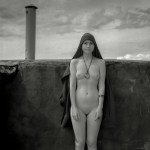
Here’s some things I noticed about his more recent work. [↑] bears more than a passing resemblance to Mark Steinmetz’s Jessica, Athens (1997); Steinmetz is objectively the better photo, but it feels as if Mokhorev only fell short because he was more ambitious in attempting to convey a similar feeling but also opening up the frame more. (I’d bet $20 that he’s very familiar with Steinmetz.) [↗] I like this because it’s a fundamentally intriguing image but also I’m curious what it is he’s holding and he looks a bit like a hedgehog; [+] between the watch on the necklace and the smoke stack behind her (which reminds me of the scene in Mark Romanek’s music video for // | /’s The Perfect Drug, where there’s a funerary urn that has crushed someone leaving only a pair of legs in riding breaches reminiscent of the Wizard of Oz; [↘] this might as well be channeling Rodchenko from beyond the beyond.
The last thing is a technical note. I am certain Mokhorev favors Ilford film stocks. And I am reasonably convinced he uses HP5 pretty much exclusively. While it is absolutely better than the comparable Delta 400 Pro–which is garbage, fwiw–it’s a finicky stock. It’s impressive that he’s getting these kind of results from it. Damn impressive actually. I’d have said that it wasn’t possible prior to seeing these. Also, another little known analog tidbit, there are subtle differences in the emulsion between different formats. The grain is usually more or less the same but there are differences in contrast, dynamic range and tonality. But the backing is always different–especially with Ilford. All the above are medium format except [↓], which is 4×5 sheet film–it’s possible this is not HP5 but in my experience 4×5 has a completely different feel to it than the 35 and 120 formulations of the same stock.
[↑] Adam Miller – Fallout from Compositions series (2012); [+] Akseli Gallen-Kallela – By the River of Tuonela (1903); [↓] All Fine Girls – Vika (201X)
I save things as drafts thinking to myself: self, this belongs here.
Unfortunately–often when it comes to composing some sort of accompanying text, my thoughts scatter like roaches when you flip the light switch.
Dredging through drafts, trying to figure out items to post–it occurred to me that it’s the expressions in these that appeal to me.
In the top image, the woman has an expression which–independent of the title–comes across as mismatched with her surroundings. She looks wild-eyed and terrified except at the same time she’s more engaged than those around her. When I discovered the painting is titled ‘Fallout,’ something finally clicked for me: she’s one of those people who only ever feels fully alive responding to and thrilling in abject chaos and catastrophic tumult.
…
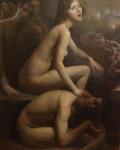
The second painting is based on a the Kalevala–roughly like a cross between the Aeneid and the Icelandic sagas except being fundamentally Finnish (as best as I can tell). The subject of the painting consists of the hero being tasked with completing three difficult tasks, the third of which is slaying a swan on the river Tuonela.
In the painting, the hero (Lemminkäinen) departs in his canoe.
Additional context: this painting was a sketch for a fresco in a mausoleum dedicated to the memory of the daughter of a prominent businessman who died at age eleven. It’s presumably her with the braid trailing down her back and her budding breast exposed, invisible to the other gathered onlookers.
Everything about her suggests that although she does not know what she has lost, she understands what the loss has cost her in a way that no one else can or will.
…
I am unbelievably conflicted about posting this image. It’s porn and not even good porn. Further, I think it is unspeakably heinous when grown ass men refer to women they are attracted to or wish to pursue romantically as ‘girls’–it’s gross and a huge red flag. (And I absolutely judge men I hear do this as total creeps.)
In my experience, to achieve orgasm, you have to stop thinking, stop trying to get off, let go and surrender to an unmediated experience of physical sensation.
By letting go, you can just kind of float there and wait for it like a wave rolling in from the sea. But in letting go, you can also reach for something.
I won’t presume to know what this young woman is experiencing but she is reaching–and with this stunning, febrile desperation. It’s breath-taking to stare at, honestly.
…
When it comes down to it, these expressions are all unusual to witness in person–let alone in visual media. What impresses me and caused me to eventually put them all in the same place is that they are all expressions I’ve seen in the mirror, especially Vika’s desperate reaching. That’s so close to home, I have trouble fighting to urge to claim this as an ersatz self-portrait.
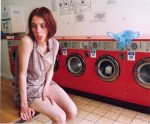
Aino Kannisto – [↑↖ ] Untitled {Launderette} (1999); [↑↗] Untitled {?} (20XX); [↖] Untitled {White Tub} (2008); [↗] Untitled {Stripey Curtains} (2013); [↙] Woman Washing Herself from Delicate Demons {collaboration with Satu Haavisto}; [↘] Woman on a Hospital Bed from Delicate Demons {collaboration with Satu Haavisto} (2014); [↓↙] Untitled {Shower II} (2000); [↓↘] Untitled {Bathtub} (2015)
Um… so… :::looks down at toe of boots and kicks clumsily at imaginary dirt::: this is like really, really, super, above-and-beyond, over-the-top phenomenal work.
Kannisto’s a member of The Helsinki School and fucking A, if you want to you yourself a jealousy aneurysm–go ahead and check that out. (It’s EXTREMELY rare to find a group with this much stellar work to their collective credit.)
Her use of color is more understated that Prue Stent–but understated color that still is integral to the work is actually incredibly difficult to manage.
Plus, I’m always gonna go gaga for any artist that is intimately familiar with both Uta Barth and Johannes Vermeer.
But what I think is most impressive about her work is how she fits so much narrative potential into such minimal and unadorned frames.
God, it is really unnerving to look at work that this incredible–because it’s a rare occasion and it’s happened maybe three times in the almost six years that I’ve been running this blog that I’ve seen indications that what I feel is important to photography as a form is something other artists are also tuned into/turned onto.
Thanks so much to @absolution-v, for his post featuring Kannisto–without it I’d probably have gone another five years without knowing about her. (Also, if you aren’t already, you should definitely check out Absolution-V’s blog–it’s offbeat and eccentric but I’m routinely introduced to work I’d otherwise miss.)
In physics, there is what’s termed the ‘observer effect’. It suggests that by watching (or, I suppose, more accurately: by attempting to measure certain phenomena) the mere act of watching changes that which is observed).
I was unfamiliar with this performance before @psyche8eros featured it–I am super impressed with it, not just in and of itself but also because of how it plays the varying experiences and perspectives of the viewer against each other, and is sharpened in the process.
Fountain pivots on lactation–a physical process.
I’ve known many folks who have been pregnant. Most of those have experienced some degree of anxiety with regards to the question of whether or not to breast feed.
There’s the questions regarding how the body changes during pregnancy as well as post-partum. Concern over whether one’s body can accommodate breast feeding. As well as the social stigmas associated with breast feeding. (Just think back to the most recent manufactured outrage about a new parent breast feeding their child in public and that’s just the tip of the proverbial iceberg.)
This removes feeding of any progeny from the equation and merely illustrates the physicality of the process. And I’m of the opinion that most of the folks I’ve known with such anxieties, would’ve been reassured if they had been able to watch this.
Thus a pregnant viewer is likely to see this video through a very specific filter.
Is this just made for pregnant folks? Hardly.
I think it’s interesting to consider several conceptual points: yes, it’s about lactation but about lactation less any sort of consuming progeny.
In that way it’s not so unlike heterosexual pornography–where procreation is not procreative but focused instead of documenting the pleasure associated with the process. The lighting, milk-droplet dotted flesh and decontextualization are all borrowed from pornography.
So yes, you can see it as lactophilic in nature. (Although I think to see it as only that requires a certain degree of privilege, since the decontextualization–porn-y or otherwise–makes the proceedings about the body, not in any objective way, but by bearing witness to a mechanical process of the body.)
The coup de grace is how the title ties the depiction of process into the art historical tradition of objects (instead of process) as the purpose of art.














 Acetylene Eyes