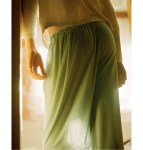

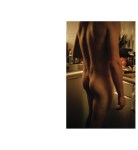

Tereza Cervenova – [↖] Untitled from See Through series (2014); [↗] Untitled from Verse series (2014); [↙] Untitled from Verse series (2014); [↘] Untitled from See Through series (2014)
One need not be especially observant to notice that the art historical depiction of women has been inherently sexist.
It’s at least partly a question of representation. History–being written by the victorious (namely: white cishet men)–necessarily reflects its authors.
Throughout history there have always been women artists. But as the quip goes: Ginger Rogers did everything Fred Astaire did except backwards and wearing heels.* In other words: women have to do twice as much equal to their male peers to be considered by history as half as meritorious.
(As the art terrorists/activists Guerrilla Girls have pointed out: representation of women artists in targeted galleries was only 10% in 1985–just shy of 30 years later, representation has doubled but still is only a paltry 20%).
But not only is the art that has been deemed canonical decidedly authored by men, it’s also produced primarily for the consumption of white, cishet men–a fact so blatantly obvious it seems innocuous.
John Berger famously called this out in his seminal Ways of Seeing, when he took the rote objectification in art history to task–which he referred to as the male gaze. (Although limited to the tradition surrounding the female nude as a subject of Art, his criticism can and should be applied broadly and often to any and all means of plastic visual representation.)
Recently, there has been a trend of young women photographers and image makers whose work has been deemed an active and sustained subversive attack on the tradition surrounding the male gaze. Typically, this is referred to–knee-jerkishly–as ‘the female gaze’.
I’m using scare quotes very specifically here. I’ve taken issue with the term in a handful of previous posts. But I am going to resist the urge to repeat myself beyond saying that I think it could apply to the work of several artists, including Cervenova.
Yet, I suspect that like the other artists where I don’t feel it’s pretentious or arrogant for the artist to deploy such a term, I’d wager that Cervenova would be hesitant to embrace the term as applicable to her own work.
That’s noble enough–but here I think it lends a certain prescience to the work. Cervenova favors vertical orientation. I don’t think accusations of #skinnyframebullshit necessarily fit. (Yes, I’m not sure I’d choose to frame things in this fashion and given a sort of familiarity with landscape vs portrait orientation and the grammar surrounding each, her work doesn’t follow ‘the rules’ but is actually surprisingly consistent. Also, I’m fond of the way self-conscious cropping figures into her framing decisions.)
But rejecting the portrait vs landscape framework hardly makes work worthy of being subversive. What’s so intriguing about Cervenova’s work is the way the frame informs or parses the space the viewer is shown. There’s something solid about it. An authoritative flourish. The act of seeing as a type of intimate sharing.
I keep coming back to that Ginger Rogers line because here are elements in Cervenova’s work that are not unlike say Paul Barbera. Both have a similar interest in using light against type. But I feel like Barbera uses the short hand developed to goose the male gaze while Cervenova pushes things in a more experiential direction–by offering the viewer glimpses of fleeting mementos in limited and contained context. I won’t argue that her work is better but she is taking risks that many established male photographers have never been forced to because they can be safe and respected.
*It’s been pointed out to me that this Astaire/Rogers quip is, at best, myopic.

 Acetylene Eyes