Chris Little – Title Unknown (20XX)

Initially, this image caused my brain to crackle a lil’.

See one of my photographic preoccupations is conveying an entire (or at least the implication of an entire) narrative in a single static frame.

This image is not narrative. The framing is odd and it doesn’t work all that well but the subject is striking enough to round up to interesting.

But: it does provide an unintended cue with regard to the question of the distinction between narrative photography and cinematography.

Namely, images with a narrative slant tend to feature many of the same key aspects of that characteristic bedrock of cinematography: mise-en-scène.

Now, in still images (especially portraits) there is a tendency to place the subject in an environment and then effectively highly and underline the portrait-ness of the image by abstracting the environment. This process is called bokeh; and people will spend thousands of dollars on ultra fast 85mm lenses to maximize their bokeh aesthetic.

Narrative images, on the other hand, tend to go the Greg Toland deep focus/Group f/64 route–presenting an expansive depth of field so that the characters are contextual grounded in their environment.

And I’m not saying that there isn’t a cinematic cross-pollination which borrows from still bokeh and huge depth of field. Yet, what there isn’t really in still images, is the sort of David Fincher-esque shallow depth of field and bokeh wherein, something is blurry and abstract in the foreground, the subject in the mid ground is in sharp focus and the background falls off again towards abstraction. (This isn’t exactly the best example for someone new to the concept but for those who have their footing, it’s hard not to stare at this and not want to furious jill off to the effortless control this shot evinces.)

The thing I wasn’t expecting was to find next to nothing on the photographer. He doesn’t seem to have a web presence anymore. I was able to dig up a version of his old personal website cached on Ye Olde Wayback Machine.  It’s heady stuff–like Noah Kalina, Ryan McGinley and Petra Collins got mad hopped up on methamphetamine at the Hopscotch Festival and passed a 35mm disposable camera back and forth between them.
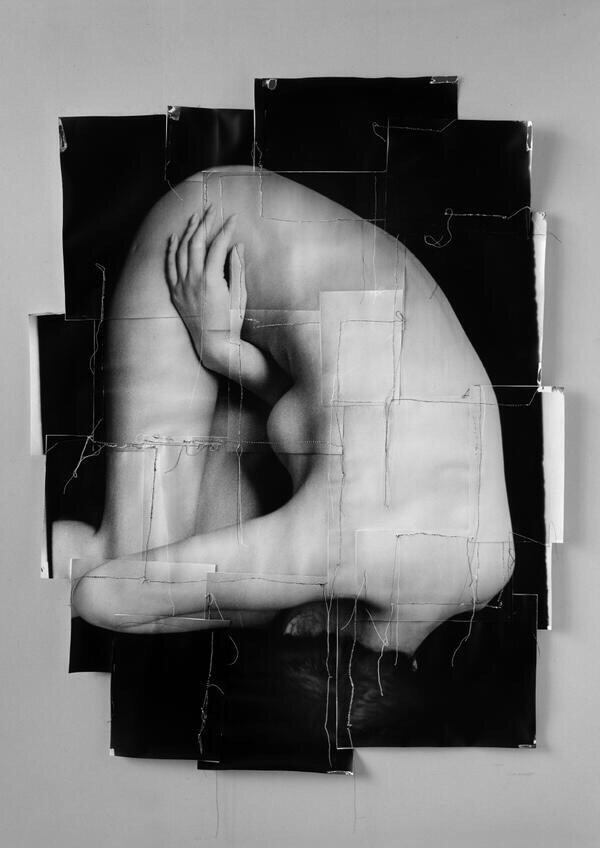
Koo BohnchangIn The Beginning #41 (1995)

It occurs to me that maybe what separates an aesthetically pleasing image from Art has something to do with connectivity–how carefully it is stitched together and to the world surrounding it.

For example, Bohnchang’s body of work entitled Soap, is clearly an exercise in typology. It’s antecedent being the preeminent practitioners of photographic typology Bernd and Hilda Becher. Followed by Ed Ruscha’s Every Building on the Sunset Strip and Chuck Close’s portraits and Sugimoto’s luminous Seascapes.

The thing is: once you start considering typology as a motivation for image making it’s difficult to know where to cease application. In effect, I can’t think of a single so-called fine art photographer whose work in terms of genre, subject or process can’t be interpreted as a inherently typological. (Francesca Woodman would perhaps provide the exception that proved the rule.)

There is something obsessive about typology. So what separates a genuine work of art from something compulsively collected–and I acknowledge the distinction between making the thing you collect and simply acquiring an object.

Bohnchang, in his own words, describes his motivation to make images as being driven “not [by] flinging a camera over my shoulder and heading off to some
unexplored place. For me the thing of real value is looking for what is
inside of me.

I could take the easy way out here and attribute this sentiment to a sort of process as an act of mindfulness. And while I think it is, at least in part, exactly that, there’s also something of an underlying awareness of the connection between that mindful exercise, the form taken by that exercise and the historical interpenetration.

The Becher’s work is genius not because of obsessivenes, it’s brilliant because it finds dignity and beauty in the ugly and ordinary; Ruscha’s efforts and not extraordinary because of their comprehensiveness, they are vital because they expandied the way that photography can present the world as continuous within the scope of singe, static frames; Sugimoto’s ocean as landscape are straight up hypnotic as fuck.

Though I don’t love all Bohnchang’s work, it’s definitely Art. And the reason it is comes as a result of the way his work always contorts in on itself to draw attention to the process that brought it about.

I feel that Matthew Weiner‘s–despite how horribly enormously problematic I find him is as a creator–oft trotted quote fits here:

Artists frequently hide the steps that lead to their masterpieces. They
want their work and their career to be shrouded in the mystery that it
all came out at once. It’s called hiding the brushstrokes, and those who
do it are doing a disservice to people who admire their work and seek
to emulate them. If you don’t get to see the notes, the rewrites, and
the steps, it’s easy to look at a finished product and be under the
illusion that it just came pouring out of someone’s head like that.
People who are young, or still struggling, can get easily discouraged,
because they can’t do it like they thought it was done. An artwork is a
finished product, and it should be, but I always swore to myself that I
would not hide my brushstrokes.

The difference between Weiner and Bonchang is that the former’s brushstrokes point self-consciously to the creator whereas, the latter’s seams point to the historical context, the process of creation and the work itself.

[↑] Source unknown – Title unknown (2009-2010); [↓] Albert FinchJourney.. (2015)

There are literally thousands of reasons why the Harry Potter series was such a cultural watershed. Among the most notable: a consistent worldview/mythology and the way the world is introduced to the reader very much the way humans begin to understand their world, i.e. through limit observation–the reader experiences the world with Harry and then learns the depth and breath through institutionalized education.

It’s funny though because the point where I invested in the story wasn’t when Hagrid arrives. It’s when Harry arrives on Platform 9 ¾ at King’s Cross Station and encounters the Hogwart’s Express train. Whether we realize it or not: there is something in our subconscious that still clings to the wonder of our first–from the standpoint of evolution–encounter with speedy transit.

Trains are fucking magic. Full stop. (And the fact that the wizarding world would enchant a train sells the whole thing in a way that is one of those conceptual coup de graces that there is no way to overestimate.)

The best I’ve ever heard this sense articulated was by Ani DiFranco in her staggering 9/11 elegy entitled Self-Evident, where she laments the problems our addiction to fossil fuel creates:

…once upon a time the line followed the river
and peeked into all the backyards
and the laundry was waving
the graffiti was teasing us
from brick walls and bridges
we were rolling over ridges
through valleys
under stars
i dream of touring like duke ellington
in my own railroad car
i dream of waiting on the tall blonde wooden benches
in a grand station aglow with grace
and then standing out on the platform
and feeling the air on my face

give back the night its distant whistle
give the darkness back its soul
give the big oil companies the finger finally
and relearn how to rock-n-roll

And that’s why, although neither of these images is anywhere near perfect–both feature underexposure and the compositional logic doesn’t really gel–there’s still something compelling about them. It’s almost as if by virtue of the fact that one places a moment that is moving not only in time but also in space in stasis, there is an inherent narrativity to the resulting image.

Consider Pavel Kiselev’s heinously under-edited, but still intriguing Railway Novel. Or, this fragment by Dylanne Lee that doesn’t fit within the themes of this blog but has been almost constantly lurking at the fringe of my consciousness.

Source unknown – Title Unknown (20XX)

Despite this being a terrible image–what exactly are those bars behind them and is that a curtain in the background?–I’m into it.

A good part of the reason I’m into it has to do with it avoiding both the usual MMF cliches of dude bros frat studs high-fiving over a coed they’re having their way with as well as the default tender sentimentality of more bi-curious tuned fare.

There’s something more primal to it.

Admittedly the image doesn’t read as clearly as it could but if you look closely you’ll notice that the woman has semen on her neck. It’s very likely that he started to come and is now finishing in the other guy’s mouth.

The way heteronormative porn handles ejaculation pisses me off and I think we should treat male ejaculation closer to female ejaculation in that… oh, that was cool but we’re just getting started here. (I don’t know about you but the best sex I’ve had has always happened after I’m sure I can’t physically handle further stimulation and then my partner(s) demonstrate to me that I most unequivocally can handle a great deal more than I think I can.

Also, I really love that everyone is so into what’s going on. The guy having intercourse with the woman is clearly into sucking cock and the woman appears to be enjoying herself. (I also really like that her braid is coming unraveled on the wood floor.)

Seeing this makes me feel like maybe there are people out there in the world who fuck the way I think people ought to fuck.

Gene OryxProvocazione (2015)

I’ve stared at this enough to realize it’s a backless evening gown she’s wearing backwards.

Remember that feeling when you were young and on the threshold of sharing your body with someone new? How your back teeth were filled with bees and your knees went all jello-y electric? That’s what her line of the dress caused by her right thumb makes me feel.

(And it’s probably #skinnyframebullshit, but I’m too biased in this case to insist.)

Massimo LeardiniUntitled from Scandinavian Girls (2013)

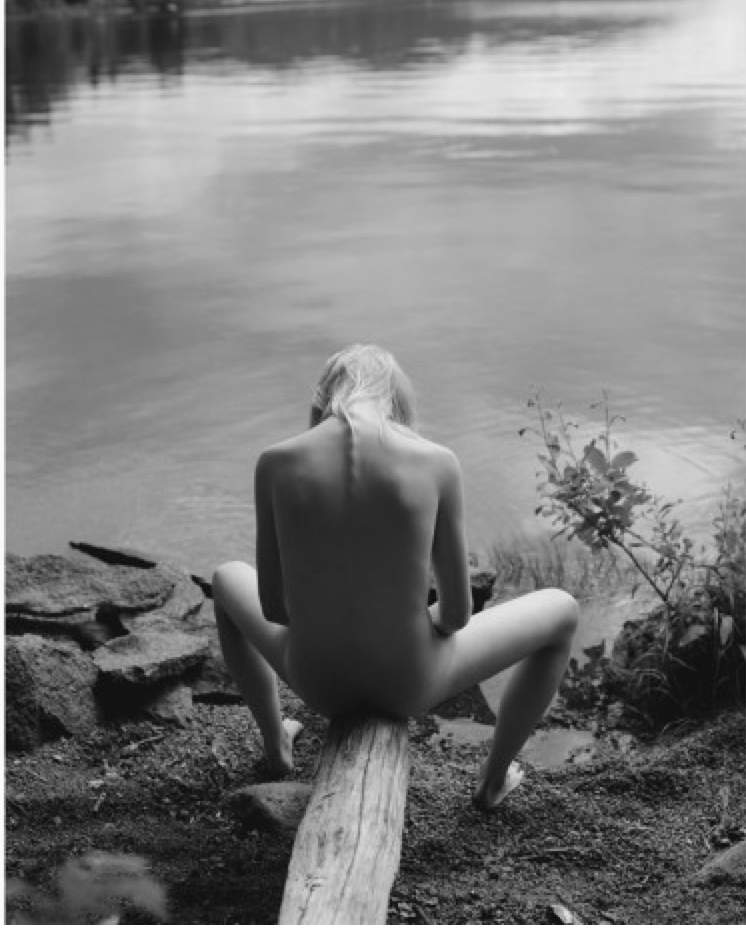
This wears its influences on its sleeve–Jock Sturges and Arno Rafael Minkkinen.

One out of two isn’t bad.

But it also shares common ground with Taiwanese genius Yung Cheng Lin insofar as it chooses implicit insinuation over explicit denotation, i.e. this could be nothing more than a simple image of a sprite nude young woman in nature, yet the pose here can just as easily be read as a sort of adolescent body curiosity which is perhaps even masturbatory; also the positioning of the log could reference Freudian misogyny or–I’ll pretend I’m an optimist today: an underdeveloped theme of genderfuckery. (I don’t really think that last suggestion fits because in this case the vertical composition is logically consistent with the image; yeah, it’s phallic as fuck but at least the skinny frame is logically consistent.)

In other words, I’m into this image on a conceptual level and not so much w/r/t technique–there’s almost no highlight detail which limits contrast and tonal separation by hazing out the middle greys. (Imagine what this would’ve looked like with the 3D pop that you can get when you effing nail the exposure with an appropriately contrasty film stock.)

Grit Siwonia* (2010)

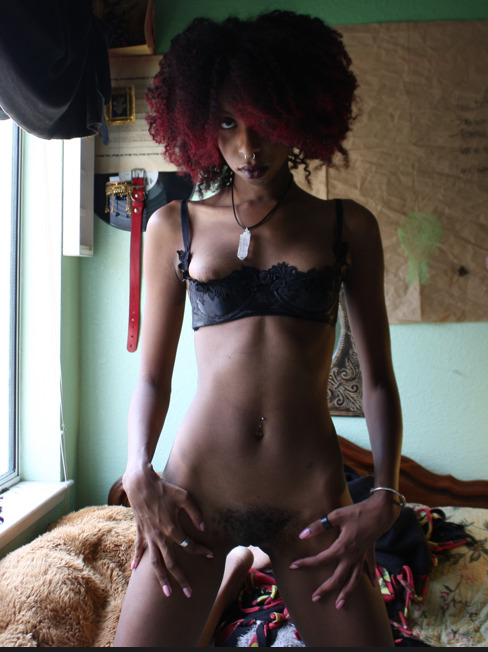
Siwonia work is squarely fashion/editorial as far as genre goes. But it takes the genres recognizable sensibilities and steeps them in a sort of Shutterstock vision of better living and then filters it all through a precocious awareness of how the Flickr Explore algorithm functions.

Not to knock those skills–they are as scarce as hen’s teeth–but if that were all there was to see, I wouldn’t be arsed with it.

There’s an underlying vitality to the work, though. Something to do with texture, gesture, expression and reverence–all deeply felt/experienced and manifested incisively.

Nate Walton – Alex Papa in Malibu (2014)

Echoes of Nan Goldin’s Kathe in the Tub, Berlin, 1984.

I effing love this image. The way the back lighting creates such stunning separation between the background and Papa’s body–especially her face, neck and torso. The tension between her stillness and the dynamism of spattered droplets frozen in the air–how they convincingly resemble the grain in high speed color negative film.

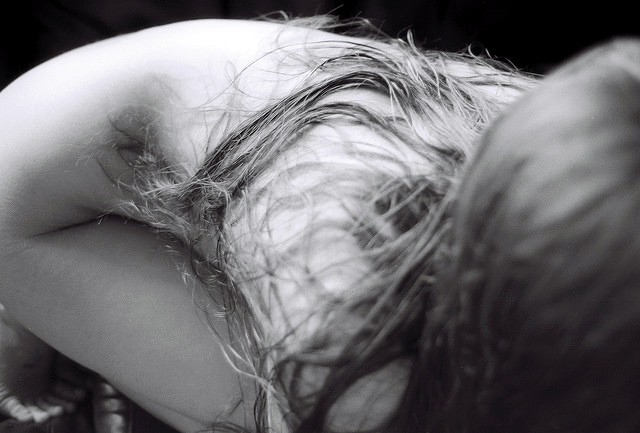
Jacs FishburneAnd the stars falling cold in the river vales where we found ourselves again (2015)

We need to talk about how absolutely in-fucking-credible the work Jacs has been doing lately is.

‘Breathtaking’, ‘spectacular’, ‘the level beyond the next level’: pick a top shelf superlative and fill in the blank. I promise no matter the word, it won’t be overstating the matter.