Alina Senchuk (goodbyestockholm)

Normal
0

false
false
false

EN-US
X-NONE
X-NONE

/* Style Definitions */
table.MsoNormalTable
{mso-style-name:”Table Normal”;
mso-tstyle-rowband-size:0;
mso-tstyle-colband-size:0;
mso-style-noshow:yes;
mso-style-priority:99;
mso-style-parent:””;
mso-padding-alt:0in 5.4pt 0in 5.4pt;
mso-para-margin-top:0in;
mso-para-margin-right:0in;
mso-para-margin-bottom:10.0pt;
mso-para-margin-left:0in;
line-height:115%;
mso-pagination:widow-orphan;
font-size:12.0pt;
mso-bidi-font-size:11.0pt;
font-family:”Garamond”,”serif”;}
La petit mort  2011

It is difficult to speak the truth, for although there is only one truth, it is alive and therefore has a live and changing face.

Normal
0

false
false
false

EN-US
X-NONE
X-NONE

/* Style Definitions */
table.MsoNormalTable
{mso-style-name:”Table Normal”;
mso-tstyle-rowband-size:0;
mso-tstyle-colband-size:0;
mso-style-noshow:yes;
mso-style-priority:99;
mso-style-parent:””;
mso-padding-alt:0in 5.4pt 0in 5.4pt;
mso-para-margin-top:0in;
mso-para-margin-right:0in;
mso-para-margin-bottom:10.0pt;
mso-para-margin-left:0in;
line-height:115%;
mso-pagination:widow-orphan;
font-size:12.0pt;
mso-bidi-font-size:11.0pt;
font-family:”Garamond”,”serif”;}
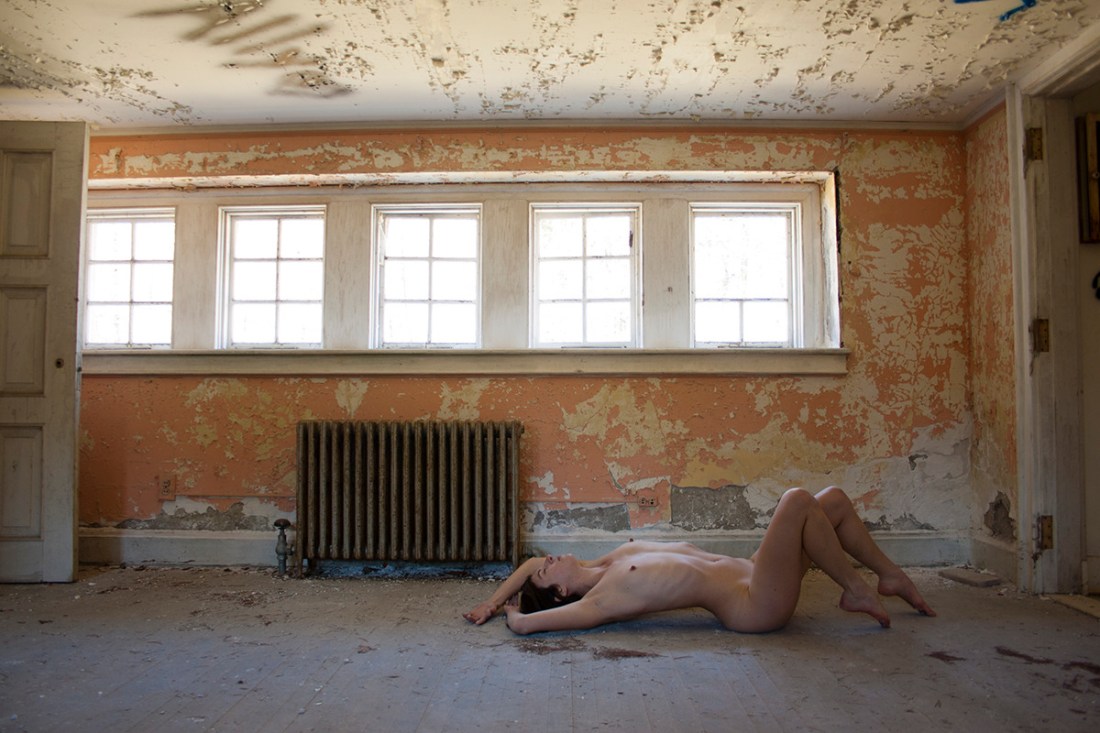
Franz Kafka

rawpix:

May21s†♥mirror/†he…mind(Daniel Schaefer)★

Roulé

Normal
0

false
false
false

EN-US
X-NONE
X-NONE

/* Style Definitions */
table.MsoNormalTable
{mso-style-name:”Table Normal”;
mso-tstyle-rowband-size:0;
mso-tstyle-colband-size:0;
mso-style-noshow:yes;
mso-style-priority:99;
mso-style-parent:””;
mso-padding-alt:0in 5.4pt 0in 5.4pt;
mso-para-margin-top:0in;
mso-para-margin-right:0in;
mso-para-margin-bottom:10.0pt;
mso-para-margin-left:0in;
line-height:115%;
mso-pagination:widow-orphan;
font-size:12.0pt;
mso-bidi-font-size:11.0pt;
font-family:”Garamond”,”serif”;}

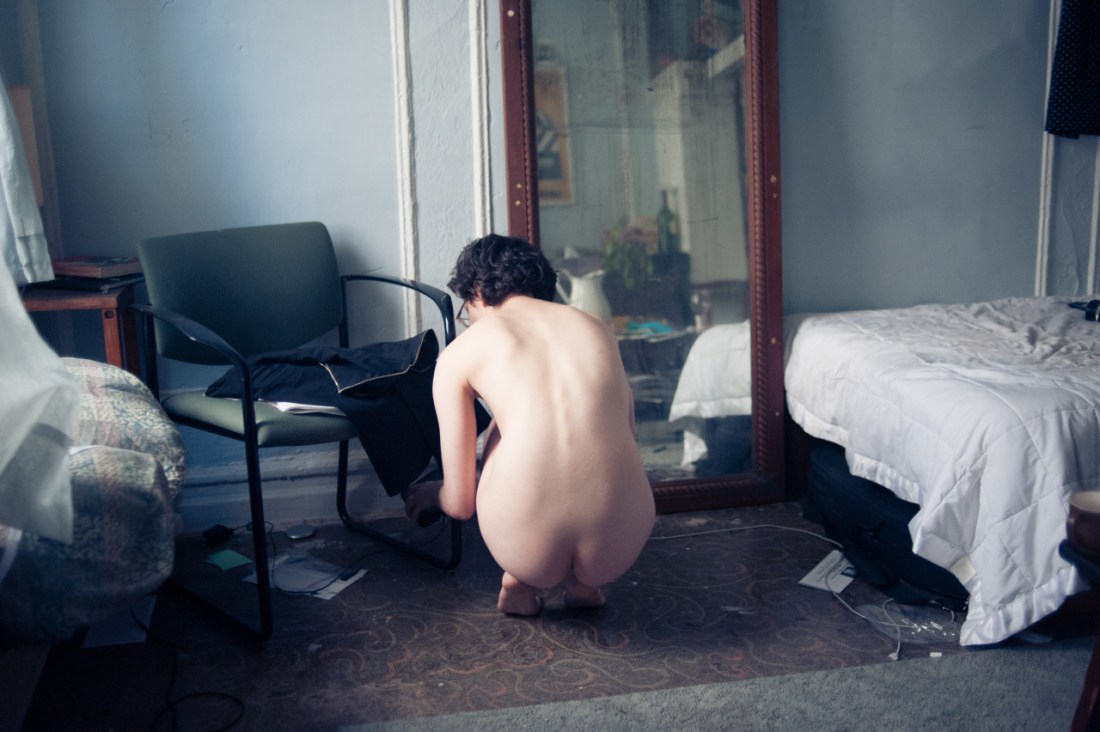
This interior—with its Spartan-with-Bohemian-pretenses—is reminiscent of my shitty, first-post college apartment in NYC.

What’s more startling is the resemblance of the young woman to the lover with whom I shared much of my time in that apartment. She, who in the pauses between our lovemaking, would crawl kneel o check the message on her phone she’d leave charging on the floor just like this.

The composition has an imprecise, snapshot immediacy which would almost certainly have appeared stale and uninspired were it not for the mirror’s reflection adding some much needed depth. Yet, what this image nails is presenting an ideal scale for everything the image contains.

Although she is kneeling, the frame is only slightly taller than she would be if she were standing. If she stood, the frame would have to move in order to contain her. In other words, she is the frame’s anchor—not vice versa; she agency in inhabit a space with implicit instead of merely appearing as an ancillary decoration.

raynetupelo:

Rayne Tupelo (self-portrait)

Normal
0

false
false
false

EN-US
X-NONE
X-NONE

/* Style Definitions */
table.MsoNormalTable
{mso-style-name:”Table Normal”;
mso-tstyle-rowband-size:0;
mso-tstyle-colband-size:0;
mso-style-noshow:yes;
mso-style-priority:99;
mso-style-parent:””;
mso-padding-alt:0in 5.4pt 0in 5.4pt;
mso-para-margin-top:0in;
mso-para-margin-right:0in;
mso-para-margin-bottom:10.0pt;
mso-para-margin-left:0in;
line-height:115%;
mso-pagination:widow-orphan;
font-size:12.0pt;
mso-bidi-font-size:11.0pt;
font-family:”Garamond”,”serif”;}

You really ought to be following image maker/model Rayne Tupelo if you aren’t already.

Her modeling work exemplifies an unusual comfortable-in-her-skin explicitness you don’t often see.

As comely and edgy as her modeling work is, for me it takes a back seat to her images. Her experience before the camera almost certainly defines how she operates behind it. She shoots models with varying body types and while she does not demanding the same level of openness from them that she expects of herself, her portraits are shot through and through a precocious acceptance of/respect for vulnerability and beauty.

If I could ever get up the courage to photograph complete strangers (or you know, get behind a camera again for that matter), although I’m a fan of Cam Damage, Nettie Harris and Kara Neko, I’d want to work with Ms. Tupelo.

Normal
0

false
false
false

EN-US
X-NONE
X-NONE

/* Style Definitions */
table.MsoNormalTable
{mso-style-name:”Table Normal”;
mso-tstyle-rowband-size:0;
mso-tstyle-colband-size:0;
mso-style-noshow:yes;
mso-style-priority:99;
mso-style-parent:””;
mso-padding-alt:0in 5.4pt 0in 5.4pt;
mso-para-margin-top:0in;
mso-para-margin-right:0in;
mso-para-margin-bottom:10.0pt;
mso-para-margin-left:0in;
line-height:115%;
mso-pagination:widow-orphan;
font-size:12.0pt;
mso-bidi-font-size:11.0pt;
font-family:”Garamond”,”serif”;}

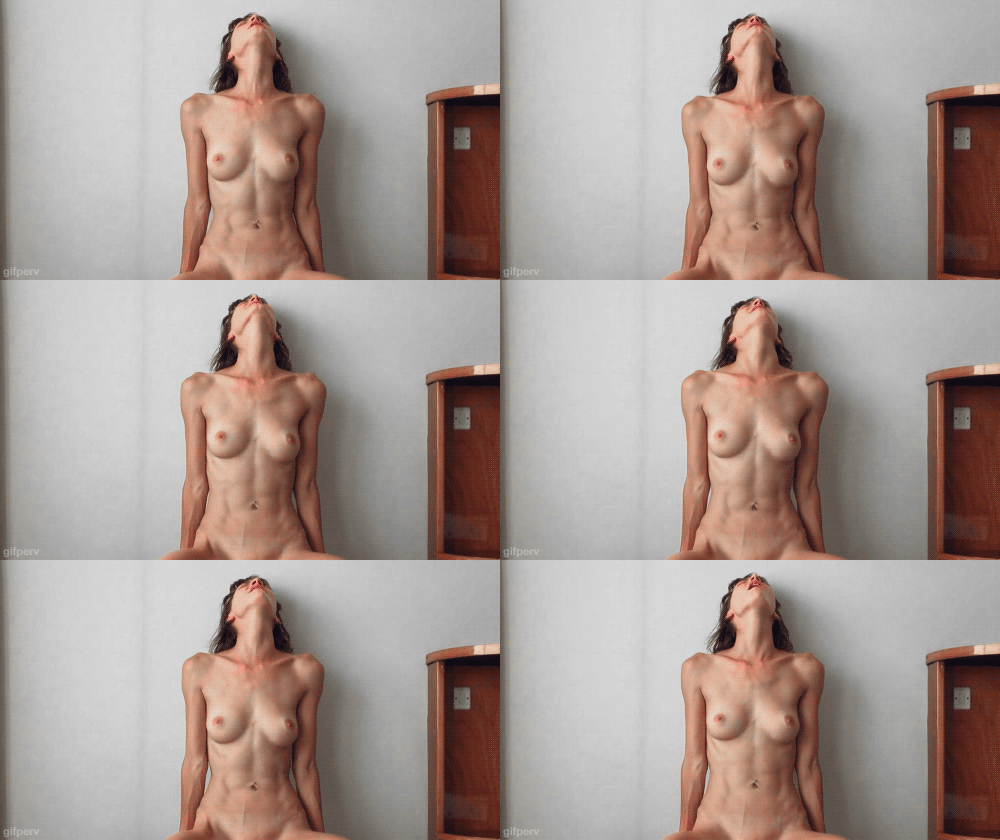
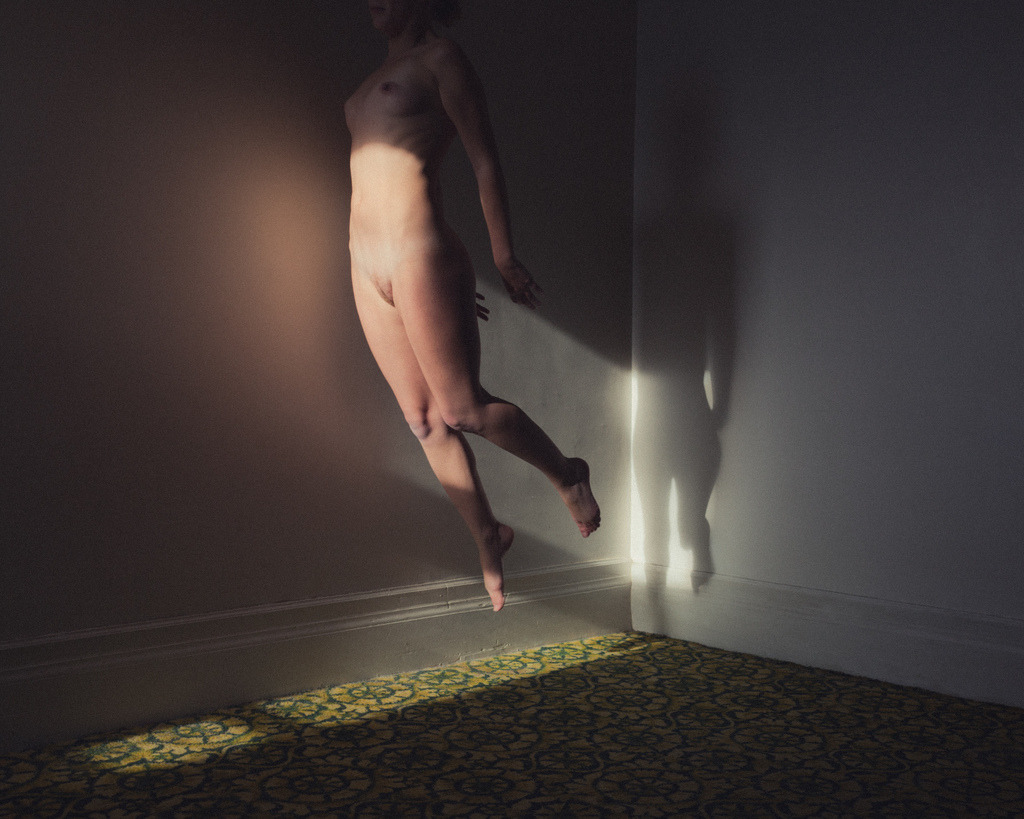
There’s a cropped, desaturated version of this with nearly 5K notes.

I’m not knocking it altogether—whoever shopped it had to have some fierce chops to dodge the area around the right eye while keeping the skin tone throughout consistent.

The edit emphasizes the young woman as a signifier of conventional beauty norms. It’s a flat casual shot.

It’s not how it reads in color, with the original framing.

This way the image is not flat. The single source of illumination is a skylight visible in the top-right corner of the frame. There is a dynamic contrast range—dark underexposed shadow areas to bright overexposed light pooling on the young woman’s skin.

And this way the awkward framing the removes the top of the young woman’s head and deletes her feet is logically explained by additional context—namely, the room is very small and the image maker is likely backed against a wall.

The original resonates with a warmth and intimacy—the antithesis of casuality.

syntheticpubes:

by Benoit Paillé

Normal
0

false
false
false

EN-US
X-NONE
X-NONE

/* Style Definitions */
table.MsoNormalTable
{mso-style-name:”Table Normal”;
mso-tstyle-rowband-size:0;
mso-tstyle-colband-size:0;
mso-style-noshow:yes;
mso-style-priority:99;
mso-style-parent:””;
mso-padding-alt:0in 5.4pt 0in 5.4pt;
mso-para-margin-top:0in;
mso-para-margin-right:0in;
mso-para-margin-bottom:10.0pt;
mso-para-margin-left:0in;
line-height:115%;
mso-pagination:widow-orphan;
font-size:12.0pt;
mso-bidi-font-size:11.0pt;
font-family:”Garamond”,”serif”;}
An image of Paillé’s—from the World Rainbow Gathering in Guatemala—slid across my dash several months ago.

Intrigued, I quickly found his candid portraits of illegal Ivorian immigrants working as “beaters” outside Paris’ Chateau D’eau Station. Despite the conceptually problematic aspects of the project—fetishizing alterity, for starters—the detail and precise exposure control floored me.

The majority of his works causes me to suffer an uncharacteristic loss for words. I am never particularly enamored with his choice of subjects and I think his use of color borders on gratuitous hyper-stylization. But damn if I don’t absolutely dig his eye.

However, the thing that makes his work so distinct is for me less a visual signature and more an attitude toward the subject. I’ve found it’s always stupid to try to say something that has already been said well better, so there’s this quote from Thich Nhat Hanh:

            You must love in such a way that the person you love feels free.

To my eye, that is what makes a Benoit Paillé image so unique—he seems less concerned with taking a picture than offer his camera as a means of recording the intrinsic truth that comes from sharing a holy moment.

danishprinciple:

[Siren by] Stephen Carroll

I am about as anti-digital as you can get short of Nottinghamshire circa November 1811.

In the broadest strokes my grudge distills to rejecting the commonplace assumption that since the physical process and user interfaces involved in making a photograph and a digital image is similar, there exists an interchangeable equivalency between them.

Fucking bullshit.

Analog photography produces a physical artifact representing a moment in time. That resulting artifact—negative or positive—stands in relationship to both the moment of creation and all subsequent retellings.

Digital image making translates light into a phenomenally long string of ones and zeros.

As a result of these differences, each process responds differently to similar situations.

  • Digital can’t handle overexposure; negative stocks benefit from mild overexposure.
  • Digital has immense depth of field even large apertures; film shot using fast lens with the aperture fully open have a narrow depth of field (DOF).
  • Digital makes it easier to capture an image in low-light settings as result of its extended DOF; however, digital is incapable (and will always fall short) of rendering a true black.

Digital works best when its limitations are embraced instead of obfuscated. (Recall the scenes in Zodiac where they are driving around at night and nothing is really dark so much as murky vs. The Social Network where wide open prime lenses stopped down to the correct aperture using ND filters in an effort to create a more filmic DOF and instead resulted in emphasizing the deathly plastic pallor digital imposes on everything and looked less like film.)

As much as a detest digital, there are a small group of people who embracing the multifarious shortcomings of digital and do interesting things.

  • Noah Kalina has created a cottage industry using the sweet spot just inside to digital overexposure margine for fashion editorial work.
  • Pedro Costa’s Colossal Youth is one of the few instances wherein digital proved superior to film.

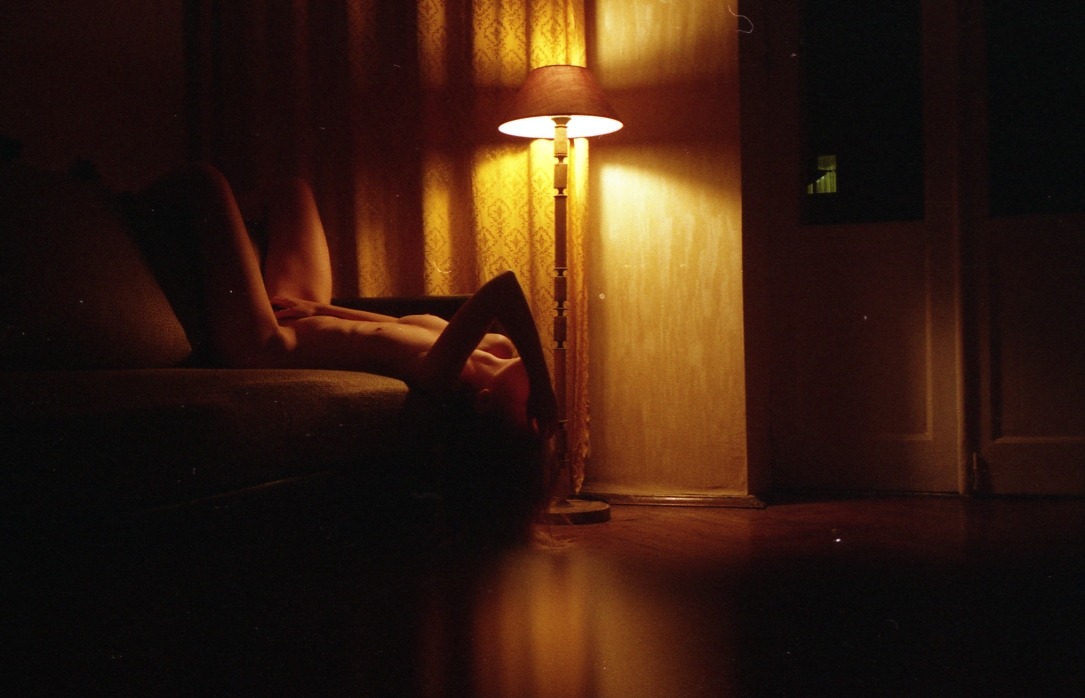
After seeing the image above and how it employs the same deathly plastic pallor I loathe so much in digital as a hyper-stylized means of conveying the ethereally phantasmal splendor of fading light on still water and wet skin.

kalkibodhi:

The reach through

KalkiBodhi Archives

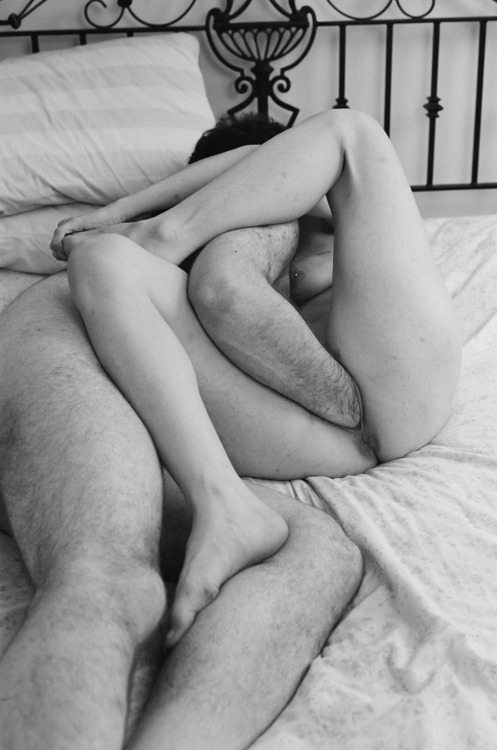
Even though it’s oriented without any goddamn regard for compositional logic and lacks the technical rigor and sophistication of say a comparable work by Robert Mapplethorpe, this image is noteworthy for avoiding the visual impoverishment which seems to follow as an almost natural consequence of focusing on the extremity of the act– an experience contrary to the experience of fisting and being fisted.

Not that extremity should be excluded. It is more that any roughness or violence in the exchange is– at least in my own experience– is beside the point. It’s about intimacy/connection; or, more specifically it strips the pretense and affectation of intimacy/connections, laying bare the vital underlying vulnerability. 

That’s my two cents, anyway. And since our experiences ends up projected outward on the world around us, this is what I see here.

Plus, I think it’s hell of sexy that you can see her piercing.