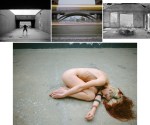
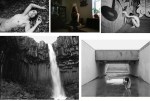
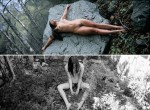
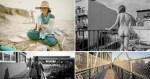


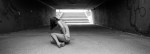
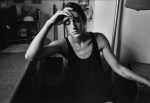
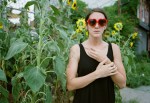
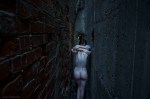
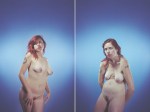
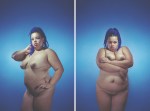
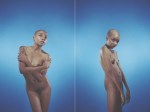
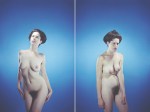
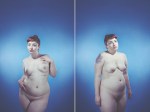
wonderlust photoworks – [top to bottom; left to right] Mx Incohate (2014); Homesick for the Distances (2015); 29:18 collaboration with Anonymous (2010); Map in the Maze collaboration with @camdamage (2015); A Dark Chant collaboration with @marissalynnla (2016); Baba Yaga collaboration with @suspendedinlight (2017); Hasp collaboration with @kyotocat (2016); Svartifoss (2015); Echo (2019); Woodland Cathedral collaboration with @marissalynnla (2016); Wombs + Tombs collaboration with @kyotocat (2016); Hold Me Now or Hold Me Never (2017); A Piece of the Sky collaboration with @suspendedinlight (2016); Coney Island, October (2016); Two Red Plastic Bags (2015); Samson’s Riddle collaboration with Kelsey Dylan (2016); Moxie (2016); Hold Me Like the Landscape Holds the Light (2017); Heart-Shaped Sunglasses + Helianthuses collaboration with Jacs Fishburne (2016); Emma collaboration with @kyotocat (2016)
Since I’ve been yammering on about it, it seemed only fair to share with the rest of the class. Above is the work I am submitting to MFA programs. (Apologies for some of the early formatting awkwardness…I had to trick Tumblr into letting me upload everything to a single post.)
The accompanying statement reads as follows:
I grew up in a Christian doomsday cult—an experience which forged a lifelong
preoccupation with the conceptual interpenetration of sin/transgression + salvation/
transcendence.
Storytelling figured prominently in this milieu—scads of Trojan horse fables secreting ideological payloads—but, also: beautiful, expansive conversations which were
less dialogue + more interactive sharing of stories not unlike a carefully curated anthology places various parts in implicit dialogue across the whole.
This effusive sharing sparked a strong sensitivity for wonderment which drew me
to music (something that saved me, continues to save me) + lead in turn to Johannes
Vermeer’s paintings, Andrei Tarkovsky’s oneiric long takes, William Eggleston’s impeccable dye transfers + Francesca Woodman gothic self-portraiture.
(Other artists to whose work I perennially return? Chris Burden, Duane Michals,
Rackstraw Downes, Ana Medieta, Peter Hujar, Kelli Connell, Aino Kannisto + Allison
Barnes.)
The enormity of experiencing beauty has always seemed a profound responsibility—as if in seeing there is a duty to labor in whatever way one is able to give something
back for what one have so undeservingly received.
My own art making process begins with the identification of a “visual problem” +
fits the form of a question*—e.g. How might a single, static frame imply a narrative
arc? (This question maneuvered me from cinematography to fine art photography.)
Any rendering of a person in an environment suggests narrative potential insofar
as the viewer asks who the figure is (characterization) + how she came to be in this particular scene (causation) + what she is doing there (context).
This introduces a second, more complicated conceptual problem. Given that photographing people is a minefield of political + ethical quandaries, how does one depict
identity, gender + sexuality while actively thwarting the art historical, dominant (hetero-partiarchal) gaze?
The only means I have found to ameliorate this is to conceptualize my photography as collaborative . I seek out + work with artists—sharing my questions with
them, asking each to bring their ideas + personal sensibilities to the proceedings.
When I am behind the camera, I refuse to allow myself to fixate on conceptual
considerations. Instead, I trust the preparation + planning that has led to the point of
making something. I proceed instinctively, acting less as author + more as a steward/midwife; the camera serves as a means of extending my capacity to feel outward—both
from the standpoint of sensory stimulus but also with regard to emotional resonance.
When what I see through the viewfinder feels like a response to the visual problem(s), I
snap the shutter.
My strategy for editing retraces the above steps from conceptualization to execution except in reverse order + with one notable exception: my collaborators receive “first
edit”, i.e. if they are uncomfortable with any aspect of their depiction they can opt to exclude any image(s) from further consideration—allowing for the exercise of personal
agency in expressing identity within the context of visual representation.
From what remains, I review the work with special attention to frames which
exhibit ‘good’ composition in tandem with unity between form + visual grammar. Work
which surprises me hints at subsequent avenues of exploration (whether by expanding
my understanding of one or more problems or suggesting more effective ways of addressing those problem). Time has taught me the photos which evoke a feeling similar to
what I felt when the shutter clicked are the ones that matter.
I am at a point in my life where it feels as if I am on the cusp of making a leap
forward in my work—the work is asking me to commit to it. The [REDACTED] program would allow me to dedicate myself to my work for two years—allowing me to take risks + experiment, e.g. I am fascinated by the ways my process
overlaps with conceptual + performance based modalities of art making; also: how might it possible to convey visually something of the feeling of gender dysphoria?
The [REDACTED] MFA would not only foster a richer understanding of art history,
it would also provide a in-depth interdisciplinary insight into the working practice of
cohorts + faculty in an edgy, forward thinking creative community
*Trial + error have shown me that a good question anticipates less an answer and instead suggests a better/more focused question.








 Acetylene Eyes