
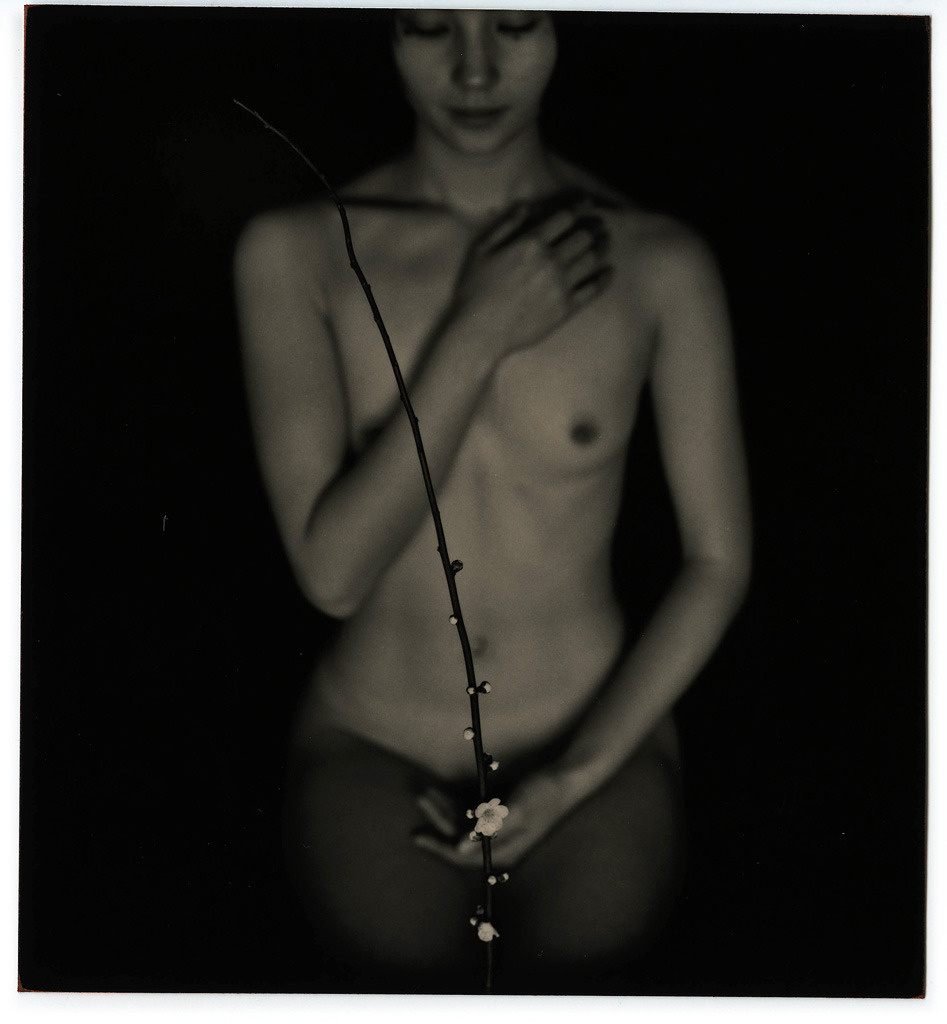
Masao Yamamoto – 1270, from Nakazora (2001)
I’ve been on Tumblr pretty much every day since mid-to-late 2010. I’ve borne witness to a half dozen or so major changes that have infuriated users and caused folks to scream bloody murder about how they’re killing the site.
The last six months have been especially harrowing. Except… I’m not seeing a lot of screaming this time around. It seems like everyone who has been threatening to leave-has and that leaves two groups: folks like me who are too stubborn to quit and noobs who aren’t super hip to the way the platform words (or, more likely: don’t care).
It’s becoming increasingly challenging to keep this blog up and running, honestly. I mean: previously, I had more content I wanted to post than I had time to prepare posts. Now? Now, there’s still things I want to post–but it’s fewer and further between. I’m less able to pick what photo or image I’m most excited about and instead I’m having to focus more on curation. (This is probably a good thing for my brain but there are times when I feel like folks–in general–are less engaged with the proceedings.
Take the photo above. I’ve been wracking my brain trying to figure out what to say about it. It’s not that I don’t like Yamamoto–I’ve posted another of his photos several years back.
I know most of his work centers on landscapes and nudes. And that he uses tea to tone his prints.
I had some notion that there’s something of William Blake in his work. But, that’s not an assertion I can necessarily support beyond just saying it feels that way to me.
I reread his Wikipedia page and noticed this statement: “[he] makes installation art with his small photographs to show how each print is part of a larger reality.”
This suggests an interplay between images within a given context being important to understanding his work. I googled “nakazora”; it returned the following from the publisher of this work:
Dictionary Definition of Nakazora: The space between sky and earth, the
place where birds, etc. fly. Empty air. An internal hollow. Vague.
Hollow. Around the center of the sky. Or, emptiness. A state when the
feet do not touch the ground. Inattentiveness. The inability to decide
between two things. Midway. The center of the sky (the zenith). A
Buddhist term. Nakazora is our second publication on the work of
Japanese artist Masao Yamamoto. But this is no book: the artist has
designed a scroll measuring over eighteen feet long, beautifully printed
in process color on uncoated Japanese stock. The timelessness of
Yamamoto’s imagery is beautifully echoed in scroll presentation. The
scroll was one of the earliest vehicles used for storing and presenting
visual information. Nakazora combines the aesthetic and tactile
attributes of this traditionally one-off format with the advantages of
modern printing technology. A striking marriage of traditional and
hi-tech materials and production techniques, Nakazora redefines the term
‘artists’ book.’
I can’t think of scrolls in an art context without flashing to Caroless Schneemann’s Interior Scroll. But it seems that my initial instinct with Blake isn’t far off the mark–since short of illuminated manuscripts, Blake was kind of the progenitor of ‘artist’s books’.
I suspect that the similarities run deeper than that but at present I am too brain drained from once again packing all of my worldly possessions in preparation to move ¼ of the way around the world…
 Acetylene Eyes