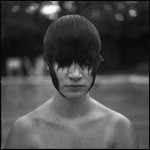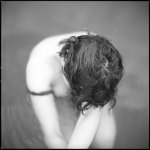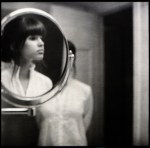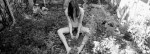


Petter HegreAqua feat. Cleo (2015)

When it comes to Hegre and his ‘art’, I have mixed feelings.

One the one hand: no matter if it’s his artier forays (a la above) or his more pornographic stuff, he absolutely has a knack for carefully considered, subtly nuanced rendering of light–especially in terms of skintone.

The other hand? He has access to a stable of imaging gear far exceeding the inventory of most high end rental establishments. (For example: the images above were made using a PhaseOne IQ3 80MB medium format digital back–an item that likely set Hegre back $60K when he purchased it.)

I’m not going to hate on someone for having the wherewithal to invest in a camera that costs as much as a sports car. But more often than not I don’t see what that investment contributes to his work. For example: it’s not exactly ideal but there but there is more than a passing resemblance between these images of Cleo and Jock Sturges color work. (Yes, Sturges is working in 8×10 large format–thus there is again the issue of the preciousness of the equipment. Also, I think Sturges’ is probably a gold star pedophile and I think his efforts to sidestep this diminish his work. In the case of his B&W photos, they are–IMO–over-praised. However, his color work is not as easily shrugged off.)

Anyway, I was looking at the set from which I culled these images. (If you click the Aqua in the title, you can see the set 16 images of which these 4 are a part.)

Looking at all 16 images, it occurred to me that likely what bothers me about Hegre so much is his emphatic insistence that his work is art.

Now, if he means that his work exhibits technically accomplishment–that’s one thing. It’s rather another for him to hire a model, get her to disrobe and then take a bunch of pictures of her and then edit hundreds of photos down to a dozen or so of the best of the best.

Yet given the 16 images in this series, there’s not a great deal of consistency. The one vertical composition arguable has better tonality than the rest but it sticks out like a sore thumb. Also, the order in which the vertical composition is inserted actually distracts from the visual flow between images in the series. Further, the look at the camera ignore the camera on the part of the model is hell of indecisive. (Although, it occurred to me that although it is unlikely this was the intention: there is something about seeing vs not seeing that is highly erotic–i.e. when I am watching a lover body intersect with my own I may alternate between watch out bodies coming together to heighten the physicality of my arousal, however as arousal stretch ever closer to crescendo there grows a tension from which focus on visual stimulus may actually prove to be a distraction.)

It wasn’t easy to distill this series into a smaller grouping. I do think there are several of the images that could easily be dropped. There are several where the angle of her face is unflattering–but I suspect the image was kept because of the posture of her body. And I specifically dropped the one image that shows most clearly that Cleo is positioned in shallow water near a ledge where the water suddenly becomes deeper.

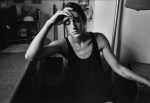
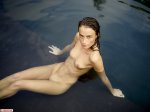
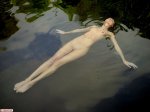
With this edit, it’s not so hard for me to concede that maybe Hegre isn’t as pretentious as a think of him as being. I mean if you sort of squint and take the sense of the portrait in the top left image, the sense of quiet reverie in the top right image, the sense of place in the lower left image and the sense of ethereal physicality in the lower right image–there is a fully formed and conceptually sophisticated single scene that suggests itself in the intersections between the images.

However, that I chose these images from a wider set and then ordered them in the fashion I did (which suggests something not unlike a narrative progression) is what it took for me to be able to see that.

Perhaps Hegre had something roughly analogous in mind. Or not. In all likelihood what he does requires a certain degree of open ended-ness in order to account for the various interests and appetites of the consumer. Really, I think that’s the crux of my frustration with Hegre: he could clearly produce more resonant and uncompromising work but he seems more interested in commercial viability. (Something which strikes me as a shame and a waste of talent.)
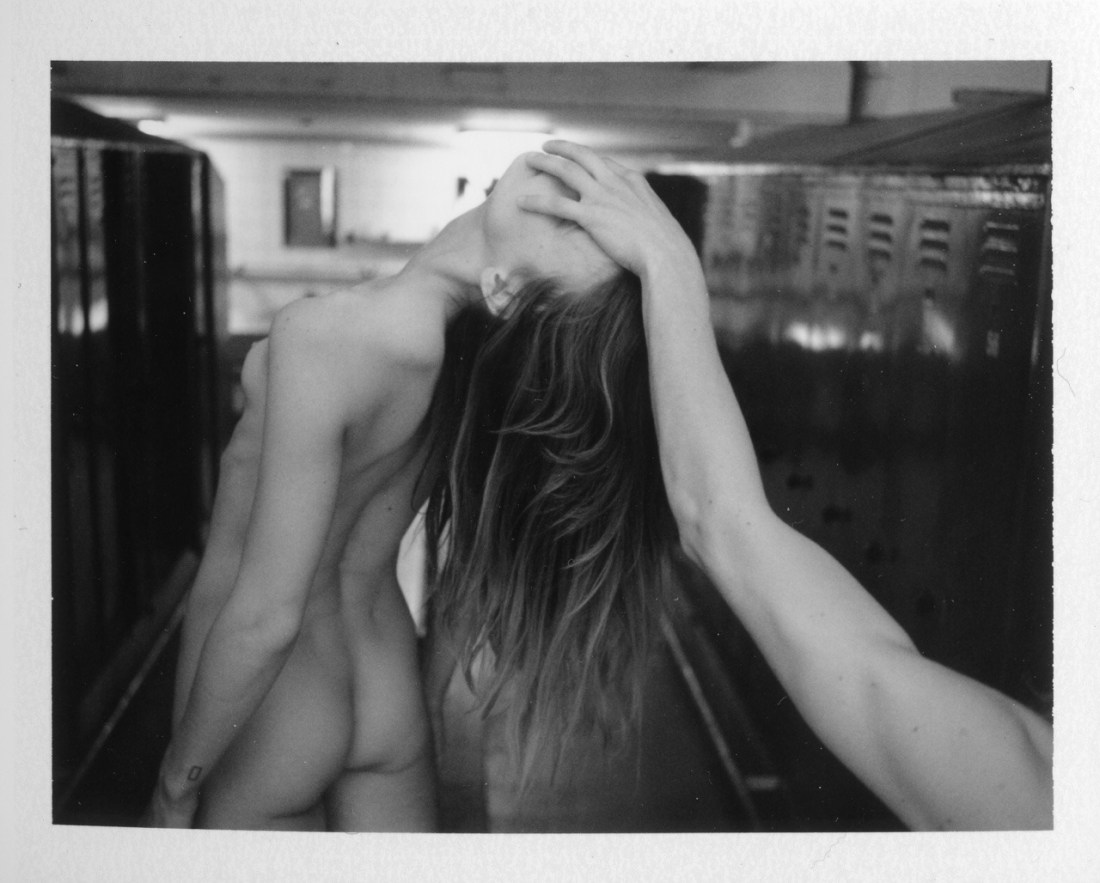
AdeYdependency (2015)

I think it was in third grade where we learned about the five questions a good reporter always answers when relaying a story: Who? What? Where? When? And How?

This isn’t exactly a shabby mode of approaching art, come to think of it. Except, there’s perhaps a proscribed order (at least as far as visual art goes).

I suggest you start by asking: what is this, what am I looking at?

In this case, it’s a stereotypical locker room–rows of lockers on either side of a central bench running along an aisle. A woman (nude) is standing on top of the bench leaning backwards in a manner that has to be both uncomfortable and precarious as far as balance goes. A male arm extends into the frame from the lower right corner; its hand holding her face not unlike a basketball superstar slam dunking.

The lighting in the locker room indicates that it is currently unoccupied and the lighting on the interaction in the foreground has a sort of cinematic flare that is suggestive of a nightmare tableau or horror film. (I can’t look at this and not think of the penultimate scene in It Follows–where they fight the monster at an indoor pool.)

What is seen speaks to viscerality/physicality but in a fashion that is unsettling/menacing/sinister.

Now–if this we’re in hanging in a gallery–there would be some placard someone explaining that the artist’s name, the title of the piece (if there is one) when it was made, where the nationality of the artist, perhaps (I’m pretty sure he hails from Sweden). Astute galleries will address the how with notes on media (in this case medium format Polaroid), the size of the work, provenance and ownership/bibliographical information).

And here’s what I think people who think art is dumb mean when they criticize it. If you’re going to understand what you’re looking at, you often have to conduct the same operation multiple times. In this case, when you get to the title, i.e. ‘dependency’, you are forced to ask yourself what that means in the context of what you’ve already figured you’d gotten super clear about.

The first thing I think of is that dependency can indicate something suspended–like a pendulum or the Sword of Damocles hanging by a single hair from a horses tail. (The position of her head to his hand is in keeping with this reading and it further strengthens my original notion that there’s something malevolent happening here.)

The second thing that pops into my head is this woman I walked by two mornings ago. She was speaking loudly on her phone to someone and I heard her say: I’m not going to waste my time on you, ‘cause I can’t depend on your ass for nuthin’.

I think there’s a tendency to view dependence as a bad thing. But I’m a dependent upon food, water, shelter and clothing (alas, we have not yet returned to the naked idyll of Eden). I depend on my job to pay me for the work that I do so that I can trade the money I earn in order to survive and exist in the world. I–personally–am also dependent upon a steady stream of illicit substances to counter the stress of functioning somewhat normally in this completely fucked world.

In other words, there are degrees of dependency and degrees of acceptability of various forms of dependency which general relate to whether they serve society or the individual.

Yet, my gut is that the sinister tone is a projection I’m placing onto the image–and it’s a strange feeling. I’m not used to it. And when I poke at it a bit more things shift for me.

My BFF and I have been talking recently about how depression–despite being awful and numbing–is actually sometimes beneficial.  When you’re numb the generally awful stuff has a muted effect and things need to be really horrendous to register. That’s a defense mechanism, of sorts. I think this photo functions similarly.

For me it’s about the fact that her face isn’t so much held as covered–the proceedings the viewer witnesses here are reasonably anonymous. And anonymity is a concept without a point unless the one who wishes to be anonymous is likely to be seen.

It feels to me like this is–in a fumbling way–trying to get at the dichotomy wherein the voyeur watches in order to see/understand and the subject wishes to both be seen and unseen at once.

And if this is more than just pedestrian hearsay, which equivocation muddles meaning more–that of the voyeur or that of the subject?

Jordi Gual – Untitled (200X)

I have posted one of Gual’s photos before. I’d link to it except after Tumblr’s NSFW schism, Google searches are no help in tracking down previous comment anymore. (And they were never exactly steller, if we’re honest.)

It doesn’t much matter. The post–as I recall–was not able to provide attribution for this photo. At the time, I posted it because I admired the subject’s fashion sense (being similar to my own with an emphasis on comfort and sumptuously soft textures).

I still love the photo. In fact, it’s grown on me since I last saw it.

Now, as I’m re-encountering it in the context of proper attribution I’m a little unnerved at how prescient my reaction was to the work.

See: Jordi Gual is an analog photographer born, raised and residing in Spain. His work focuses on his family–his wife and his two daughters, predominantly.

His oldest daughter, Natalia, was born blind. She is the subject of the photo I posted previously and it appears to be she who is the focus of the upper five photos here.

Beyond traces of his work work that are still floating around the digital aether, he doesn’t seem to have an online presence. That’s unfortunate. He’s not as technically accomplished as someone like say Patricio Suraez; and he’s no more effective at creating moody portraits than some pretentious jack ass hipster shooting in B&W because it’s ‘artsier’; however, what he does have in goddamn spades is a preternatural knack for facilitating unsettled tension.

What little is left of his work on-line sports all sorts of folks imposing their reactions to the work as it’s impetus–oh, it’s ‘sinister’, ‘disturbing’ or ‘sad’. I–for one–reject such facile efforts to pin the work under the viewers finger.

Even I referred to the work as ‘unsettled’ but that was an effort not to project my own view onto the work merely point to the thing about it which I think is crucial and absolutely vital in a way that few things being made these days have even the vaguest ability to imagine in their wildest dreamings: Gual feels like a madman architect who builds ornate structures on shifting sands. He’s studied the sands enough to know that what he builds will stand the test of time but acknowledges that the shape can be–ultimately–maleable beyond his control. In effect, he is walling off an sort of dialogue the viewer can have with any sort of notion of the image being a decisive moment; instead, the viewer is given a moment that is unknowable with regards to any definitive resolution.

I don’t know really know how to say it any better than that but if you understand what I’m pointing toward and squint a bit, you’ll likely start to discern the outline. Even if you don’t, this is some extremely next level shit right here. I hope this guy is still shooting because the B&W stuff of his that you can still find is exquisite and his color work (1 & 2) is also fucking stunning.

alveoliphotography:

August, 2015.

Tiffany Helms x Alveoli Photography

This post is guest curated by @suspendedinlight.

As someone usually preoccupied with stillness, my favourite thing about
Alveoli Photography’s work is actually how it always feels on the verge
of coming to life. I can look at his images and feel that they are
moving and breathing. Also I genuinely think
Tiffany Helms is one of the most talented faces out there right now.
Her expressions are so genuine, she can tell an entire story, sell an
entire image with her eyes. I can’t decide with this one whether she
might be inviting the viewer in or walking them
out.

wonderlust photoworks in collaboration with @kyotocat – [↑] Vestibular; [+] Hasp; [↓] Wombs & Tombs (2016)

I’ve highlighted Emma’s intensity, poise and versatility several times already.

When I found out she was passing through NYC on her way back from overseas, I contacted her to see if she wanted to work together.

Given her work, my expectations were impossibly high and she still managed to exceed them by a factor of at least 20.

The hardest part of editing was selecting scenes where I managed to–through some fumbled bumbling miracle–make a photo that didn’t completely distract from her cultivated sense of her body in space/time, her meticulously considered poses and affinity for experimentation.

Honestly, I held back about a half dozen good images; simply due to the fact that afforded the opportunity to work with her again, I am certain we can do them better than they turned out this time ‘round…

Laura KampmanUntitled (2015)

I’d post this just based on the exquisite tonal range and use of the depth of field–the mid-ground is soft while the background (both actual and reflected are sharp).

But really this deserves to be celebrated as a testament to discipline.

Anyone who’s ever tried to take a Traci Matlock-esque mirror self-portrait without looking through the viewfinder, knows it’s nowhere as easy as it looks.

But here Kampman is using a TLR–so she doesn’t even have the benefit of a  straight forward view as I’m reasonably certain that Rolleis mirror left to right in the waist level finder.

And she’s set things up with very thin margins as far as composition, so this is emblematic of a degree of mastery I’ll admit I lack the patience necessary to cultivate.