Joanne TaosuwanThe Cold, The Dark & The Silence (2008)

I could probably yammer on for a couple of paragraphs about opacity–you know: transmission vs reflectivity w/r/t light.

But even thought it’s just a shower curtain, I can’t help but see it as the surface of a puddle seething with tadpoles and she’s a god like figure who unfolds time and space and unfolds her creation by unfurling it, throwing it away from her, letting the wind catch it and then letting it drift slowing to lay upon the ground–not unlike you’d cover a bed with the topsheet in the process of making it.

If you see it like that it’s not hard to imagine this as an image of a piece with William Blake’s metaphysical illustrations. Perhaps that’s why this has imprinted itself so indelibly on my mind.

topoftheshaft:

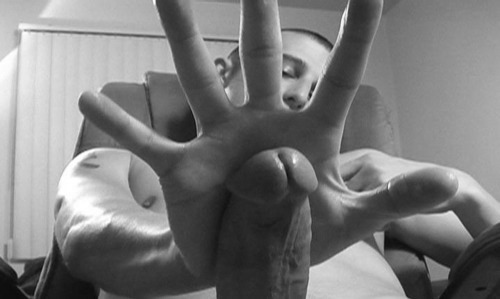
Time Seems Like a Blur When You Cum

Bill in Exile – Load Dump (2010)

Let’s consider the previous poster’s comment because I think it’s actually insightful af.

It’s impossible to describe the taste of coffee to someone who has never had it. But you don’t try to describe it, you brew a cup and say: taste this, it’s warm and delicious. (Or, if you’re me and can’t stand warm beverages, you break out the Chameleon Cold Brew.)

It’s interesting: before I ever used marijuana, a number of people had explained to me what it was to be stoned. I remember being like uh, wait, I don’t get it.

After I smoked up, I totally got it. There’s no way to describe it. It’s like the taste of coffee–once you’ve had it, you’ll never forget what it tastes like. But you also don’t ever remember not knowing what it tastes like.

Literacy is probably a better example. Once you learn to read you know–practically–that at a certain point you didn’t know how; but the knowing overrides the memory of not knowing. (Like I’m a bit precocious in that I remember very specific things from as young as six months. So I can remember seeing signs before I was able to read and being able to read them in my recollection even though I couldn’t have read them at the time.)

Again, that only works ex post facto. You sort of have to walk to the edge and jump.

Consider this scenario: you’re sitting in your room and suddenly the brightest red cardinal darts in through the window and lands on the back of a chair. The incongruity is stunning to you and the surprise of it shakes your brain out of it’s perpetual classifying and organizing: this is inside, this is outside; me vs. not me, when do I need to leave to meet Su for dinner, etc. But in that moment of unplanned surprise, there is the briefest of moments where you are too surprised to label or otherwise interpret the scene.

And when you tell people about it your explanation will last ten times longer than the moment did. Our eyes see and even though we can’t see the act of our eyes seeing, that is how our brain processes it–we see routinely as if through a mirror darkly. But in moments of self-transcendence it’s like the experience of needing glasses and never having had them and then when you put them on you’re just like OMFG at all the details you’ve been missing.

Interestingly, virtually every account I’m familiar with as far as mystical/self-transcendent experience involves the distension of time. You can see 100 things for every one you’d normally notice and because your brain is too shocked to filter any of it, it just all comes in and you absorb it.

So the person who posted this image is actually very much on point with their observation. Orgasm does share a number of points of commonality with transcendent experience in my… er, experience. And if I’m not mistaken that’s why church and state are so down on drugs and an openness to sexual expression–when you realize the kingdom’s keys are within your grasp why would you give the first half a fuck about an institutional intercessor?

Source unknown – Title Unknown (201X)

I’ve yammered on at great length before about distinguishing between selfies and self-portraiture–but where is the line?

Strictly speaking, this isn’t a selfie. Except… the process that went into making it is almost certainly comparable. I mean the view could be a screen cap from chaturbate that’s been desaturated…

I think anything where you’re consulting a live view in order to compose and frame the image counts as a selfie. Thus: if you’re composing your shot and then setting the self timer before running to get into position–that’s a self-portrait. A micro 4/3 camera with a flip around screen that you can just look at to position yourself in the frame without getting behind the camera is a selfie still.

The question of whether selfies can be art is mired and wrapped round and round with barbed wire because the context is tied up in the context of selfies, where one is trying to appear a certain fashion aligned with their digital curation of self. Not that an artist can’t do that, it’s just that it’s been done already–so that means do it better than Cindy Sherman or go the fuck home. (Sherman was a self-portraitist, so there’s that, too.)

The context of selfies hinges almost entirely on authorial intentionality–and that’s a totally BS line of questioning. Was the selfie an ontological virtual back of the memory of an event–I know I was here because pics, it did happen. Or, is this the version of myself I’m aspiring to be and the selfie is part road map, part fuel for the trip ahead. (Baudrillard would have a freaking field day.) Is it a form of self-care–a radically body positive reclamation of creating a new context wherein you exert a degree of agency in how you are seen by the world (which you may not have recourse to in your day-to-day)? Is it about saying: sharing something with others instead of insisting upon digital attention in the form of likes, regrams/reblogs, etc.?

And please don’t mistake me: I’m not willing to say oh, vanity, vanity all is vanity and dismiss something as art due to a concept that is so steeped–historically–in misogynistic fervor. Whereas I do believe that Art is more about what’s given than what’s taken.

I just worry that so many of the impetuses for selfies are centered upon style over content–essentially canceling out any sort of compositional logical or visual grammar in a quest for something that is on-brand (stylistically consistent) and on fleek (immediate and attention inviting).

I think this is nowhere less front and center than with dick picks. I mean any photo or image that is erotically charged is already fueled by the dichotomy between what looks good and feels good. Models don’t point there toes because it makes it easier to hold a position, they do it because it slims and shapes the body in ways that have come to be accepted as aesthetically desirable.

It seems there are two kinds of dick pics, generally speaking: the look how hard I am help me out type (which the above is not) or the I was really turned on and felt attractive.

This is definitely that latter type but it’s interesting because it is unified in content and form in such a way that it doesn’t seem to be making a choice between what looks good and what feels good. It’s played toward the camera but in a way that conveys a lot about the subject.

Or, perhaps, I’m just once again reading entirely too much into random porn on the Interwebz.

Source unknown – Title unknown (201X)

This is not a good image. It’s a victim of shitting lighting in a small bathroom and being taken on a front facing camera phone propped up against a soap dispenser or tooth brush caddy. (I wouldn’t say it’s #skinnyframebullshit, however.)

But there’s something that ought to be a greater concern than whether or not an image is good. This is poignant and brave and because of those two things it’s also true and alive in a way that few things in life are.

Or to put it another way: this goes a lot deeper than your usual camera phone in front of the mirror in a state of provocative dress or undress, that have become de rigeur among mid-to-late teens and twenty somethings. It says I wasn’t sure I wanted to know but I decided that not knowing was worse than knowing. (If there’s a prerequisite for being an artist, it’s probably that.)

Author uncredited – COS PRIMAVERA/ESTATE (2017)

When you start learning photography, you’ll have a lot of maxims thrown your way:

  • 400 speed film stock should always be shot @ 320 ISO
  • Expose for shadows; develop for highlights.

The premise behind both of this isn’t nefarious. I mean the 400/320 thing actually was a huge benefit for certain Kodak B&W stocks–all of which are no extinct (to my knowledge).

But you’ll have someone like me who rates a a half dozen rolls of 400 speed stock at 320 ISO and is subsequently displeased with the result so then goes on to shoot another half dozen rolls at the 400 box speed and is equally dissatisfied and only then realizes that maybe it’s the film stock that’s not working for me.

The expose for shadows; develop for highlights is useful. But I’d rather teach someone how to actually use the Sunny 16 rule to shoot without a light meter and then teach the expose for shadows and develop for highlights after the student has spent a year or so honing their dark room chops saving overexposed prints.

There is one thing I heard Mark Steinmetz suggest in a lecture that is actually indi-fucking-spensable. He talks about how in the afternoon, you’re walking down the street with your camera loaded with B&W film and you find that walking on the side of the street in shade, everything looks flat and muddy but if you cross to the sunny side of the street, shit just pops off your negs.

The reverse is true of color. Too much light is a bad thing but if you cross over to the shady side of the street.. bingo, your colors look better. (And, in truth, your colors are never going to look better than golden hour or for like three hours after its rained in the spring but the clouds are still hanging around and the grey against the green just super saturates everything. Swoon.)

But the point is well taken here. There’s entirely too much light for this image to have worked in color. This is likely digital–but it’s smartly executed–the gray scale grade of the background means that you can actually let the white of the suit blow out completely at points but the lost detail in the highlight tone just conveys a brighter white. (With only a few exceptions the only folks doing anything interesting in digital cinematography are actually exploiting this same trick.)

Hiroko Shiina AKA C7Conium maculatum (2015)

I could opt to digress about the gorgeously filigreed line work (which to my eye is on par with Albrecht Dürer); or, I could rant about Shiva‘s multiple arms.

And speaking of multiple arms–it’s wonderful and rich with meaning the way the hands embracing her for a second appear as if they are hers but at least two of them belong to the person holding onto her (in a mix of comforting or perhaps more accurately sharing of sorrow) but also at the same time there’s a unsettling fondling feel to things. (The two hands on her body are clearly signaled as masculine.)

But what transfixes me, I’m talking hypnotically mesmerizes me is the way she’s catching her heart with her dress–her heart appearing as if it’s exploded out of her chest in a bursting bloom of Baby’s Breath, looking less like an organ and more than a little like a plant trimming left soaking in water long enough to begin to form root structures.

The way she’s catching the heart reminds me of that scene early in Twain’s Huck Finn where Huck dresses as a girl to attempt to gain information from a local farmer, his disguises is quickly seen through thanks to the gender essentialist tests of Mrs. Judith Loftus. (In particularly, the woman asks Huck to thread a needle–he fails; hit a rat with a lump of lead–he succeeds; and, to catch something tossed toward his lap–he slams his legs together to protect his testicles, whereas a young lady would spread her legs so that the surface of her dress would act as a trampoline to aide in catching the object.)

But really I’m kind of just so completely in awe of this because everything about it speaks to me on so many freaking levels–especially as a non-binary trans girl who (personally) has no interest in medically transitioning. I suspose that means I’m officially out to you, dear followers…

The resonance is so strong, in fact, that I am seriously thinking about getting this as a tattoo on my left tricep…

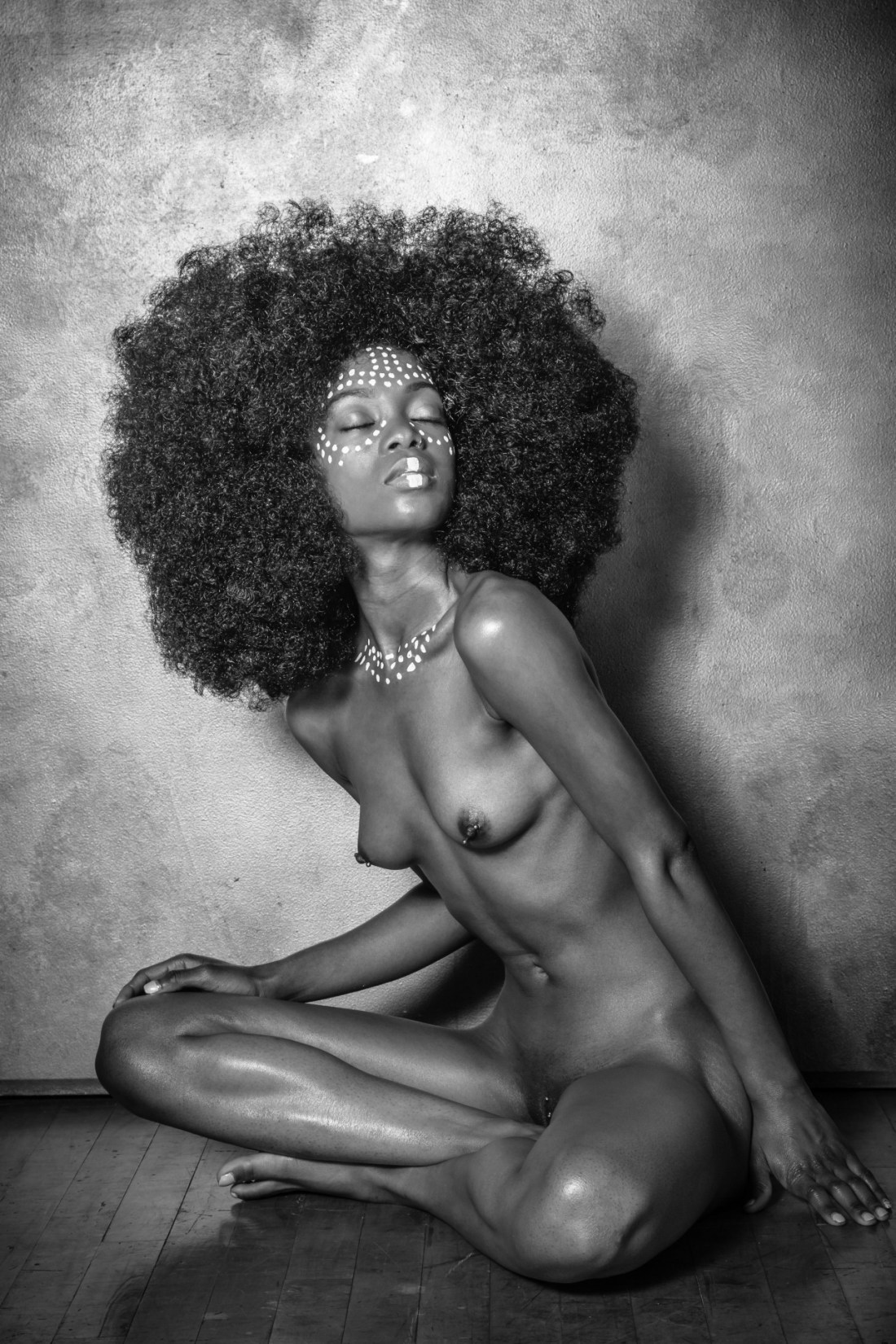
Cem EdisboyluFRG3519 (2015)

I’m trying to figure out how to talk to you about Edisboylou’s work.

As best I can tell the work is primarily digital monochrome. There’s no one unifying thread. Yes, there’s a consistent focus on the solitude-isolation spectrum and a fascination with an arguably too rigidly circumscribed preoccupation with femininity as form–which is, yes, you guessed it: problematic.

It’s been said that the edges of an image’s frame are like a thumbprint. In other words, through attention to what’s included vs excluded, it is possible to reliably determine authorship.

No one is every going to confuse a Richard Avedon photo with one made by Robert Frank.

Avedon and Frank aren’t really the best examples. Genre-wise Avedon was a fashion photographer/portraitist and Frank was a documentarian. (Salgado–a fellow documentarian would have been a better choice…but I digress.)

Edisboylou doesn’t combine his work to one genre. A few of his images qualify as portraits, the rest are mostly distinguished by lofty, fine art aspirations.

The thing I keep coming back to in struggling to figure out how to encapsulate his work is an analogy to alchemy.

Generally, we’ve come to think of alchemy as some bent back old nutter with a Fu Manchu beard pouring bubbling concoctions from one test tube into another and then holding them up to light streaming in through a single clerestory window into a dank, moldering basement lab.

Of course, we think that the alchemist struggling to untangle the riddle chrysopoeia is hogwash. Although alchemy as a metaphor for leading a fulfilling, creative life is entirely valid–and arguably one of the less fundamentally detrimental metaphors for leading a better life; we take transmutation of lead into gold as literal, therefore deeming it inexcusably absurd but give Xtianity (a profoundly flawed metaphor at best) and Catholicism (with its transubstantiation, bread to flesh, wind to blood–an appropriation of alchemy) a pass.

It has always fascinated me that virtually all ancient traditions have a tradition of 4 or 5 most basic elements. And there’s a surprising overlap in that they all consider fire, water, wind and earth to be. (The eastern tradition includes metal as an element.)

Interestingly, these 4 (or 5) elements prefigured the eventual discovery and implementations that eventually became The Periodic Table. (The proposed fifth element in the western tradition, aether, informed early manifestations of Newton’s thinking on gravitation.)

So while yes, water and earth both figure prominently in Edisboylu’s work, it’s really aether to which, conceptually, I keep circling back. I’m not sure I can explain to you exactly why. But I think it might have something to do with potential vs. limitation.

I’m not a mathematician–I don’t have the chops for it (although number theory intrigues me), but it strikes me that the alchemical systems tend to be open ended whereas science is focused on replicability and that which is measurable–empiricism. (I can’t help but revel a bit in the fact that Rene Descartes, essentially the father of science, retroactively applied scientific precepts to interpolate ‘truth’ as to the interpenetration of the physical by the metaphysical, the perniciously resilient mind-body problem, Cartesian dualism et al.)

Alchemy is about potential, whereas science is about limitation. Or maybe, the better way to put it would be that alchemy aspires to outward expansion whereas science seeks accuracy and precision. (And it occurs to me that I’m further complicated things by setting this notions up as a diametric opposition. I’m not sure that’s helpful. It might be better to say that one is a hammer, the other a screwdriver; each has specific uses and secondary uses, including substituting the tools for each other in the absence of the other. Am I the only one who’s used the handle of a screwdriver as a hammer and vice versa?)

Kurt Gödel‘s incompleteness theorem famously used math tor prove that a system of symbols cannot be proven as true utilizing nothing more than the symbols intrinsic to that system.

There’s a great deal that one might reverse engineer about psychology with all this mess but I’ve meandered rather off the beaten path and I’d like to get back to the image above.

Perhaps one of the reasons I struggle to talk about style using more than a few distinct handholds here and there is because style is a category and by delimiting a category into increasingly specific subcategories, one eventually ends up with a category that holds only one thing–and what use is that beyond specificity for the sake of specificity.

A good category is one that is specific enough to group things with a prevailing theme or concomitant purpose without excluding a panoply of related overlap or intersection. It’s for this reason that I think stream of consciousness is actually one of the few truly useful categories. I loathe Joyce, for example. Have mixed feelings on FaulknerThe Sound and The Fury can bite my ass but As I Lay Dying is effing brilliant. Yet I adore Virgina Woolf. (Part II of To the Lighthouse is one of the most incredible bits of writing I have ever encountered and I’m trying to convince myself to actually excavate enough time in the near future to write that essay I’ve always been meaning to write on the Influence of To the Lighthouse on Antonioni, specifically the ending of L’Eclisse and Tarkovsky’s Mirror.

To those who actually read through all this: thank you. I realize this has been inexcusable intellectual masturbation (not to mention self-indulgent af) but it seemed disingenuous to just deem it aethereal without showing my work w/r/t how I arrived at that conclusion.

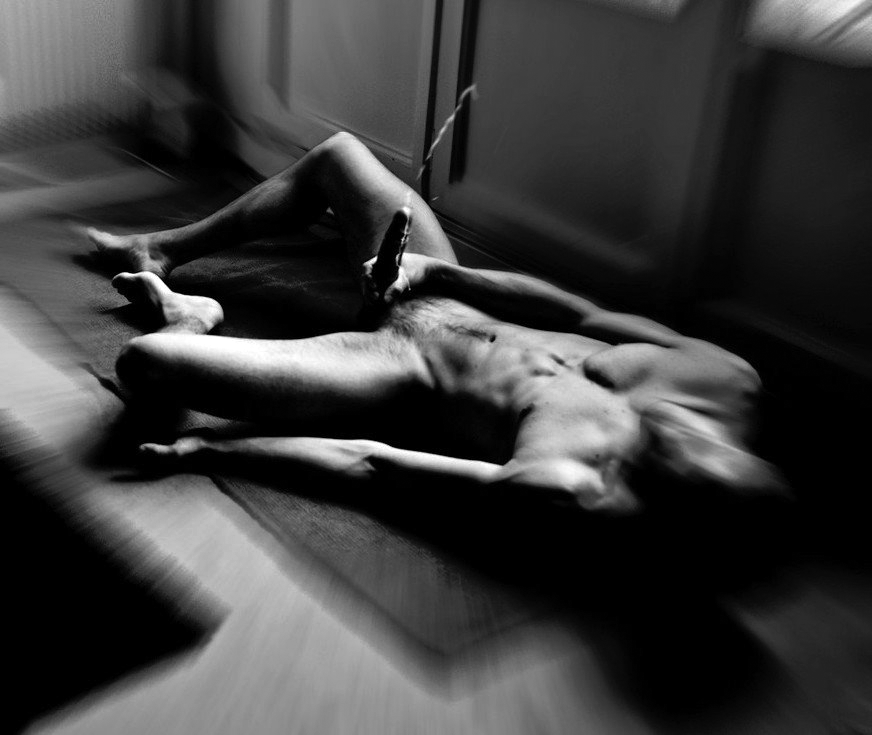
Vic BakinParthenonas, Sithonia (2016)

[I]n the realm of ethics, politics, aesthetics it was the authenticity and
sincerity of the pursuit of inner goals that mattered; this applied
equally to individuals and groups – states, nations, movements. This is
most evident in the aesthetics of romanticism, where the notion of
eternal models, a Platonic vision of ideal beauty, which the artist
seeks to convey, however imperfectly, on canvas or in sound, is replaced
by a passionate belief in spiritual freedom, individual creativity. The
painter, the poet, the composer do not hold up a mirror to nature,
however ideal, but invent; they do not imitate (the doctrine of
mimesis), but create not merely the means but the goals that they
pursue; these goals represent the self-expression of the artist’s own
unique, inner vision, to set aside which in response to the demands of
some “external” voice – church, state, public opinion, family friends,
arbiters of taste – is an act of betrayal of what alone justifies their
existence for those who are in any sense creative.

Isaiah Berlin, on the relationship between Romanticism and the rise of fascism /totalitarianism.

Dmitry ChapalaAnastasia Scheglova from La Mégère apprivoisée series (2015)

The composition here is so muddled and dunderheaded that I don’t even feel as if I can weighing in on whether or not it qualifies as #skinnyframebullshit–maybe, maybe not? What is even with this perspective? Are we supposed to interpret that bed as positive space and the Ikea shelf–why does everyone I know have this shelf, it’s ugly af–floor and rug as negative space? :::shrugs:::

Why am I bothering with this picture then? More specifically: why am I bothering with Chapala’s work at all? (It’s not like he’s especially good at what he does… he lacks the edginess/audacity of Giancomo Pepe and there are times when I effing swear he’s genuflecting in Marcel Pommer’s general direction. (Not to say he has never produced interesting snaps… he has a handful that are almost good. I simply feel his work is nearly completely derivative. He seems to be this breed of image maker that insists upon himself and his ‘fine art bonafides’ and folks just go along with it because the work superficially conforms to some arbitrary median threshold…)

Again, why bother? Well, in this case, there are two reasons. First, it seems as if every snap from this session is available online–a sure indication of less than adequate editing rigor.

I want to circle around to two of the more widely circulated shots from this series; both echo each other as far as composition–far more sensible but it still doesn’t entirely work. In one the woman has her eyes open, in the other her eyes are closed.

As far as order goes there’s a sense that the picture above preceded the other two. The falling trajectory of her left hand across the three images suggests that the subsequent order is eyes open then eyes closed. (You’ll notice–also–that the other two have had the contrast dialed up compared to the one above.)

The angle of view and the position of the ugly Ikea shelf contribute a feeling that the viewer of the image has walked into a room with which they are familiar and have found a beautiful, naked woman comfortably stretched out on the bed.

The second image is Playboy softcore-esque; the third is more unsettling given the first and second image. It suggests that either the woman is no coyly pretend as if she’s napping or worse–that this is sort of an on the fly revision, a sort of masturbatory fantasy change on the fly. (”I walk in and she’s stretched out on the bed, gazing coquettishly at me. Wait, no… she’s alseep…” Yeah, I like that better.”)

Point number two w/r/t why bother with this image is despite the litany of flaws with the above image, it does actually do something a lot of fine art nude work fails stupendously at: aligning a candid perspective with actually candid body language.

I recently realized there’s a way to describe this as long as you don’t mind a minor digression. Okay? Cool.

Mark Twain’s The Adventures of Huckleberry Finn is one of the few books I’ve actually had to read on three different occasions across years of schooling. As you’ll recall, Huck runs away, encounters Jim and then hears about a drowned body found on the river. He wonders if it’s his father so disguising himself as a girl, he approaches the abode of Mrs. Loftus to seek information.

Mrs. Loftus quickly puzzles out that something isn’t quite right and so she challenges Huck to three tests: she has him toss a lump of lead at a rat, thread a needle and finally the old woman tosses a lump of lead into his lap to note how he catches it. He fails each test. His aim is true with the rat, he thoroughly botches threading the needle and instead of opening his legs to let the material of his dress act as a trampoline to catch the lead, he slams his legs shut to avoid the potential of getting his gonads struck.

There’s a way in which supposedly candid shots always seem to have this demureness that undercuts the scene. As humans we carry and arrange our bodies different based on whether we are in public or in private. In public, we tend to favor decorum over comfort, in private, it’s the other way ‘round.

In other words: there’s a tendency with the sexualization inherent in the male gaze, frequently candid work features extremely stylized and self-consciously demure poses. In effect, there’s a tendency for the subjects in candid fine art nude work to make the same mistake as Huck–responding instinctively instead of naturally.

This doesn’t do that–which despite it’s numerous flubs–is actually to its credit. However, I will admit that the two subsequent images sort of screw with that by subverting the comfortable naturalness to the end of something that I can’t help by read as holding some sort of unsettling psychosexual implication.