Source unknown – Title unknown (201X)

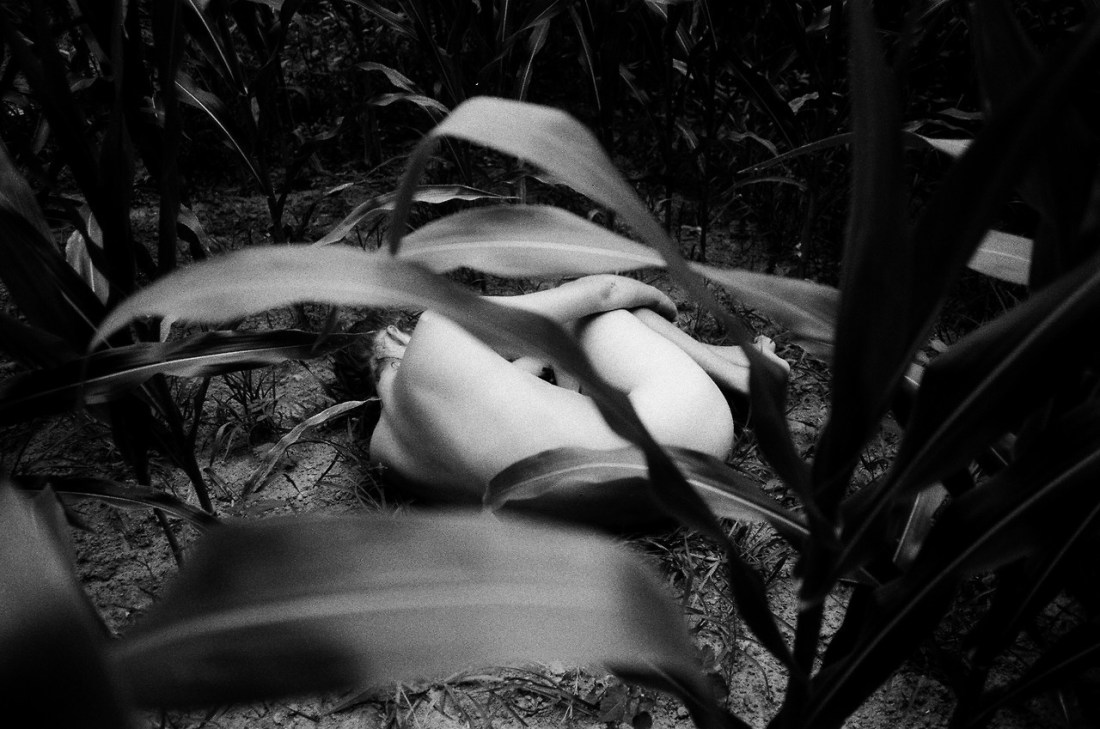
I’m usually super creeped out by hetero porn where the camera assumes the man’s POV but I actually dig this.

I think the reason why is because the leaves entering the frame in the upper right half of the frame draw attention to her face–which at least draws attention to her agency in so far as the proceedings are pleasurable for her. (And again, there’s the additional filter of displays of women’s pleasure in pornography being part of the product sold to consumers.)

But I think there’s a kind of bliss in the maybe three frames where you can see her right eye slide out from behind the leaf and look into the camera.

Also, as the sort of girl who strives to always have her manicure game on fleek, the color of her nail polish is absolutely perfect for that outfit.

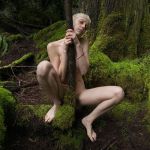
Jocelyn Lee – selections from The Appearance of Things series (2018)

For me, the most obvious way to run with this would be to contextualize this work as being in conversation with Sally Mann’s work.

“But,” you interject: “Sally Mann works exclusively in B&W.”

The word you want instead of ‘exclusively’ is ‘mostly’. There are the sumptuous cibachromes appearing in the last section of Mann’s Still Time–Lee’s semi submerged fruit and sky reflected in presumably staged settings loudly echoes Mann’s use of fabric, fruit/vegetable and plant matter in water.

It would be easy to–by extension–tie that in neatly with Mann’s foundational preoccupation with the intersections between embodiment and memory. In fairness, I do not consider that notion at all misguided; I think there’s probably some pretty illuminating stuff that could emerged from following that thread… it’s just that I’m far more interested in the way this work echoes Rimantas Dichavičius.

Actually, it more than merely echoes–it also (and I’m not sure to what degree Lee may or may not be familiar with him) is a solid critique of Dichavičius’ work as well as pretty stunning improvement upon it which in the process of renovation re-appropriates the women in nature trope from something for voyeurs vs something more bewitchingly empowering.

And some of the stuff she’s doing with color is to my eye moving from photography to painting in an equal but opposite way that Rackstraw Downes moves from painting towards photography.

nymphoninjas:

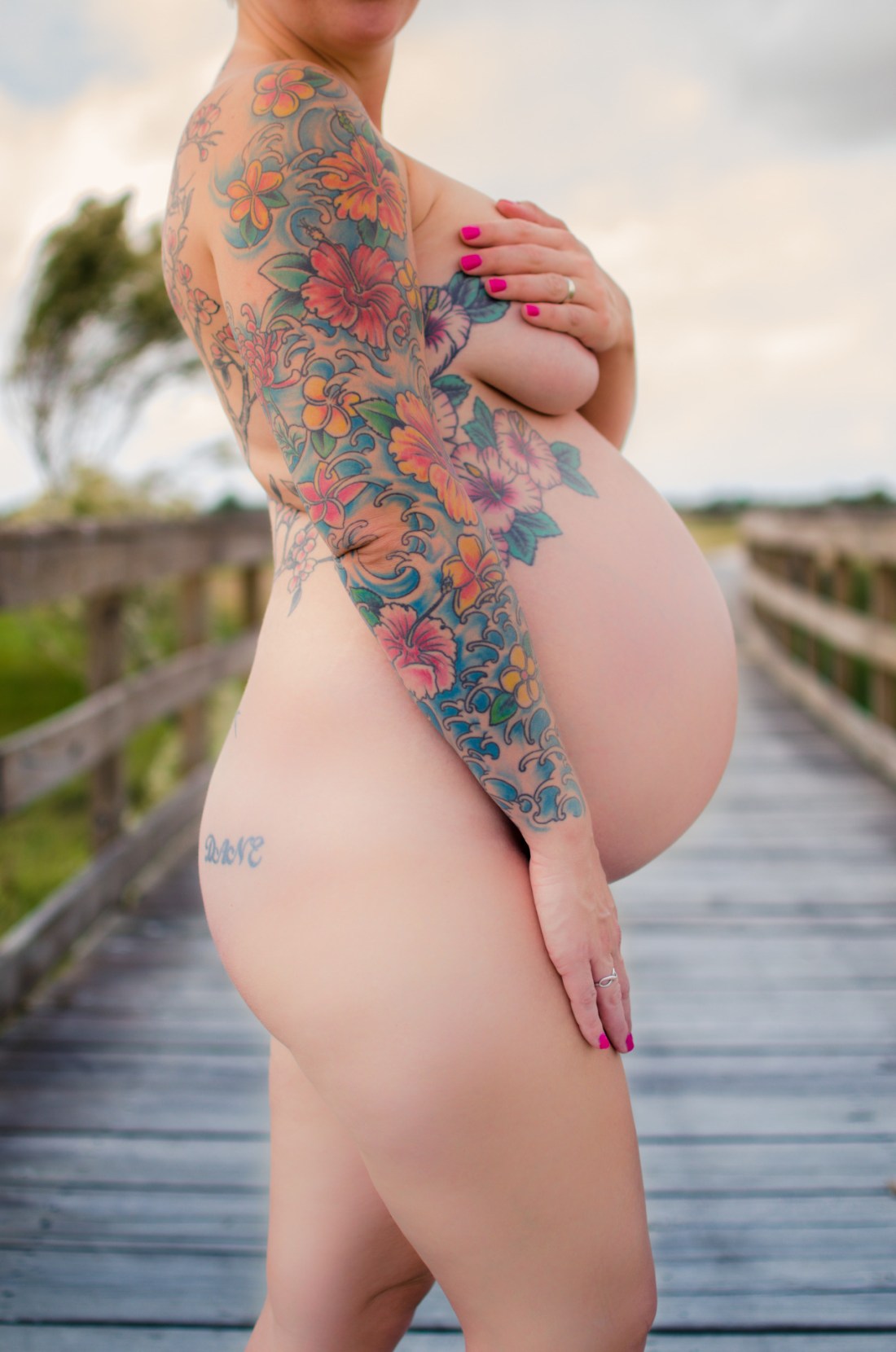
We have been a huge fan of your blog for some time now, and never submitted. But as my time as a mother fills my days, I look fondly at how my body was during pregnancy, and it is a bittersweet feeling knowing this was the last time I will carry someone within me. My husband could not take enough photos, and I wanted to share some of them with you, and your wonderful community. 

Wow, thank you so much for sharing this incredible portrait. The colours of your tattoos look so nice in the sunlight, and you are radiant and beautiful. It’s amazing you have these photos to look back on and reflect about that time in your life. And I really appreciate you contributing to Submission Sunday for the very first time. 

“Mother is the word for God on the lips and hearts of all children.”

Marie Tomanova – [↖] By the Waterfalls (2016); [↗] Green Tenderness (2015); [↓] Untitled (2016)

The Museum of Sex here in NYC (as opposed to the one in Amsterdam and there may be more I don’t know about) is running an exhibit called NSFW: Female Gaze.

I’m not a fan of the venue or the current bandwagon curatorial trend otherwise known as ‘the Female Gaze’–it’s generally preposterous (at best) and mistakes inversion for subversion (at worst); also, the people who actually go out of their way to embrace the notion pretty much to a one make godawful work. (However, like the term ‘post-rock’–which operates similarly: a pretty reliable shortcut to some great music when you weed out the bands who refer to themselves as post-rockers and focus on the bands who eschew the distinction.)

(And to be clear–I don’t object to women who are photographers. This blog strives to favor women photographers and image makers in such a fashion that 60% of the posts are created by women; what I object to is the idea that we can correct for the art historical problematics of the male gaze through nothing more than paying lip service to more diverse representation without actually acknowledging a multiplicity of factors beyond just male photographer vs female photographer….)

What appeals to me about Tomanova is the quality of her work. She’s working with a Canon dSLR and a hotshoe flash. Yeah, I know… her results are pretty incredible.

But in the video trailer for the exhibit, she mentions that her motivating notion is the idea of “how nude is too nude?”

It’s an interesting question. (That is supported by her work, incidentally.)

The other thing I notice from her video is that her way of working is much more unrushed. As someone who is also interested in notions of public vs private and nudity, I have to say that I find her process fascinating. Usually, if you’re shooting nudes in public, you set up the shot, strip and get the shot as quickly as possible–so that you can get dressed again before anyone stumbles upon the scene uninvited.

You get the feeling Tomanova sets the camera up, gets undressed and then experiments. Trying out a bunch of different poses and frames before getting dressed again and breaking things down to move on.

There’s something very audacious about her work. (I would LOVE to be able to work that way, honestly. It’s not that I’m worried about people sneaking up on me while I’m naked and more what happens as a result of someone potentially stumbling upon me…)

I recall how Szarkowski divided fine art photography into two parts: mirrors and windows. I’ve never really agreed 100% with him but I do at least see the utility of his taxonomy. It strikes me that there’s another dichotomy in photography: reproduction vs discovery.

Reproduction would be where you have a very clear picture in you rmind of something you want to make into a photographer or image whereas discovery is more organic, you don’t know what you want but you are aware that you’ll know what you’re looking for when you see it.

I think the best work does both at the same time. But I think Tomanova is decidedly in the discovery camp. And honestly I think if it’s a choice between the two, I’ll take discover over reproduction any day of the week and twice on Sunday.

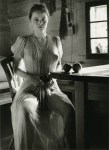
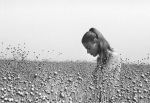
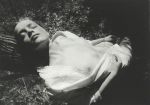
Taras KuščynskyjUntitled selections (196X)

Viewing Kuščynskyj‘s work it’s easy to get caught up in interrogating the anxiety of influence.

For example, you can’t see an image like this and not think of Arno Rafael Minkkinen; or, consider the way he frames subjects against backgrounds as a sort of revisionism of Koudelka where fixation on the relationship between perspective, space and people positioned in it it becomes less concrete, more oneiric fleeting/unstable.

Really though what ought to be celebrated about Kuščynskyj are his poses. And I think his work is only as good as the singularity of the poses he presents. The above all work because the way the subjects inhabit the frame is an organic outcropping of the environment. There’s a meditative lack of self-consciousness, an unnerving unity of form and function.

It’s probably not entirely inaccurate to draw comparisons with the Czech New Wave–since Kuščynskyj was making most of his work concurrently. However, I think arguable a bigger influence would’ve likely been André Kertész–who was also unparalleled at presenting people in moments of uncontrived immediacy.

(Another interesting exercise: there’s almost no way Emmet Gowin wasn’t familiar with Kuščynskyj. It’s fascinating to see the way Gowin uses the same sort of end–documenting unselfconsciousness–by adopting a wider palate of from non-contrivance to stylistically over contrived than Kuščynskyj. Yet, Gowin never managed to make an image that provided such a singular and perfectly realized pose as the middle image in the right column above.)

I find it galling Kuščynskyj‘s work isn’t more widely available. There’s some clips of his work laying around if you care to search for them and they suggest that what’s available of his work online is of shabby quality compared to the original prints.