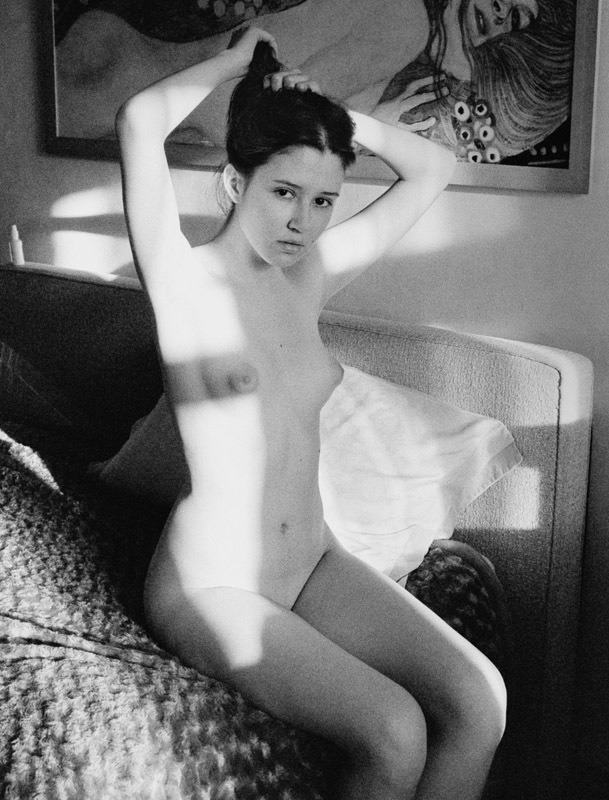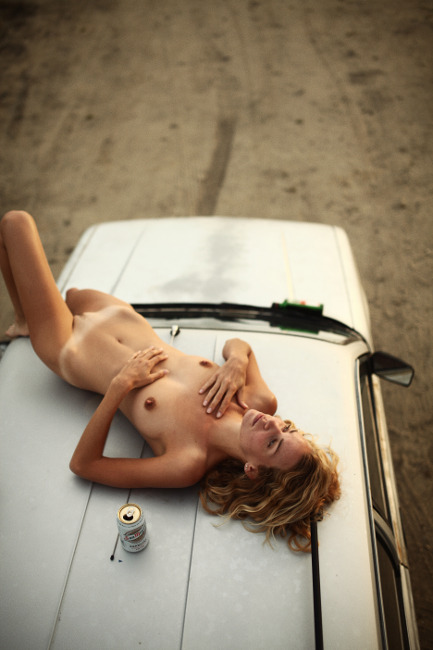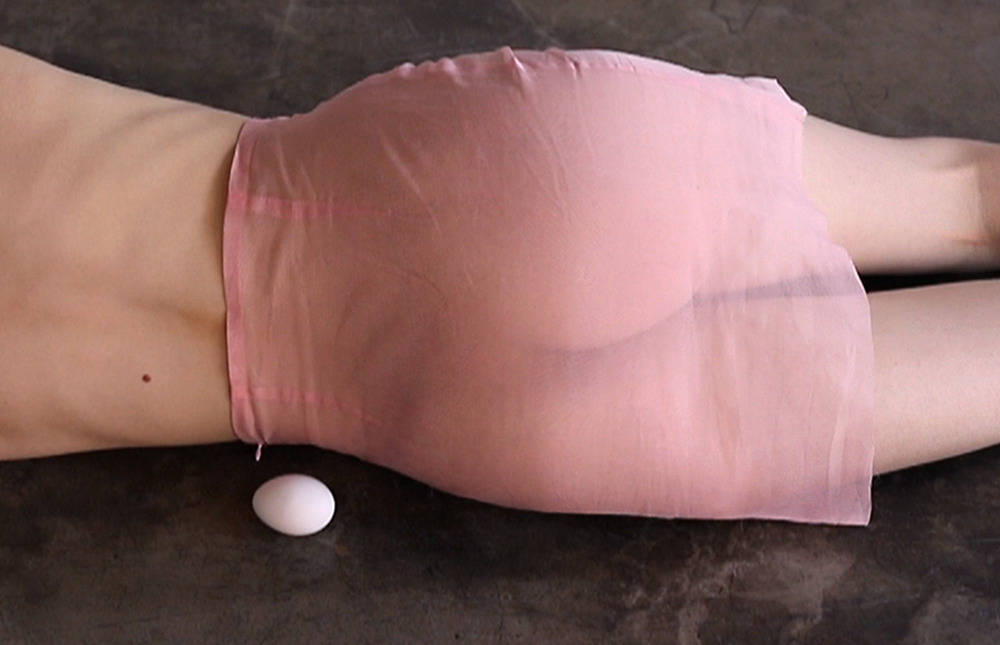
Julia GrossiJada Joyce (2017)

Vigils
by Ernesto Mejía Sánchez trans. William Carlos Williams

I
Vacant days, what shall become
of me? At nightfall
already conquered in our dreams,
facing a wall, uncertain we stumble
and go astray. To fall as night falls
without deceit, on any bed
which chance interposes, in search
of the most modest and white caress.
Tell me, my soul, elect
or favored, friend of the Lord
in the star filled night, how
bar the day from that blinding light.

II
Vacant days, what shall become
of me? Free as the steed
before the timeless goal, panting
but secure, free of the wall
placed about us blind, but
with the pride of one who gives
all that of himself that may be
given by a free man,
uncursed if it may be—,
knowing that I am here
today, and tomorrow … no where,
nor when, failing tomorrow. Free,
as a dagger, but with
you, suffering, self pitied,
keeping from self the power of
a most savage conscience and, for
all that, relentless love.
When I place you, my body,
sacrificial to night’s beneficence,
lowly I am reborn and humble me.

III
Vacant days, what shall become
of me? Bordered by a light
acid and sudden, sand
made vain by a lightning, like
foam at the edges of waves
to my heart’s thumps
swinging from bump to bump
toward the star. What whiteness
so stealthy, what sleepless
wonder, the live lime
rocks, the furious waters
cause to blanch, silver shouting
from the torch which never dims.
Bays solely blossomed in snow.
Days hardened by the moon
as if at a cobra’s gaze
and weeping melting the self
centered snow of meanest breast.
Oh implacable! Oh ferocious white
between grey and the air, shading water
to grey, shining, threatening,
debasing, with a murderous glint,
thus are the bones I shall leave
polished as a signal in the night.

IV
I am kneeling before the white wall
I write my name
upon the water. I see the hours
passing like clouds. There is no
bottom. Neither abyss.
At my feet shadow draws back.
Who am I? Do you not know me?
What strange monster
is sucking the minuscule
darkness that I need not
disappear? What delirium
the Uranian skies have willed on me?
I am within myself beside myself,
side by side, my fog, my
ashes, my breed, my
guts, look upon me for the last time
before I destroy myself.

V
Someone calls me and I don’t know how to answer.
I am not here. I have not returned. It is not I.
Subterfuge, unknown person,
unknown self who will continue calling
from always to never without stop.
I am not here. I am unknown to myself. Who is who?
I call, implore, question, no answer,
and I will continue calling, whom? and who
to whom, without end or beginning,
until I can call and answer
with one voice and at the same time.

VI
What plunging thoughts
the heart casts upon me,
your own heart. What
patent joy.
What amazement. Under
its bark life has
kept its forms by which
we know it, the egg
from which it was borne.
I desire what at once
I desire and spurn
—to remember, be false to
the present—and consent,
what difference? by you alone
my entrails are scorched.

VII
Pain does not point
either to movement or
movelessness. Thus
sway dancing between
the hurt and the joy
so that I no longer know
whether I live
or swoon. Let me spin
if I would persist.
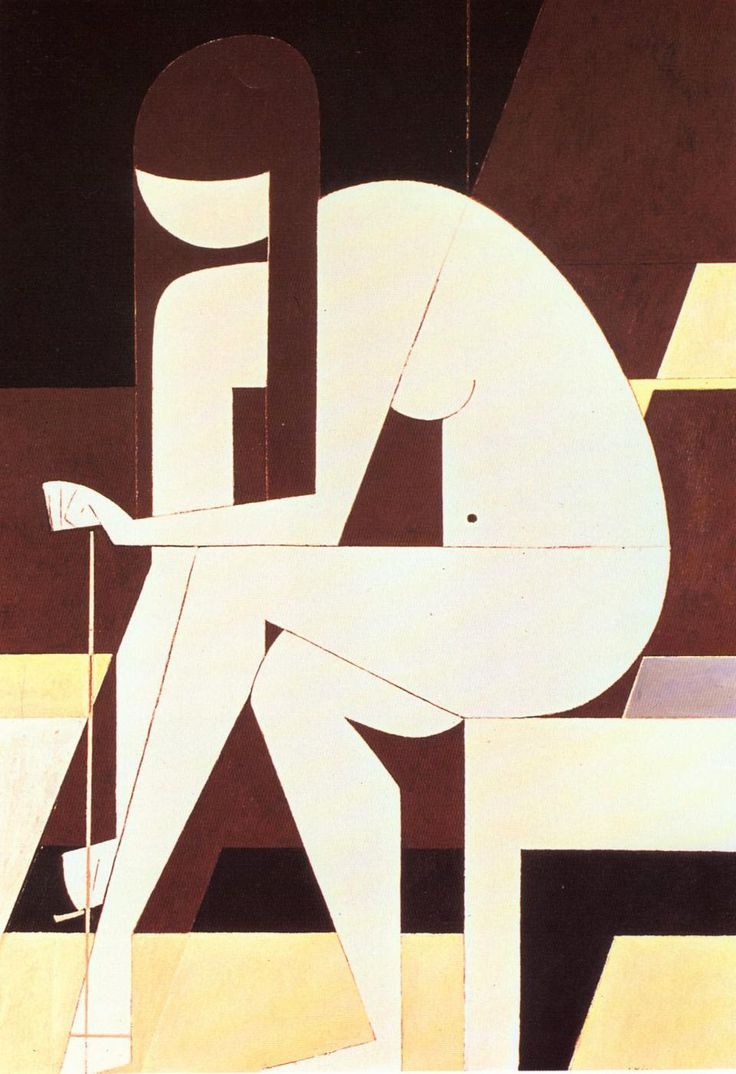
Yiannis MoralisGirl Untying Her Sandal (1973)

You know that thing you do where you find a nice green grassy area in a park, lay on your back watching the clouds shift overhead and try to see the clouds as shapes other than clouds–an elephant, a steam train the Buddha? (See also: pareidolla.)

Call me sentimental if you must but I think that sort of thing is a good creative practice to encourage.

What does that have to do with this painting? Well, I think first of all the instinct of an art historian is going to be to term this as cubist in nature. I’m not entirely sure I’d agree with that.

By and large: cubist work has a sense of multi-planar dimensionality–most cubist painting ends up looking like fragmented origami with enough of the original form to allow for general identification or one of those foil, fabric and paint mixed media collages.

This takes a single view and more or less sticks with it. I know very little about Moralis other than he was Greek and dabbled in a shit ton of different styles–yes, including cubism. But he was also interested in mosaics and I think that it’s better to view this in that context.

I feel like mosaics are sort of the best way of teaching people to see both the forest (or to re-embrace my original metaphor: clouds) for the trees (the suggestive shapes the clouds take on).

Let me attempt to clarify what I mean. Consider this design:

It’s a standard checkerboard–big whoop. Well, what if I told you I see a flying saucer. I’ll understand if you are quizzical but the important thing is that given this I can show you what I mean in a way that I cannot with cloud watching.

In effect a mosaic is a means of teaching how to see less what is than what is possible to see.

And that’s really the brilliance of this painting. It instructs not only in how to see but via that teaching allows the viewer to witness something beautiful in a task that is usually so mundane as to not receive the attention of creative reverie–untying sandals.

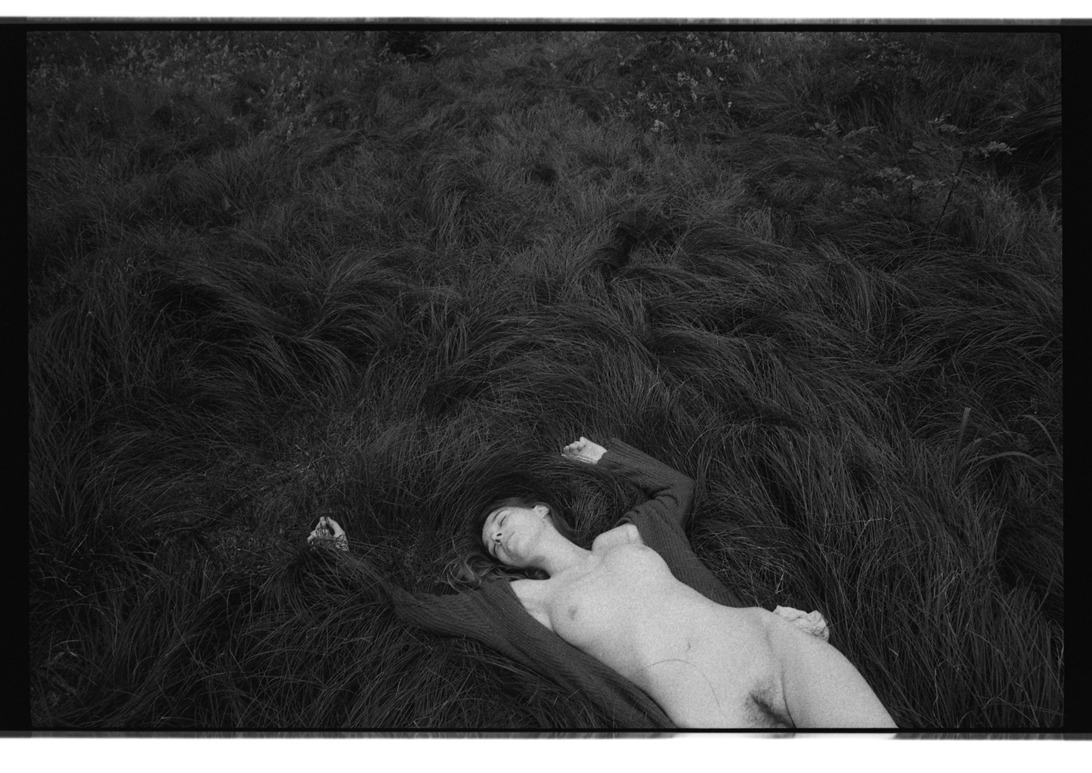
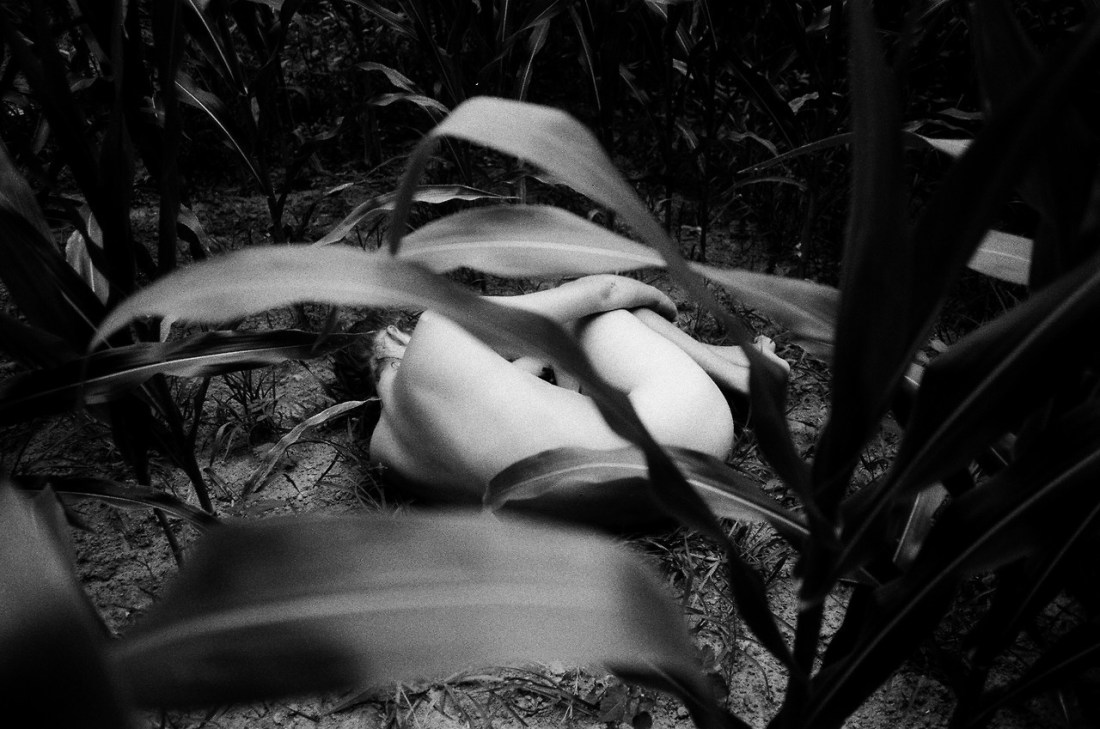
Davide PadovanSara Pavan (2016)

I feel like photos/images–and just to clarify this blog strives to counter the current conflation of analog processes (photography) with digital media/methods (images) of lens based visual representation–of nude/semi-nude woman reclining supine amidst lush vegetation are a dime a dozen these days.

That being said, there’s something special about this… I want to say ‘photo’–the shadows appear thicker and more viscous than I’m accustomed to seeing from digital–but the beveling at the lower frame edge seems indicative of some sort of post-production intervention… so we’re going to go with ‘image’ in order to exercise appropriate caution.

I feel like representing nude bodies in or against the backdrop of a landscape is a fairly common motif throughout art history. I feel the justification for this ranges from an urge to envision a sort of utopian realm, a preference for timelessness, a juxtaposition between the predictable solidity of the body contrasted with feral flora variegation.

Hopefully, you’ll excuse* the trotting out my overused example of Edward Weston’s famous nude surrounded by desert sand–however, I think one of the reasons they are so memorable to me is because these photos employ more than one justification for their existence:

  1. An interest in contrasting the texture of flesh with the grain of sand;
  2. A sort of vague narrative insinuation that the woman is sunbathing instead of posing for a camera.

The second notion is important because it’s a way of thwarting criticisms of catering to the art historical (lecherously entitled) male gaze.

(I’ve also suggested previously that a figure in a landscape is intrinsically narrative by default.)

Anyway, what I like about this is that it’s doing something I can’t recall ever seeing before: as the industrial world becomes more and more ‘technologically advanced’, there are increasingly insurmountable barriers between humans and the natural world–we don garments to protect against the elements, design and build structures to shelter and protect us. In effect, we are separating ourselves from the natural world of which we are an inherent part and function of.

This image seems to be embodying the same sort of openness to the environment that inspired Walt Whitman to personify nature as if it were his beloved when he wrote in Leaves of Grass: I will go to the bank by the wood and become undisguised and naked.

*The laziness in recycling this example is due to the fact that I am feverishly working on applications to a handful of MFA programs and I am honestly spread far, far too thin. (But I am committed to keeping this project up and running even if I am thoroughly overwhelmed; thank you for bearing with me.