Helena Darling AKA The Woods WitchTitle unknown (201X)

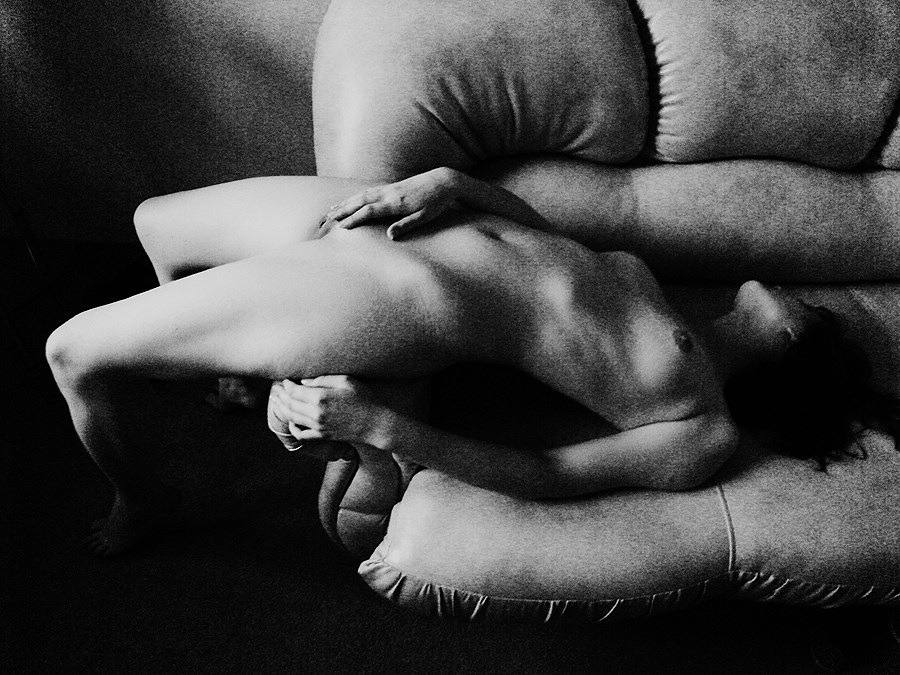
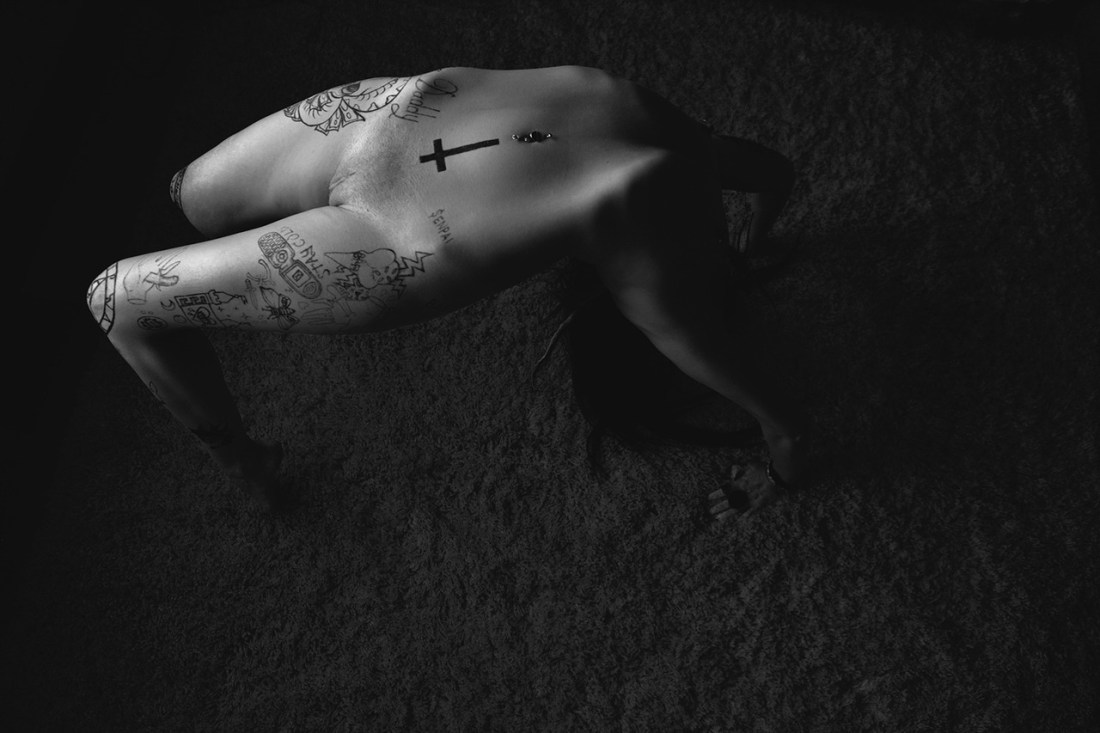
I love everything about this–and Darling’s images are 120% worth digging into–however, I’m less interested in talking about the tenebrism in this or the compositional acumen (reading from left to right, you see the backbending body first and then the framing negative space balances the positive space in a way that insists upon the viewer considering both what is visible and what is occluded within the context of the frame in its entirety).

Instead what I’m interested in is the inverted cross tattoo.

First off, it’s a fraught symbol. There’s all the goth scene appropriations and witchy applications and it’s become an over-the-top cliché in black metal–and unfortuantely, through black metal the image has been appropriated by some less than savory ideologies.

The reason the symbol appears to me is that way back in the day when I was dabbling in staunch atheism (a viewpoint I have only slightly more sympathy for these days than Evangelicalism) is because, I don’t think anyone who identified as an atheist in the late 90s and was really into the fringes of the metal and progressive rock scenes, didn’t go through a phase of confrontationally pointing out to Xtians that were it not for sheer luck they’d be Mithrians (after the Mithras fertility cult).

All I really knew about the cult was that many of their rituals bore more than a passing similarity to Xtian observances. I remember being told by several of my acquaintances who were self-proclaimed occultists that the symbol of the inverted cross was originally associated with the Mithras cult.

Further, the Roman crucifix was an inversion and perversion of the Mithrian symbology framing the ‘rightside up’ iteration as a symbol of death by linking it with the prominent mode of capital punishment.

Subsequently, the Roman Catholic Church appropriated the symbol as a means of claiming dominion over the realm of death through Christ’s death and resurrection.

However, most sources cite the origination of the inverted cross as the Crucifixtion of St. Peter–who insisted on being crucified upside so that no one would associate his death with Christ’s. (Given my understanding of the image, I find this complication utterly fascinating.)

I was less than critical with a lot of stuff I was consuming in my early 20s. So I went back to check the validity of this and although I can’t find any definitive proof I did discover the apparently initiates to the Mithras cult went through an induction ceremony that unfolded a-whole-fucking lot like a baptism and ended with the inductee having a cross scarified onto their forehead.

If you consider this in the context of the fact that Rome was already a full-blown empire before the Mithras cult came up and it appears that crucifixion would’ve risen to predominance around the same time as the cult. And given the disparity between a fertility cult and the death cult of state sanctioned executions, I don’t think my understanding is entirely implausible here.

Either way: I am increasingly preoccupied with the panoply of often contradictory significations folks impose on simulacra. To me: such signs are more resistent to the ascription of extant meaning and instead require both constant personal re-evaluation as well as contextual exegesis. In other words: it’s difficult to make an idol of that which will always and forever remain ambiguous.
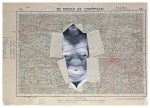
Avi YairUntitled (2017)

These are enormously eye catching for a number of different reasons–the dynamism of the design elements (each of these four is exceedingly graphically astute in it’s use of line, shape and form–I especially like the way that the collage interventions are structured in order to convey the work has been stripped away to reveal an underlying image; that to me renders these less collage than sculptural excavation).

There’s also a lot of notions of representing three dimensions in two–but in a way that is fundamentally between two and three dimensions.

The inclusion of maps is especially poignant beings as maps are inherently problematic. There’s the simple fact that Euclidian geometry breaks down when you move away from the 2D into the 3D, for example an equilateral triangle inscribed on the surface of a sphere does not form a closed triangle, it’s just three different lines that share a connection to each other but do not form a contained shape.

Historically, this has caused all kinds of misunderstandings. The maps with which most of us are familiar preference the northern hemisphere and western hemisphere (for example Brazil is roughly the same size as the Lower 48 but looking at a typical map, you’d not easily grasp that; also, the US and Europe are presented in relationship to each other and then secondly the rest of the world is added in in relation to them.

Maps also delineate boundaries between geopolitical nation-states, boundaries between water and land, etc. Thus, it feels like the presence of naked bodies speaks to questions of boundaries as far as what is appropriate, what isn’t, what is celebratory, empowering and natural vs. sexualized or otherwise libidinous.

If that were all these did, I feel that would be interesting but not necessarily conceptually ambitious enough. The thing that appeals to me is that the interplay between maps and bodies begs questions of the discrepancies between accurately representing three dimensions in two and referential utility. (In a lot of my current grad school research practice: I keep coming back to BorgesOn Exactitude in Science postulates a kingdom so obsessed with its own accurate mapping that a map is commissioned that ends up being the same size as the terrain it purports to map. In the end, it ends up rolled up and rotting in the desert.

Or, to put it another way (if you are–like me–of a decidedly Wittgenstein-ian bent: explanations come to an end somewhere.

Source unknown – Title unknown {desaturated} (201X)

In my experience, no matter your anatomy–there is something about causing someone to orgasm at the same time that they are causing you to orgasm has this way of creating a feedback loop that increases the intensity of the pleasure experienced.

I realize the logistics probably became increasingly complicated the more parties are involved; but–I don’t know–I sort of feel like a simultaneous orgasm is probably amplified exponentially as you increase the number of parties involved.

Anyway, that’s the super pervy place this image takes my brain.

Oleg AndreevTitle unknown (201X)

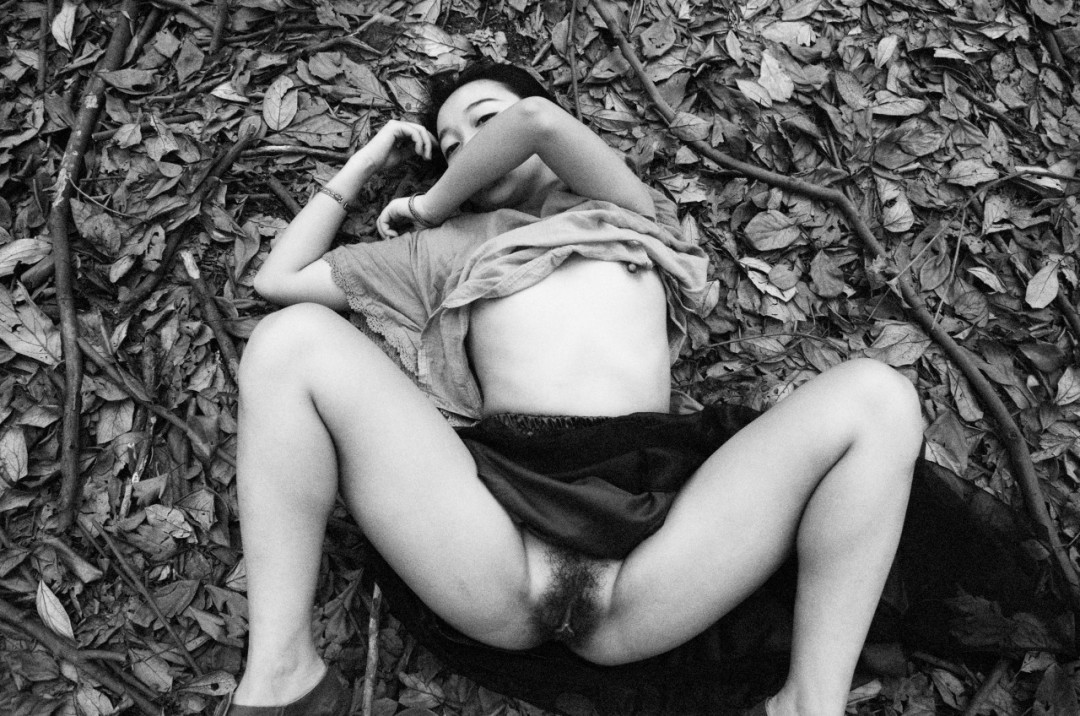
I don’t believe in reincarnation. (Not that I don’t grasp what makes the concept so appealing–I just think it’s an all-too-extravagent proposition.)

But looking at this–which full disclosure: I don’t think is an especially great photo*–I’m just sort of instinctively drawn to it.

It reminds me of the first internet friend I made back in the mid-90s. She was the first person I met who claimed to be an honest to goodness witch. (I didn’t take her super seriously but I also didn’t feel any need to question or refute her.)

She always maintained that I had been a Russian peasant girl in my most recent past life. And honestly–that’s sort of the most reasonable explanation I could provide as to why so much of the work that commands my attention is made by folks who were formed and came of age during late Soviet decline in Eastern Europe and Russia.

*As to what doesn’t work about this, it’s dealing with a similar conceit as @mrchill‘s The Push–which I consider to be a much more effective evocation.

Club SeventeenTitle unknown feat. Tamara F (2013)

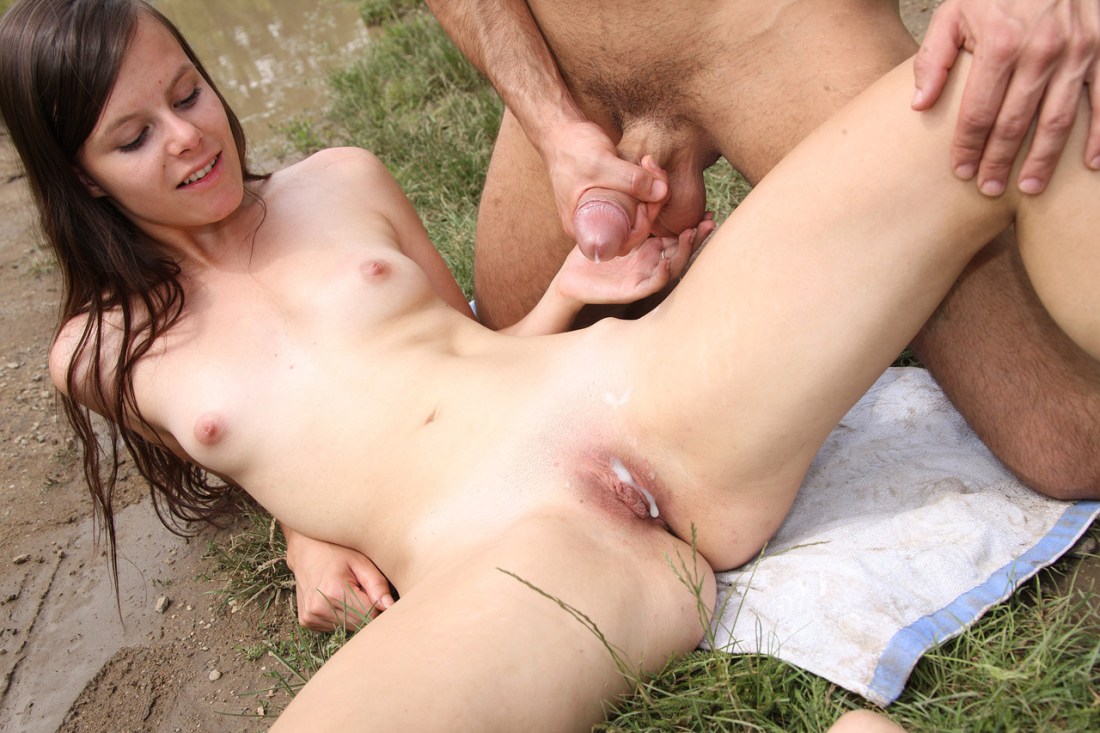
Ever since this post when I consume porn, I remind myself to pay attention to how the staging of a scene in relationship to the camera makes me feel about what I’m viewing.

Interestingly, scenes like this where the proceedings are cheated toward the camera to provide a clear and unobstructed view for the audience appeal to me more than scenes created by either a montage of various heterosexual erogenous signifiers or scenes that pretend to take a fly on the wall approach to capturing the scene–by staging the action for a stationary camera that only faces in one direction, moves on one axis and switches between reframings of close-ups and medium shots. (And POV shots are usually a huge turn off.)

I think there’s something about the sense that this scene has been blocked in a theatrical fashion contributes something to both the notion that both participants want to be seen in flagrante delicito. That self-consciousness makes me feel as if–as a spectator–my participation is expected if not the point of the undertaking.

(FYI, I do think this same idea can be applied negatively given the surfeit of tales where the consent of femme performers on porn sets is not protected or respected.)

九口走召 9mouthUntitled from Menstrual series (2014)

From one vantage: this image is a little too perfect of an addendum to the previous .gif. From another: I’m not entirely comfortable posting it.

9mouth is an exceedingly problematic image maker. I’ve posted about him before and my argument each time seems to boil down to even misogynist men can sometimes make an objectively good sexy picture.

However, engaging with his work this time around has prompted me to modify my opinion of him and his work.

The first thing that’s worth mentioning is that I’m bringing a better working familiarity with Nobuyoshi Araki and Daidō Moriyama to the table this time around–9mouth’s aesthetic being influenced heavily by them both.

The problem with this is that that the younger photographer cleaves to these sources in a blunt and non-contemplative fashion. To speak in broadest of generalities Araki’s work implicates its own voyeuristic raison d’etre through various conceptual stratagems; Moriyama tends to seek out the foreign in the familiar–in the instances of his more voyeuristic work, there’s a decontextualization of the mundane in an effort to draw attention and focus to how the juxtaposition between the erotic and the mundane infroms our notions of the limits of either category.

It feels like 9mouth looks at Araki and Moriyama as photographers who like make photos of nude women–without understanding that there is a lot more going on in their work than just gratifying a knee-jerk cishet male gaze.

9mouths work hinges not on any conceptual framework–and he very much attempts to lead with that but it’s disingenuous, self-justification at best–instead, his work is fixated on either women’s bodies as the locus of all sexual fetishization and women’s bodies presented to the viewer as if their bodies are sexually available to anyone approaching the work.

I am disappointed in myself for taking so long to see this fact. (Even by my own persnickety quibbling with compositional considerations–it’s taken me a minute to apply my own frequent criticism regarding the frame edge as a amputative tool. (For example: in the image above the woman–who is unnamed and due to the nature of the Menstrual series, inherently carrying an expiration date and therefore also disposable–has her feet amputated meaning that not only is she presented as sexually available to anyone who sees her, she also is rendered immobile through the symbolic amputation of both her feet.

Roman PyatkovkaUntitled (2017)

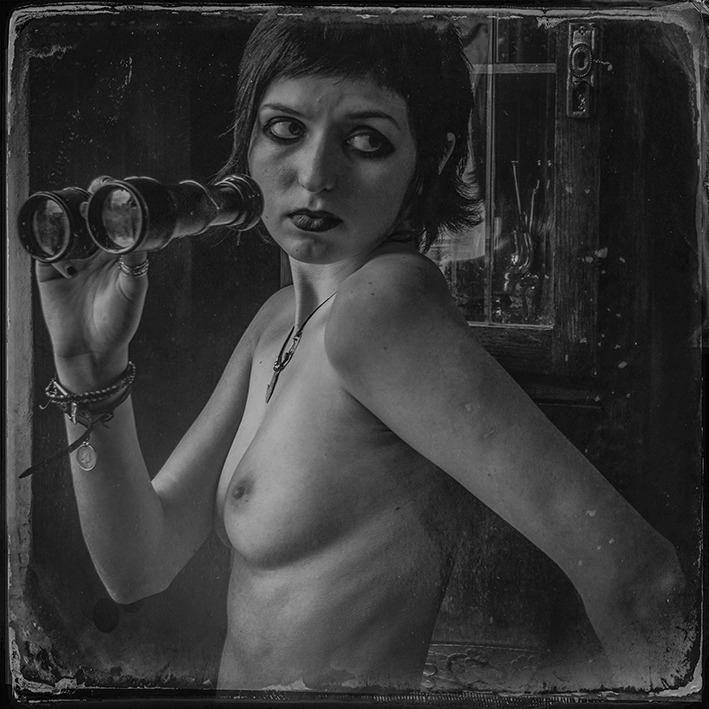
I’m not 100% on board with this composition–the way the woman is looking back over her shoulder seems like a failed effort to counterbalance the prominence of the binoculars in the frame.

On the one hand, I think this strategy does focus attention to the reflection in the open casement window behind her–which is straight out of Vermeer’s Girl Reading a Letter at an Open Window. On the other hand, however, the woman’s eyes don’t match the rest of her expression and this diminishes the degree to which any attention is practically diverted to the reflection behind her. (Instead, there’s a focus on the extreme shadows surrounding her.

To me: what is most intriguing about this is the way it seems almost like a hyper realistic drawing–something that’s seems to be big right now. (Several people I know aren’t into art have posted Buzzfeed-esque human interest stories on folks from Africa and the African diaspora making these completely batshit photo-realistic pencil drawings. (The only one I could find was this Colossal featurette on Arinze Stanley–there are at least two others making similar work, including one kid who is in his early teens, unfortunately I’m not having any luck finding the things I saw on them again.)

Additionally, I like the way this looks like the frame out of a brooding graphic novel. It makes me want to actually clear out a block of time to start working on this idea I have of figuring out how to replicate the high contrast, intricately detailed panels of a Moebius’ comics into an analog, in-camera ‘preset’ that can produce photos that can be printed to look like B&W comic book illustrations.