
Yoshihiko Ueda – 3 Women (1994)
In Praise of Ambiguity: Or, Why I Prefer This to Anything Spencer Tunick Has Ever Done
Yoshihiko Ueda – 3 Women (1994)
In Praise of Ambiguity: Or, Why I Prefer This to Anything Spencer Tunick Has Ever Done
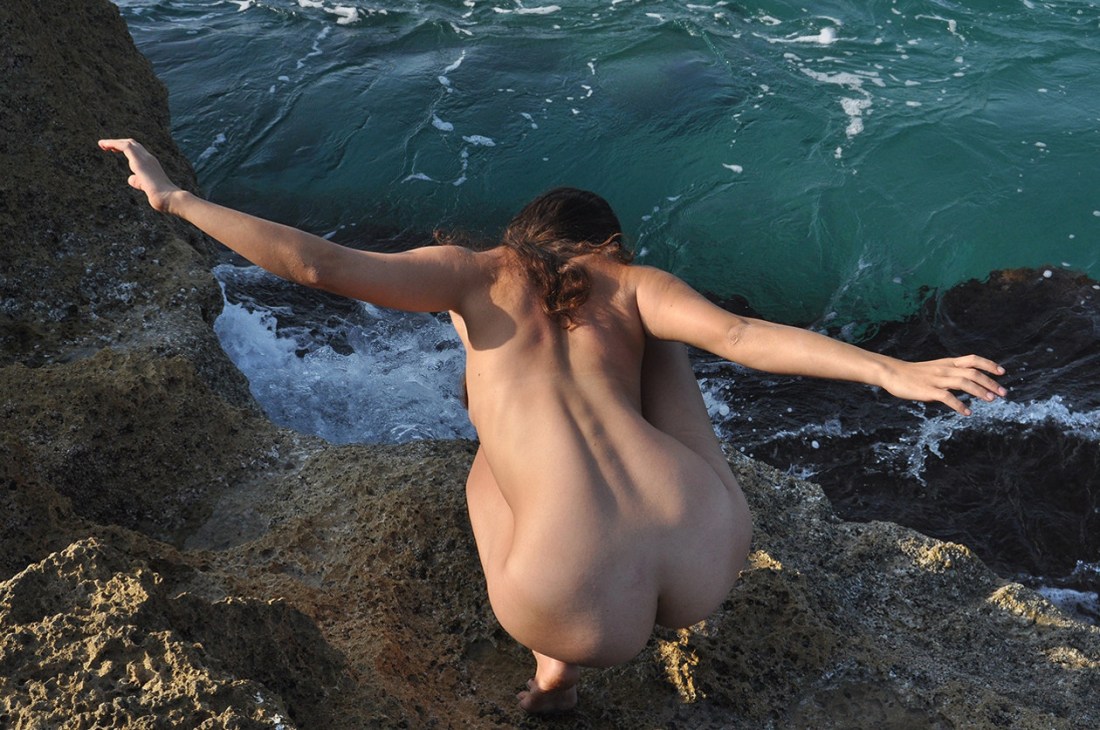
Gil Blay – Seagull (2016)
I’m not here to suggest Blay is a gifted image maker. Hardly.
However, as I’ve stated previous (and it bears repeating), like the old adage about monkeys and typewriters even crappy creatives get something right on occasion.
This probably would’ve caught my attention even if it didn’t come immediately after this image of Nicole Vaunt in Patagonia by Corwin Prescott.
My first thought was when the fuck am I going to Patagonia–got damn.
My second thought was that I would’ve really liked to have seen Vaunt in a less Den lille Havfrue and more like the above.
More often than not Tumblr is super frustrating–with the porn bots, shitty attribution striping personal aesthetic as self-definition blogs but occasionally the slap dash gumbo of seemingly randomized post aggregation results in seeing things in a completely different way.
It reminds me of David Bowie’s process–decoupage, which I found out about through the fabulous BBC series Luther, featuring the formidable (and hot as eff) Idris Elba.
Unlike most of my peer group–who are decidedly secular–I was raised in an ultra-conservative Xtian cult. Unlike my friends, my folks didn’t bestow a solid familiarity upon me with regard to the cornerstones of modern art rock. (I’ve had to blaze my own trail, in that regard.)
I began to learn about Bowie after he died–which meant discovering the allegations of rape and pedophilia that (as with most similarly aligned superstars in that day and age) never quite stuck to him because he was white, rich and male. (Jia Tolentino, who gets my vote for the best up and coming young writer and is my secret dream person to guest curate Acetylene Eyes, covered this negative legacy for Jezebel with an impressively clear-headed and thoroughly nuanced analysis.)
I’ve dipped my toe into Bowie’s oeuvre. It’s not all exactly my cup of tea–but what I like I like quite a lot.
This design by Daniel Gray turned up later and I think it fits a little bit too well here not to offer it as a summation:

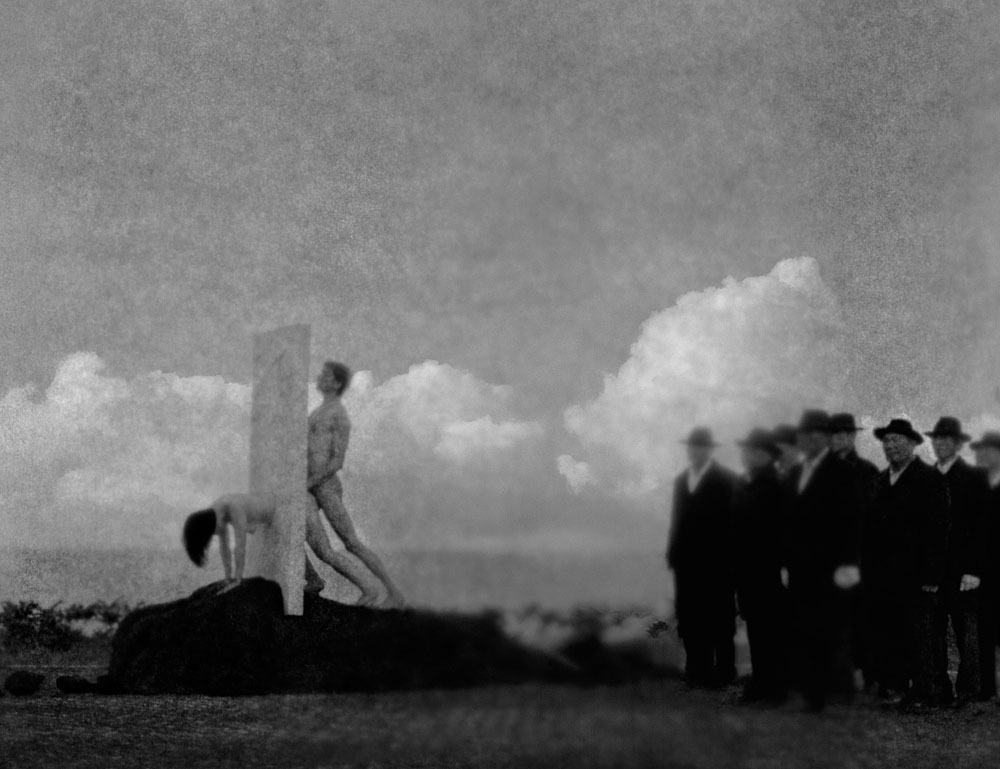
Hsieh Chun-Te – The Romance on the Stele from Raw series (1987-2011)
The images in the Raw series are intended to be narrative–yet what the narrative entails remains muddled due to how little is available on the artist in English.
For example: an image titled Bitches was, according to Chun-Te inspired as a result of: “overhear[ing] a journalist
friend of mine who got beaten up during an investigation of human
trafficking of a prostitution ring. Girls were captured then sold, some
of them tried to escape.”
I was not able to find the creative impetus underlying the above image. In fact, I discovered very little of merit beyond this blurb from the 2011 Venice Biennale. I agree that themes of desire, eroticism and death permeate his work. But, he’s clearly working within the Surrealist tradition. (I feel as if this is so apparent as to not need comment but to put to fine a point on it, he makes a point of telegraphing this affectation via his inclusion of bowler hats–a reference to Margritte’s seminal painting The Son of Man.
I’m inclined to disagree with the aforementioned blurb w/r/t what the above image depicts. It takes the easy route of correlating death and eroticism and suggests the image depicts a scene of capital punishment by means of being fucked to death. (The pose of the woman in the image suggests she’s still very much alive.)
And that is definitely an interpretation in keeping with the tone. Except, I read this as a far more nuanced examination of punishment in society. The relationship between the person receiving punishment and the remove at which the person who inflicts the punishment must be placed in to avoid sullying polite society by association.
I look at this and see it point to an irony. We’re not okay with this because of the context–restraint as a means to facilitating punishment and punishment as a means of retaining social control.
But this can also be read as an allegory of the relationship between pornographic performance and consumption within a capitalist, hetero-patriarchal system.
And really one of the reasons this works so well is that the author is clearly far more interested in pointing to a slippery corollary than passing any sort of judgment on it.
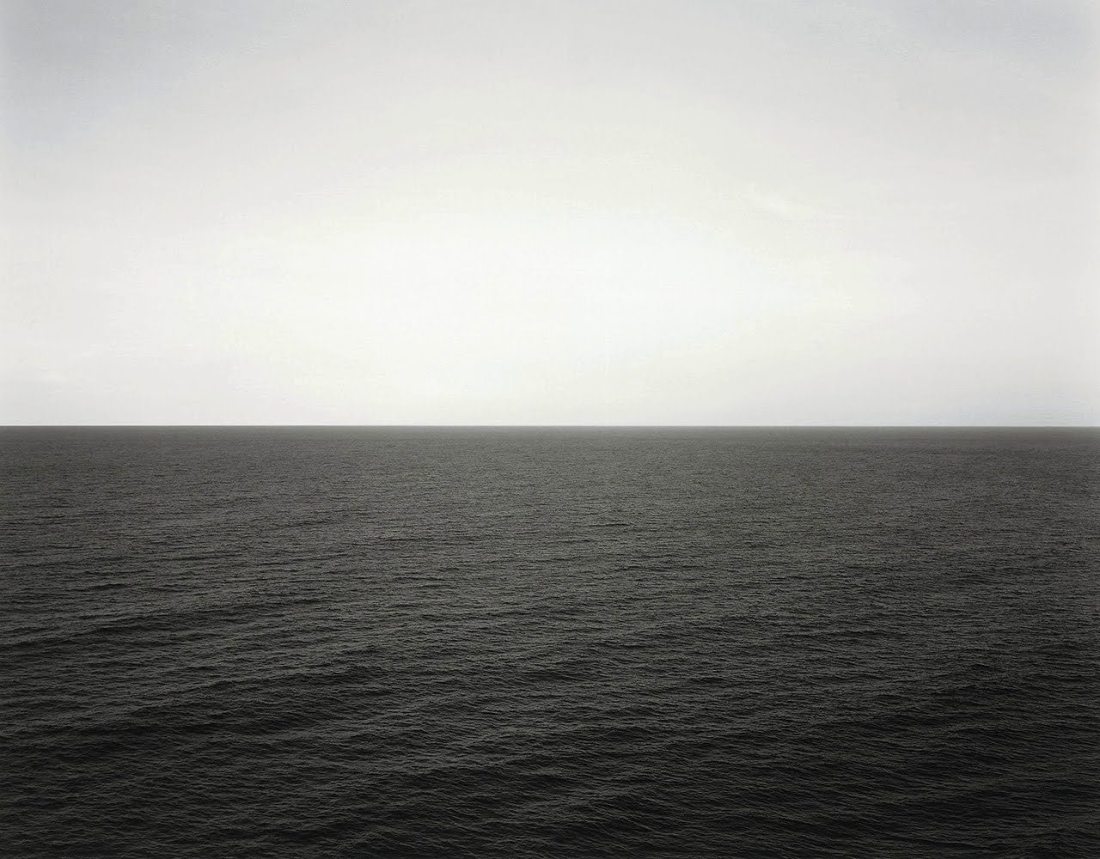
Hiroshi Sugimoto – Indian Ocean, Bali from Seascapes (1991)
The person you think about when you stand in front of the ocean. That’s the person you’re in love with.
 Acetylene Eyes