
nymphoninjas:

We have been a huge fan of your blog for some time now, and never submitted. But as my time as a mother fills my days, I look fondly at how my body was during pregnancy, and it is a bittersweet feeling knowing this was the last time I will carry someone within me. My husband could not take enough photos, and I wanted to share some of them with you, and your wonderful community. 

Wow, thank you so much for sharing this incredible portrait. The colours of your tattoos look so nice in the sunlight, and you are radiant and beautiful. It’s amazing you have these photos to look back on and reflect about that time in your life. And I really appreciate you contributing to Submission Sunday for the very first time. 

“Mother is the word for God on the lips and hearts of all children.”
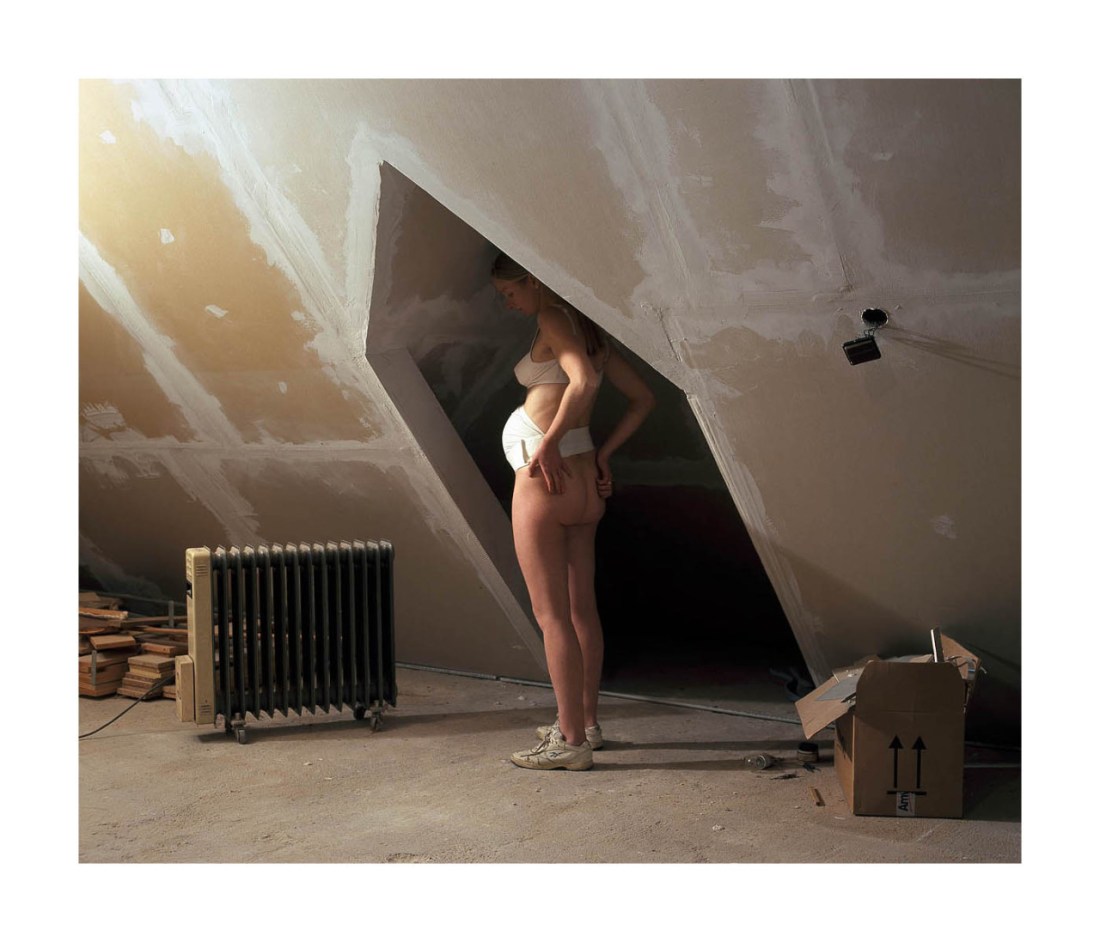
Gábor Arion Kudász – The Attic [Bogi] from Middle series (2005-2011)

There are critiques to be made here but I’ll not be making them since they don’t interest me.

Instead, I would like to point out how much this work diverges from Kudász’s early work which can really only be described as aggressively formal. And by that I mean it’s all very thoughtful features lucid clear conceptualization and technical accomplishment.

It also reeks of a self-conscious fine art photographic raison d’etre.

Middle is almost playful. Yes, it continues to evince top shelf skill–I’m still reeling from this exquisite image of a child (eyes closed) hiding behind a glass faced door, leaning up against a textured wall in a courtyard.

But there’s also whimsy: a picture featuring a woman standing in the middle of dense brush holding a chainsaw–naked except for work goggles and her jeans and knickers pulled down around her ankles; another picture of a presumably partially disrobed woman sitting on a chair in a field, a naked man stands over her framing her through a camera that blocks his face–the woman tracing the index and middle finger of her right hand upward along the inside of the man’s left thigh.

It’s all ultimately flawed–but it’s as if the flaws are the cracks that allow a sense of life to get into the work. And much of the life is the result of the pithy, clear eyed notes extracted from the diary of Kudász‘s wife which presented as a time line corresponding to the images, contextualize them in the stream of day-to-day family exigencies.