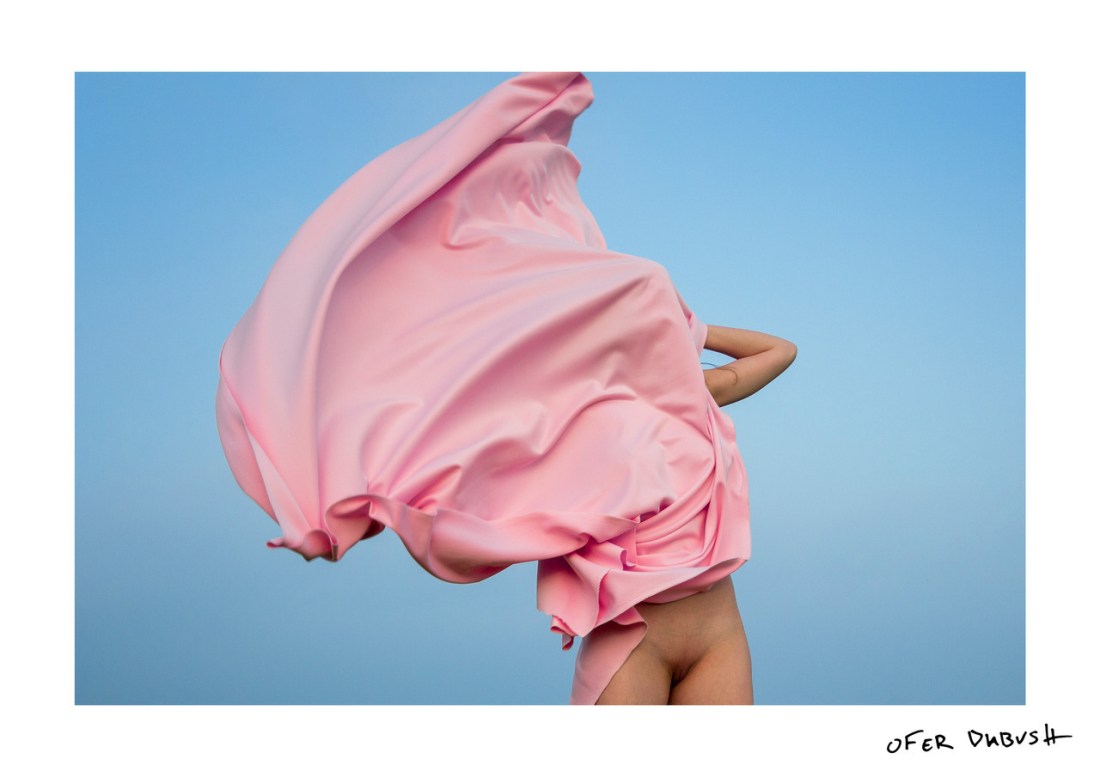
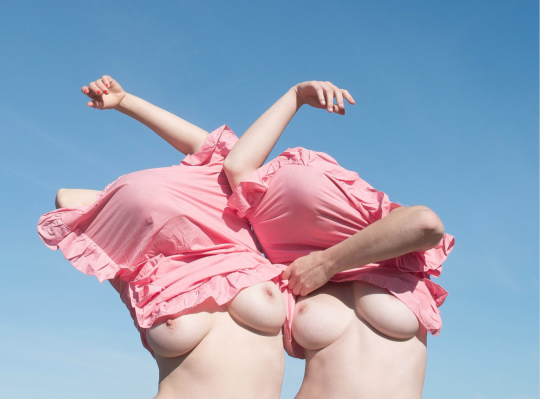
[↑] Ofer Dabush – Untitled (2018); [↓] Prue Stent – With Isabella Connelley (2016)
Juxtaposition as commentary
[↑] Ofer Dabush – Untitled (2018); [↓] Prue Stent – With Isabella Connelley (2016)
Juxtaposition as commentary
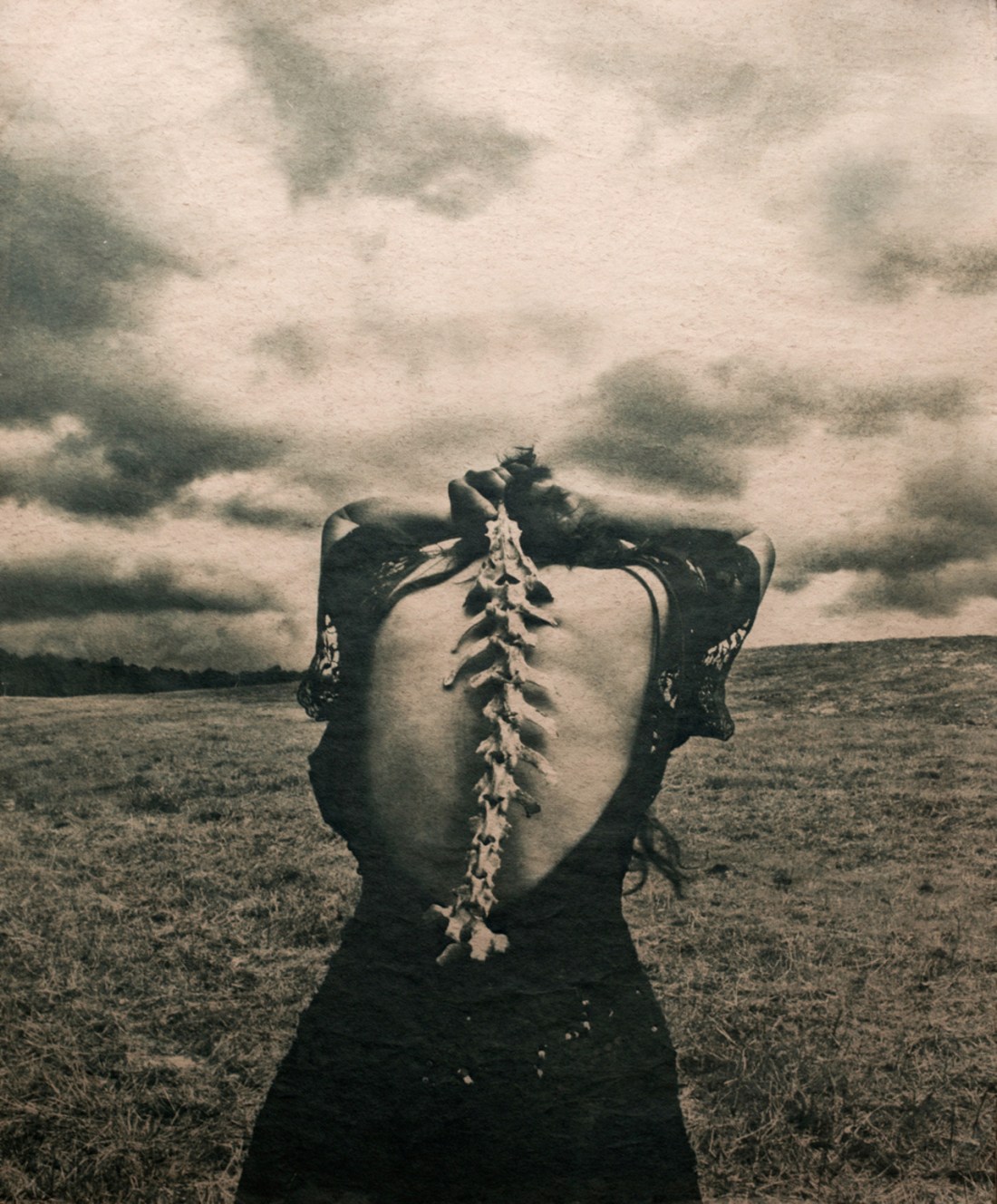
Jaime Erin Johnson – Spine (201X)
Everyone is familiar with the experience of seeing something and swearing they’ve seen it before even though they have never seen it–the experience of déjà vu.
Somewhere exactly halfway between the inverse and opposite of that is what’s called jamais vu–seeing something known as if for the first time.
For me, this photo sits somewhere between déjà vu and jamais vu: I am reasonable certain I’ve never seen it.
..yet I’ve had a notion of making a stunningly similar scene for a while now…
The great photography as fine art curator John Szarkowski maintained that all photos functioned as either windows or mirrors–respectively: showing the viewer the world around them or showing them something about themselves.
I tend to get tetchy about either/or dichotomies. (Or, as the joke goes: there are two types of people in this world; hard working decent folks and assholes who go around sorting everyone around them based on arbitrary bifurcative criteria.) However, I think for the epoch in which Szarkowski worked, windows and mirrors were arguably better criteria than might’ve otherwise be employed.
The thing I wonder is if maybe they no longer apply. I mean photography as a discipline has been predominantly focused on The World As It Is ™ for much of its formative years. (Arguments about the potential for a photograph or image to be subjective, notwithstanding, of course.)
Something I do that I’m not sure whether actually trained art historians do is the tendency to extrapolate based on trends that have already run their course.
There’s the interpenetrative history of dadaism and surrealism–and I’d argue that dadaism arguably better earns the surrealist designation, while surrealism was something more interested in toeing the line of what these days gets termed: oneiric.
As I’ve pointed out David Lynch has made a career out of sometimes skillfully, other times clumsily conflated surreality and oneirism. (In fact it occurs to me that his best work occurs when he actually distinguishes between the two with some sort of logical system–that no matter how difficult it is to parse, keeps these differing impulses in their own respective lanes. And, here I am thinking explicitly of Mulholland Dr. Although if you’d prefer me to restrict things to the realm of photography, I’ll see you Josef Koudelka and raise you Arno Rafael Minkkinen.)
Also, photography doesn’t really have a surrealist branch of practice. I mean you’ve got Joel-Peter Witkin and Jerry Uelsmann–and I’d place both closer to say whatever the hell it was H. R. Giger was on about than of a piece with Salvador Dali.
My point is merely that I don’t think Szarkowski’s windows/mirrors bifurcation works any more–except maybe in oneiric deviations of photography/image making.
It seems like surrealism is invested in showing us a world that is enough like our waking world that were it possible we could step into it and ‘inhabit’ it. Oneirism reintroduces us to a world we already know–but may have forgotten upon waking.
In effect: surrealism is a window, whereas oneirism is a mirror.
And what I adore about Jaime Erin Johnson’s image here is that the experience I have looking at it is virtually identical to encountering a word in The Dictionary of Obscure Sorrows that describes something I’ve felt is an experience only I have ever had–only to discover that a language I don’t speak or know found that feeling important enough to name.
It really doesn’t matter whether I’ve ever seen this image before–it works because it taps into a sort of archetypal symbology to convey the reality of an emotion that has been if not fully inhabited, then at least methodically studied.
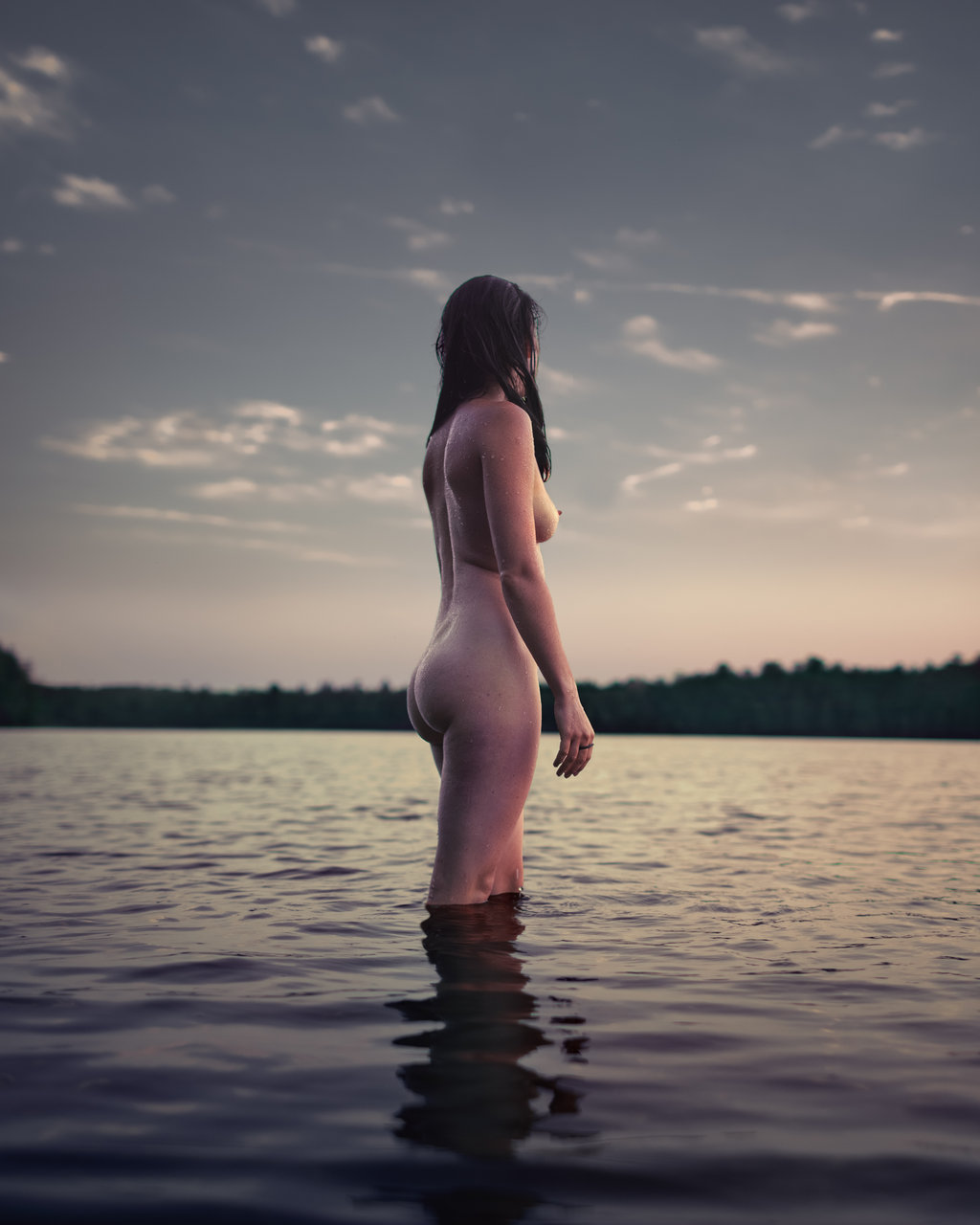
Benoit Paille – Rainbow Family member 39 (2011)
I can’t think of a contemporary image maker who casts a wider net than Paille.
In the last five years, he’s explored Crewdson-esque quasi-narrative, made a bunch of stuff with strobes mounted on drones, used a video game as a point of departure for landscape work, created realistic scenes via masterful Photoshop manipulation and made portraits of business owners in and around Paris.
Not all of it works. Yet, what’s surprising is how much of it does. And usually what makes that which works do so is a direct result of Paille’s fascination with surreal, psychedelia-inflected lighting.
The above is wonderful because of the subtle and dynamic gradation of skin-tone–red, purple, pink and peach tones that present with something like an inversion of the sky. (I’m saying it poorly–but think of the sky as if it were a positive and the woman as if she were a negative placed onto a positive field.)
The slight cant of the horizon and the way her reflected shadow goes completely black in the water all work together for an arresting, incisive image.

Soapstones – foto para el nº de abril de 192 mag (2013)
I spend a lot of time thinking about the impetus for nudity in image making.
The easy answer is who doesn’t like looking at naked folks?
I think that’s a lazy and knee jerk explanation.
However, short of equally facile justifications (i.e. figure studies, ‘timelessness’ or porn), there’s precious few image makers who fixate on naked people and who also offer some sort of implicit notion of why the people in their images aren’t clothed.
Consider someone like Mona Kuhn who works primarily in nudist resorts skirting the Mediterranean. Or Traci Matlock, whose work when it involves nudity feels a little like the photographer is functioning like the person at a party who suggests everyone join in a game of strip poker and as soon as they’ve achieved near universal agreement, strips down before the game even starts to demonstrate a commitment to the journey and not the destination.
I have no idea who this Soapstones is–beyond that the person responsible for the photographs most likely uses male pronouns in self-identifying and seems to hail from Mexico.
The above probably isn’t the best image to illustrate my point about his work because it’s very staged and there’s a feeling that the two guys in the image probably weren’t already naked ahead of preparing to take it.
However, that’s the exception to the rule. Generally, you get the feeling that the image maker was less intrested in nudes as a subject and more interested in documenting the hijinks of his friends and acquaintances. But his friends and acquaintances are close knit enough that expectations for social propriety take a back seat to fully inhabiting the moment.
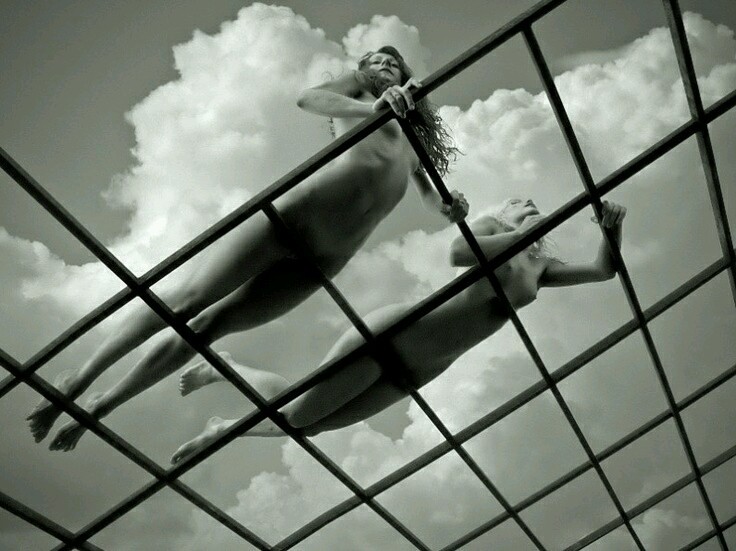
Alexander Rodchenko – Angle de Tir (1928)
Okay… why am I just now discovering that Rodchenko shot nudes?!?!??
Seriously, why have you all failed to inform me of this?!?!??
Holy shit on a stick. This. IS Marvelous!
(Also, certainly an influence on another great Russian artist.)
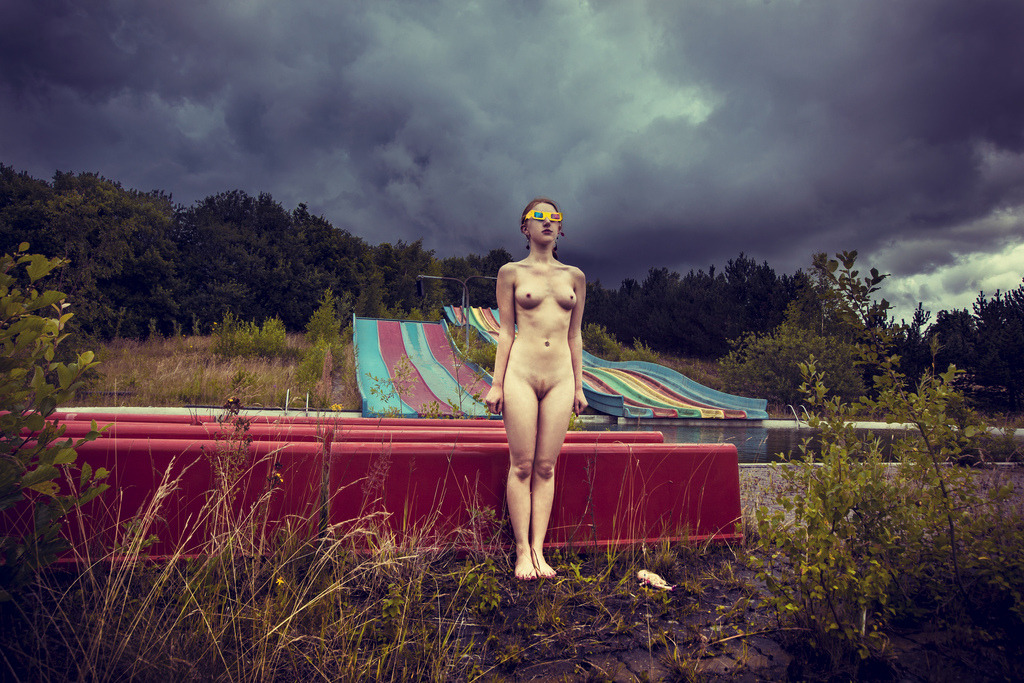
Jan Emil Christiansen – Book II (20??)
The colors in this are in-goddamn-sane. the punchy yellow of the 3D glasses…
…the cream + peach + magenta of the skin tone against the red plastic…
…and the exhaust blue + gun metal grey of the storm-roiled sky.
Still, something is missing…something about those glasses triggers a series of questions:
For me, the patent lack of answers is not charmingly ambiguous, it’s fucking frustrating.
So… I breeze over to Christiansen’s website since his Flickr no longer has any shared content.
Frustration rapidly transforms into confusion. + I don’t mean confusion in the usual sense of being lost or uncertain. I mean more: how in the exact fuck did this cat ever make such a killer image?
Le sigh.
Jan Emil Christiansen is an Urban explorer; the above, ostensibly (not that you can realy tell) an Urbex image; making it the least Urbex-y Urbex image I’ve ever seen–which probably also makes it the best. (I give negative shits about Miru Kim’s ‘thinly veiled’ narcissism.)
Not to be all Debbie Downer on Urbex. I vaguely orbit the scene + in truth urban exploration environs figure prominently in my own work.
This issue is making images in such environs demands a hodgepodge of bastardized and otherwise degraded photographic conventions: a little bit o’ landscape, some documentary and some architecture thrown in for leavening.
Put another way: if an urban explorer is there has a camera, there is a sense that the resulting images have an in-built relevance.
Mostly he abject wonder that motivates most urbex folks to bother taking a picture usually serves the resulting work. The trouble arises when airs emerge + pretense begins to take root.
Christiansen thrills at mixing his beloved hobby with a gumbo of contradictory ends in mind: documentary, horror films, erotic + portraiture. Excepting this image the single unifying aspect of his work its the appalling discontinuity between concept and enactment.
To see these tendencies in this image, you need to look no further than what stands out the most in the frame: the 3D glasses. They do tie the frame together fabulously.
But as has been noted, their presence suggests questions for which the image contains no answers. This has to do with Christiansen’s pick and choose approach to image making blissfully unaware that the glasses shift the image away from an uncomplicated ‘document’ and veer toward a mise-en-scène, of sorts. + the audience has no recourse to fill in the blanks necessary to suspend their disbelief, unravel the story and surrender to the image.
This could have been so fucking lovely; but all just sound and fury, signifying nothing–a fact which depresses + infuriates me me all at once.

Ryan McGinley – Somewhere Place (2011)
This is easily my favorite McGinley creation–followed closely by Pickup Truck, 2013, Untitled (Bathtub), 2005, Running Field, 2007, Dakota (Hair), 2004 + Ann (Windy Truck), 2007.
As for the rest of it? I’m conflicted.
What attracts me to the work–its restless + vital physicality as well as the way the images I like thrum with a dreamlike unbounded anarchic togetherness–stems directly from party line criticism: the fuel of charmed youth, the match of absented consequences.
Plus, the work is goddamn pretty as you please; and when you tall that with it’s unmediated immediacy–so rarely seen in galleries–and it’s cleary how + why McGinley became the youngest artist to have a solo show at the Whitney.
What, to me, is off putting is the artist’s reliance on goosing the viewer’s reptile brain. I wouldn’t go so far as to say that McGinley is conceptually vacuous–but his work lacks anything even remotely resembling the conceptual sophistication of his predecessors (i.e. Nan Goldin + Larry Clark).
In the same breath, though, I can’t think of another imagemaker who so fairly divides his focus between male bodied and female bodied subjects. And that’s not nothing. Especially, given his impressive ability to unify contrived naturalism with an ultimately hollow aesthetics that still has the capacity to resonate deeply with the viewer.


 Acetylene Eyes