
Christophe Pok – Untitled (2016)
Remember,
the entrance door
to the sanctuary
is inside you.
—Rumi (via blackshivers)
Christophe Pok – Untitled (2016)
Remember,
the entrance door
to the sanctuary
is inside you.
—Rumi (via blackshivers)
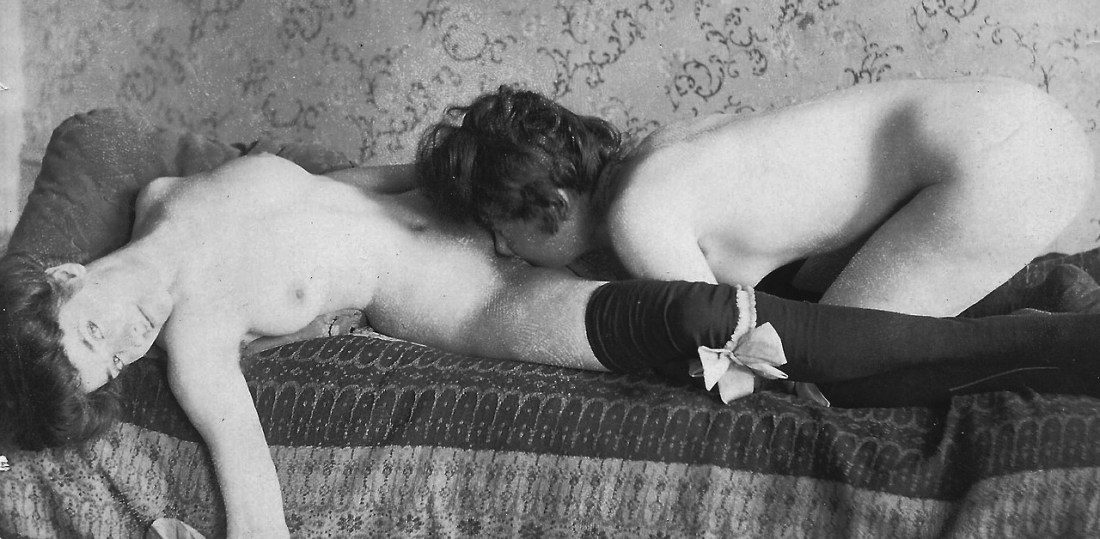
Author unknown – Title Unknown (192X?)
Things I like about this:
Lastly, a counterpoint on the why the eye parses this frame: there is no sense that there is a continuity beyond the edge of the frame, thus the exclusion of the woman on the left’s right forearm and hand represents an amputation, a symbolical removal of autonomous agency. (Her foot is similarly maimed.) No matter the cleverness of the way the work cycles the gaze–these women are definitely meant to perform for the male gaze.)
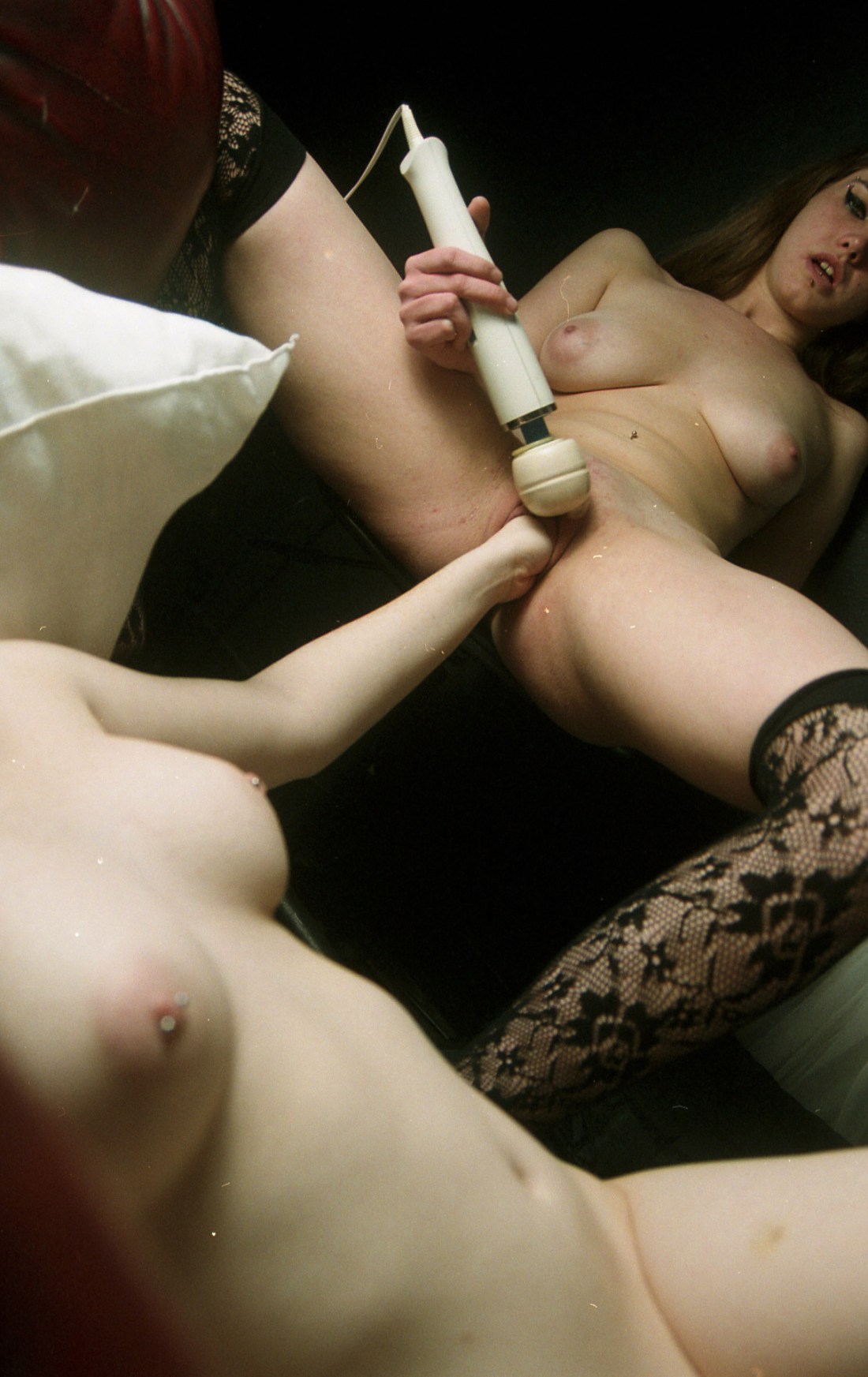
Source unknown – Title unknown (20XX)
I feel there is something unexplored about woman that only a woman can explore.
–Georgia O’Keefe
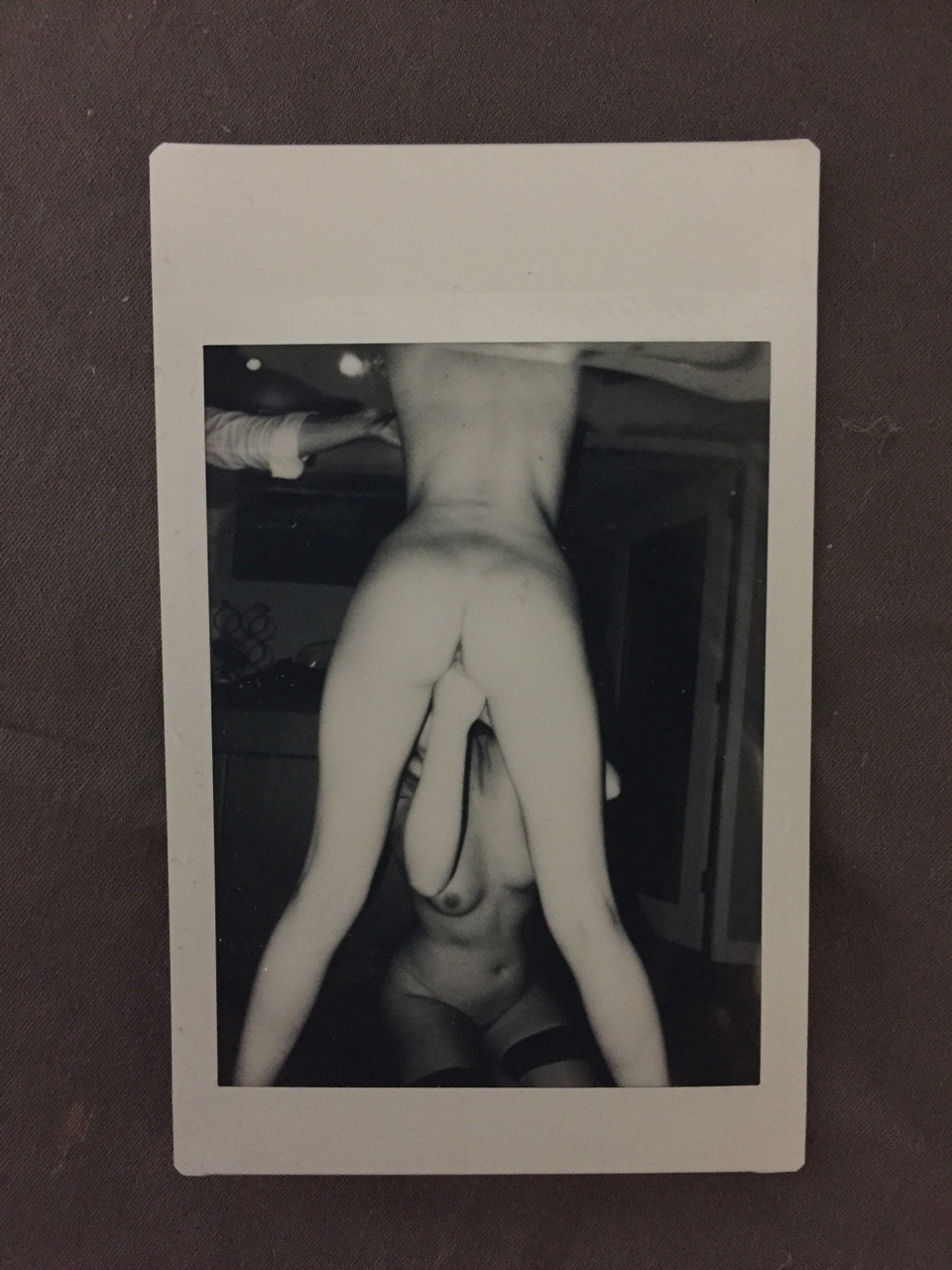
defiantly-yourss – Some friendly fingers 🐶 (2017)
The above is a Fuji Instax Mini Monochrome instant photograph.
I’ve always been a fan of instant film–the unpredictable peccadilloes of the process contribute an unmediated in-the-momentness to them. It’s partly the singularity of the original–yes, you can scan them or snap a picture of them with your phone (but that one be the same; essentially, there’s only one true original.
Whether it was intended or not, this has always facilitated a special relationship between instant photography and DIY porn making.
(Honestly, if there was a browser plugin that filtered out mainstream pornography and only allowed DIY work through, I’d be thrilled. Diminish the profit motive and it seems like this girl’s enjoyment of things increases, but also ostensibly there’s less premeditation on what will sell the most units, earn the most clicks and it’s focused on what the producer likes and perhaps also what the target audience–whether a person or a small community–enjoys just seems to me to come across as not only more immersive but more authentic.)
Yet, of all things this also got me thinking about the received wisdom that art and pornography are mutually exclusive. (There’s a stellar piece, Museums, Urban Detritus and Pornography, written by Paul B. Preciado (formerly Beatrix), which has been seminal influence on this blog.)
It’s been a bit of shit week for me and I was wracking my brain for something to say about this. (A common misconception is that I just find something I like and then spew convincing BS about it and call it a post. I won’t deny that that happens on the off occasion. But for the most part, the stuff I post is posted because I have something to say about it.)
With this I knew I wanted to post it–that it belonged here–however, I wasn’t sure what I was supposed to say about it.
Then it occurred to be that while this is an explicit image, it’s not especially graphic. Genital penetration by multiple fingers is clearly implied but not graphically illustrated. And that’s kind of the strength of the photo: the basics are clear but the specifics are amorphous.
This encourages the viewer to fill in the blanks–and I use that in spite of the clumsy pun.
I started to wonder how many fingers are inserted. You can’t tell but it specifically says fingers plural. For some reason I thought of the tradition of depicting Christ in oil paintings–with his thumb extended and index and middle finger raised in a sign of blessing. (Bonus points for the art history nerds out there: apparently this was because this finger placement is like a gang sign that reads IC XC–the first and last letters of ‘Jesus’ and ‘Christ’ in ancient Greek.)
It being a sign of blessing is definitely in keeping with the above image. And that got me thinking about how ecumenical tradition tends to take extant symbols and appropriates them for religious use. Xtianity is all but a carbon copy of the ancient Mithras cult, for example.
The Xtian cross symbol originates from what is termed a Roman or Latin cross and became–after the apostle Peter demanded to be crucified upside down to prove his piety and that he was not anything like Christ–the Petrine Cross. Thus a symbol of imperial violence is appropriated by early Xtians, then appropriated again by the Catholic Church (in it’s upside down variant) before being flipped right side up again only to be re-appropriated as a bit of anti-Xtian imagery nowadays.
I realize this isn’t the most un-specious of arguments but I think it works given the way the majority of wisdom traditions have de-emphasized individual experience of the divine with a sort of ersatz groupthink instead. The fact that drugs and sexuality can–given the right environment–be a stepping stone to self-transcendent experience. The powers that be are very much invested in using religion to wall off that option from the majority of people.
Lastly, I’ve had this notion for a while that landscape oriented imagery tends to be secular in nature whereas vertical oriented stuff tends to be more liturgical–I think this digression is actually very much in the spirit of the original Instax.
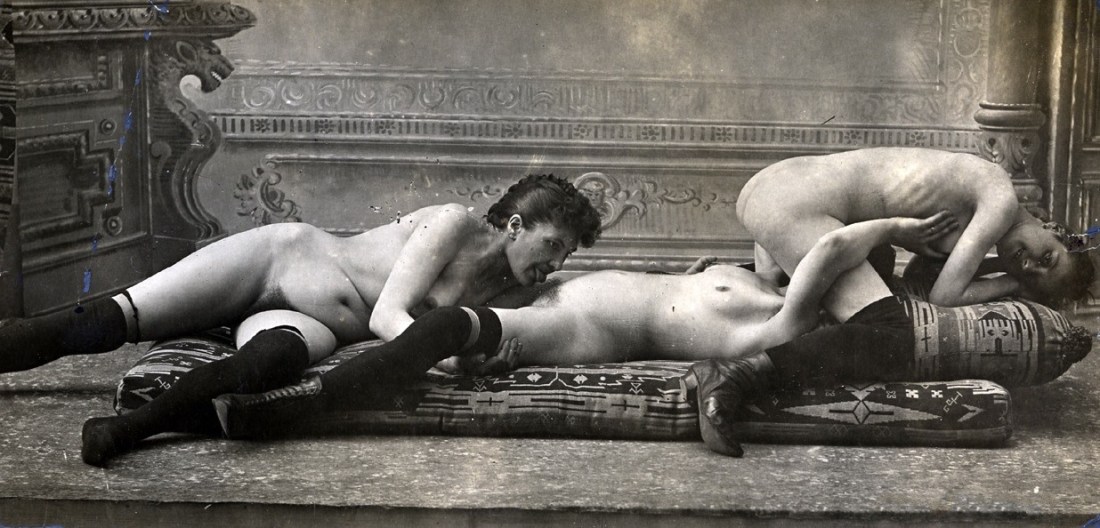
Source unknown – Title unknown (19XX)
Free love? As if love is anything but free! Man has bought brains, but
all the millions in the world have failed to buy love. Man has subdued
bodies, but all the power on earth has been unable to subdue love. Man
has conquered whole nations, but all his armies could not conquer love.
Man has chained and fettered the spirit, but he has been utterly
helpless before love. High on a throne, with all the splendor and pomp
his gold can command, man is yet poor and desolate, if love passes him
by. And if it stays, the poorest hovel is radiant with warmth, with life
and color. Thus love has the magic power to make of a beggar a king.
Yes, love is free; it can dwell in no other atmosphere. In freedom it
gives itself unreservedly, abundantly, completely. All the laws on the
statutes, all the courts in the universe, cannot tear it from the soil,
once love has taken root.–Emma Goldman, Marriage and Love

Source unknown – Title unknown (20XX)
My first partner loved the show Friends.
At the time, it seemed like a fair trade off. She’d ‘suffer’ through the latest von Trier or the odd early Bresson and in return I’d hold her while she giggled at the vapid banality of Joey and Chandler. (With hindsight, I definitely got the short end of the stick, but…)
There’s this one episode where the white cis men discover that they are getting free porn via their cable provider. They think it’s a stroke of luck but as things progress they begin questioning how it effects their perception of reality. If I remember correctly, Chandler mentions how while interacting with a teller at the bank, she never offered to take him back to the vault and seduce him.
It’s a knee-jerk, made-for-sitcom parsing of the ethics of porn w/r/t gender representation. But it does suggest a point (to me at least) that I feel is worth exploring; namely: whether the frame is an edge or a boundary.
In the case of the porn that Chandler and Ross were consuming, the frame is an edge. It is separated, so much as to be cut off from reality. However, due to the non-critical consumption–this fantastical representation of a reality that is at a remove from the one either inhabit, they begin to question why their world isn’t like the one they spend the most time considering.
In other words, when you spend too long studying a world unlike the world in which you live (without keeping in mind the fact that you are watching a discrete fantasy), you begin to note discrepancies.
However, some work–and the above image definitely fits in this category–where the frame is a boundary not an edge; a broader reality exists outside the frame. There aren’t people with stock, archetypal designations acting on sets. There are reminders that there are people, places and things beyond the limited view provided to the audience.
This is cool because there’s more hinted at beyond the frame’s boundaries. There are at least 5 people in this scene. Likely six, including the person taking the picture. (And the proximity to the action of the camera person, suggests that they are a participant in the proceedings.)
I love that the one guy is wearing stockings–which note have clearly been pulled on and off enough times that their is a rip opening in the left thigh–and cowboy boots. His scrotum is clearly still irritated from being recently shaved. And the hand that is presumably tracing it’s way up the right arm of the woman eyeing the camera. It all speaks to both the immediacy and intimacy of the moment but also that it exists within the context of a broader world beyond the outer boundary of the frame.

Pixoom Photographie – Title Unknown (2015)
If you’ve followed this blog for any time, you are most likely painfully aware of my aversion to portrait orientation in lens based image making.
I refer to it–with profound contempt–as #skinnyframebullshit.
It’s a term I use a lot and I’m always linking to the same article I wrote more than two years ago. So–with the notion in mind that someone seeking to determine counterfeit from legitimate currency always studies the real item instead of the fake–it occurred to me that being as this image is not only stunningly gorgeous but also in no way shape or form #skinnyframebullshit, that it might be time for me to create a positive reference instead of a negative one.
…
It’s maybe not the best place to start but one of the things that doesn’t directly relate to my hatred for portrait orientation but does inform it is the increasing ubiquity of digital imaging technology. (Again, if you’ve followed me for any time you’ll know that I am obsessively anal about differentiating between digital and analog processes. Yes, they are built off the same chassis but their respective functions are vastly different in practice.)
By now, you all are familiar with shitty Youtube videos wherein due to the shape of and interface of our smart phones you get a preponderance of video with vertical frames. It’s ugly, sloppy and I would maintain a poor reflection of the author’s basic intelligence.
I’ve been pretty active in Internet photo communities since 2006. Back then, folks making work were basing it off the history of lens based image making up to that point. Yeah, you had vertical oriented images but whether or not there was a reason for them to be vertical (i.e. an internally consistent compositional logic) they were the distinct minority.
Of that minority, a plurality featured this sort of self-conscious flipping the physical camera body on its side makes me look more like a photographer. When you do it, you feel a little rebellious.
Now, if you’re a person shooting on film, then you drop what you shot at your lab (or better yet, process yourself); and then you pop your slides or negs down on a light table and have a look-see. The thing you note immediately is that your vertically oriented frames break the flow of your reading your slides. You end up having to flip the filmstrip, contact sheets or whatever. Invariably, this causes you to favor either the landscape or portrait images due to the fact that it’s easier to read images that are in line with however you have the page currently oriented.
I learned quickly that there really needs to be a compelling reason for a shot to be vertically oriented. And with my reluctance to deal with vertical oriented shots, I realized that almost categorically, image makers opt for vertical orientation as a compositional shortcut. Like: oh, hey…what I want to shoot won’t fit this way, I’ll just flip the camera and that’ll fix it. Makes sense. Except one small thing and I’ll state it as a truism–you will always get a better shot by moving your body in relationship to the object or by using a different focal length lens. It’s just a fact.
And if you apply that to the history of photography, it’s interesting to note that most images with vertical orientation are–wouldn’t you know it–within the architectural genre. Why might that be? Well, in relationship to an edifice there are few options with regard to moving in order to achieve the framing you want.
Thus, I maintain rather rigidly that in general, if you aren’t shooting architecture, you can go ahead and shoot that vertical but then maybe move around and shoot the same thing landscape from different positions. I’m confident that all things being equal, you’re going to find you prefer the landscape frames.
…
One of the first things a beginning photography student hears about is the sacred rule of thirds. As a rule of thumb, it serves–and ensures photography instructors cut down substantially on the godawful wawker-jawed, indecipherable images. But like any rule, it’s nothing more than a general guideline that you really have to understand before you’re allowed to start ignoring it as you please.
Yes, the rule of thirds is an abstraction of the Golden Ratio. And with the tendency to frame the subject at one vertical third line and then leave a great deal of negative space to the left or the right, it does produce appealing images. (Note: how images that are perfectly balanced within the framework of the rule of thirds tend to have the effect of leaving you confused about what you’re supposed to be looking at.)
My theory is that with vertical compositions, the rule of thirds is less useful as a guideline; the expectation of the eye is something more in-line with the golden ratio.
…
There is only one horizontal line in the above image–dividing the frame top-to-bottom roughly 60/40. Katjuschenka is ever so slightly off-center (consider the mid-line of her face)–balanced expertly by her right knee opening what would’ve otherwise been a repetition of the angle of her arms.
There’s essentially only two colors in the frame–red (hair, skin tone) and blue. Everything falls in line with those tonal hues. Focus is sharpest on her eyes. (And as a dizzying bonus, check out the texture in her stockings. Dayum.)
A creepier photographer would’ve focused on the nipple or at least increased the depth of field so that it would remain in focus. But the decision to do that makes this image about the color and framing. The eye contact is neither coy nor pouting. It’s not flirtatious but it does convey a sense of knowing a great deal that the viewer does not.
This image is breathtakingly exquisite. If you’ve got to go vertical, this is the baseline. Either make it clear that the composition was the only thing that would’ve communicated the magic of that moment or go home with your weak ass #skinnyframebullshit.
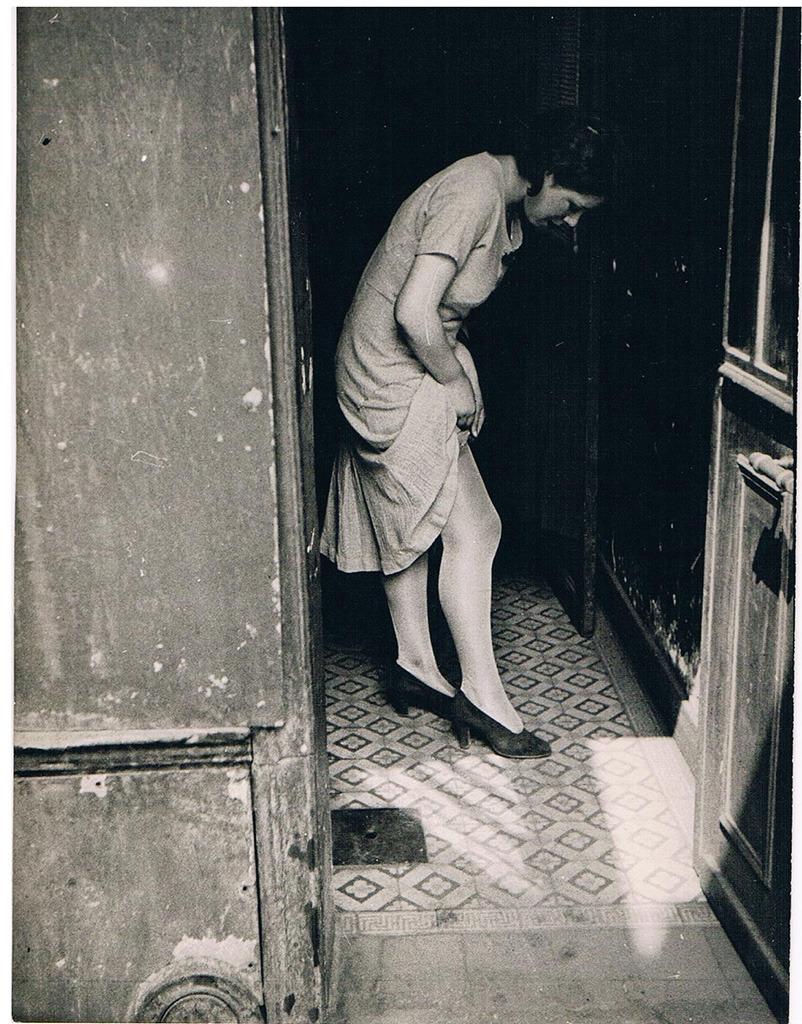
Brassai – Anonymous Prostitute (1930)
I’ve seen this photo attributed to Brassai. I am not convinced that’s correct.
The supposition is probably based upon the date, placing it concurrent with what we might term Brassai ‘sex worker’ period.
The image strikes me as too bright to be Brassai. Further, this woman has clearly ducked out of sight to straighten her stockings. The photos from his ‘sex worker’ period suggest the subjects as collaborators aware of the camera.
Brassai will never be my favorite photographer but I do appreciate the fact that his work suggests he saw sex workers as more than just objects. And that’s what makes me think this isn’t a Brassai–because as wonderful as the unmediated moment presented is, it skives me out a little because the seemingly unaware subject in combination with the title raises all sorts of issues w/r/t consent and objectification.
(Also as an aside: I don’t consider this #skinnyframebullshit. There is a compositional logic for the vertical orientation–drawing attention to this woman’s legs. So yeah the moment presented is intriguing but there are some downright lecherous aspects that are causing me second thoughts about posting this. I suppose the point I want to make is please image makers, strive for this sort of unself-conscious immediacy in your work but at the same time take great pains to lead by example when it comes to questions of consent..)

 Acetylene Eyes