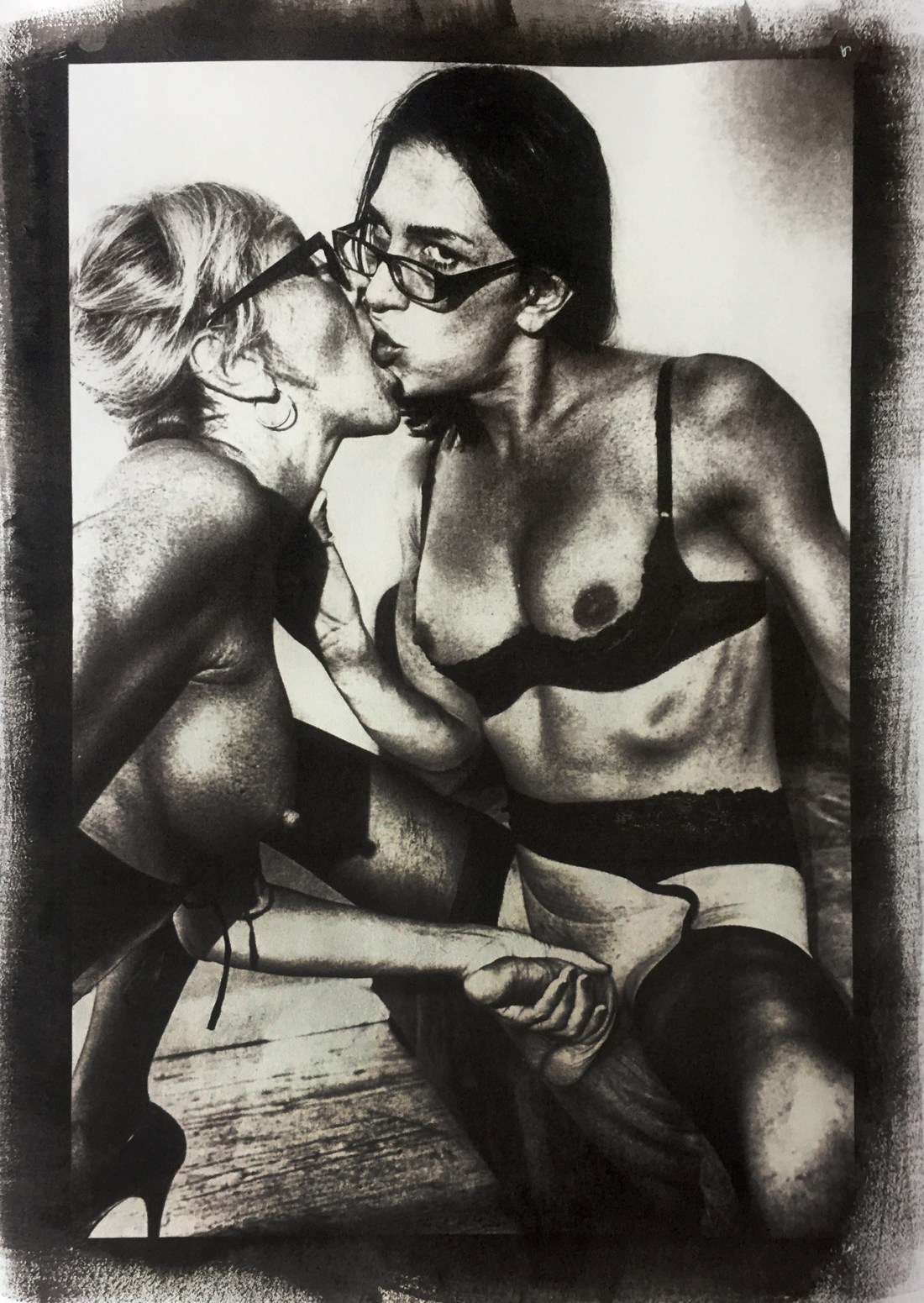
Laurent BenaimUntitled (2018)

It’s interesting to me what people accept regarding the aestheticization inherent in most mainstream pornography. That the cute college coed is going to answer the door in her robe, see the muscly stud with a pizza and be immediate DTF? That everyone who fucks does so in opulent but ultimately either nearly empty or decorated without any discernible sense of form or function, without a single trace of any sort of shadow anywhere in the scene? That the only people who fuck are perfectly depilated without a trace of body fat?

The general motif is that if it distracts from the fantasy, it should be diminished or eliminated. But just as the best lies are sown in the same furrow as truth, so I think that the reality of depicting sexuality is that if your fantasy has an correlation with reality, an aesthetic that eschews the aesthetics of perfection is probably the better option.

This image is downright ugly–looking more like a photocopy of a photocopy that has been darkened to compensate for the first layer of generation loss. But it really does work better for that. You can’t so much focus on the pretty picture so you instead have to embrace what’s being depicted to engage with the picture.

And I can’t tell which part of this I like better: the self-aware way the model is staring directly into the camera or the discrepancy between the way her ankle in those stiletto heels is wrapped in light or the way you can only see the other woman’s breast by imagining what’s in between her breast and the cast shadow.
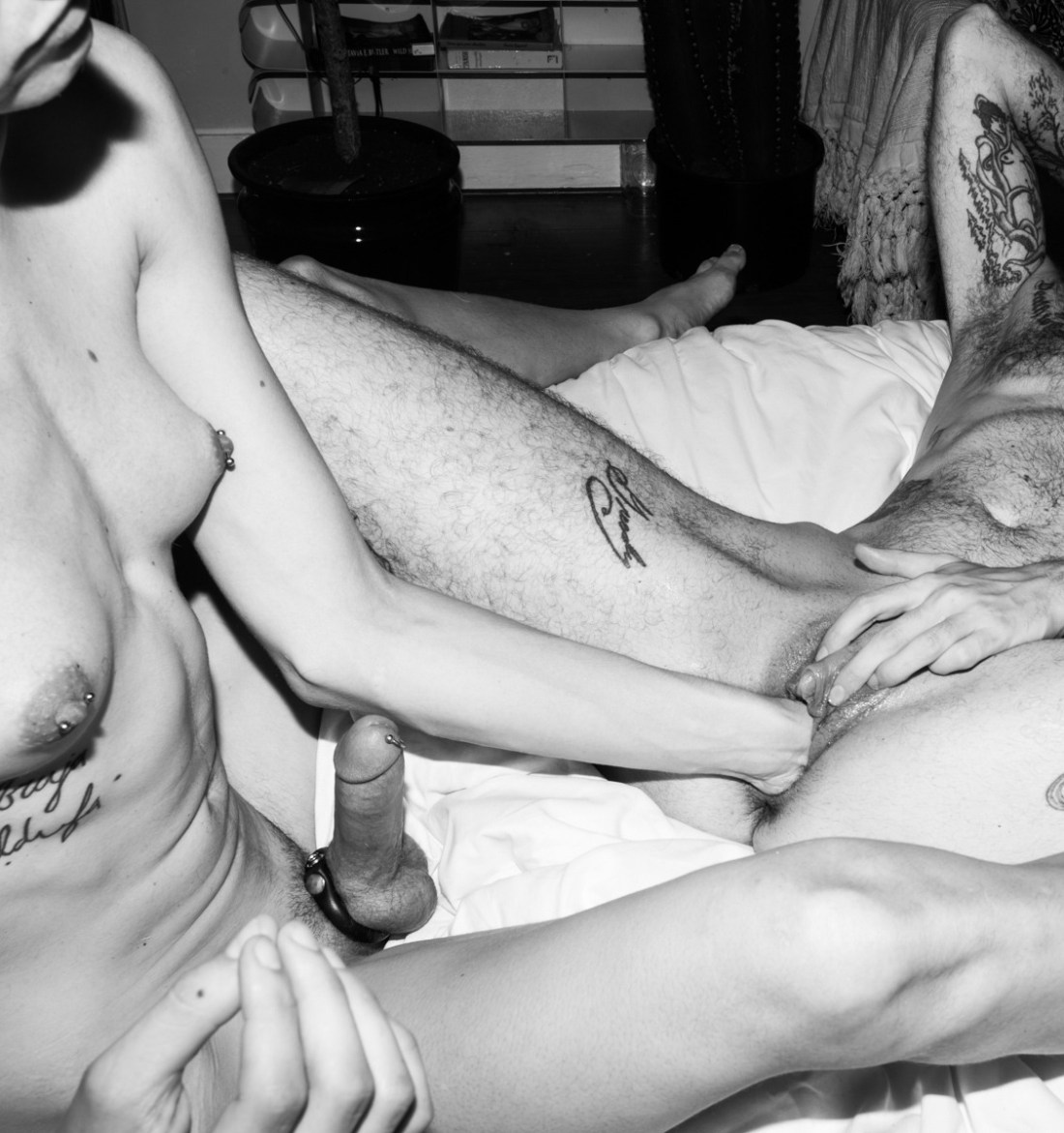
Momo Okabe – Untitled from the series Dildo (2008)

I was so high the last time I passed through Amsterdam. (How high were you?)

So high I completely missed the renowned photography museum foam.

I was still stoned this time but for the sake of proving there’s a difference between drug use and drug abuse, I managed to stop in this time.

For all the shiny things I’d heard about foam, yeah, uh, color me exceedingly unimpressed. Granted, a good part of the museum was shut down so that they could install a new exhibit on Magnum contact sheets. But Anne di Vries can eat my asshole–he’s clearly one of these Kurzweil kool-aid guzzling bastards who think that we need to shake off our limited perceptions and embrace the coming neo-human singularity. (I’m totally not shitting you. Did anyone else see this feature in Time about the future of photography? Especially disturbing given Apple’s Live Photos BS?)

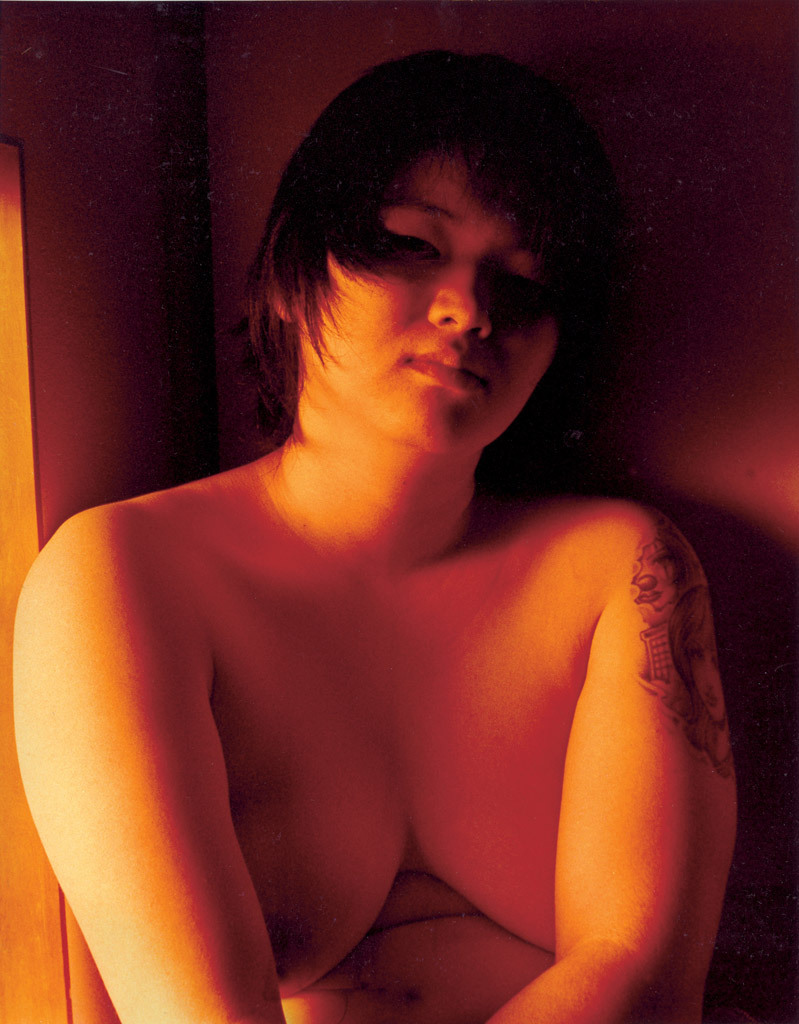
The best part of the show was Momo Okabe’s Bible and Dildo, two bodies of work–ostensibly documenting the fringe existence of transgender folks in Japanese culture and the physical process of surgical transition.

I was warned before I purchased a ticket and subsequently via signs and blackout curtains blocking the portals to the exhibition that what I was about to see was explicit/shocking.

In the end, I do not understand all the strum und drang. Some of the pictures are intimate, perhaps even a little awkward given the viewer is treated to access no one other than a lover would ever be granted.

Okabe cites Araki as a formative influence–but it feels a bit like leading with the patently obvious (a well known subterfuge tact). Perhaps better corollaries might be Nan Goldin, Wong Kar-Wai and Tsai Ming-Liang.

As a photographer, Okabe tends to produce images that always have about a 8 degree from level cant to them–nearly always left leaning. She favors medium close ups unless pragmatic concerns–nurses tending to a patient before and after surgery, distance from the subject. These disjunctions from the rest of the work as a whole are actually what results in the most compelling imagery. (In fact, I would got so far as to say that all her loosely landscape–in terms of scale and content–is actually excellent and vital in a way most landscape photography these days isn’t.

The above image was in my opinion the best in the exhibition and therefore in the museum. There’s something straight forward and unguarded in it. The light and the confrontation short-circuit the insistence upon gender labels.

In essence, although I think the act of documenting the experience of transgender folks is of crucial importance–I think the fact that it is clearly presented as documentary, let’s the viewer off the hook as to why the documentary is so desperately needed. As documents, the images feel sparse and incomplete. However, the part of the work that is preoccupied with say portraiture or the moment of being alive and present in the world (which is how most of the more landscape stuff feels–as if the photographer nixed her own aesthetic preference in favor of the truth of the moment).