


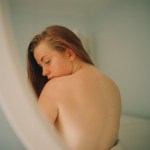
Rosie Brock – [↖] Untitled from Lily series (2015); [↗] Untitled from Bone, Flesh, Memory series (2015); [↙] Untitled from Lily series (2015); [↘] Untitled from Lily series (2015)
Two days ago, Canon released the results of a survey where 1004 people were asked about their image making. A preposterous 80% graded their skills as excellent.
There are a veritable litany of problems with the methodology of this survey. The most pertinent is asking people whose only training to be an image maker is likely owning a camera to self-critique is a little like administering a multiple choice test and instead of checking it against an answer key, instead grading the test take on how they feel they did.
Really, it’s great that we can talk about the democratization of image making. I mean these days virtually any cell phone comes with a built-in camera that is superior to any standalone device under $1000.
Further, anyone coming of age from the 70s onward, grew up immersed in a culture steeped in a preternatural awareness of the impact of lens based visual media.
If anything, one would expect given the wide availability of quality equipment and an awareness of form and function that might as well be ingrained at a cellular level, you’d expect more and better work.
The truth of the matter is: you’ve got more people with better equipment making far less inspired, interesting and urgent work now than at any time in the history of the medium.
What does this have to do with Brock? Well, their are scads of young women making work with similar, perhaps over-earnest examinations of what it is to be young, female and visible in a culture dominated by notions of male entitlement and rote sexualization of women and women’s bodies.
Some of it is very good but by and large the majority of it is poorly conceptualized, executed and presented.
Not so with Brock. Part of it, I suspect, is that she’s shooting on film–specifically with a Hasselblad 500CM. It’s not just that with the ubiquity of digital, she’s willing to blaze a more solitary trail, it’s also that there seems to be an awareness that the square format is particularly well suited to portraiture.
And that’s the other fascinating thing about the work–it borrows tropes and traditions from portraiture–but it’s as if her images manages this delicate mobile-esque structure where each part exists able to be examined both as a part and as a part of the whole; everything is in balance and the balance is what activates the photograph.
For example, Brock has a patience with light that I haven’t seen many photographers bother with. She favors illumination just slightly beyond the confines of golden hour. At 19 she possesses an impressive familiarity with both form and composition, shaming the majority of folks who’ve been doing this half their lifetimes.
She’s presenting singular, indelible images with a seeming effortlessness that I know from experience takes endless work and fearless dedication. If she continues on her current trajectory, she will almost certain be a force of goddamn nature within the next decade. Thoroughly excellent and exceptionally noteworthy.

 Acetylene Eyes