#850

It doesn’t escape me that there’s a major level of privilege which makes this blog possible. So every fiftieth post, I ditch the naked folks and focus on the desert of the real.

For this edition, I’m feeling dispirited.

I continue to worry about the hideous shit show that is the lead up to the US Presidential election.

I am grudgingly supportive of Bernie Sanders’ candidacy. His unflinching support of Israel, his aptitude for being effectively conversant with women’s issues boils down to little more than vehement support of Roe v. Wade and his track record on gun control all worry me. However, his response to Black Lives Matter interrupting his rally and his populist message are all–if nothing else–extremely refreshing.

What does concern me are the Berniebros and the ways in which a sizeable faction of youthful supporters are essentially anti-democracy.

The first contest in the electoral primaries takes place in Iowa on Monday. FuckFace von ClownStick and Ted Cruz are neck in neck going in; as are HRC and Sanders. A Sanders win would make put Sanders out in front. And since I believe New Hampshire is next–where he’s polling double digits ahead of HRC–that would give him two wins out of the gate. The concern, of course, is that if HRC isn’t the Democratic nominee, Bloomberg is already telegraphing his desire to run as a spoiler–which would almost categorically ensure victory for the Republican candidate. (Having lived in NYC for more than a decade, I’m hard pressed to pick who I dislike more between HRC and Bloomberg.)

Anyway, since I tend focus on dire sub-apocalyptic level current events, here’s something that although a reminder of the world wide refugee crisis: a 17 year old young woman who is a Syrian refugee in a Jordan learned how to use a dSLR from a digital filmmaking workshop set up in her refugee camp. The NYTimes featured a short film of hers recently and it is earth shattering. (As someone who has worked extensively with student filmmakers, I think you can take all the best kids I’ve encountered, add up their potential for excellence and place it next to this young woman and her ability exceeds their combined aptitude by a factor of at least two.)

Nicholas Noisenestglamourmatic glowstick . subclitoral squirt gun (2012)

Believe it or not–despite my many misspellings, myriad grammatical errors and the fact that I routinely forget to include the sort of quantum connective tissue that connects my various notions–I am exceedingly self-conscious about my writing.

So I’m aware that by this point it’s almost a formula for this blog: I start of a post saying I really don’t like X, Y and Z but I’m super down with P, D and Q.

Yeah, yeah–sometimes I invert the order but mostly with the exception of the confessional personal posts or unmediated compositional analysis, I’m an appallingly predictable writer.

For example: the only way I know how to approach the above image is by first subtracting the things I (strongly) dislike about it. The combination of monochrome and strobe clearly asserts an affection for Nobuyoshi Araki’s Tokyo Lucky Hole.

There’s less than no love lost between Araki and myself. But from a technical standpoint this isn’t even thoughtfully derivative work–yes, Araki was using flash and B&W to capture salacious scenes but despite my distaste for most of his work, you can’t dispute the man’s tech chops. Whereas Noisenest–while at least not using the strobe mounted on his device, positions it in such a way that it casts an obtrusive shadow behind the woman. (It’s also #skinnyframebullshit.)

And for a work that appears so self-conscious about its family resemblance, the execution with the strong and the stylized tonal gradation, all work at cross purposes given the Araki impetus. (Araki is afterall and if nothing else grossly immediate in his presentation.)

However, all these (admittedly damning) critiques aside, it does strike me that this instinctively gets something about erotic photography that I haven’t realized before–specifically with regard to ostensible depictions of masturbation; namely: there’s a knee-jerk tendency to frame the scene as something habitual instead of something novel.

The distinction I am trying to draw is that we tend to make work featuring folks masturbating in bedrooms or bathrooms–spaces that exist hand in hand with a degree of personal privacy. Thus, images produced given that sort of framing, tend to serve more as mirrorrs; the viewer responds to them based on their response to the person depicted.

While that is probably an honest depiction of probably about 65% of masturbatory experience, there’s also the part that is experimental and boundary transgressive. The instinct that doesn’t want to be caught but wants to press up against the notion of this is private and that is public and never the twain shall meet.

I mean I don’t think I’m the only one who has masturbated in strange places either because the moment felt right to do so or a libidinal itch demanded scratching without recourse to all the locks and catches of safe privacy.

And I think there are certainly ways of hybridizing these two extremes, but I think if you can’t be bothered to present indications of a fully developed, three dimensional individual when depicting masturbation, that you can at least bother to recall the sense of urgency that drove you to transgress boundaries and use that as a conceptual starting point.

What Noisenest intended to do that with this image or not, he succeeds stunningly in at least that one regard.

Soapstonesfoto para el nº de abril de 192 mag (2013)

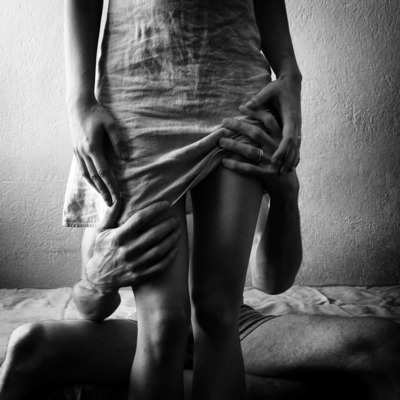
I spend a lot of time thinking about the impetus for nudity in image making.

The easy answer is who doesn’t like looking at naked folks?

I think that’s a lazy and knee jerk explanation.

However, short of equally facile justifications (i.e. figure studies, ‘timelessness’ or porn), there’s precious few image makers who fixate on naked people and who also offer some sort of implicit notion of why the people in their images aren’t clothed.

Consider someone like Mona Kuhn who works primarily in nudist resorts skirting the Mediterranean. Or Traci Matlock, whose work when it involves nudity feels a little like the photographer is functioning like the person at a party who suggests everyone join in a game of strip poker and as soon as they’ve achieved near universal agreement, strips down before the game even starts to demonstrate a commitment to the journey and not the destination.

I have no idea who this Soapstones is–beyond that the person responsible for the photographs most likely uses male pronouns in self-identifying and seems to hail from Mexico.

The above probably isn’t the best image to illustrate my point about his work because it’s very staged and there’s a feeling that the two guys in the image probably weren’t already naked ahead of preparing to take it.

However, that’s the exception to the rule. Generally, you get the feeling that the image maker was less intrested in nudes as a subject and more interested in documenting the hijinks of his friends and acquaintances. But his friends and acquaintances are close knit enough that expectations for social propriety take a back seat to fully inhabiting the moment.

Werner LorbertLiv Sage (2013)

Liv Sage posted this image as a part of a photo set over on her Tumblr.

I’ve excised the above image from the set and re-posted instead or reblogging for several reasons.

First: Tumblr’s layout interface can place two vertically oriented frames side by side with minimal cropping. However, any time you add more than two vertical images, the default grid presentation clips the shit out of vertical frames. Sadly, the layout ends up being a huge detriment to the images.

Second: I have (admittedly insignificant) quibbles with three of the other five images.

Third: I really want to showcase this image on its own because it’s exceptional and absolutely NOT #skinnyframebullshit.

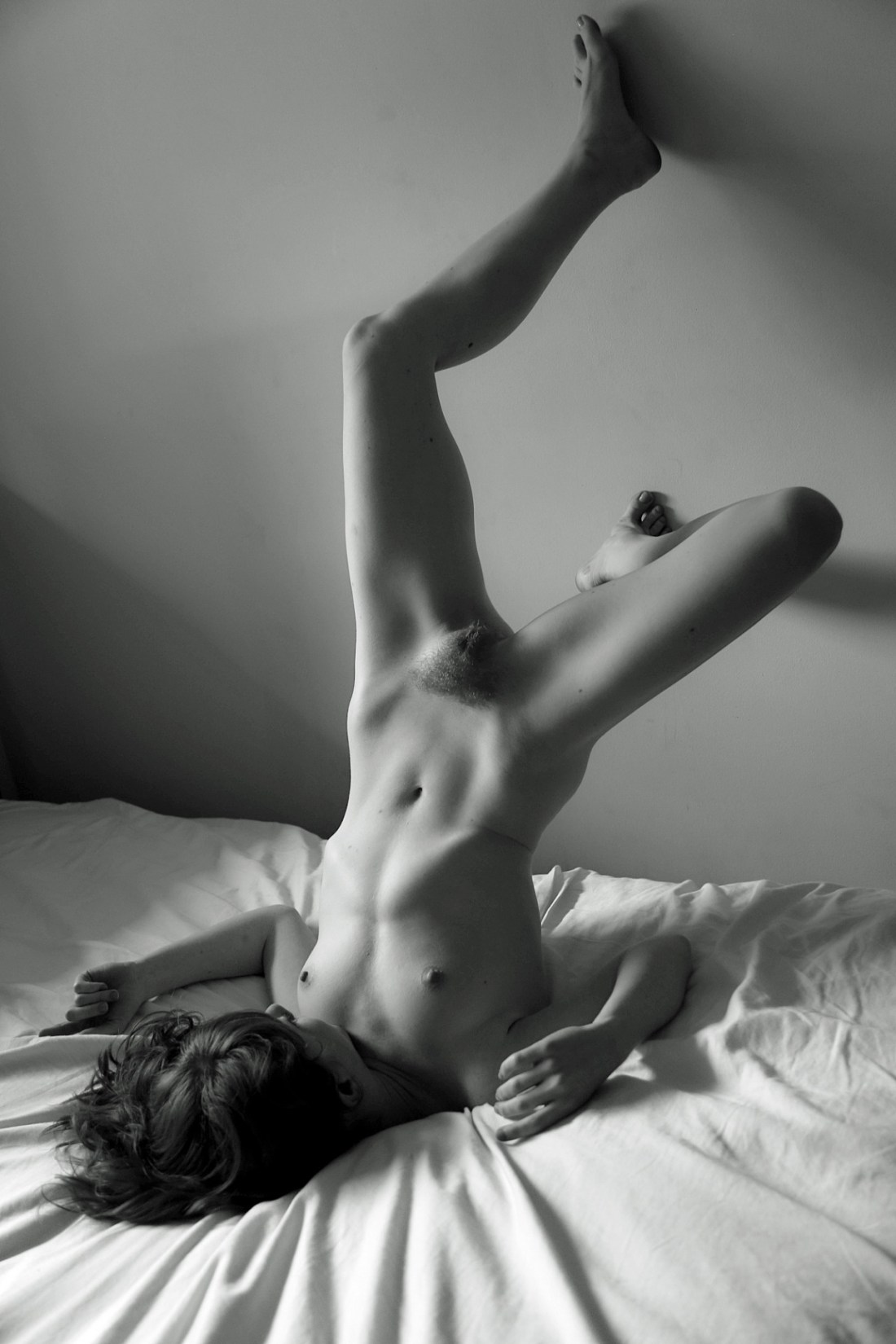
Why? You ask. Well, my eye enters the frame in the upper left third, follows the line of angled light at a downward diagonal and then I follow the left edge of her body down to the bed. The way the wrinkles in the topsheet radiate halo-like from her head and shoulders–and this is the way I think most peoples’ eyes first enter the frame–makes her head a focal point of the image; her gaze is directed back upward and the viewer naturally follows this upward.

So why isn’t it #skinnyframebullshit? Simple: it insists upon your eye moving up and down the frame–not left to right across it.

It’s a great image because it uses this compositional logic to guide the eye toward all the treasures this image holds–as I’ve mentioned the wrinkles forming a halo, the compression of highlights, mid-tones and shadows in order to expand the range between highlight and mid-tones and mid-tones and shadows, respectively.

And it may seem like a small thing but you can clearly see both her hands and both her feet, which contributes a sensuous sinuosity to her exquisite muscle town which is not only extraordinarily flattering, it also lends a naturalism to an otherwise unnaturally contorted posture.

Crystal ZapataDon’t Be Afraid of Yourself II (2014)

I am in love with this image. Seriously, I know mid-career artists who aren’t as conceptually cohesive, direct and unequivocal.

And Zapata isn’t about holding the hands of anyone who misses the ostensible point:

I’ve never had such a hard time trying to make art. Lately, I’ve been
trying to figure out what it is that I actually care about. As it turns
out, I am a woman. I can go on for a while about all of the things that
anger me about our social construct, but all I will say is fuck the
media and fuck history for telling me that I have to be a pretty,
flawless, sexual being, when my own sexuality is taboo.

This image should not shock you. I see photos of sexualized women
hundreds of times per day, so why is THIS considered inappropriate?
Question your surroundings.

Awesome and profoundly relatable.

Renee Kingself portrait (2015)

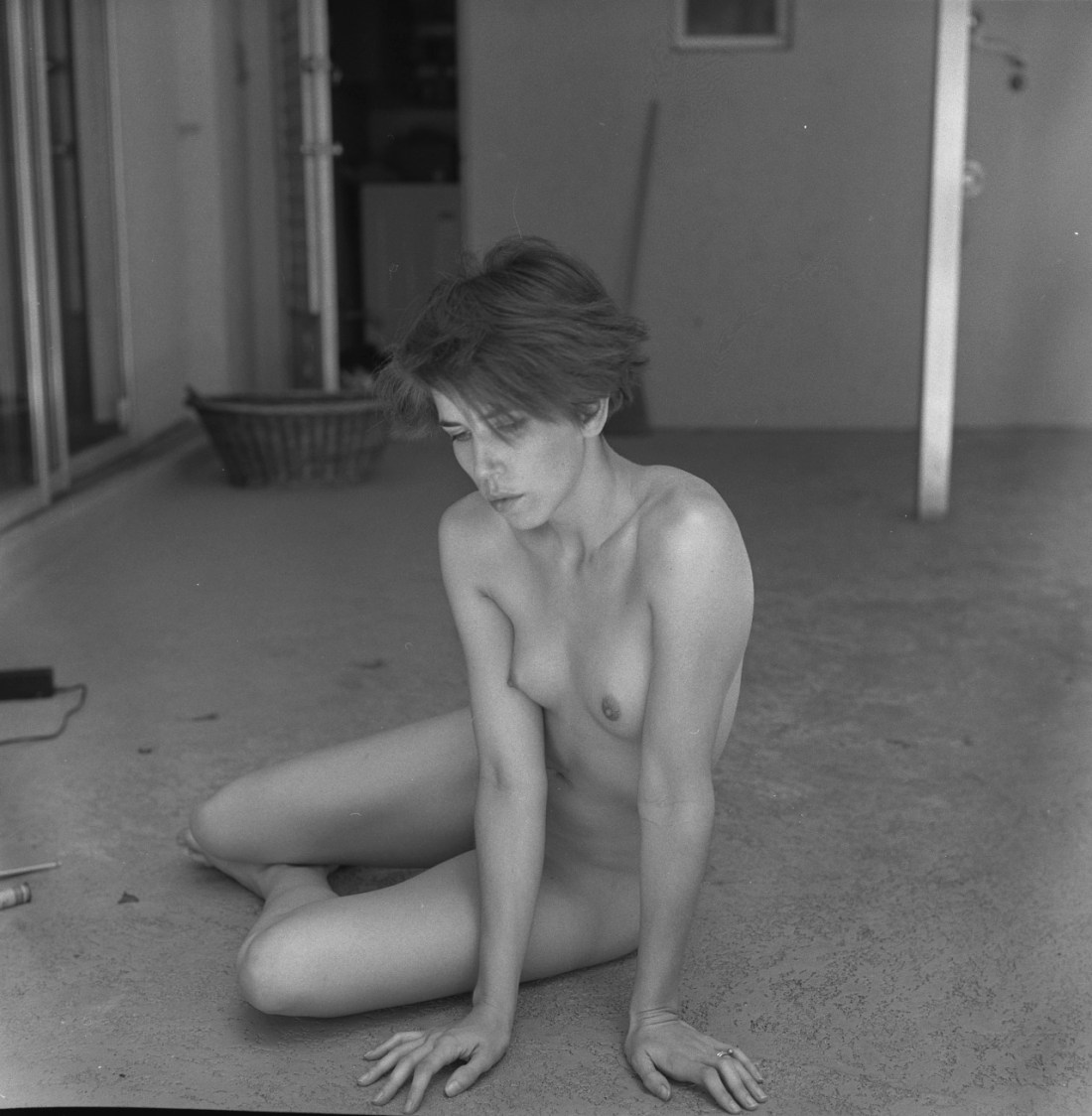
This photograph takes my breath away.

There’s room for improvement: the background–a patio/porch, a sliding glass door and a door leading into a laundry room–is ho-hum; the basket is an interesting touch and the depth of field does a good bit to focus attention on the subject; conversely, the three items intruding into the frame on the lower left are ultimately distracting.

But look at the way her hands are perfectly aligned with the bottom of the frame! And the tautly sinuous effortlessness of it. (Perhaps half a demerit for the oddness of not being able to see her right foot–a slight shift so that it would be seen protruding behind her right thigh would’ve accent the dynamics of her pose.)

Anyway you slice it, Renee King is splendidly talented photographer. I hope you’re all following her.

Raven MacabreAimee IV American Beauty (2009)

I can’t remember who said it but a noted photographer–doubtlessly riffing along the lines of Warhol’s infamous 15 minutes assertion–claimed that in the future everyone will take one good photo in their lifetime.

This is Raven Macabre’s one ‘good’ photo.

I use the scare quotes because Macabre is one of those image makers whose work I just freaking detest–super-saturated colors limited to aggressive strip club chromatic palates, completely bereft of even the vaguest understanding of compositional logic (to wit: Macabre treats #skinnyframebullshit as his default orientation, earning my wrath) and despite being a ‘visual’ artist employing a text-only watermark (I pointedly opted to find a version of the image that excluded the watermark).

All that said: there is something about this image. It’s digital–so there’s some color exchange between the bright light flooding in and the area between Aimee’s right shoulder and the window; but this is a sublime exposure given the scene–yes, her left eye is a little too dark but a negative shot at the same settings would’ve rendered just enough of a kiss of extra latitude to distinguish the white from the pupil.

The slight tilt of her head and the play of the light accentuates the perfect classical shape of her face and flouts the conventional wisdom that when both a subjects head and shoulders are square to the lens, the resulting affect is to render the person as if they were dead.

The skin tone skews a little to yellow and magenta but were you to get in there and edit it, you’d have to be careful about losing some of the grace notes (i.e. the darker pink of her right nipple against the lighter pink of her areola and the slight reddening around her vulva indicating less than eight hours from her last depilatory session).

In summary: there’s no reason this should be vertically composed and it breaks a number of rules but the moment it captures is authentically unmediated enough that the stillness of it makes it a surprising editing choice for an image maker who seems desensitized to anything that isn’t loud and obvious.

Falk GernegrossHerz, Karo, Kreuz (2013)

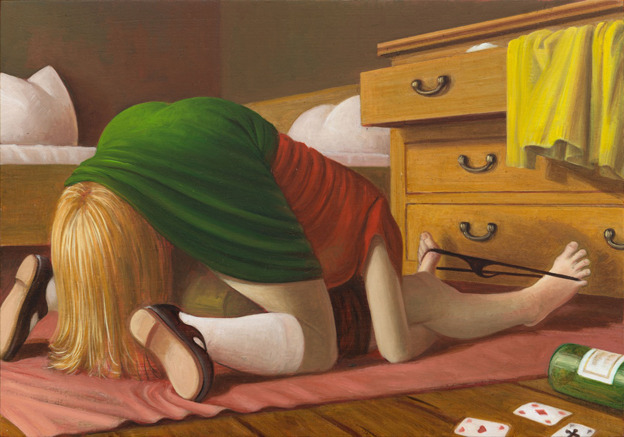
I am not a painter. But of the dozen or so painters with whom I am acquainted, three are die hard adherents of mischetechnik.

I don’t claim to completely get the process but my understanding is that you construct a painting in layers. There’s an initial layer of underpainting that accentuates the shading. From their color is layered onto the image in a fashion so that light refracting off the layers creates the sort of randomization of color sheen that we expect of the world around us. (In other words: even a simple red isn’t really just one color–it consists of a range of so similar as to be nearly indistinguishable reds.)

You could probably tell from the fact that a notable percentage of the painters I know use the process, it’s very hip right now. And although I typically don’t care for the stuff people are employing it to paint–especially given that one of my all-time favorite paintings used the mischetechnik and very little that’s made subsequently improves upon Van Eyck’s Arnolfini Wedding Party.

Gernegross is not especially subtle or nuanced. He’s clearly obsessed with the mixed bag of joy and anxiety that accompanies adolescent sexual experimentation. But whereas other artist’s own this preoccupation, he presents adult looking surrogates in situations that are clearly intended to convey a post-pubescent reality.

I’m not entirely sure this works as a subliminatory strategy. I mean the defined bust of the girl in the red blouse and green skirt aside, this is clearly supposed to be two twelve year-old girls who were playing cards after school while sloshing wine nipped from the family liquor supply. They drink too much and things grow lusty.

Really, it’s probably the affronting style of the rest of his work that made him decide to build in a method of escape should he face criticism for the depiction, but honestly, save for the manner in which the girl on the bottom’s thong is positioned around her feet, there’s a matter-of-factness that’s worthy of Balthus–even if Balthus would’ve almost certainly rendered something more graphic than Gernegross’ explicit implications. But then Balthus’ was more interested in the ambiguity his work instilled in his audience than in ambiguity as a safety net against critical backlash.