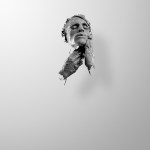
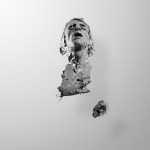
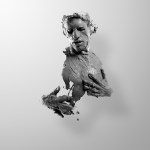
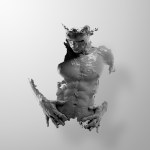
Alejandro Maestre GasteaziEL HOMBRE QUE SE CREA (2010)

Julián is a good friend who I deeply respect; he is a multidisciplinary artist and complete artist. He is, at the same time, [a] film director, sculptor, painter, photographer and writer. [A while ago] he suggested… the idea of doing a portrait of him that could describe his capacity of creating and his constant research to understand his body and spirit. All these [considerations] made me think about his work and helped me develop the [concept for this project].

Therefore, with this photograph[ic] series I intend to show an artist fighting to get to know and shape himself [become] a better human being.

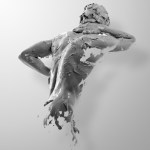
Bryce Louw – [↑] Skin | [→] Hold | [↓] Pull (201X)

Despite being graphite drawings, the first thing I notice here are the colors.

In fact, I am fighting the urge to create the sort of palate swatch sidebars that seem to be de rigueur–a la this and more insidiously ingenious this. (Note: I lifted both links from popotum; who has a murderously precise eye for immaculate graphic arts ephemera.)

Beyond color, I am not really sure what to do with these. There seems to be a stylistic disconnect between the more minimal blitz sketch (what I prefer when faced with drawings) in the left half of Pull and the more overwrought shading in the fully rendered work.

It’s not that I don’t dig the full renders–there’s a sense of gorging on carnality to beat back an all-consuming visceral desperation which I find appealing.

But, at the same time, I am not comfortable with the amputation of 2 out of 3 female bodied figures left arm by the fourth wall. And, I find it odd that all the left hands/arms are dismembered. Could this have something to do with the factoid about Classical Latin: the adjective ‘left’ (sinister/sinistra/sinistrum) also meaning ‘evil’ or ‘unlucky’?

Jan Scholzaliane (2014)

Scholz uses an arsenal of analog cameras, among them the  Pentax 67; given the shallow depth of field, I suspect this was made with the Holy Grail of Pentax 67 lenses: the 75mm F2.8.

I am not a fan of bokeh; focusing attention on the subject at the expense of reducing surrounding context to blurred abstraction isn’t my bag.

In medium format, the fastest lens is typical f2.4–or 1.5 times the depth of field of a 35mm format f1.4 lens.

It serves nicely here: clearly intimating a living room while thwarting any greater specificity. This could just as easily be the photographer’s domicile, the subjects house or some bungalow borrowed for an out of town weekend.

Scholz prefers Kodak Tri-X stock. Again, I really would be hard pressed to be any less of a fan; so it is startling for me to see someone coax such delectable tones from it.

Isabel DreslerNon-Binary. (2014)

He seems to me equal to gods that man
whoever he is who opposite you
sits and listens close
           to your sweet speaking

and lovely laughing—oh it
puts the heart in my chest on wings
for when I look at you, even a moment, no speaking
           is left in me

no: tongue breaks and thin
fire is racing under skin
and in eyes no sight and drumming
           fills ears

and cold sweat holds me and shaking
grips me all, greener than grass
I am and dead—or almost
           I seem to me.

But all is to be dared, because even a person of poverty

—tr. Anne Carson; Fragment 31 If Not, Winter: Fragments of Sappho (Vintage, 2002)

News

With the CRAZY influx of new followers today, I wanted to take a moment to say: Welcome.

What I do here seems pretty obvious (to me, at least); however, if you questions, please send them my way.

A NOTE ABOUT SUBMISSIONS:

Yes, I do technically have a submit button. But really it’s less that I take submissions or want to take submissions and more general laziness. (Plus, I’m toying with using it for something else as yet underdeveloped and amorphous.)

Lastly, special thanks to God Loves Bacon for the unexpected (and undeserved) kind words.

Jan SaudekThe Dancer (2001)

Consider:

  • the staggering tonal range and varied texture in the concrete backdrop,
  • the painstakingly graded skin tone (for me invoking little as much as the incisive crosshatching in Dürer’s etchings),
  • the obvious resemblance to Michelangelo’s David,
  • the subject is presented slightly off-center, cheated toward the source of light at frame left and formally balancing every aspect of the composition.

There’s no denying Saudek’s mastery; sadly, I find my frustration with his proclivity for shooting the same/image images in perpetuity an insurmountable obstacle to engaging with his work.

I absolutely see inspired flashes of anti-authoritarian glee, subversion and rebellion amidst the cloying repetition–all attitudes that resonate strongly with me. Ultimately, the work either commands my eye or it doesn’t.

This is one is just motherfucking goddamn incredible.

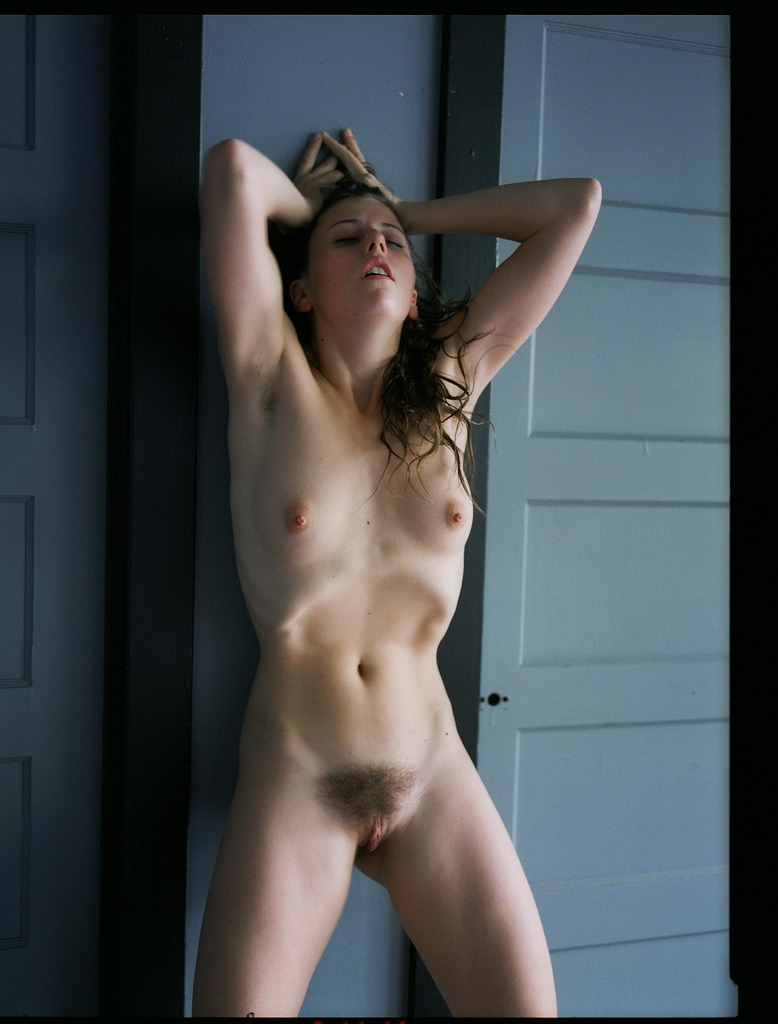
asp photosKatlyn Lacoste (2014)

It seems a rite of passage for young artists: an over-enthusiastic, searching response to a query or a giddy, unedited experiment is published bereft of context and so begins the circling of wolves.

Those who limp away learn the necessity of reducing the truth of process–often counter-intuitive and confusing–to simple, easily digested soundbites.

Dismissing the messy trappings of Being for a precisely manicured media-digestible facade has always seemed inherently self-hating to me.

It’s great to make work, to release it into the world. It’s awesome to speak in tongues which disallow all misconstrual. Still what never fails to give me chills are creators who struggle not only to birth work but to shape the conversations and contexts surrounding the work, how the work is approached and understood.

I think Katlyn Lacoste is actually enacting this sort of meta-context shaping in her modeling work. Yes, I am probably biased as a result of this bad ass  missive against assholes who exploit the vulnerability of nude models she penned being my introduction to her work.

Also, her images make me vaguely uncomfortable. Not in any bad way, they just fuck with my notions of where the line between voyeurism, eroticism, sexuality, identity, pornography and art might lie.

It’s as if the image has the effect of someone standing too close to me in a loud over-crowded room whispering: fuck you, fuck your frames and double fuck your preconceived notions: I am perfectly imperfect as I am. This is not for you, about you, concerned with fuck all to do with you or will ever be concerned with fuck all to do about you. See me–really see me–or go right ahead and fuck off and die.

Alec DawsonUntitled from Nocturna series (201X)

Any convesration about Dawson’s work will prove a fool’s errand unless one first addresses the elephant in the room: Gregory Crewdson pernicious influence.(Sidebar: whenever someone says elephant in the room, I look around for a split second hoping there’s actually an elephant in the room so maybe I can hug it. I ❤ elephants like whoa.)

Now, I know I mostly come across as a crotchety, you-kids-get-off-my-lawn, over-critical contrarian but I do make a very concerted effort to stay constructive.

However, there are several photographers for whose work I can only muster abject revulsion; Crewdson is one.

I would never dispute his technical acumen–even if questions as to whether his process precludes him from consideration as a photographer are interesting thought experiment.

And his finely tuning, orchestrated lighting masterfully facilitate a consistent, oneiric aesthetic.

My objection is to the manner whereby the elaborate conception/execution and presentation insist upon itself and is excused as being in service of conveying a decisive moment-esque impetus; bullshit given simply asking of the image what led up to this moment and subsequently what leads away from it remains indecipherable.

If Crewdson would shut the fuck up about his work as being narrative–a concept he woefully misunderstands–then I might give his work a pass.

But as goes Gregory Crewdson, so goes a raft of fuckwit MFA students as well as Reverend Bobby Anger and Alec Dawson.

Not to malign the latter two by association but with such a pervasive debt of influence in their work, they both get snared by their similar reliance on aesthetic as means of compensating for flimsy narrative conceptualization.

That being said, I hardly want to piss all over Dawson’s work. He has a profound knack for making a scene appear cluttered without detracting from the composition and though I do worry about the implication of some of Frances Blanc dead and crumpled poses in Nocturna; the series would arguably prove more compelling than Crewdson if Dawson could cull a very much needed, tighter edit.

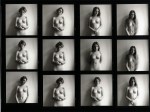
Stephan BrigidiFrancesca Woodman contact sheets (1978)

Despite the absence of her characteristic compositional asymmetry and murky mid-tones, these are frequently attributed to Woodman instead of Brigidi.

(I only sourced them because it seemed odd–given my familiarity with Woodman’s oeuvre–that I had no recollection whatsoever of these contacts.)

If nothing, the instinct to impose false attribution is not entirely misguided. After all, the prevailing art historical framing holds Woodman as the progenitor of the current surfeit of confessional self-portraiture.

This conceit has always frustrated me. First, Self portrait at thirteen demonstrates a more comprehensive grasp of photography as Art than 95% of the legacy claimers.

Second, the rule every seventh grade literature student leans the writer and the narrator aren’t necessarily the same individual is ignored.

To my mind, there’s a reason only one of her images explicitly bears the ‘self-portrait’ designation: Woodman only documented herself in the strictest sense. Really, it was more that hue was playing a character in a single frame film.

This is made clearest with her flirtation with an alter ego, Sloan, resemblances to Lewis Carroll’s Alice and her On Becoming an Angel series.

My feeling has always been that Woodman’s images are much closer to a sort of alchemical fiction–being by way of photography a means of becoming. As if all the identities in the world are dresses hung in a wardrobe and image making offered a mode of trying them all on one-by-one to see which ones fit, which ones pinched and which ones did little more than hang like limp sails in horse latitude doldrums.

On top of that, there is a sort of underlying menace to her experiments. Whenever I look at her images, I have a feeling similar to someone I care about showing me scars from self-harm. To an extent, I think photography served as an externalizing stand in for cutting–at least initially, at least through her arrival in Rome; at which point her flirtations with magical realism shifting toward a darker obsession with potential to harness the interplay of light, shadows and skin in the conjuring of malevolent maledictions.