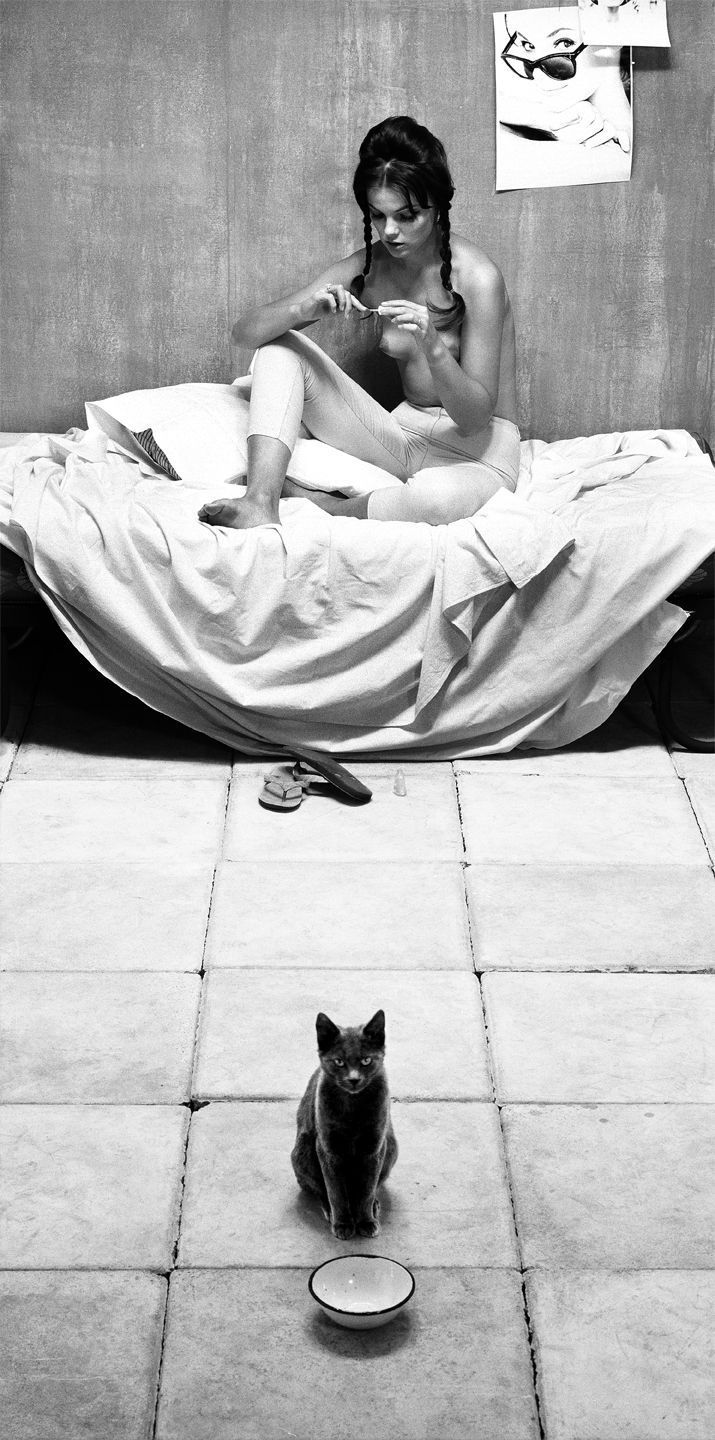
Sam Haskins – Untitled from Cowboy Kate & Other Stories (1964)
An exemplary (& rare) instance of a vertically orientated composition that is 120% not #skinnyframebullshit.
Sam Haskins – Untitled from Cowboy Kate & Other Stories (1964)
An exemplary (& rare) instance of a vertically orientated composition that is 120% not #skinnyframebullshit.
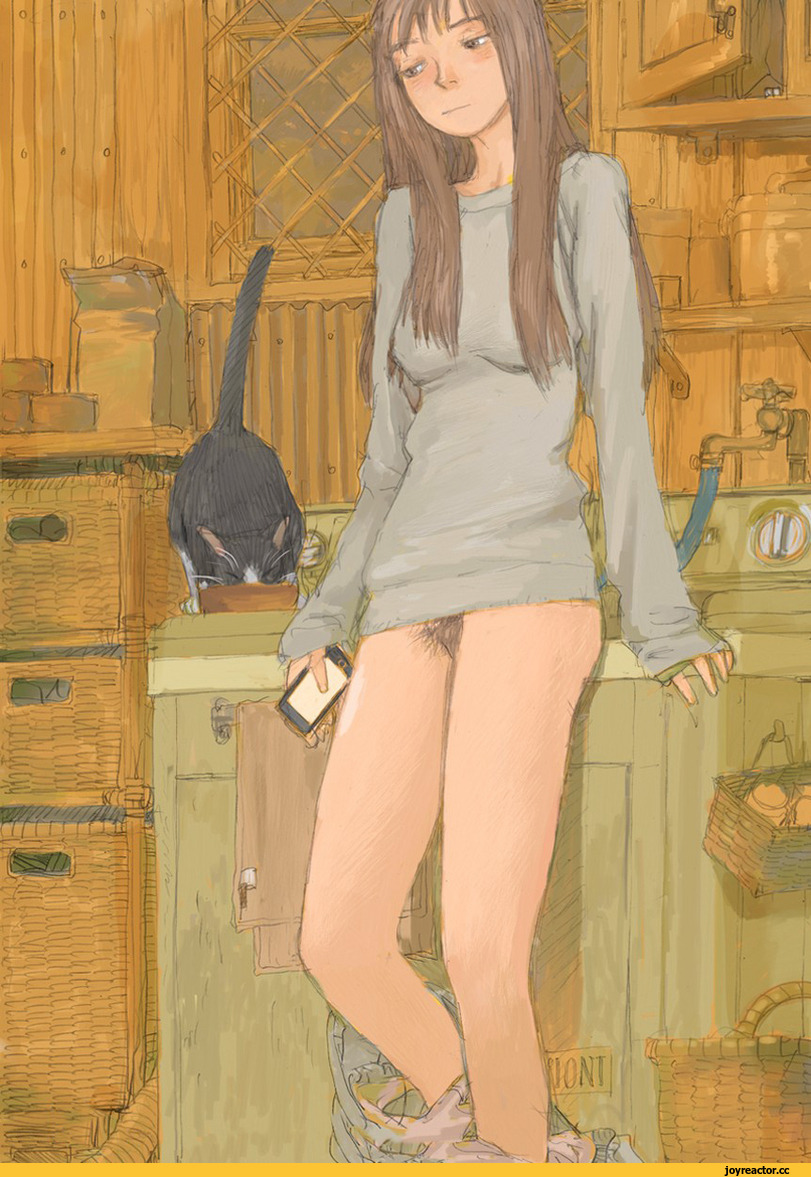
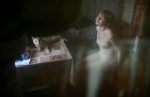
Kenji Tsuruta – futari no tenshi feat. hita hita (201X)
I know fuck all about manga. Either way: I like this quite a bit.
It’s mostly that the woman bears more than a passing resemblance to my dear friend Amadine.
Yes, Amadine is decidedly Team Bangs-are-the-worst. But the longer hair, the bliss-stoned expression edging slightly towards melancholic introspect and just the general body language is spot on.
There’s also the stylistic overlap between this and her illustration work. She studied Japanese in HS and college. And although she’s more in the thrall of Georgia O’Keefe and Kiki Smith these days, she was entirely enamored with Miyazaki when we were flatmates during my Junior year.
I used to draw, actually. I was never very good at it. I lack the necessary discipline and focus. But it does strike me that there are three ways to use lines: to define a boundary, to darken or lighten (aka give the illusion in two dimensions of three) and to suggest texture.
Both Amadine and Tsuruta employ lines to suggest fascinating things about texture.
In the above there’s the wood paneling on the walls, the wicker chest of drawers, the sink (or is it a washing machine?) are all intricately detailed; yet, at the same time, the edges defining distinct boundaries between objects in the mid-ground become blurry, as if suffused with a sort of dream like lighting.
It’s actually not unlike Degas except Degas renders texture in such a fashion as to accentuate depth whereas Tsuruta uses it to flatten the scene. Tsuruta does uses color to heighten that compression–not to uniformity of the walls, wicker cabinet and cupboards, vs. the falling dark outside the window and the color takes on great gradations as we move towards the frames point of focus–the woman and her cat.
I also appreciate the way that the nudity appears incidental. (With an eye on overarching context–the panels leading up to the above can be seen here; and the scenario, while not unrealistic, feels a bit of a male fantasy contrivance.)
This also reminds me of Amadine yet again. Our last conversation was about Sally Nixon–Amadine was singing the praises of this illustration where a woman sits in her robe and underwear while smearing jelly on a piece of toast.
Amadine felt that it was an incredible accurate depiction of being unguarded and comfortable while a woman–and that sometimes the assumption that you’re granted great intimacy because you see someone nude is crap because it’s usually far more intimate to see people when they are comfortable, uncomplicated and at ease.
So while I think this is overly precious and coy, I do think it’s fly-on-the-wall voyeurism is perhaps an upgrade from the default male gaze voyeurism.




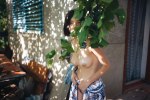
Amy Montali – [1] In the Garden (2004); [2] History (20XX); [3] Souvenir (2009); [4] September (2007); [5] Stain (20XX); [6] Holiday (20XX)
I’m sitting in a cramped little vestibule-like area that opens off my shitty basement apartment into a claustrophobic backyard sobbing my stupid eyes out.
You know those moments: when warm light touches the world just right; and the perfume of spring lingers in the breeze; or, the players on the stage play their music as if muddy horns and staggering joy were the only magic anyone ever needed, when words or subtle turn of phrase makes the truth of the song, a chorus you can’t help but sing and in singing it, singing as if singing were the only one that might maybe save this sick and dying world.
I exist for such moments. And people always fault me, tell me my expectations are unrealistic, that I am asking too much.
But then, then I stumble upon beauty like this. Work that shows me the world I already see, proving that someone else sees it too, sees hope and beauty and love and so, so much more joy than all the words ever spoken could circumscribe. And it is all so terrifyingly easy to overlook…
In those moments, I always know I ask for too little; I should ask for more.
Amy Montali is everything.
Everything.
 Acetylene Eyes