Edward WestonNude on Sand, Oceano (1936)

If you ever get the chance, I recommend going to an exhibition opening party at MoMA enough. There’s nothing like getting shitty off an open bar and then wandering around transfixed by art.

I’ve been to two such events. The one relevant to this post was for Paul Graham’s a shimmer of possibility. Graham is a grossly underappreciated photographer and the show was excellent; but being more than a little inebriated, I wandered into either the permanent photography catalog or another exhibition. Come to think of it, it might’ve been part of the broader implications of Graham’s work in an photo historical context.

However it worked out, I ended up staring at this Weston print for the better part of an hour.

I’ve noted previously that I don’t really care for Weston as a photographer but I consider his skills as a print maker unriveled. That’s not an uncontroversial opinion–given that Weston’s son apparently made the prints for the majority of his father’s work.

The thing that makes me reasonably sure that this photograph was printed by the elder west is that it’s both flatter and both shadows and highlights are more restrained.

This capture doesn’t even come close to doing the physical print justice. But you can at least see the implication of the stunning texture in the sand and the luminosity of gradations in the mid-tones shine through legibly.

As such, when I read about the tempest in a teapot over at The Guardian–where several of their ‘esteemed’ art critics got into a tiff over whether or not photography is art, I was immediately reminded of Weston’s print.

Perhaps, I’m biased but I don’t understand how anyone could stand in front of this print and argue that isn’t Art without being a troll’s asshole.

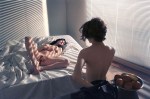
Lucian FreudAnd the Bridegroom (1993)

Can you believe a decade ago I detested Freud’s paintings? Like really super hated them–I think it was something about their stretched, obtusely rendered perspective.

I do not feel the same way these days and I’ve become borderline obsessed with his work. His use of color–minimal around the edges and growing more layered/nuanced the closer the eye draws to the subject(s).

It’s almost as if everything in the work is designed to draw attention to what can only be inferred–i.e. the psychological state of the subject(s).

It’s a brash maneuver to have everything function solely to the end of conveying something that can’t really be fully communicated through visual depiction.

That Freud manages it so frequently and with seemingly so little effort is so improbable, there’s only one way to accurately encompass it: unmitigated genius.

Here’s to being wrong–and the growth/evolution that arises from being willing to admit it.

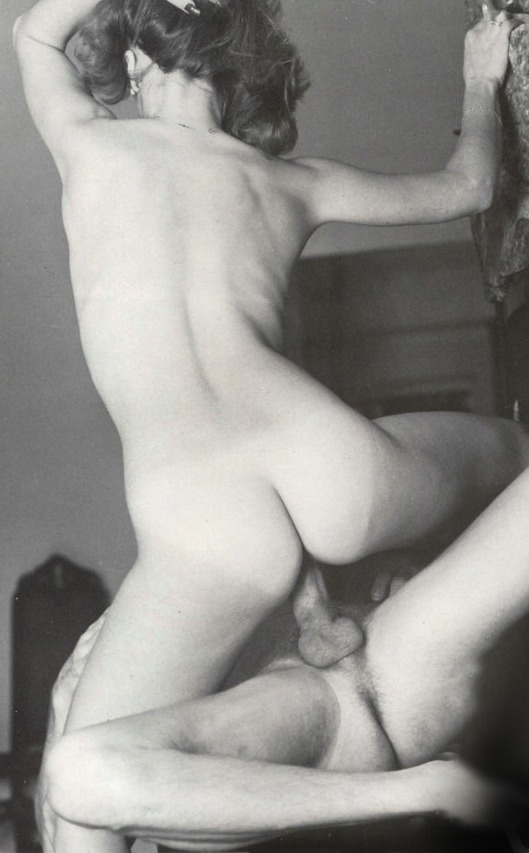
Source unknown – Title unknown (188X)

One thing you learn very quickly studying visual art in academia is the liability that is sentimentality.

The two exceptions I can think of are Nan Goldin–who, while her work is unsentimental, the raison d’etre for her work is fundamentally sentimental; and Sally Mann, whose work frequently borders on inexcusable sentimentality but always manages to maintain a rigorously formal foundation w/r/t to conceptual complexity and masterful execution.

I’m not arguing that the above image is sentimental. It is, however, very earnest and I think all too often that disqualifies certain work from being considered as art.

There are certainly compositional flaws that detract from this. The entire frame is left heavy. As all the elements either shift the eye left or are gathered at the left half of the frame. The “24.” along the right frame edge is placed as if to counter-act some of that off kilterness–but it hardly makes up for it.

Additionally, the lower frame edge cutting at the knee is just inelegant and jarring.

Yet, there is a lot to praise here. The skin tone is lovely–the subtle gradation between the curve of his body and the backdrop, the way her skin is so much lighter than his.

The backdrop borders on ridiculous; however, with the careful drape of the rug and the position of the bodies with the aforementioned gradation, it all suggests a familiarity with classical modes of visual representation.

I also adore the way her arm is bent back and she’s looking directly into the camera. There’s something calculated about it–part defiance, part fascination. Also, the dirty soles of her feet splayed in the air is inspired.

It feels to me like the photographer wanted to make images of people fucking but didn’t want it to read as frivolous. Thus, there’s an attention to detail that although it doesn’t entirely work, it adds a ring of truth to the scene.

I have no idea about the origins of this image. But there does appear to be a scratch on it–bifurcating it more or less horizontally at the center as well as a dogeared corner. It may not be accurate but it’s possible to imagine someone keeping this photo secreted away in a coat pocket.

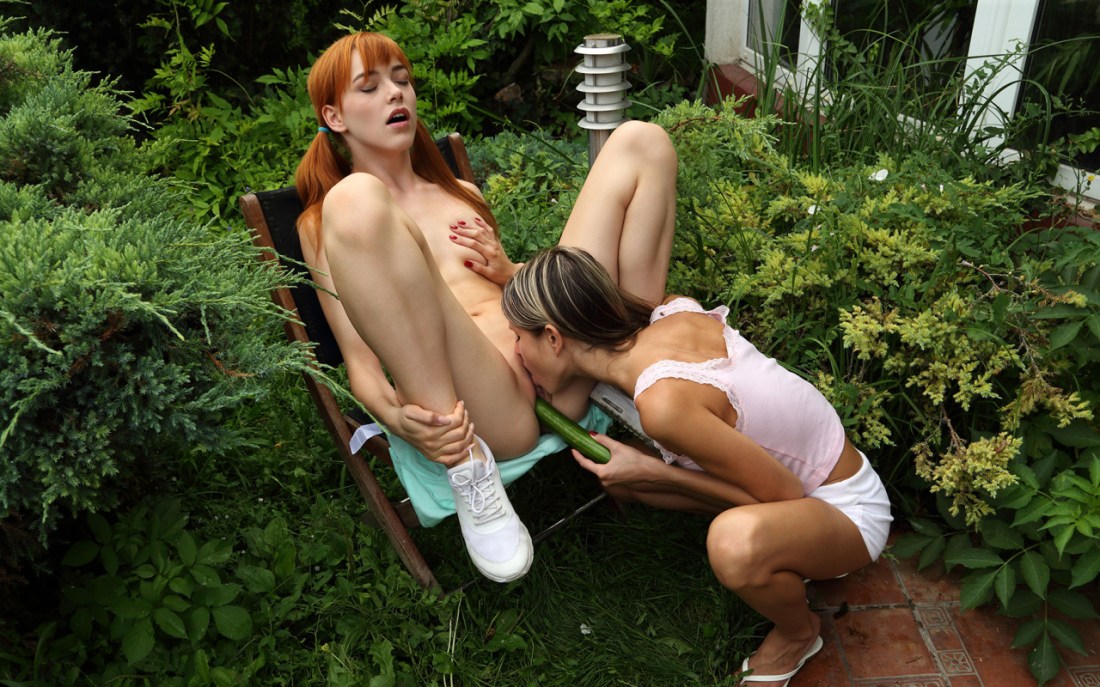
Source unknown – Title unknown (201X)

Unlike most of the porn I post–which tend to be images with a certain audacity I appreciate, honest immediacy I crave or a libidinous savoir faire that resonates strongly with my own weird desires–I think this image ticks all the right boxes but also suggests something about the nature of the question of pornography vs art.

This image is constructed to convey context. I love that with the exception of the woman in the pink blouse’s left flip-flopped foot, both women are presented in their bodily entirety within the frame.

It’s not just my own personal preference here. Pornography–and especially pornographic moving images–there is this tendency of embodying the laziest and worst short cuts offered up by cinema. Establishing shots that suggest the scene is in a famous city that then later cuts to environs built up in sterile soundstage; or, worse, the excessive use of close-up inserts (a tact which only works when kept to a bare minimum since each instance is intended to cause the viewer to take special notice of the object or action depicted, porn tends to gravitate towards something on the order of 65% inserts–pun intended, sorrynotsorry.)

From the standpoint of form, it’s sloppy technique. But, since the advent of DVD players–if not before–a viewer has been able to zoom in on a portion of the frame at will. With the telescoping of increasingly absurd resolutions, there’s really no reason to have a scene play out in extreme close-up. With moderate thought given to composition and blocking, a wide shot could be filmed in such a way that it could subsequently be parsed by the viewer to focus on what interests them.

Back to the question of pornography vs art. I think a better dichotomy might be questioning whether the image is a document or a product. Let’s use the above as an example to show how such an analysis might go.

This is clearly someone’s back yard. And that invites questions of public vs private–in this case a private space that verges on public. The down tilt of the camera emphasizes this. It’s not quite high enough to be the view of a neighbor looking over their fence–but it’s still not entirely possible to shake that feeling that the camera is a stand-in for a voyeur. (In and of itself, the camera functioning as a voyeur does not exclude the the image from being a document. However, in this case, the fact that the woman in the pink top has carefully pulled her hair over her right shoulder so as not to block the camera’s field of view.

Given the absence of body hair, my gut is that this is intended as less a document than a product. Yet, I’m not completely willing to disqualify it from being a document. The use of color is mad on-point. The spectrum of reds–hair, lips, respective skin tone, bricks; greens–bushes, grass, cucumber; the pastel magenta shirt and the aquamarine cushion. There’s also that super-saturated, contrast-y color you get when it’s overcast.

Also, the composition doesn’t quite work–the brushed nickle lighting pylon and the windows and bricks, skew the balance so that frame right is almost twice as heavy as frame left. Still, it’s a solid idea with better than average execution.

Given the opportunity this is exactly the sort of scene I’d like to use as inspiration for a fine art image.

Emmet GowinEdith, Danville, Virginia (1973)

In speaking of his work, Issac Newton famously asserted if I have seen further it is by standing on the shoulders of Giants.

It’s one of those famous quotes that much like the ubiquitous inclusion of Robert Frost’s The Road Not Taken in graduation speeches doesn’t quite mean what most people think it does. For example: people cite Frost because the feel the poem celebrates the worth of the difficulty and hardship of taking the less traveled path, when in fact, the narrator is expressing regret over his choice.

Similarly with Newton, the quote is less the by product of reverent humility and more history’s most notable humblebrag. (Newton plagiarized at least half of the revolutionary ideas history now attributes to him.)

That’s a super pretentious way of introducing the idea of influence on creative endeavors.

I find Gowin absolutely fascinating. His early figurative work is among my favorite photographic work. Conversely, there’s little canonical fine art photography that I detest more than his late-career aerial landscapes.

I can’t look at Sally Mann’s work without seeing the debt she owes Gowin. (It’s no accident that her son is named Emmet.)

And I can’t look at Gowin’s work without thinking of Harry Callahan. (No accident either given that Gowin studied under Callahan.)

All three–Callahan, Gowin and Mann–work competently by envisioning a hybrid of genres; they all focus on family, lovers as well as work that symbolically alludes to existential concerns.

Yet, the small variations in approach and execution speak volumes to the ways in which personal perception affects creative output.

It’s dangerous to deal in generalizations but although Callahan clearly loved Eleanor, there’s something cold and clinical to his images of her. It’s an issue I feel Gowin addressed fabulously–so well, in fact, that it makes me hate his later work even more; he’d figured out how to present something between portraiture and erotica, full of pathos and vitality, yet simultaneously devoid of an sentimentality. Whereas Mann is always working expertly to upend the notion that sentimentality–in and of itself–is anathema to art.

Also, I really love how this is almost certainly a reverse angle featuring the same shed in this stunning photo of Edith pissing–my second favorite Gowin photograph ever.

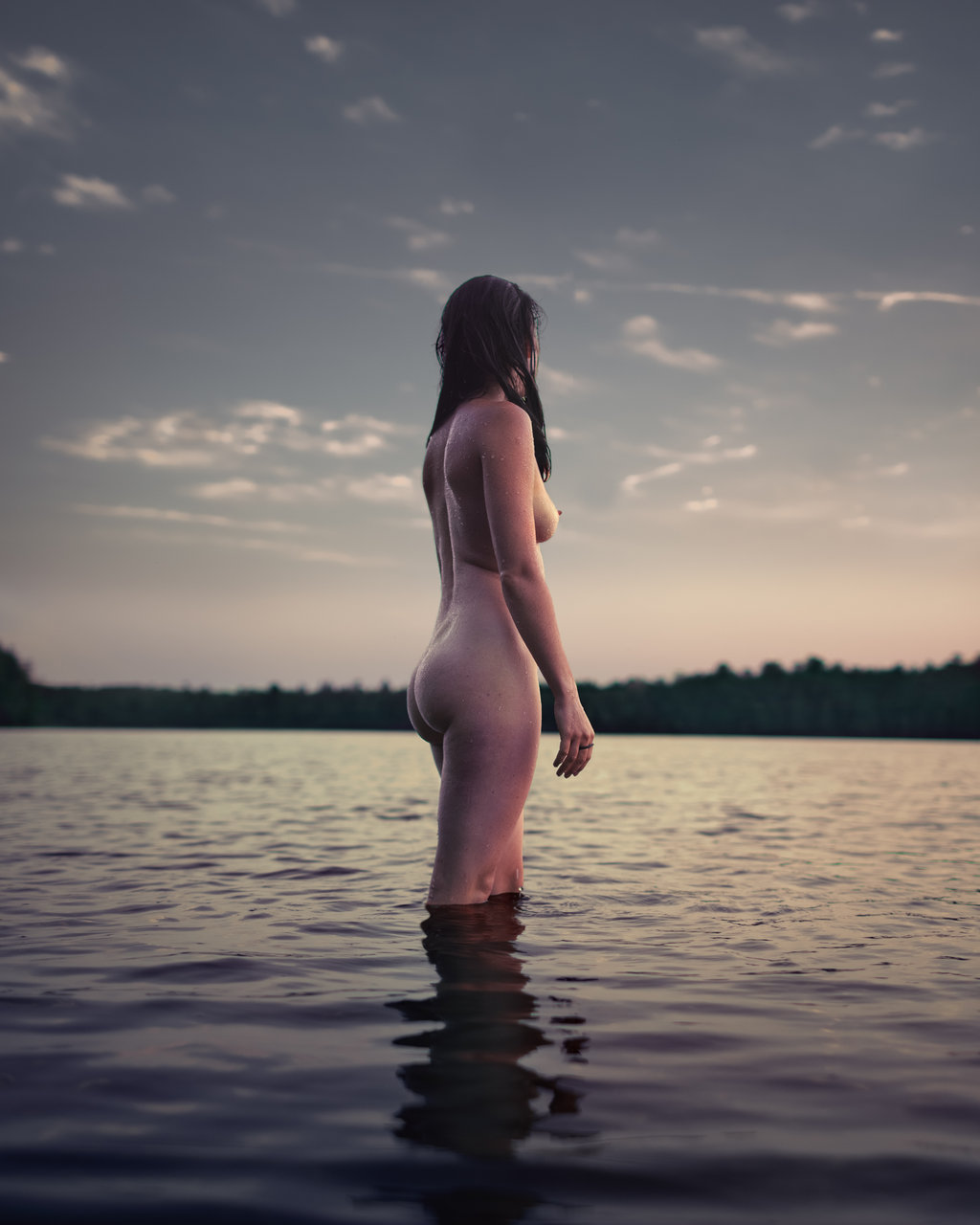
Benoit PailleRainbow Family member 39 (2011)

I can’t think of a contemporary image maker who casts a wider net than Paille.

In the last five years, he’s explored Crewdson-esque quasi-narrative, made a bunch of stuff with strobes mounted on drones, used a video game as a point of departure for landscape work, created realistic scenes via masterful Photoshop manipulation and made portraits of business owners in and around Paris.

Not all of it works. Yet, what’s surprising is how much of it does. And usually what makes that which works do so is a direct result of Paille’s fascination with surreal, psychedelia-inflected lighting.

The above is wonderful because of the subtle and dynamic gradation of skin-tone–red, purple, pink and peach tones that present with something like an inversion of the sky. (I’m saying it poorly–but think of the sky as if it were a positive and the woman as if she were a negative placed onto a positive field.)

The slight cant of the horizon and the way her reflected shadow goes completely black in the water all work together for an arresting, incisive image.

vivipiuomeno1:

Judy Dater (U.S.A. 1941) Untitled (Self-Portrait with Sparkler) 1981, Gelatin silver print, 15 × 19 in.

Dater’s Self Portrait with Snake Petroglyph is the first of her photographs I encountered.

I love it. (So much in fact, that I riffed off of when I made this photograph.)

Shortly after, I tuned into Imogen and Twinka at Yosemite and it’s narrative bent couldn’t be more relevant to my own photographic preoccupations.

The above is a more resolute photo, more symbolically charged.

Victoria Gannon’s commentary Judy Dater: On Vaginas and Earthworks is a addresses the broad strokes reasonably well: the Freudian notion that vaginas are voids needing to be filled, how the sparkler Dater is holding behind her back and between her legs serves as the focal point of the photo, the work’s position within a historical context of Second Wave Feminism.

Such points are clearly valid–although I bristle a bit at the notion that Carolee Schneermann’s Interior Scroll was anything less than proto-Third Wave. 

Yet, I think in Gannon’s effort to associate the Dater with feminism, there’s an overlooking of the radical ambiguity of this image. To her credit, she does note that the space behind Dater isn’t land, it’s an expanse of water–something I completely missed.

The light is also between day and night–whether it’s dawn or dusk, remains uncertain. (Although my gut says dusk.)

Further, Dater is standing behind a steam vent or fumarole. I have no idea if it was intentional, but I was almost certain it was a geyser.

Part of my reason for thinking that is a result of visiting iGeysir in Iceland–the site from which the word originates. (Spoiler alert: it’s a tourist trap par excellence.)

The thing that visiting there made me realize is it’s not just porn where folks fixate on ejaculatory spectatorship–when Geysir spews, everyone stops and watches with rapt awe.

I have no idea if Dater meant for the viewer to think of a geyser. But the way she’s standing, defiant–with the light dying out in the sky–with fire symbolically emanating from between her thighs, there seems to be something radically talismanic about her formulation with regards to this image, a reformulation where femininity is the site of an equal but opposite force of nature. Something perhaps less historically observed, but as this photo asserts, it’s high fucking time that prejudice was upset.

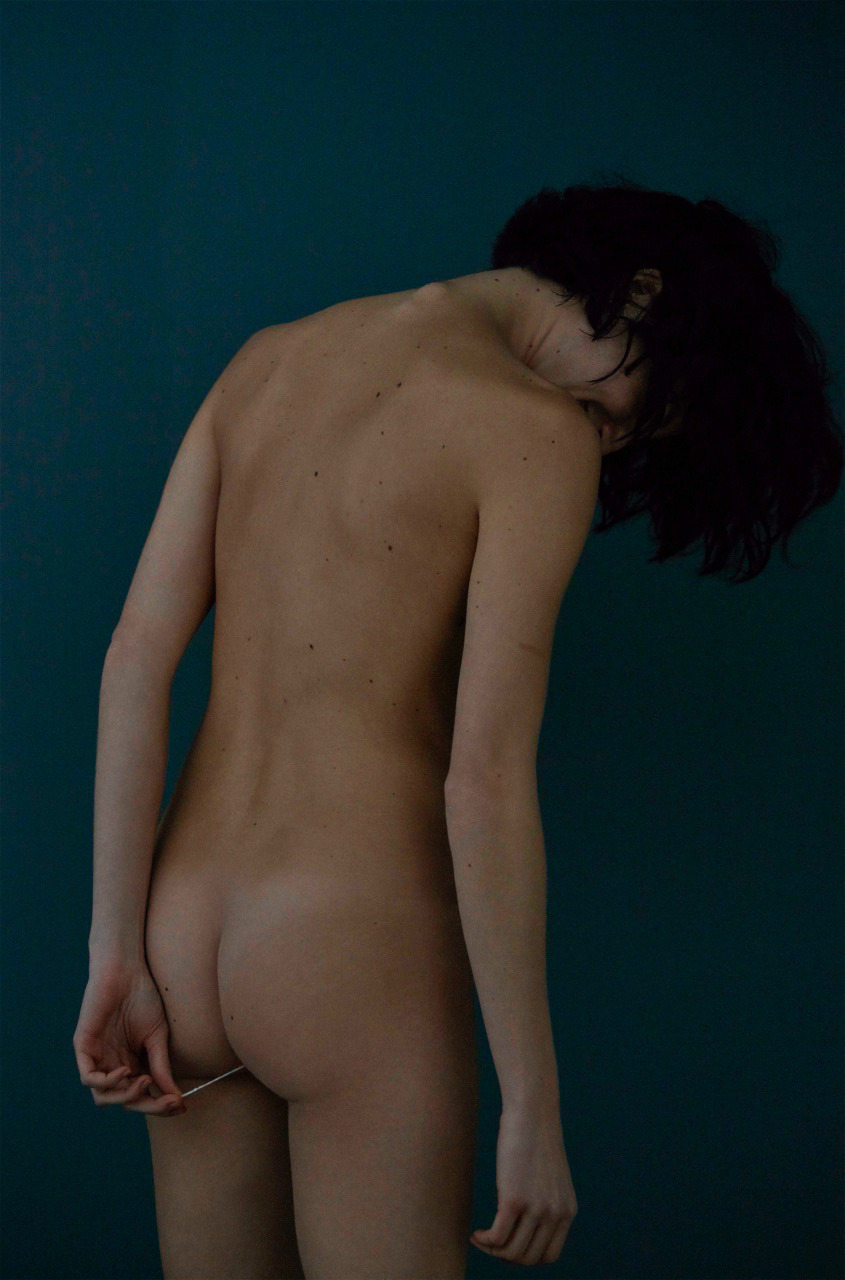
Cass BirdHeather Kemesky (2016)

Usually I’m not into editorial or quote-unquote lifestyle work.

What tends to resonate is image makers who take what functions and discard the rest. (Here I’m thinking of Lina Scheynius with the way she appropriates the tropes and visual language of lifestyle only to filter them–incongruously–  through her distinct lo-fi aesthetic and diaristic tendencies.

Bird’s work is more of a hybrid between editorial and lifestyle. Were that all, then I would be less enamored with her work than I am.

Perhaps the best way to get at what I mean is to focus on the hybridization. Usually, editorial work is supplemental to text–it’s a form of illustration, in effect/a picturebook for adults. Whereas, lifestyle tends to be fixated on immediacy of experience, beautiful people in exotic locales appearing relaxed and happy.

From the former, Bird adopts an unusual concreteness. Her images always have a lucid and clearly legible tone. (Consider the above: there fading light and heavier hues, lend a melancholic feel that is subsequently amplified by the gravity of the pose–head down, the look at me I’m on my period implication, belied by the might as well be joyful grin.) The tone alone frequently contributes a strong narrative thrust to the images. In other words, these images are able to stand on their own independent of their intended context.

Whereas with the latter, there’s an immediacy of bearing witness. I’m struggling with how to articulate what I mean on this point but it’s something like the built in interest that comes with viewing images of people you know, say on Facebook, on vacation, hanging out, going to a show, etc. They don’t have to be good, for you to experience some slight vicarious rise in yourself.

Bird’s work has that sort of feeling to it, except the images aren’t just interesting for what they document, they are astute considered and technically accomplished.

Lastly, Bird is clearly a talented image maker. But I get the feeling she’s an even better editor. I had a really difficult time deciding which image of hers to feature. I ended up going with this one but I’m head over feet for this one. When editing there’s a tendency to focus on style to the diminution of substance, an impetus for excluding the imperfect in favor of the unimpeachable. So it’s nice to see an image maker who although she seems to have precocious luck at capturing that perfect moment in an exceedingly well-considered composition, will opt out of any sort of perfectionism in favor of an indelible moment.