Rodolfo AsinVictoria Bernabei (201X)

There’s probably in excess of a seven (7) stop dynamic range between absence of shadow detail and loss of highlight detail.

In order to accomplish that you really have to know the latitude of your emulsion/sensor and make sure your exposure is dead fucking on.

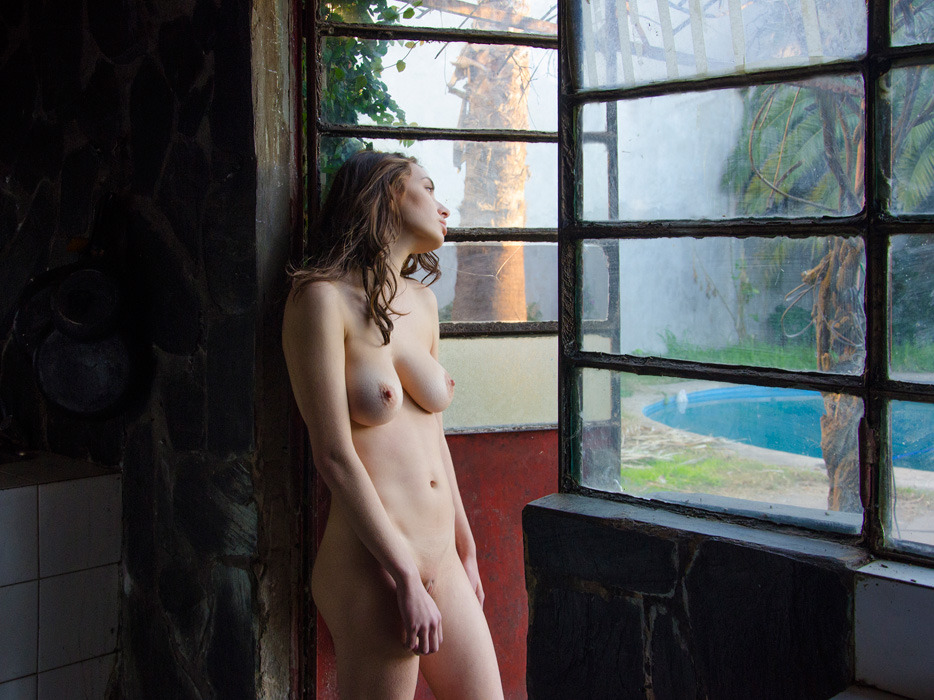
But what impresses me about this is the fact that you have both a strong blue (the water in the pool), a saturated green (the grass, palm fronds and plants above Bernabei’s head) and a distinct red (the lower panel on the door).

It requires a masterful effort to balance those elements in any image but all that is merely an overture meant to frame both the exquisitely rendered skin tone and morning/evening sun on the palm tree.

All that on top of a thoughtful, balanced composition.

It’s rare for me to encounter work that causes me to pause and independently consider color as anything more than a part contributing to the total sum of the image. Generally, when I think of what I would label masterful use of color it’s work from Eggleston or The Double Life of Veronique–arguably the best example of color cinematography in the western film historical canon. And not to diminish the brilliance of both, what I like about them is they make me think about the role color plays in the reading of an image. Yet, what the demonstrate isn’t easily applicable to my own photographic voice.

I can’t really process it all at the moment, but I feel the stunning color separation in this and the way it is employed in a layered fashion to re-frame the scene from a fine art meditation on the quietness of a moment to a sort of implication of the erotic potential in the physicality of the inter-relationship between being in a body, being caressed by light and therefore seen.

There’s definitely some problems with Asin’s larger body of work and objectification of women’s bodies but the skill of the photographer does manage to sublimate the objectification from time to time–to fucking spectacular effect.
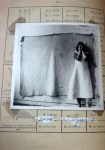
Francesca WoodmanSome Disordered Interior Geometries (1981)

Although it’s on some level problematic: I have moments where I think of Ms. Woodman as if she were both still alive and as if she and I were a couple.

Let me try to clarify that so it’s less presumptuous and entitled: I read a lot of critics who bemoan her enduring appeal. They say she wasn’t really all that good. That she’s only canonized due to her broad public appeal–a sort of way to put asses in the seats–so to speak.

I don’t agree with either perspective. If anything Woodman was a great deal better than even her current popularity speaks to–her work still suffers from centuries of entrenched art historical sexism.

As to her enduring appeal, there is a way in which her work comes across as not exactly conversational but… wait, I know how to say it! I just need to steal from someone smarter than me.

In her brilliant summary of the best movie of 2014–Jim Jarmusch’s Only Lovers Left Alive–the lovely and amazing Knitphilia describes the interactions between Tilda Swinton and Tom Hiddleston’s characters in the film thusly: “the pair conversationally present amazing trufax to one another as love gifts.”

As vampires both have lived for centuries, they’ve seen and done it all. The range of new experiences open to them is if not long exhausted, finite. Yet, amazing trufax–and, and! Books and Art and Music as avenues of transmission–are something that can still stir awe in them.

That’s how I feel looking at Woodman’s work! It’s as if the medium is the message and the message is a constant stream of amazing trufax, little loving offerings that this insanely talented young woman who died shortly after my birth keeps leaving behind for me to glimpse if I pay careful attention.

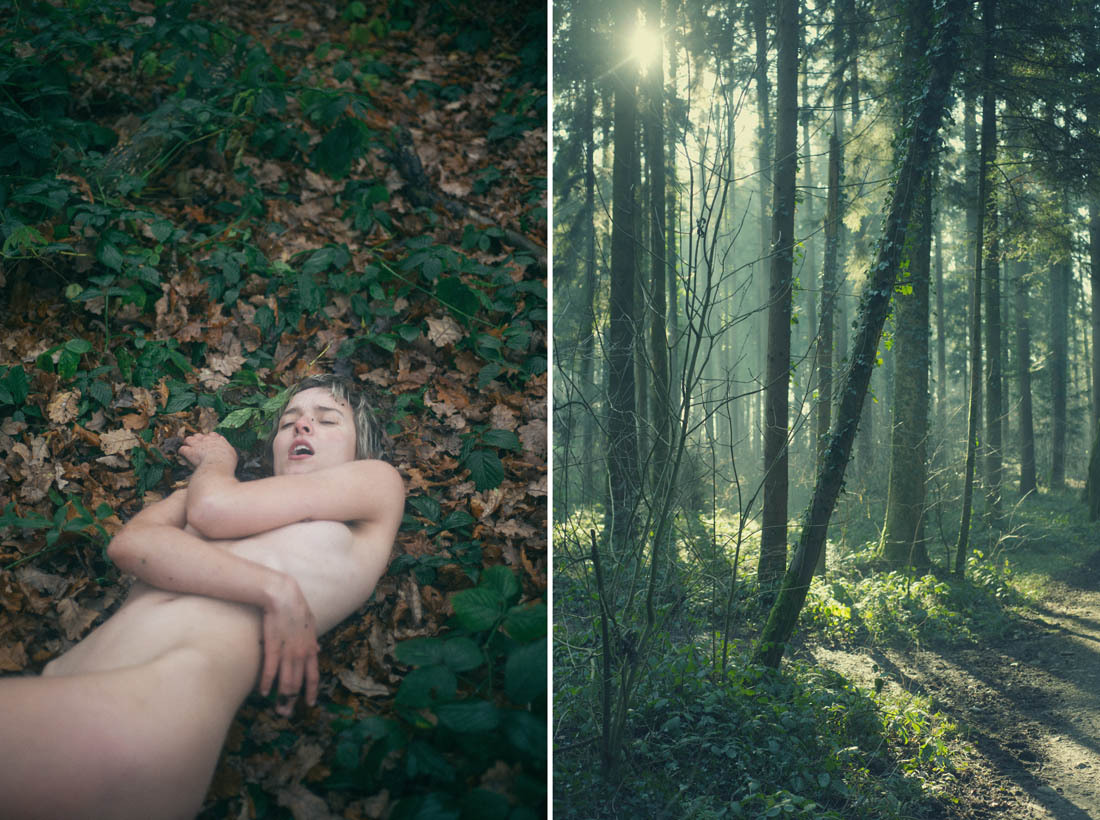
Lula HyersUntitled (2014)

Were you to take the current bumper crop of twenty-something lifestyle/fashion image makers, write their names on slips of paper, fold up those slips and place them into a hat, shake the hat about and pull out a name at random, any name would share some obvious parallel with Hyers’ work.

I am certain that Hyers would be at least passingly familiar with the large majority of names in that hat. She probably even considers many of them influences. The thing is: her work is also frequently better than the work of at least ¾ of those names that might emerge from the hat.

A bold statement: yes; but if you stop and look at her work–I mean engage with it–you can’t dispute the assertion. Add to that, Hyer’s still being a teenager and Jesus Harold and Maude Fucking Christ on Christmas her aptitude is freaking unbelievable.

And while I am of a mind that she’s better than the majority of her peers/influences, what she does better than just about anyone is the way she presents bodies and the sometimes related sometimes unrelated sexual expression of bodies as almost an afterthought–allowing her broad latitude in presented the truth of those in her life without misrepresenting the complexity of the moments she captures or relying on knee jerk shock value.

It’s surprisingly mature work for someone so young. And although comparisons to those aforementioned twenty-something lifestyle photographers are astute (along with correlations to Goldin and McGinley), I feel there’s a closer relationship with the frenzied urge to document life exemplified by one of my favorite photographers Igor Mukhin.

What I see matters little next to  than simple truth that this work is breathtaking; I cannot wait to see where it goes from here.

Sabrina DacosThe hand that rocks the cradle (2010)

The bumbling mad scientist in me would love to facilitate an experiment on the effects of porn consumption on straight, cisgendered boys.

This experiment would consist of two groups–one left to their own devices while another was granted access to sex positive, body positive, feminist and artfully executed pornography. (In other words, work of the sort for which Dacos is–in my mind–the quintessential exemplar.)

Of course, such a project would never pass muster with an ethics board (primarily for reasons to which I’m almost certain I would strenuously object). And I’m not naive enough to think there would be a total mitigation of heteronormative sexism in the second group; however, I’d like to think the second group would demonstrate a slightly different post-study trajectory of porn consumption.

I admit a strong bias driving this hypothetical experiment–I’m motivated by a retro-active wish that I’d had access to exactly the sort of sensitive, sophisticated pornographic material at the time I was navigating puberty. I suspect it would have diminished much of the guilt I experienced consuming such material given not only the front loading of puritanical bullshit into my Xtian upbringing as well as assuaging the nascent feminist awareness I felt at that juncture in my life.

EDIT: It’s been brought to my attention that my conceptualization of feminism and Ms. Dacos’ diverge significantly. That’s fine–feminism is a big tent. I’m not about to tell anyone else what they should think. That being said, I do find some of her commentary to be disturbing and sometimes even repugnant. So much so that my first response was to delete this post. I’m going to leave it though–to show that I’m not always right and that I make mistakes when I assume things just by only looking at someone’s work and not doing any research about their pubic facing persona.

My sincere apologies if my glaring oversight offended anyone (and thanks to wyoh for opening my eyes).

Marta Maria Perez BravoProtection (1990)

You know that class everyone has during their first year of uni that teaches you have to write a paper and use the library for research, etc?

Well, during my first college try, the teacher who taught my orientation course was a curmudgeonly fucker who smoked in class while refusing to let anyone else partake; he told us right off that he only promised to read the first paragraph of our papers and if he wasn’t interested he had five steps from his vestibule up to his living room and he’d stand in the living room and toss the offending papers down rendering the binding final grade based upon where they landed–top step being an A, bottom step an F.

I was one of three students who had every word of every paper read. This was not necessarily a desirable status due to the fact that unlike the other two folks, my tactic wasn’t finding a way to present the material in a direct and pithy manner so much as to present a first paragraph that made the reader ask themselves how the ever loving shit is this fucker going to bring this back around to the assigned topic?

To this day I struggle with directly engaging with material. It’s so much easier for me to indicate overlap and then address things in terms of analyzing things with which I am much more thoroughly familiar. I worry a lot about getting shit wrong and it’s easier not to fuck up when you are dealing with the familiar instead of the foreign.

The benefit to my approach is occasionally, the apt metaphor is the perfect decoder ring. So for every time it works, the nine other times it doesn’t just seem like the price of admission instead of a deficit of diversity in tactics.

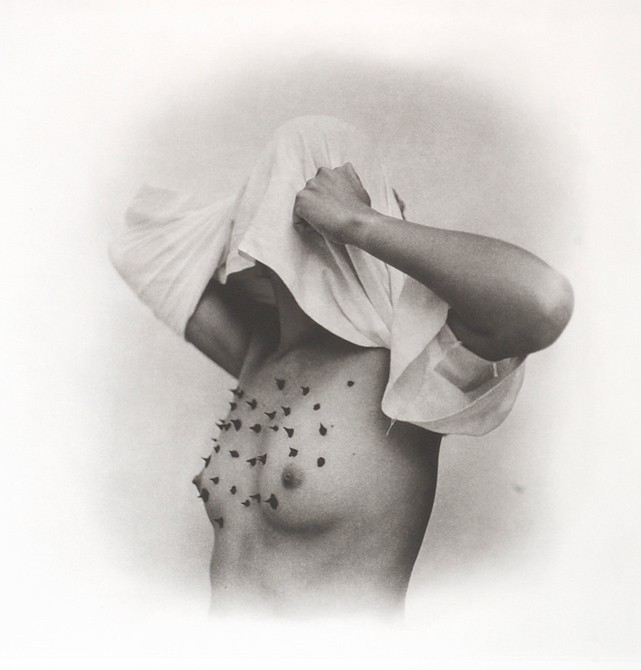
Whatever that’s a whole lot about me and very little about this amazing photograph. But part of the reason this photograph appeals to me is that it presents the equivalent of an initial paragraph that is both completely outlandish and also simultaneously tied to a rigorous artistic unity within the work.

For example: when I look at it I notice two things predominately. It provides an oneric as opposed to dream-like consistency. (Perhaps the best way to explain what I mean in juxtaposing ‘oneric’ with ‘dream-like’ is the difference between Maya Deren and David Lynch–the former is interested in replicating the logic, structure and mechanics of dream states on the silver screen whereas the later is interested in borrowing the fragmentation, ruptures and disjunctions familiar from dreams as a means of structuring/sequencing images in a more-or-less narrative fashion.

Thing #2 that I notice is that when researching the additional, non-visual context of the image this distinction broadens and enriches my perception of the images; i.e. there is a reason that this reminds me of an image emerging from a dream instead of being an imitation of a dream–Bravo being deeply immersed in the Afro-Carribean Santería, a belief that “the divine exists in all things, even everyday objects.”

I will be forever fond of work that rewards engagement by unfolding and intensifying. Plus, I pretty much live for those moments when I learn something without any sort of awareness of didactic intentionality. In other words, the engagement is both its own reward and an invitation to deeper levels of resonance and understanding.

Malinda WasellSlowly, my soul awakes (2015)

Out of every 24 hourrs, I spend two–give or take–perusing the work of various photographers and image makers.

Every day, I find work I like. Work I love is harder to come by–perhaps a couple times a month. Then–in an especially good year–a half dozen image makers completely beguile me.

Wasell’s self-portraits are rarer beast. It’s not so much that her images resonate with any great profundity. It’s more their one masterful aesthetic flourish–the knack of employing absolutely fucking impossible light to devastating effect.

I’ve experienced a comparable reaction before. Four and a half years ago, in fact, as a result of of first stumbling upon Lina Scheynius’ work.

On the one hand I grant that it’s not exactly fair to connect a nineteen year-old with a handful of promising images to one of the quintessential badass Internet famous photographers. But look at the way both manage to coax cooperation from insane lighting situations. So the comparison may not be fair but it’s damn accurate.

These two images in particular are wonderful. They’d almost certainly benefit from a more thorough engagement with questions regarding the boundaries separating selfies from self-portraiture as well as concerns over representation vs. identity. Yet, independent of more intensive conceptual framing, there’s both a raw potential and precociousness that is all but absent in photographers twice her age.

Lastly, I would be woefully remiss in my duties were I not to mention Wasell’s Tumblr curation. Yeah, super beyond on point.

Source unknown – Title Unknown (19XX)

I’d have posted this because it’s solely one of the most creative positions I’ve ever seen.

And yes, it’s a textbook example of #skinnyframebullshit due to the diminution of the overall context; namely, the ostensibly male legs protruding into the lower left third of the frame seem to suggest this is a group sex scenario transpiring in some teenage parental basement recast as an after school late-60’s rock and roll shangri la.

Then there’s the young woman’s breathtaking expression: a blissed out surrender to overwhelming stimulus, mind-expanding chemicals amplifying the almost magical ability music has to vibrate the soul raised to a level of transcendent crescendos of physical pleasure.

I’m actually extremely curious as to the photographer responsible for this. I’d likely disagree with him on a number of technical considerations, but this single image causes me to suspect he probably considered the pleasure motivating the performance to be the point; not the other way round.

Come to think of it: add pleasure over performance to remember empathy to my list of commandments for pornographers.

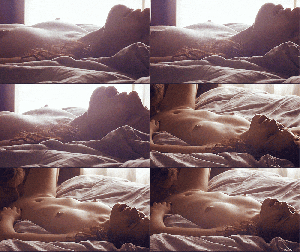
X-ArtYoung Love featuring Maryjane (2011)

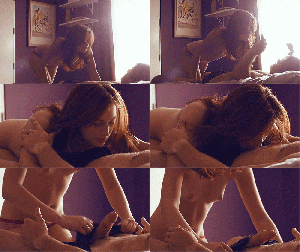
If you want you can watch a lo-res upload of the full scene here.

You don’t need to, though. No, really: you don’t–whomever curated this .gif set pretty much grabbed all the best bits.

I’m posting it here for several reasons. While it’s certainly not as pretty as the Sex Art scene with Silvie Deluxe and Whitney Conroy (I’ll honestly never understand the Janusz Kaminski wall of super white light aesthetic… shit PISSES me off)–and glosses over any explanation of who these characters are and how they relate to each other when they aren’t fucking–this scene manages to be extremely graphic and heteronormative without making me feel super skived out.

I think it’s beyond dumb that he pulls the I’m going down on you so you’ll return the favor bullshit typical straight boy routine. And I appreciate any straight porn where the stud getting off doesn’t involve a facial. However, by the same token, it’s really awkward the way you don’t even know he’s jizzed until the tacked on post-coital cuddling. I mean the typical male gender role demands a certain stoicism, but damn boy–would it kill you to vocalize a little? It’s not as if her parents are in the next room.

Le sigh.

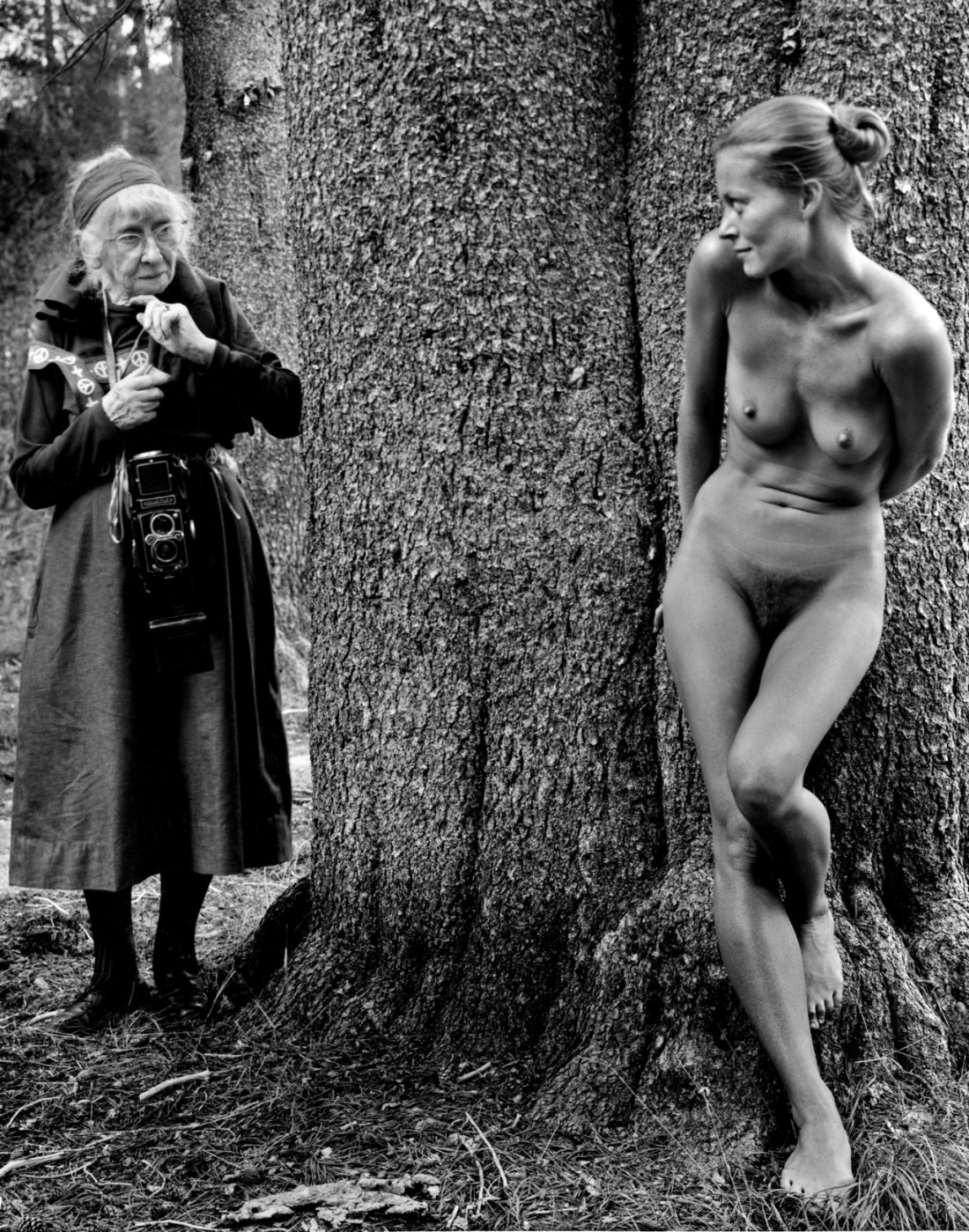
Judy DaterImogen and Twinka at Yosemite (1974)

I was completely unfamiliar with this image prior to this morning. And now that I know about it, I am sort of going crazy over it.

Long story short: I came to photography via cinematography and ever since I’ve been trying to figure out how to convey a narrative within a single, static frame.

There’s a lot of folks who are similarly fixated. Fewer succeed and some (looking at you, Crewdson) don’t even come close but continue to tout their work publicly as narrative despite a colossal misunderstanding of what narrativity entails.

This image is narrative as fuck. What we are seeing is indisputable. A woman with a camera has walked around a tree and to her surprise, encountered a nude woman eying her coyly.

Given only the image, we can surmise both what led up to this event and what will follow from it: respectively, a photographer was wondering through the woods looking for a scene to shoot and now having found it she will take a picture.

But… but… (sorry, totally v. emotional ova here) that framework suggests a number of questions: who is the photographer and why is this woman just leaning up against a tree naked?

And unlike so many images that rely on the inclusion of accompanying text or a title to activate the narrative, the title here–hallelujah!!–directly addresses those questions: the photographer is Imogen Cunningham, one of the first American female photographers; and the nude woman leaning against the tree is Twinka Thiebaud.

Further the mention of Yosemite serves the dual purpose of connecting this to the American photographic tradition–Eadweard Muybridge and Ansel Adams writ all the way into the fucking margins–and grounding it in the fact that this image came out of workshop (organized by Adams) entitled “The Nude in the Landscape.”

Apparently, Twinka character was conceptualized as a woodland nymph after Thomas Hart Benton’s Persephone. (Note how this intricately compliments the fantastical undercurrent of the initial narrative interpretation as well as presents a critical and conceptual weight to the mention of Yosemite in the title–i.e. the American west and it’s relationship to the nascent medium of photograph as a new mythology.)

I’m overcome by how incomparably perfect this is. This is the model for the work I want to make as a photographer.

Nagib El DesoukyUntitled (2014)

I don’t think those who follows this blog suffer from any sort of illusion when it comes to this author’s infallibility. Between lapses in grammar, sensibility and taste, I fuck up more often than not.

One of those fuck ups was ignoring El Desouky when he submitted several of images to me roughly two years ago.

The mistake I made–unfortunately, one I make with alarming frequency–was to judge the work based solely upon whether or not it engaged me.

That’s not put as clearly as I’d prefer. Let me employ a metaphor: craft–being a strictly mechanical process–is something anyone can be taught in such a way as to eventually allow them to achieve mastery. Passion, however, is a different story.

I’m not someone who believes that passion is something either inborn with or you’re shit out of luck. But I object to the notion of passion be something–like craft–that can be taught. It doesn’t work like that. Perhaps a better metaphor is either that of the heroes quest, or what shimmers between this wonderful list of rules for education penned by John Cage that’s making the rounds lately.

Or, to put it another way: I don’t think art teachers owe their pupils only constructive criticism. Much the way a Buddhist novice must wait outside the monastery for three days without food, water or encouragement, if one or several instances of brutal criticism are enough to cause you to foreswear a creative pursuit, then don’t let the door hit you in the ass.

All this is to say that although I still find myself put off by most of El Desouky’s B&W work (this incredible photograph being a notable exception), his tentative forays into color are fucking stunning.

I regret that I didn’t recognize El Desouky’s intense and unflagging passion sooner. And I’m calling myself out on it in a very public way, in the hopes that I learn from the mistake instead of continuing to perpetuate it.