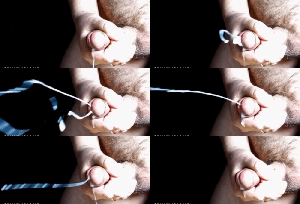
Eadweard MuybridgeJumping Over a Boy’s Back {Leapfrog} from the Animal Locomotion series (1872-1985)

Like any good art student, I hear Muybridge and experience a Pavlovian response where Horse in Motion pops into my head.

And it’s not a bad association but I tend to think of Muybridge as a scientist who used photography as his laboratory.

Unfortunately, that’s been a barrier to really exploring his work. It’s not that I don’t like science, it’s more that I struggle with thinking of a photograph as evidence. Or, as Wolfgang Tillmans has correctly observed: “photography always lies about what is in front of the camera but never lies about what is behind.”

I feel like that’s actually the perfect quote to contextualize Muybridge. Yes: his work leads with a rigorous precision. However, I feel like that’s maybe more a statement about Muybridge’s personality than an accurate account as the scope, form or function of his work.

During a lecture earlier this week I was shocked at the sensual, Whitman-esque humanism of some of his work. Like some of it is straight up erotic in it’s obsessive fixation on an effort to measure the differences between motion as we perceive it and motion as an amalgam of discrete, constituent parts.

This isn’t the best example but I couldn’t find the one from the lecture–but I still think this is pretty damn daring, actually.

Also, Rebecca Solnit–one of our best living essayist–wrote a biography on him. I started reading it a while back but didn’t finish because it started to get into the scientific facets of the work that just presented an obstacle to my engaging with the proceedings. I suspect I am going to have to revisit it when I have some free time. (And who the hell knows when that’ll be… going to grad school FT and working FT is rough, y’all.)

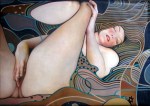
Source unknown – Title unknown (201X)

It has been shown that at least part of the information received by the optic nerves is routed through and affected by memory before it reaches the part of the brain that deals with visual impulses (input). Now René Dubos discussed the distortion of stimuli: we tend to symbolize stimuli and then react to the symbol rather than directly to the stimuli. Assume this to be true of the other senses as well.

Bruce Nauman, Artforum Dec. 1970

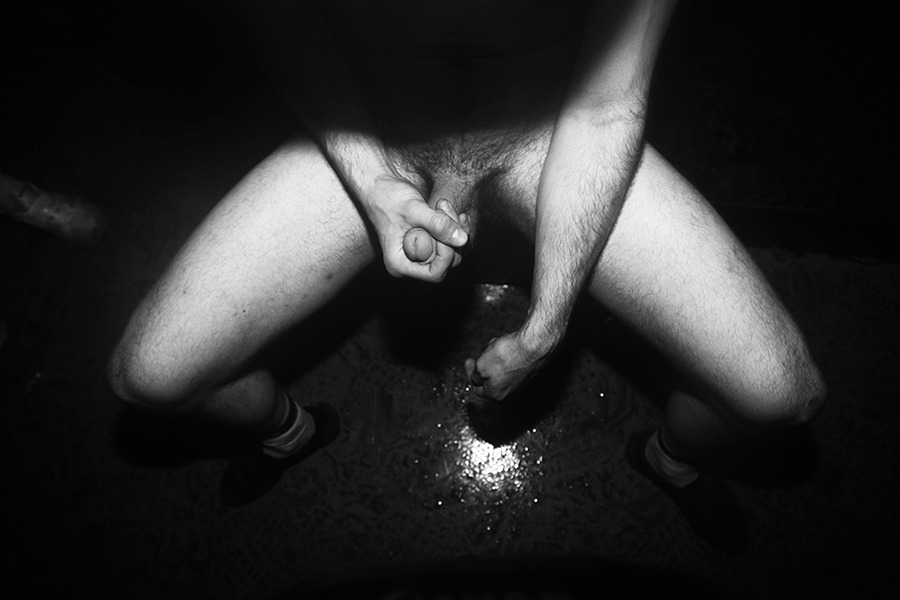
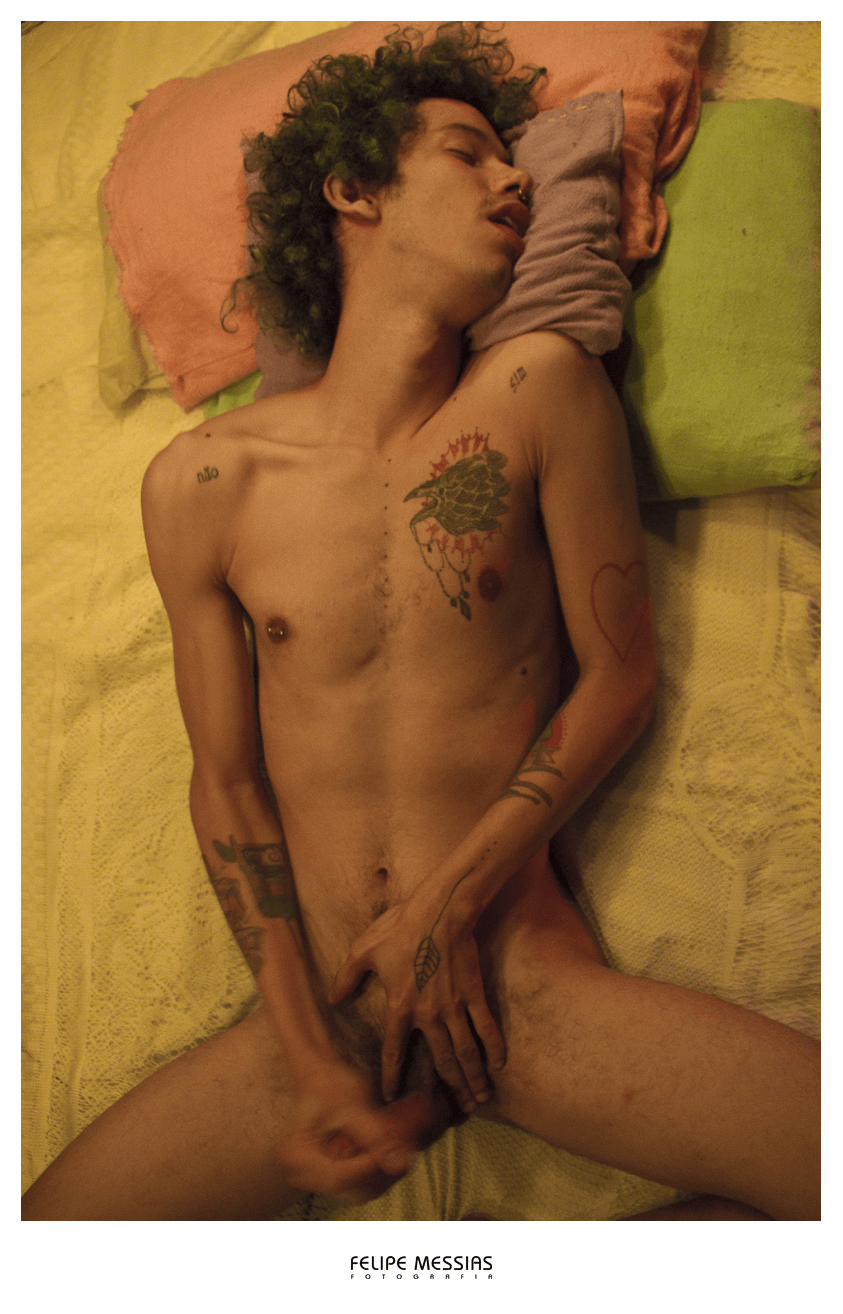
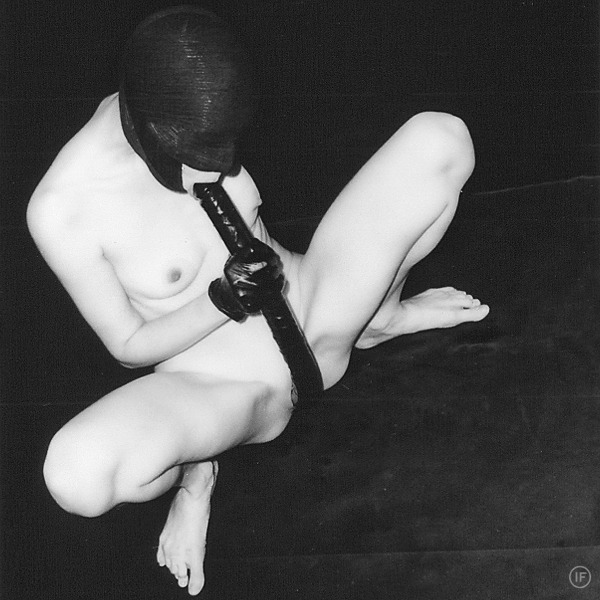
insidefleshartificial pleasure (2018)

At present, my brain is a hectic, swirling mass of chaos–my first semester as a graduate art student is spinning up and I’m not as lucid as I would prefer. (As a result: things with this project will be fairly scattered for a couple of weeks–thank you all so much for bearing with me.)

I don’t have a clear piece to offer you about this image. I mean: I freaking love it. But as I’m looking at it trying to figure out what about it I want to point to as being the thing or things that draw me to it–it’s the usual: a simple, straight-forward conceit, executed in a matter-of-fact fashion; also, I both wish it was an image I made; or, even better: I wish it was an image of myself.

Looking at it the only place my brain keeps returning is to a point a member of the sculpture faculty made about how he feels that one of the biggest hang-ups contemporary artists have with struggling to fit their concept within a particular form–when the concept would become for less complicated if it were perhaps applied to a more complimentary form.

His point was that there’s a natural tendency to play to our strengths as creative folks. But there are times when our ideas will be expressed more clearly in a form with which we are perhaps not so well versed.

And I think the inverse of that notion applies to insideflesh–I would be very hard pressed to point to work with a better synergy between concept and execution (form, aesthetic, tone, resonance of meaning).

Jocelyn Lee – selections from The Appearance of Things series (2018)

For me, the most obvious way to run with this would be to contextualize this work as being in conversation with Sally Mann’s work.

“But,” you interject: “Sally Mann works exclusively in B&W.”

The word you want instead of ‘exclusively’ is ‘mostly’. There are the sumptuous cibachromes appearing in the last section of Mann’s Still Time–Lee’s semi submerged fruit and sky reflected in presumably staged settings loudly echoes Mann’s use of fabric, fruit/vegetable and plant matter in water.

It would be easy to–by extension–tie that in neatly with Mann’s foundational preoccupation with the intersections between embodiment and memory. In fairness, I do not consider that notion at all misguided; I think there’s probably some pretty illuminating stuff that could emerged from following that thread… it’s just that I’m far more interested in the way this work echoes Rimantas Dichavičius.

Actually, it more than merely echoes–it also (and I’m not sure to what degree Lee may or may not be familiar with him) is a solid critique of Dichavičius’ work as well as pretty stunning improvement upon it which in the process of renovation re-appropriates the women in nature trope from something for voyeurs vs something more bewitchingly empowering.

And some of the stuff she’s doing with color is to my eye moving from photography to painting in an equal but opposite way that Rackstraw Downes moves from painting towards photography.

Vinson Smith – Flora Fauna (2017)

This was taken in Vík í Mýrdal, or Vík, on the southern coast of Iceland.

It’s a quaint little town. The main tourist draw is its utterly breathtaking black, volcanic sand beach. Also, there’s an iconic church position on some of the highest terrain in town. Here’s a film photo I took one of the half-dozen times I’ve been there:

image

The rock formation in the background of the first image is called Reynisdrangar. It’s a basalt sea stack.

But there’s a folk story about the sea stacks–two night trolls stole a ship and we’re dragging it back to shore. Unfortunately, the boat was either too heavy or they were further from their cave than they planned because they were caught by the rising sun and immediately turned to stone.