Source unknown – Title unknown (20XX)
Writing for this project, I frequently feel like my primary form of interacting with images is a this-isn’t-a-good-photo/image-but…
I mean beyond my generalized feeling that I am a bit of a broken record sometimes, this this is something about which I’m always very self-conscious.
But…
I mean I think one of the disservices we do in teaching photography (or, hell, more broadly any creative discipline) is that there’s a laser-like focus on the canonical.
It’s not that I don’t think that shit is important. It absolutely is–indispensable, in fact.
But…
It’s all sort of incestuous–in a biblical sense: the genealogies of influence flow in a clear, unbroken fashion back through history. It’s clean and full-up-to-the-gills with masterpieces of unadulterated genius.
So what’s the downside? I mean if one is trying to learn, the presumption is that one wants to learn from the best. Unfortunately, in my experience this has a limiting effect in a number of ways. If I study only greatness and my own work isn’t great (yet) then I either to be a total asshole narcissist or suffer from a certain degree of oblivion. (After all, when comparing your work with canonical masterpieces, your work begins at a stupendous disadvantage. And that disadvantage can cause you to lean on the work that’s already been done (I know so many emerging artists who view certain artists in such an uncritical light, that it’s almost as if their relationship with the work is less hippie looking to expand their mind and more blasted addict chasing the next crest.)
Truthfully, I’ve learned just as much from perusing shitty work as I have from obsessing over the greats. And it’s for that reason that I think every serious photographer should make a point to critically interrogate bad work in the same fashion they do good work.
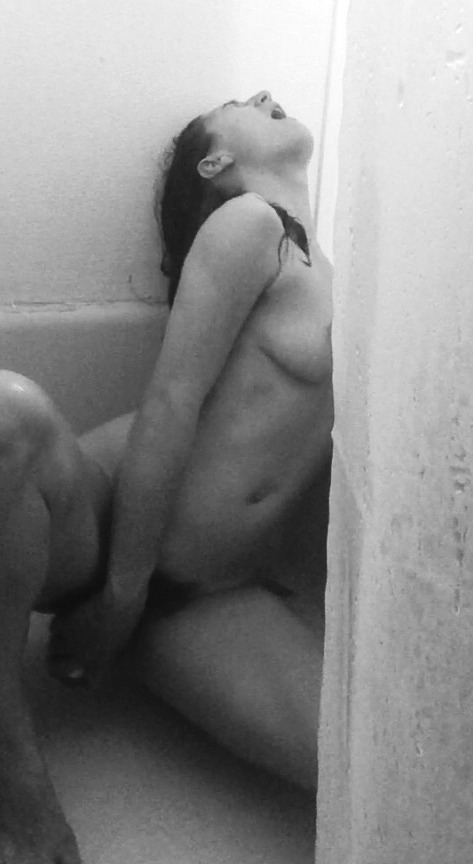
I mean the above is not a good image. It’s been blown up far beyond the point of disintegration. It’s blotchy and ugly. Yet, even if I knew where it originated, the original is probably not that much better. Unless you’re going to go to the trouble of setting up highly precise, orchestrated lighting–or you’re one of those lucky shits with a bathroom that has a window (and therefore: some natural light)–then the light is going to look like shite.
Despite looking awful, this does do a number of things extraordinarily well. First, according to the letter of Instagram law, this is an image that is Instagram safe. (Though, I’ll admit it would probably be taken down.)
Whether or not the intention of the author was such is immaterial–and given how bad the image is, it’s unlikely that the motivations approached anything like I am about to suggest: but it doesn’t matter because if the images reads a particular way, it reads a particular way.
It reminds me of the line teachers always used to throw around to my classmates about dressing in a fashion to leave something to the imagination. the idea was you’ll be more attractive/alluring if you show off less instead of more. (The creepy implication being that how you dress is an open invitation for others to imagine things about your body.)
The same mentality is frequently utilized in distinguishing porn from erotica and erotica from art. Porn tends to leave little to the imagination; whereas erotica is somewhere closer to the middle and art allows for the assumption of chastity.
For the record, I’ve always instinctively objected to this framework. I think it’s all a great deal more muddy (and therefore more interesting) than that.
But there is something in the whole admonition to leave something to the imagination that does actually inform as to the essential nature of pornography: it’s like they teach you in Writing for the Screen 101–unless you can see it on the screen, it doesn’t go into the script.
This relates to the ‘visual’ nature of the ejaculatory orgasm (and why most porn centers around male arousal and sating)–it’s visibly demonstrable. (Here we run into the inverse of my previous argument that art students should study shitty images, pornographers should study art history, as well: because you can actually depict non-male ecstasy.)
(As a tangential note although I can’t find them now: there are a handful of popular tumblr porn gifs that I do think are exceptions to this notion: despite being close-ups–which I’m not especially fond of–they focus on the pulsing muscular contractions associated with orgasm. In one, a hand stimulates the clitoris of an Asian woman. She audibly squeals as her anus and perineum spasms. In others, ejaculatory contractions can be seen at the case of the erection.)
Now–lest anyone forgets–this isn’t a good picture but the decision to present it in such a way that it is both entirely clear what she is doing but the viewer is not afforded an unobstructed view of the typical erogenous zones. Also, the fact that we don’t do the coded porn thing of zooming in on the woman’s oh-face (a la Albert Pocej’s staid Orgasm series) and instead are presented with the tableau sans access to erogenous zones and within context, this scene is decidedly about female masturbation via orgasm.
In other words, there’s no way the viewers can make this about themselves. Unless they think that perhaps she is fantasizing about them–which is, in itself, radical as to do so demands the recognition that she is not an object and has her own individual agency, volition and inner life (to which the viewer has no immediate access.)

 Acetylene Eyes