#950

Unless you’ve been living under a rock, you’ve heard about how after the city of Charlotte passed an ordinance protecting transfolk from discrimination for using the correct bathroom, the state of North Carolina subsequently voted to–on the grounds of protecting religious freedom–initiate a statewide ban on anyone using a restroom other than the one designated for their gender assigned at birth.

This is hugely problematic for any number of reasons. However, it’s worth noting two. First, there is a hate mongering fear campaign that prays upon the lack of information by those who are uneducated in matters relating to gender–people believe that if you let transfolks use the correct bathroom, you’ll get a bunch of men trying to spy on women while they pee. It’s absurd. A transperson isn’t going to go into a restroom unless they really have to and then it really is to do nothing more than urinate quickly and get the fuck out. The misinformation about sexual predators exists despite the fact that more U.S. Senators have been arrested for misconduct in public restrooms than have transfolks; also, the US Senate has more instances of former Speakers of the House who have confessed to sexual assault involving children. (I’ll give you three guesses as to which party the above hail from and the first two guesses don’t count–hint: it’s the same idiotic fucktards sponsoring these laws.)

The other problem is that Republicans supposed believe that state’s rights trump all else. It’s how they justify that the civil war wasn’t racist–because they allege it was fought for state’s right–completely overlooking the fact that at issue was a state’s right to fucking own other people. A huge plank in the anti-marriage equality movement’s rhetoric is that state’s shouldn’t be forced to enact things that are against their sincerely held religious beliefs. (Where does this sound familiar. If you guessed that it’s virtually identical to objections to interracial marriage, you’d be 100% correct.)

So now the Republicans have basically exercised their state’s right argument despite the fact that they’ve created something which they allegedly reject–a sort of libertarian autonomy when it comes to governing. By passing this legislation, N.C. Republicans have pissed all over their own ideals as a result of hate, fear and intolerance. And, in case you’re brain dead and don’t have sensible senses, this should be the turning point where you realize this has nothing to do with ideology and has everything to do with maintaining the status quo of rich, white male hegemony.

France passed laws criminalizing payment for sex. This move to the so-called Nordic model–which has been roundly criticized by folks who are currently sex workers (and who, subsequently, should be the ones most aware of what sort of reforms are needed and which aren’t).

The NYTimes actually ran a reasonably even handed long read on the subject of what to do with sex work. It’s notable especially for it’s willingness to distinguish between feminists in the ivory tower, former sex workers and current sex works. It also, surprisingly, stops just sort of saying The Nordic Model is actually really bad for sex workers. It’s definitely worth the read.

This crossed my dash today and I had to include it as I’m dating someone who suffers from chronic debilitating pain: Prince did not die from pain pills – he died from chronic pain.

Shit out there is fucked up and bullshit. Please, PLEASE take care of yourselves and each other.
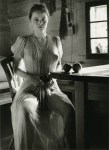
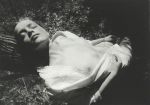
Taras KuščynskyjUntitled selections (196X)

Viewing Kuščynskyj‘s work it’s easy to get caught up in interrogating the anxiety of influence.

For example, you can’t see an image like this and not think of Arno Rafael Minkkinen; or, consider the way he frames subjects against backgrounds as a sort of revisionism of Koudelka where fixation on the relationship between perspective, space and people positioned in it it becomes less concrete, more oneiric fleeting/unstable.

Really though what ought to be celebrated about Kuščynskyj are his poses. And I think his work is only as good as the singularity of the poses he presents. The above all work because the way the subjects inhabit the frame is an organic outcropping of the environment. There’s a meditative lack of self-consciousness, an unnerving unity of form and function.

It’s probably not entirely inaccurate to draw comparisons with the Czech New Wave–since Kuščynskyj was making most of his work concurrently. However, I think arguable a bigger influence would’ve likely been André Kertész–who was also unparalleled at presenting people in moments of uncontrived immediacy.

(Another interesting exercise: there’s almost no way Emmet Gowin wasn’t familiar with Kuščynskyj. It’s fascinating to see the way Gowin uses the same sort of end–documenting unselfconsciousness–by adopting a wider palate of from non-contrivance to stylistically over contrived than Kuščynskyj. Yet, Gowin never managed to make an image that provided such a singular and perfectly realized pose as the middle image in the right column above.)

I find it galling Kuščynskyj‘s work isn’t more widely available. There’s some clips of his work laying around if you care to search for them and they suggest that what’s available of his work online is of shabby quality compared to the original prints.

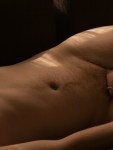
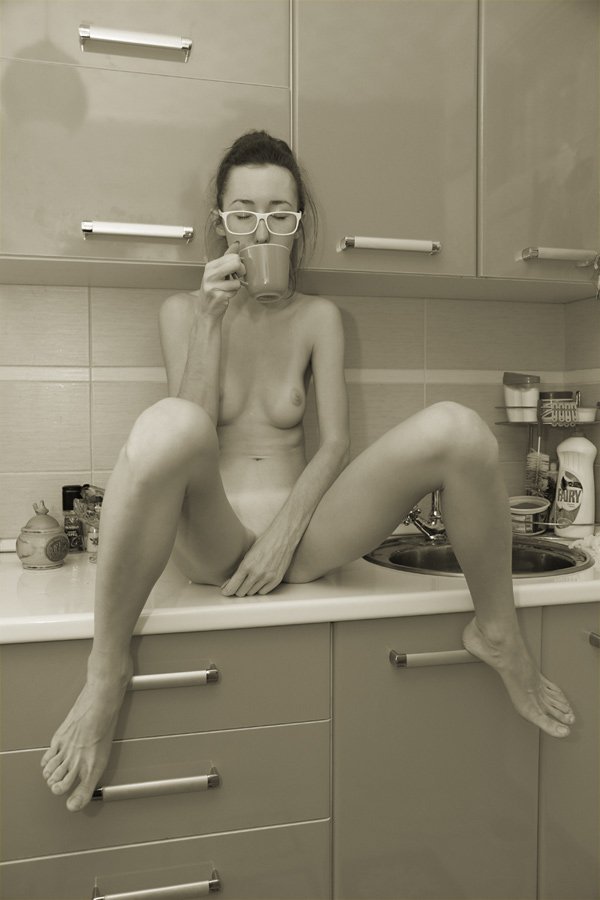
Source unknown – Title Unknown (2010)

For the record: this ISN’T #skinnyframebullshit.

Which is not to say I entirely understand or agree with the orientation, but there is a persistent logic to it–the verticals are level with the left and right frame edge and the way the horizontal seams stand in relationship to the horizontals recalls Piet Mondrian.

To understand, why the vertical composition isn’t as problematic here, it’s necessary to examine the complications presented by a horizontal frame. There’s only two ways it can go: either you increase the amount of the kitchen around the subject or you place the camera closer to her.

Both these options diminish compelling facets of the original. In the first case, a wider shot of the kitchen increases negative space while decreasing immediacy/intimacy; in the second, you’d lose a good bit of the way the upper cabinet’s glossy finish blurrily reflects the rest of the room the viewer cannot at present see–suggesting a holistic and somewhat immersive totality of space.

Thus, whether I completely agree with the orientation or not, there is a clear, legible logic guiding it.

Yet, that’s not even what I like most about this image. What gets me is the way that it manages to stipulate it’s own context. Namely, if you’ve spent any time on Tumblr you know that disgusting creeps who bully, belittle or attempt to shame folks who post nudes–as if naked bodies are always inherently sexual.

I 120% support people who want to post nudes and not get shit for it. At the same time, I do often wonder to what extent failure to address such work from the vantage of its position in a particular traditions, be that nudes or fine art nudes… I do feel that there is a pervasive thread of believing that the master’s tools will eventually dismantle the master’s house.

In other words, we all just need to do better. To insist our work isn’t about sex or sexuality when it includes nudity and that’s it. Unfortunately, that ignores a shit tonne of subtlety and nuance. It can be both or neither or something else entirely.

What I like about this is it feels like a self-portrait. A sort of this is who I am when I’m authentically me–I get up in the morning and sit my bare ass on the counter while I drink my coffee.

The image conveys a real sense of comfort in one’s own skin. Simultaneously, there’s an awareness of the relationship between the subject and the camera. A sort of hey, this is how I roll and I want to document that but at the same time someone else isn’t necessarily going to see it the same way I do.

The way her eyes are closed and the way her left hand is positioned completely frustrated any sexualization of the image. And the brilliant thing about the work is it makes it seem incidental. There’s no sense that I’m covering myself because I’m ashamed, it’s more an: oh, this way I’m sitting which is super comfortable to me might be more than you want to see of me, so I’m going to address that in a way that doesn’t diminish how comfortable I am rn.

PS Super bonus points to you if you noticed the Fairy dish soap. It’s apparently a brand distributed in the UK, in case you care.

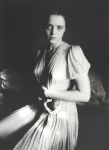
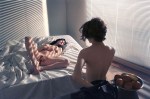
Adrian Sztruksportra 400 (2014)

Kodak Portra is NOT my cup of tea. It tends toward muted pastels with compression in the highlights that I find unappealing.

Plus: if you’re working analog and making portraits or so-called fine art nudes, you likely use Portra. And call me an iconoclast but: girlfriend, ubiquity is an enormous turn off.

That being said, three things about this scan interest me:

  1. It’s medium format with a shallow depth of field, check the way that the bokeh seethes against the grain structure–a nice, thoroughly cinematic effect that highlights the young woman while also clearly grounding her in her environment.
  2. Because it’s medium format, there’s a good chance the camera doesn’t have built-in metering. As a result, this is slightly underexposed. (Little known oddity about cameras, unless you’re actually measuring the amount of light in exact relationship through the lens onto the focal plane, then you get hit up by the discrepancy between F* and T* stops.
  3. The highlights aren’t compressed, you’re retaining a full range of detail in the sheets but further more note how the tonal range of the wall–ostensibly yellow–is not replicated within the woman’s skin tone. The result is an appealing warm tone–which is 120% in keeping with the image. However, from the standpoint of color correction, such separation offers a ridiculous range as far as color balancing. (For example: I’d apply basic color correction, monkey around until I got Prue Stent-esque skin tone and lastly add a little bit of the amber glow back.)

Edward WestonNude on Sand, Oceano (1936)

If you ever get the chance, I recommend going to an exhibition opening party at MoMA enough. There’s nothing like getting shitty off an open bar and then wandering around transfixed by art.

I’ve been to two such events. The one relevant to this post was for Paul Graham’s a shimmer of possibility. Graham is a grossly underappreciated photographer and the show was excellent; but being more than a little inebriated, I wandered into either the permanent photography catalog or another exhibition. Come to think of it, it might’ve been part of the broader implications of Graham’s work in an photo historical context.

However it worked out, I ended up staring at this Weston print for the better part of an hour.

I’ve noted previously that I don’t really care for Weston as a photographer but I consider his skills as a print maker unriveled. That’s not an uncontroversial opinion–given that Weston’s son apparently made the prints for the majority of his father’s work.

The thing that makes me reasonably sure that this photograph was printed by the elder west is that it’s both flatter and both shadows and highlights are more restrained.

This capture doesn’t even come close to doing the physical print justice. But you can at least see the implication of the stunning texture in the sand and the luminosity of gradations in the mid-tones shine through legibly.

As such, when I read about the tempest in a teapot over at The Guardian–where several of their ‘esteemed’ art critics got into a tiff over whether or not photography is art, I was immediately reminded of Weston’s print.

Perhaps, I’m biased but I don’t understand how anyone could stand in front of this print and argue that isn’t Art without being a troll’s asshole.

Paul von Borax – Selections from SOOMBRE (2015)

Ninety percent of Borax’s work represents–to me–all the tendencies in contemporary image making that I consider inartful, tactless and conceptually bankrupt.

It’s not that SOOMBRE transcends those flaws–quite the opposite: it doubles down on them: presenting style as substance.

Typically, such a gamble doesn’t pay dividends. Here it does in at least some measure.

It’s honestly the aesthetic that gets me: the gummed edges indicating peel apart film, the soft focus, the replication of the sort of flat tableau that informed so much of Victorian photography–the way the artifice of constructing a set actually manages to increase the authenticity of the aesthetic. (In fact, I’m reasonably certain that the sets used in SOOMBRE were almost certainly predicated on a production design concept similar to Mark Romanek’s brilliant work on // | /’s Closer music video.

The other thing that works well is the implicit provocation of the staging. In the top image, the poses would be indecent were it not for the way the shadows play over the scene; the women maintaining eye contact with the camera makes a degree of voyeurism explicit–their expressions suggest that both are aware of being watched and aren’t bothered by the fact but also aren’t especially interested in it.

The bottom image toys with the same ideas but in a manner that is arguably more perverse. To me this photo hinges on two things: the position of the rear woman’s hands–less her right hand than her left; the latter being exactly on the line between contrivedly staged and unsimulated. The awareness of that boundary and the willingness to press up against it, in addition to the way the one woman seems aware of the camera while the other does not and the askew composition, gives a very real feeling that the scene is less presented for a camera’s aperture than a glimpse through some sort of illicit peephole.

Also, it would be disingenuous of me not to mention that fact that while I am typically into anything that fucks with the notion of the sacred vs. the profane, the use of crucifixes in this project is some milquetoast, weak tea bullshit. I’d kill to see what someone like Plume Haters Tannenbaum would do with this location. Like although there are definitely a few intriguing things about Borax’s work on this project, I don’t feel it reads as even a tenth as transgressive as it seems the creator would hope. Whereas, Tannenbaum would’ve made you feel almost deliciously dirty for looking at the images with such unrestrained wonderment.

Lucian FreudAnd the Bridegroom (1993)

Can you believe a decade ago I detested Freud’s paintings? Like really super hated them–I think it was something about their stretched, obtusely rendered perspective.

I do not feel the same way these days and I’ve become borderline obsessed with his work. His use of color–minimal around the edges and growing more layered/nuanced the closer the eye draws to the subject(s).

It’s almost as if everything in the work is designed to draw attention to what can only be inferred–i.e. the psychological state of the subject(s).

It’s a brash maneuver to have everything function solely to the end of conveying something that can’t really be fully communicated through visual depiction.

That Freud manages it so frequently and with seemingly so little effort is so improbable, there’s only one way to accurately encompass it: unmitigated genius.

Here’s to being wrong–and the growth/evolution that arises from being willing to admit it.